
Commercial roofing contractors handle warranty claims by documenting the roof problem, checking the applicable warranty, notifying the responsible party, and arranging an approved repair. A leak alone does not establish coverage: the cause, exclusions, notice requirements, and repair authorization determine how the claim proceeds. For a claim opened in 2026, keep the original warranty alongside the inspection findings and all correspondence.
- Commercial roofing contractor warranty claims depend on documented cause and written coverage, not simply the presence of a leak.
- Separate contractor workmanship coverage, manufacturer coverage, and property insurance before authorizing permanent repairs.
- When contacting Murray Inspection Services, ask what documentation supports the claim and who decides coverage.
- Get repair authorization and a written explanation of the coverage decision; preserve emergency mitigation records.
Why this matters
A roofing contractor can inspect a defect and propose repairs without having authority to approve a manufacturer's warranty claim. Treat those as separate decisions. Otherwise, you risk approving work before the party responsible for coverage has reviewed the evidence.
If you contact Murray Inspection Services, ask which role the company would perform: inspection, documentation, claim coordination, or repair. A documented cause is stronger evidence than a contractor's verbal assurance that a leak is covered. Your agreement should identify the actual scope rather than leave those responsibilities implied.
How do commercial roofing contractors handle warranty claims?
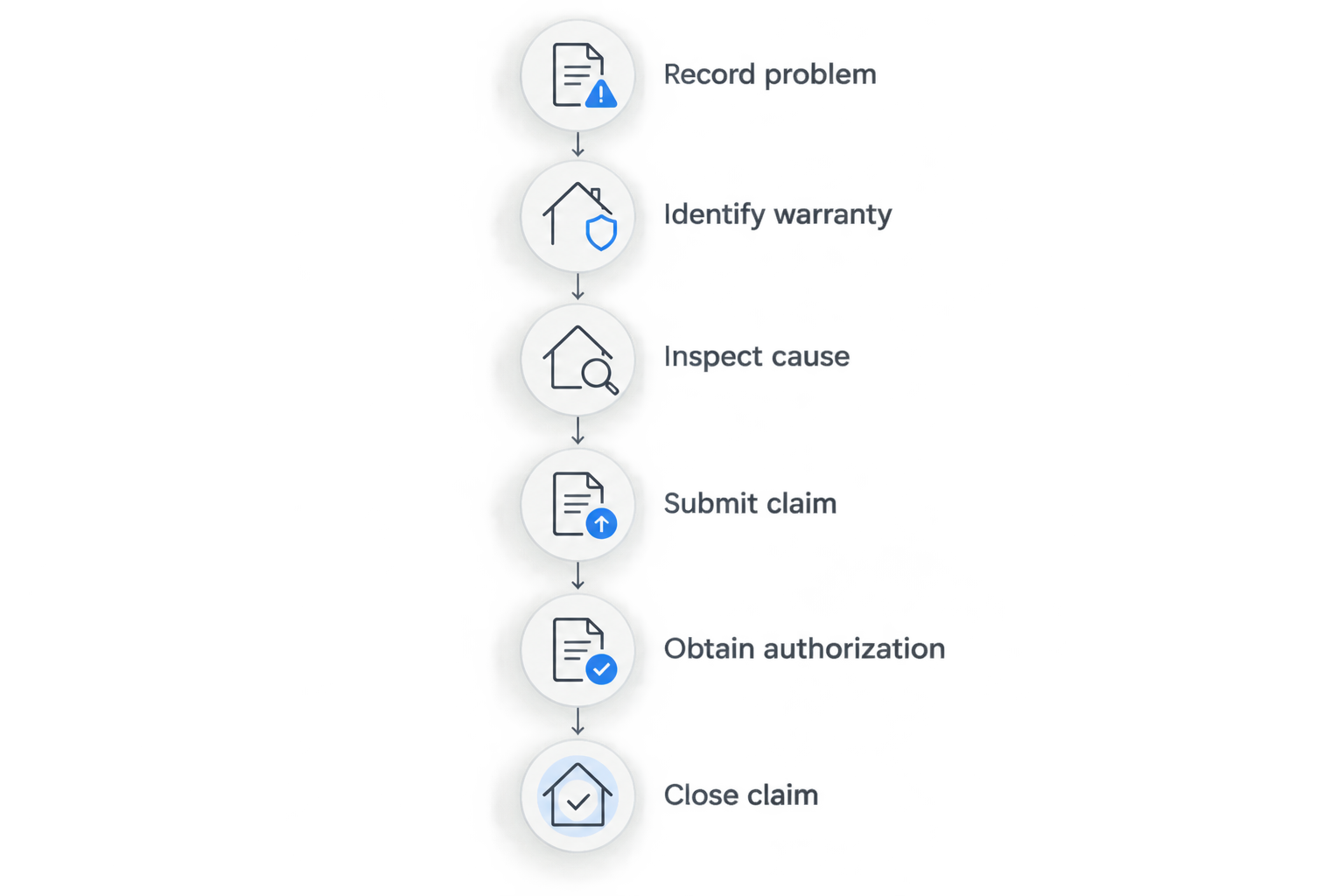
The claim process connects the observed problem to a specific promise in the warranty. Use these steps to keep the investigation, coverage decision, and repair approval separate.
1. Record the problem and protect the building
Record when you discovered the leak, where water appeared, and what building operations were affected. Photograph interior damage from a safe location and retain records of protective measures.
Do not send untrained employees onto the roof. Where immediate protection is necessary, document the condition before and after the work when safe, retain invoices, and follow the warranty's emergency-repair instructions. Protect the building without assuming that every emergency expense is reimbursable.
2. Identify the warranty and responsible parties
Find the executed warranty, installation contract, roof-system information, and any registration or acceptance documents. Confirm the building address, owner named on the warranty, effective dates, and issuer.
Next, read the notification instructions. A call to the installing contractor does not replace written notice to the manufacturer when the warranty requires that separate notice. If ownership changed, check transfer requirements rather than assuming coverage followed the sale.
3. Inspect and document the suspected cause
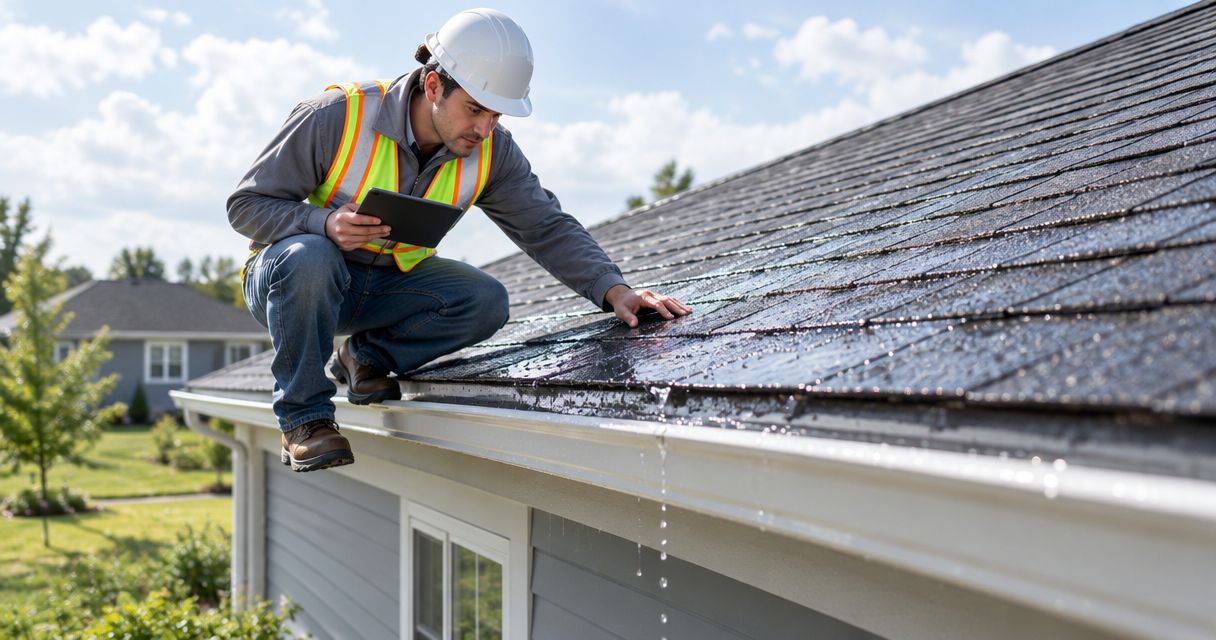
The inspection should distinguish the visible symptom from its suspected source. Water entering near a roof penetration, for example, does not by itself prove that the membrane material failed.
Ask for photographs tied to roof locations, observations about seams and flashings, and an explanation of any recommended testing. Destructive investigation needs appropriate permission and a plan to restore the opened area. Record limitations, including inaccessible areas, instead of treating an incomplete inspection as a final diagnosis.
4. Submit the claim through the required channel
The submission should connect the reported condition, inspection findings, and relevant warranty language. Include the documents requested by the warranty issuer, and keep proof of delivery or a submission confirmation.
For your 2026 claim file, preserve the original submission separately from later supplements. Request a claim identifier, a named contact, and the next required action. A submitted claim is not an approved claim.
5. Obtain authorization before permanent repairs
The responsible party reviews coverage and determines the remedy under the warranty. That review can require additional inspection, maintenance records, photographs, or a proposed repair scope.
Before permanent work starts, obtain written confirmation of the approved scope and who is authorized to perform it. Identify excluded work separately. Do not assume that approval to investigate also authorizes replacement or reimbursement.
6. Close the claim with repair records
Keep completion photographs, repair descriptions, applicable invoices, and written confirmation of claim status. Ask whether the repair requires an inspection or acceptance by the warranty issuer.
Also request clarification of how the repair affects the remaining warranty. A completed repair does not automatically mean the entire roof has a new warranty term.
Which coverage applies to a commercial roof problem?
Separate the possible routes before assigning responsibility. The signed documents control; these categories describe the issues to investigate, not a promise that a particular roof qualifies.
| Coverage route | Best for investigating | Main advantage | Main limitation |
|---|---|---|---|
| Contractor workmanship warranty | Alleged installation defects | Direct connection to the installation work | Scope, term, exclusions, and responsible business depend on the contract |
| Manufacturer material warranty | Alleged defects in covered roofing materials | Identifies the manufacturer's material obligations | Does not automatically include installation labor or unrelated components |
| Manufacturer system warranty | Issues involving components and work expressly included in system coverage | Can address a broader defined roof assembly | Covered components, remedies, and authorized repair requirements vary |
| Property insurance | Damage from an event addressed by the policy | Provides a separate route for covered physical damage | A policy is not a substitute for a workmanship or material warranty |
Contractor workmanship warranty
A workmanship claim concerns how the contractor installed the covered work. The supporting report should explain the installation condition at issue, not simply label the roof defective.
Check whether the warranty requires the original contractor to inspect or correct the problem first. Hiring another contractor without following the agreement can create a dispute about repair responsibility and evidence.
Manufacturer material or system warranty
Read the actual document rather than relying on the product brochure. A material warranty and a roof-system warranty do not necessarily promise the same remedy.
Ask who must inspect the roof, who can authorize repairs, and which components fall within coverage. Manufacturer approval of a claim does not automatically extend to interior damage, business interruption, or every item in a contractor's proposal.
Property insurance
Insurance and warranty reviews answer different questions. A warranty examines contractual promises about the roof; insurance examines the policy's treatment of the reported loss.
Where storm damage and an installation defect are both suspected, keep the evidence organized by cause. Do not describe the same repair as approved under both routes without written clarification of responsibility.
Why commercial roof warranty claims vary
Different outcomes often reflect different documents and roof conditions, not inconsistent treatment of identical claims. Check these factors before comparing your claim with another property owner's experience:
- Warranty scope: Identify the materials, workmanship, components, and remedies expressly included.
- Cause of damage: Separate alleged defects from impact damage, later alterations, drainage problems, and other potential causes.
- Notice requirements: Follow the specified recipient, submission method, and deadline in the actual warranty.
- Maintenance history: Preserve inspection and maintenance records where the warranty makes them relevant.
- Ownership and alterations: Check transfer provisions and records of rooftop equipment installation or other later work.
- Repair authorization: Confirm whether the warranty requires an approved contractor, repair method, or inspection before closure.
A warranty still in effect in 2026 does not necessarily cover every condition discovered in 2026. Coverage depends on the promise made and the facts supporting the claim. Ask the reviewer to connect any approval or denial to those details.
What should you ask before someone works on the roof?
Start with responsibility: who investigates, who submits the claim, who decides coverage, and who performs the repair? Request those answers in writing. A contractor's willingness to help with paperwork does not establish authority to bind the warranty issuer.
The most consequential questions to ask roofing contractors separate diagnosis from authorization: what evidence supports the proposed cause, who approves the repair method, and which work remains outside the claim? Those answers determine whether the proposed work fits the warranty process rather than merely addressing the visible leak.
When discussing commercial roofing contractor warranty claims with Murray Inspection Services, use the same questions and request a defined scope. For property owners assessing claim support, written responsibilities matter more than promises of approval. Do not treat an inspection engagement as a guarantee of coverage.
Keep a claim register
Use 3 records: a chronology, an evidence index, and a decision log. The chronology records events; the evidence index connects photographs and reports to roof locations; the decision log tracks requests, authorizations, and unresolved questions.
In a 2026 claim register, distinguish the discovery date from the inspection date and submission date. Preserve original files and label later additions. This organization makes it easier to answer a specific request without resending an unexplained collection of attachments.
Require a defined repair scope
A repair proposal should identify the affected location, the work to be performed, and the relationship between that work and the claimed defect. Separate necessary investigation from the permanent remedy.
If the proposal includes unrelated maintenance, keep that work distinct. Combining covered repairs and general roof improvements in one unexplained scope makes responsibility harder to establish.
What happens if the warranty claim is denied?
A denial should identify the reason coverage was declined and the relevant warranty provision. Request that explanation in writing, together with the inspection findings or evidence supporting it.
Compare the stated reason with your records. If the dispute concerns maintenance, provide the relevant maintenance documentation; if it concerns cause, ask which observations support the conclusion. Address the actual issue rather than submitting the same leak photographs again.
Follow any reconsideration or dispute procedure in the agreement. Where the dispute involves substantial damage or contractual rights, seek advice from an appropriately qualified professional. A technical inspection can address roof conditions, but it does not replace legal interpretation.
Can emergency repairs affect a warranty claim?
Emergency repairs affect the claim when they change the evidence or conflict with the warranty's repair requirements. That does not mean you should leave active water intrusion unaddressed. Follow safe mitigation practices and the applicable notice instructions.
Before work proceeds, ask the repair contractor to document the affected location and proposed temporary measure. Retain removed material when appropriate and safe, and record any reason prior authorization was impractical. Never assume an emergency exception exists without checking the document.
Who coordinates the claim for a managed property?
The owner or authorized property representative should identify a single coordination contact while preserving the warranty issuer's required communication channels. The contractor handles the agreed technical or repair scope; the owner still needs visibility into submissions and decisions.
For managed buildings, connect the claim file to the property's maintenance records and approval process. The commercial roofing for property managers guide addresses the broader management context; the warranty document remains the authority for the claim itself.
FAQ
Does a commercial roof leak automatically qualify for warranty coverage?
No. A commercial roof leak establishes a problem, not coverage; the cause must fall within the warranty’s terms and conditions.
Should I call the contractor or manufacturer first about a roof warranty claim?
Follow the notification instructions in the warranty. Contacting the contractor does not replace separate notice to the manufacturer when the document requires it.
Can I hire a different contractor to fix a roof under warranty?
Check the warranty and obtain any required authorization before hiring a different contractor for permanent repairs. Unauthorized work can create coverage disputes and change evidence needed to evaluate the original problem.
Does a roofing contractor decide whether a manufacturer pays a claim?
The manufacturer or its designated administrator decides coverage under its warranty. A contractor can inspect, document, and propose repairs without having authority to approve that coverage.
What documents should I send with a commercial roof warranty claim?
Send the documents required by the warranty issuer, including the warranty identification and evidence of the reported condition. Inspection findings, location-labelled photographs, maintenance records, and prior repair records help explain the claim.
Does an approved roof warranty claim include interior water damage?
Interior water damage is included only if the applicable warranty expressly covers it. Review that issue separately from coverage for repairing the roof.
Does a warranty repair restart the roof warranty?
A warranty repair does not automatically restart the roof warranty. Request written confirmation of the remaining term and any coverage specific to the repair.
Can Murray Inspection Services guarantee that a warranty claim will be approved?
Do not treat an inspection or claim-support agreement as a guarantee of approval. Request the exact scope from Murray Inspection Services and obtain the coverage decision from the party responsible under the warranty.
One last thing
The place where water appears inside is not necessarily the place where it entered the roof assembly. Before approving a patch directly above the stain, ask the inspector to explain the evidence connecting the proposed repair location to the leak.
Close your 2026 claim with a documented repair and a written coverage status, not just a dry ceiling. Those records establish what was addressed if the problem returns.
Related guides
- How often should a commercial roof be inspected?
- How do I find a reputable commercial roofing contractor?
- From roof inspection to contractor bid comparison