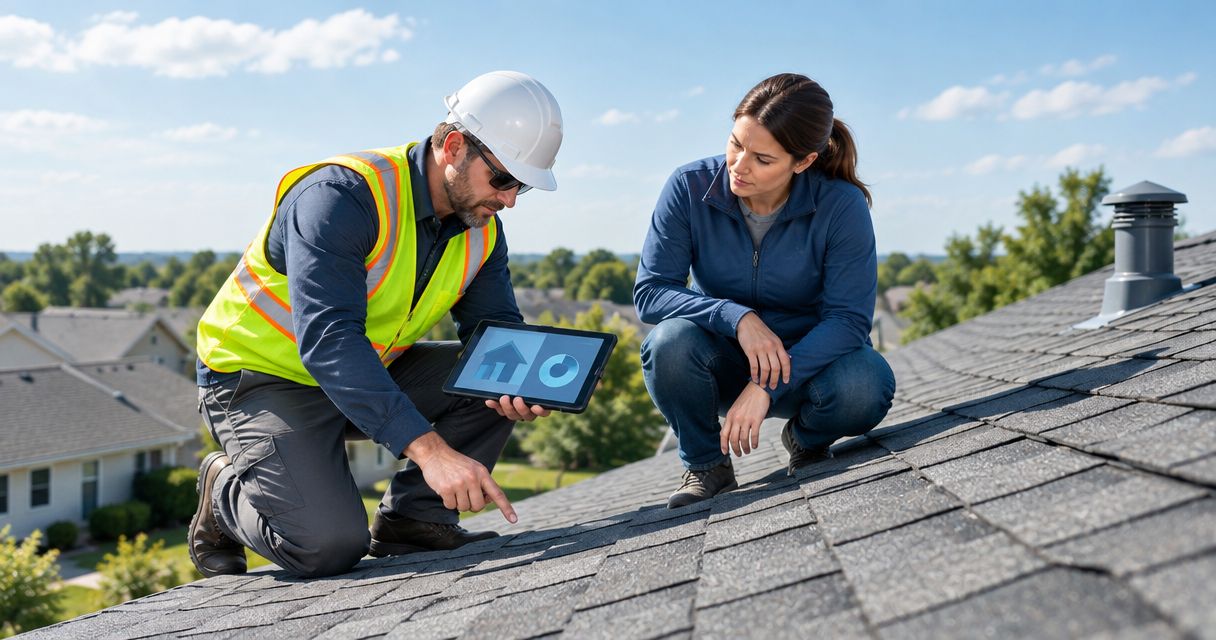
Yes, you can get a second opinion on a roof inspection report by asking another qualified roofing professional to review the findings and inspect the property. Request a written explanation of any disagreement before authorizing repairs or replacement. A second opinion does not automatically overturn an insurance decision, change a warranty determination, or extend a real-estate deadline.
- Can you get a second opinion on a roof inspection report? Yes—ask for documented findings, not another estimate alone.
- Compare inspection scope, photographs, access limitations, and repair recommendations before choosing the next step.
- Murray Roofing provides residential and commercial roof inspections in Lincoln and Omaha.
Can you get a second opinion on a roof inspection report?
You can request another inspection when the original report is unclear, recommends extensive work without supporting photographs, or conflicts with another professional's findings. Tell the second inspector exactly what decision you need to make: address a leak, evaluate storm damage, negotiate a purchase, or assess a replacement recommendation.
For Lincoln and Omaha properties, start with a contractor whose roofing services cover your residential or commercial roof. Ask whether the visit includes written findings and photographs suitable for the purpose you identified.
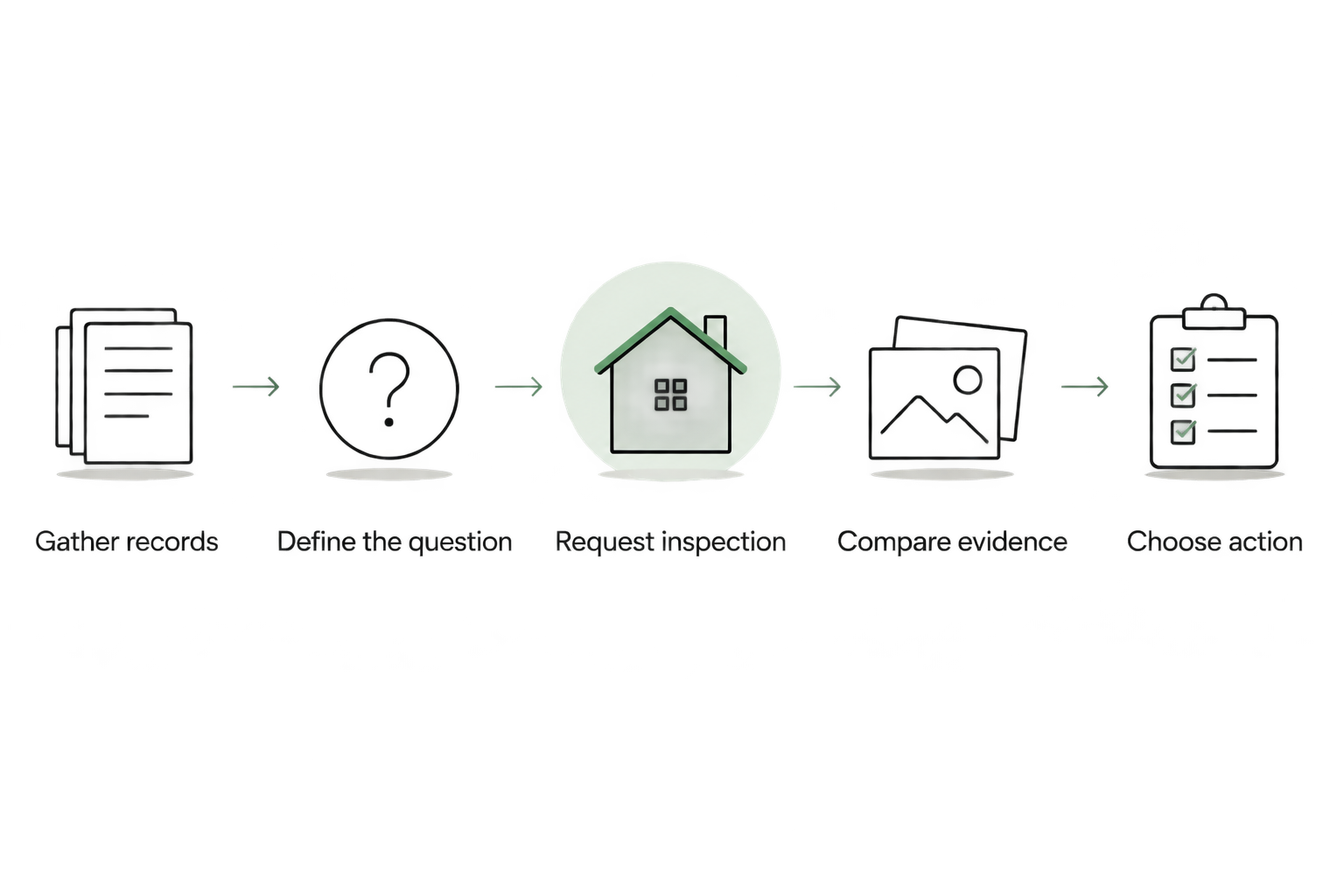
Use this process to make the second opinion useful:
- Gather records. Collect the original report, photographs, estimates, maintenance records, and relevant warranty documents.
- Define the question. Identify the disputed finding rather than asking only whether the roof is good or bad.
- Request inspection. Arrange access with the property owner and clarify which roof areas and interior spaces need review.
- Compare evidence. Match each recommendation to photographs, locations, observations, and stated limitations.
- Choose action. Request clarification where findings conflict, then decide what work or specialist review is justified.
A useful second report addresses the first report's conclusions directly. Another replacement proposal, without an explanation of roof condition, leaves the original question unanswered.
Why this matters
An inspection finding and a sales proposal serve different purposes. The finding describes an observed condition; the proposal describes work a contractor offers to perform. You need the connection between them before approving a substantial project.
For a 2026 purchase, repair, or replacement decision, ask what the evidence establishes now and what remains unconfirmed. A visible defect, a suspected leak source, and a prediction about remaining service life are different kinds of conclusions.
The strongest report explains both what the inspector found and what the inspector could not verify. That distinction helps you avoid treating an assumption as a confirmed diagnosis.
When should you request another roof inspection?
A second opinion is useful when the missing explanation affects your decision. It should resolve a specific uncertainty, not simply produce the answer you prefer.
Consider another inspection when:
- Replacement lacks support. The report recommends a full roof replacement but does not identify the conditions that make repair unsuitable.
- The scope is unclear. You cannot tell which roof sections, penetrations, drainage areas, or accessible interior spaces were examined.
- Reports conflict. Professionals disagree about the same condition without explaining why.
- Symptoms continue. Water entry or staining continues after earlier work, and the cause remains uncertain.
- Access was limited. Weather, roof conditions, or unavailable interior access prevented a complete evaluation.
- The decision has changed. A general condition assessment does not answer the questions needed for a purchase, claim, or major capital project.
Do not postpone professional attention to active water entry or an apparent safety concern while collecting opinions. Ask about protective measures and documentation while the underlying disagreement is reviewed. Stay off a damaged roof yourself.
Which kind of second opinion do you need?
Choose the review around the unresolved question. A document review cannot establish everything an on-site inspection can, and a roofing contractor's assessment does not replace a structural evaluation when structural concerns require specialist attention.
| Review approach | Best for | Main benefit | Limitation |
|---|---|---|---|
| Report review | Understanding an unclear report | Identifies unsupported conclusions and missing information | Cannot confirm current roof conditions without site observations |
| On-site roofing inspection | Checking damage and repair or replacement scope | Connects recommendations to conditions at the property | Concealed materials remain unverified unless separately investigated |
| Structural evaluation | Concerns about roof framing or structural movement | Addresses structural questions within the specialist's assignment | Does not replace a complete roofing condition assessment |
Ask the professional to define the assignment before the visit. If additional testing, opening of materials, or specialist involvement is proposed, request an explanation and obtain any necessary owner authorization first.
An inspection offered by a contractor who also performs repairs can inform your decision. However, ask the contractor to separate observed conditions from proposed work so you can evaluate each on its own merits.
Why roof inspection opinions vary
Different conclusions do not automatically mean someone is wrong. Compare the conditions and methods behind the reports before judging the recommendations.
- Inspection purpose: A general property inspection, leak investigation, and replacement assessment answer different questions.
- Access and visibility: An inspector who could not access a roof area or attic has a different evidence base from one who could.
- Inspection date: A 2026 report should identify its inspection date so you can check whether weather, repairs, or other changes occurred between visits.
- Roof areas examined: Findings about one slope or roof section do not necessarily describe the whole building.
- Testing performed: Visual observations and additional investigation provide different levels of information about concealed conditions.
- Recommendation assumptions: A proposal focused on addressing a specific defect differs from a plan addressing broader roof deterioration.
Ask each inspector to state these limits in writing. Compare matching scopes before comparing conclusions. Otherwise, a limited repair assessment and a whole-roof replacement plan can appear contradictory when they address different needs.
What should a useful second report include?
A useful second report lets you understand the recommendation without relying on a verbal explanation. Request enough detail to connect the condition, its location, and the proposed response.
Evidence you can identify
Ask for photographs tied to recognizable roof areas, with explanations of what each image shows. A close-up without location or context can be difficult to compare with the original report.
Keep inspection dates with the photographs. If your file includes several 2026 visits, preserve each report separately rather than combining images into an undated folder.
Clear observations and limits
The report should distinguish visible damage from suspected concealed damage. It should also state where access was unavailable and which conclusions require further investigation.
Ask whether the inspector observed the apparent source of water entry or inferred it from interior symptoms. That difference matters when deciding whether the proposed work addresses a confirmed defect or a suspected cause.
A reasoned recommendation
If replacement is recommended, ask why repair is unsuitable. If repair is recommended, ask what the work addresses and what roof conditions it leaves unchanged.
For a commercial building, request findings by roof area where appropriate. That makes it easier to connect the report to maintenance planning, tenant concerns, and a defined work scope without assuming every section needs identical treatment.
How do you compare conflicting repair and replacement recommendations?
Put the recommendations beside each other and compare the evidence before the proposed work. Do not assume the larger project is safer or that the smaller project is sufficient.
| Decision point | Repair recommendation | Replacement recommendation |
|---|---|---|
| Best for | Addressing a defined defect when surrounding conditions support repair | Addressing broader conditions when the report explains why repair is insufficient |
| Supporting evidence | Located damage and an explanation of the proposed correction | Documented conditions across the proposed replacement area |
| Main benefit | Targets the identified problem | Addresses the larger roof scope identified in the assessment |
| Main limitation | Leaves unrepaired roof sections in service | Commits you to a broader project that needs clear justification |
| Question to ask | What remains unresolved after this repair? | Why is a smaller scope unsuitable? |
Ask both professionals to explain the same disputed condition. If one report identifies widespread deterioration and the other discusses only a localized leak, request clarification rather than treating the recommendations as equivalent.
For Lincoln and Omaha homeowners and commercial property owners, Murray Roofing is an option for roof inspections and repair-or-replacement assessments. A second opinion is useful only when its reasoning helps you decide what to do.
Can a second roof inspection change an insurance decision?
A second roof inspection can provide additional documentation for an insurer to review, but it does not guarantee a changed coverage decision. Keep the contractor's condition assessment separate from the insurer's explanation of coverage under your policy.
Ask what evidence addresses the stated reason for the decision. Photographs of damage, an explanation of its location, and a defined repair scope serve a different purpose from an unsupported statement that the insurer should pay.
Preserve original reports, correspondence, and dates. If a claim is under review in 2026, check the applicable policy requirements and written deadlines rather than assuming another inspection pauses them.
Can you get another inspection before buying a house?
Yes, you can seek another roof inspection during a home purchase, subject to owner permission, access arrangements, and your contract deadlines. Ask your real-estate representative how the review fits the transaction before scheduling it.
Give the roofing professional the original inspection findings and the specific question affecting your purchase. You might need clarification about an apparent defect, the basis for a replacement recommendation, or the limitations of the original inspection.
A second roofing report does not itself amend the purchase agreement or require the seller to perform work. Use the findings to inform the discussion with your representative.
FAQ
Should I show the second roofer the first inspection report?
Yes, share the original report and identify the findings you want checked. Ask the second roofer to document independent observations and explain any agreement or disagreement.
Is another roof estimate the same as a second opinion?
No, an estimate proposes work, while a second opinion evaluates the findings behind that work. Ask for written condition findings as well as any proposed scope.
Can I get a second opinion if the first roofer says I need replacement?
Yes, you can ask another qualified roofing professional to assess whether the documented conditions justify replacement. Request an explanation of why repair is or is not suitable.
Who should review a commercial roof inspection report?
Choose a roofing professional familiar with the type of roof on the building and the question the report needs to answer. Structural concerns require an appropriately qualified specialist rather than a roofing proposal alone.
Does a second inspection guarantee insurance will cover my roof?
No, a second inspection does not guarantee insurance coverage. It provides condition documentation for consideration under the policy and the insurer’s review process.
Can Murray Roofing inspect a roof in Lincoln or Omaha?
Yes, Murray Roofing provides residential and commercial roof inspections in Lincoln and Omaha and offers free inspections. Explain whether you need a second opinion, a leak assessment, or help evaluating a replacement recommendation.
What should I do if the roof is leaking while I wait for another opinion?
Arrange prompt professional attention to active water entry rather than waiting for the disagreement to be resolved. Ask the contractor to document conditions and explain any protective measures before work begins.
One last thing
Ask the second inspector what evidence would change the recommendation. This question separates a testable conclusion from a fixed sales position: the answer should identify a condition, an access limitation, or an unresolved question—not simply repeat the proposed project.
Keep that explanation with the final report. It gives you a clearer basis for approving work and a record of why you made the decision.
Related guides
- Is it cheaper to repair a roof or replace it completely?
- How soon after a storm should you schedule a roof inspection?
- From commercial roof inspection to budget approval
Need clarity before approving roof work? Contact Murray Roofing to schedule an inspection in Lincoln or Omaha and discuss the findings in your existing report.