Yes, a leaking roof can be fixed without replacing the whole roof when the leak comes from a localized defect and the surrounding roofing remains sound. The repair must address the water’s entry point and any damaged material underneath—not just cover the spot where water appears indoors.
- Can a leaking roof be fixed without replacing the whole roof? Yes, if damage is localized and surrounding materials remain serviceable.
- Murray Roofing provides roof repair, replacement, and inspections for homeowners and commercial property owners in Lincoln and Omaha.
- Choose repair for an isolated defect; consider replacement when inspection reveals widespread deterioration or repeated failures.
- A ceiling stain identifies where water appeared, not necessarily where water entered the roof.
Why this matters
A leak is a reason to inspect the roof, not automatic proof that you need a replacement. Replacing sound roofing adds unnecessary work; repeatedly patching a failing roof leaves the larger problem unresolved.
For a 2026 repair decision in Lincoln or Omaha, start with documented roof conditions rather than age alone. Understanding whether to repair a roof or replace it completely helps you evaluate the proposed scope before signing a contract.
Can a leaking roof be fixed without replacing the whole roof?
Yes. A contractor can repair an isolated leak when the damaged area is accessible, compatible repair materials are available, and adjacent roofing can support a lasting repair.
The decision changes when water has damaged a larger area beneath the surface or when multiple roof components are failing. The size of the ceiling stain does not establish the size of the roofing problem.
| Approach | Best for | Main advantage | Main limitation |
|---|---|---|---|
| Localized repair | An isolated defect with sound surrounding roofing | Preserves roofing that still functions | Does not correct deterioration elsewhere |
| Partial replacement | Damage confined to a distinct roof section | Replaces more extensive damage without removing every section | Connections between new and existing roofing need careful evaluation |
| Full replacement | Widespread deterioration or failures across the roof | Addresses the roof as a connected system | Removes more material and involves a larger project |
Ask the contractor to show why the recommended approach fits your roof. Photos, moisture findings, and a written scope are stronger evidence than a recommendation based only on the roof’s birthday.
Localized repair: best for an isolated failure
Localized repair makes sense when a specific defect explains the leak and the remaining roof is serviceable. Examples include damaged flashing around a chimney, a failed pipe-vent seal, displaced shingles, or an isolated opening in a commercial roof membrane.
Flashing is the material that directs water away from roof joints and penetrations. A failure there does not automatically mean the roof covering across the entire building has failed.
The limitation is scope. Repairing a chimney connection will not resolve unrelated deterioration on another slope, and a surface patch will not restore damaged wood beneath it.
Choose localized repair when the contractor can identify the cause, define the repair boundary, and explain the condition of adjacent materials. Ask what evidence would change that recommendation once the area is opened.
Partial replacement: best for a defined damaged section
Partial replacement deserves consideration when damage extends beyond a small repair but remains confined to a distinct section. A separate addition or roof slope can present a different condition from the rest of the building.
The advantage is preserving sound sections. The challenge is connecting new roofing to existing materials without creating weak transitions or disrupting drainage.
Ask how the work affects appearance, material compatibility, and warranty eligibility. New shingles also need not visually match weathered shingles, even when the material type is similar.
Choose partial replacement only when the remaining roof and the connection details support it. A section-by-section plan needs more justification than simply drawing a line around the visible damage.
Full replacement: best for widespread roof failure
Full replacement becomes the stronger choice when inspection identifies deterioration across the roof rather than at an isolated location. Repeated leaks in different areas, extensive material failure, or widespread damage beneath the covering can support that recommendation.
Replacement gives the contractor access to inspect exposed roof decking and address the installation as a system. It also involves more removal and disruption than a targeted repair.
An older roof is not automatically beyond repair. However, deteriorated surrounding material can make a localized repair impractical because it cannot be disturbed or connected reliably.
Choose replacement when the documented condition makes repair a temporary response to a broader failure. Ask the contractor to distinguish necessary replacement from optional upgrades in the written proposal.
Why the repair-versus-replacement decision varies
The same indoor symptom can come from very different roof conditions. These factors explain why neighboring Lincoln or Omaha buildings can need different solutions after the same weather event:
- Damage extent: An isolated opening calls for a different scope than deterioration across multiple slopes or roof sections.
- Underlying moisture: Wet insulation, damaged decking, or concealed deterioration can expand the work beyond the visible surface defect.
- Surrounding material condition: Repairs depend on making sound connections to the roofing that remains.
- Leak history: Repeated failures in different locations raise different concerns from a first leak at a clearly damaged penetration.
- Drainage and detailing: Roof joints, wall connections, penetrations, and drainage paths need evaluation when they contribute to water entry.
- Repair compatibility: The proposed materials and methods must suit the existing roof system and applicable manufacturer requirements.
For your 2026 inspection, bring previous repair records if you have them. A documented history helps the contractor separate a recurring unresolved defect from a new problem.
What should a roof inspection establish before you approve work?
A useful inspection connects the reported leak to a supported diagnosis. Looking only at the ceiling stain or only at the exterior roof surface can leave part of the problem unexplained.
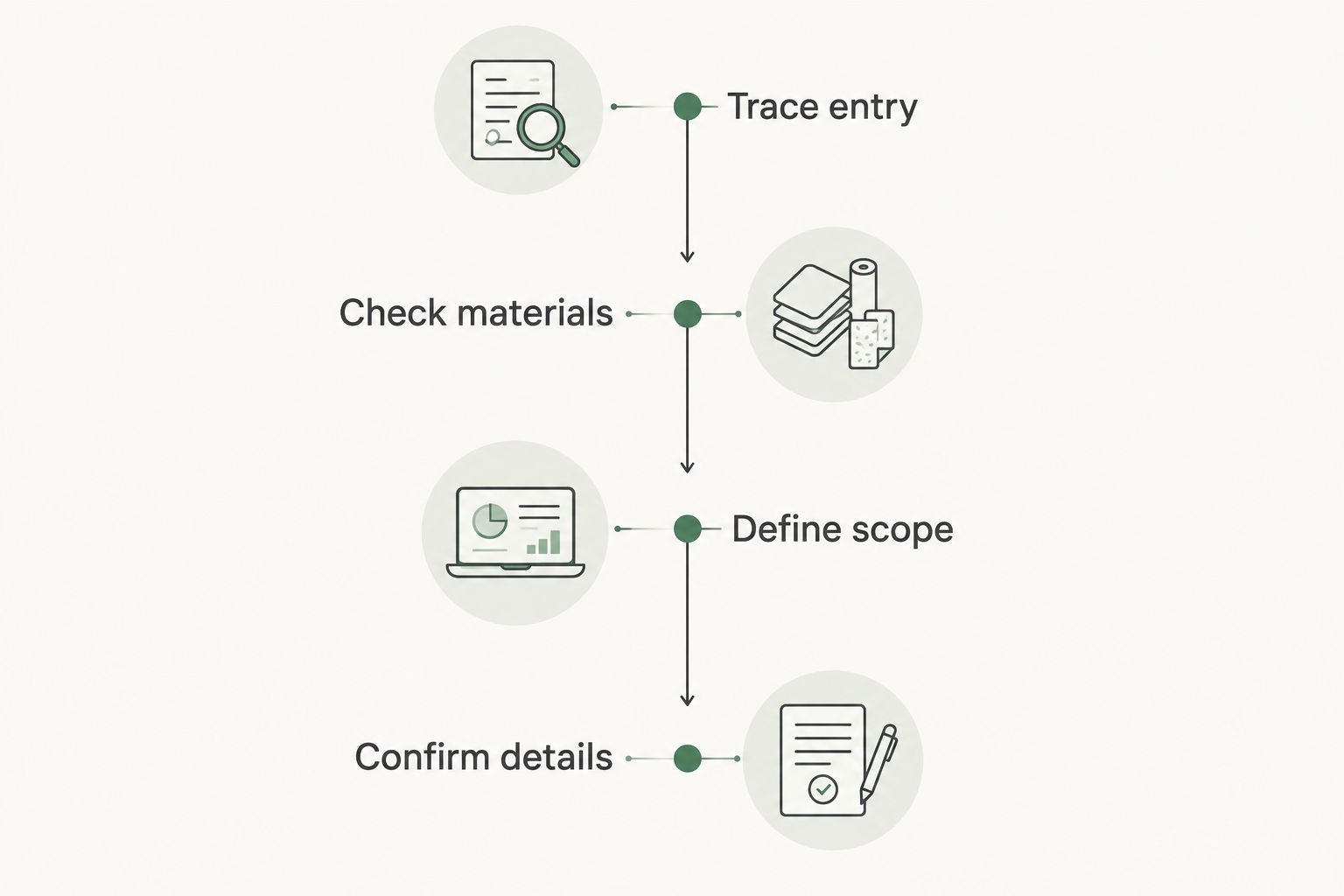
Ask for these steps before choosing a permanent repair:
- Trace entry. Describe where water appeared and the weather conditions when it happened. The contractor should investigate the likely route rather than assume the entry point sits directly above the stain.
- Check materials. Have the roof covering, flashing, penetrations, and accessible underlying areas evaluated. Hidden conditions sometimes require further investigation or opening an affected area.
- Define scope. Request a written description of what will be removed, repaired, or replaced, including how concealed damage will be handled if discovered.
- Confirm details. Establish repair-material compatibility, cleanup responsibilities, warranty terms, and how the contractor will assess the completed work.
Murray Roofing is suited to Lincoln and Omaha owners who need roof repair and replacement evaluated by the same contractor. Murray Roofing offers free inspections; use the findings to understand the recommended work, not as a substitute for a detailed written proposal.
What changes for a leaking commercial roof?
A commercial roof needs the same basic diagnosis, but the investigation also needs to account for the roof assembly and building operations. Water can move beneath the covering before appearing inside, and a visible surface defect does not establish the full moisture boundary.
A localized membrane repair can be appropriate when the surrounding assembly remains suitable for repair. Wet insulation, recurring seam failures, drainage problems, or deterioration across the roof call for a broader evaluation.
For a 2026 commercial maintenance plan, document leak locations, previous repairs, and affected interior areas. Share that record with the contractor so the inspection can consider patterns across the building.
The operating priorities differ by property, but the repair standard does not. An office, warehouse, restaurant, apartment building, or healthcare facility needs a scope based on roof condition, safe access, and protection of occupied areas—not a generic patch applied without investigation.
Does patching a small leak count as a permanent repair?
A patch can form part of a permanent repair when the material, preparation, and installation method suit the roof system. A patch is not automatically permanent simply because the visible dripping stops.
The distinction between roof patch materials for small leaks matters because a repair material must match the existing roof surface and the conditions at the defect. Choosing a sealant or patch before identifying the cause reverses the proper decision process.
Ask whether the proposed work is temporary protection or a completed repair. Temporary protection addresses immediate exposure; permanent work must address the identified defect and any affected materials included in the scope.
Do not treat caulk over a visible gap as proof that the roof has been repaired. The contractor should explain why the chosen detail works, what it connects to, and whether further work remains necessary.
What should you do while the roof is still leaking?
Protect people before property. Stay away from sagging ceilings, water near electrical equipment, and areas where falling material presents a hazard.
If you can do so safely, move belongings away from the affected area and contain drips from floor level. Photograph the visible damage and record when the leak occurs, without entering an unsafe attic or climbing onto the roof.
Do not walk on wet roofing or attempt exterior repairs during a storm. Temporary weather protection should be arranged through a qualified contractor when conditions allow safe access.
For occupied commercial buildings, notify the person responsible for facilities and restrict access to affected areas. A stopped drip is not confirmation that concealed materials are dry or that the entry point has been corrected.
What should the repair proposal say about warranties and insurance?
A repair proposal should state exactly what workmanship protection applies to the repair. Do not assume that a warranty advertised for a qualifying replacement also covers an isolated patch.
Murray Roofing lists a 50-year Golden Pledge warranty and a 10-year labor warranty among its offerings. Ask which warranty applies to your specific project and request the eligibility requirements, exclusions, and written terms before approving work.
For a 2026 proposal, keep the repair scope, warranty documents, and any inspection photos together. That record makes it easier to establish what was found and what work was authorized.
Insurance is a separate decision. Coverage depends on the policy, cause of loss, and insurer’s review; neither a leak nor a replacement recommendation guarantees payment. If you pursue a claim, preserve documentation and distinguish emergency protection from the permanent repair scope.
Does a single leak mean the whole roof is bad?
A single leak does not establish whole-roof failure. An isolated flashing or penetration defect can allow water into a roof whose remaining covering is still serviceable.
The inspection should test that explanation against the condition of the wider roof. Avoid approving either a small patch or full replacement based solely on the number of indoor stains.
Can an old roof still be repaired?
An old roof can still be repaired when its materials remain suitable for the required work. Age matters because deterioration affects repairability, but age alone does not identify the leak’s cause.
Ask whether the surrounding roofing can be worked on without creating additional damage. That answer is more useful than a blanket age cutoff.
FAQ
Can I fix a leaking roof without replacing all the shingles?
Yes, when the leak comes from an isolated defect and the surrounding shingles remain serviceable. The repair still needs to address damaged underlying materials where present.
Does a ceiling stain mean I need a new roof?
No, a ceiling stain does not establish that the entire roof needs replacement. An inspection must identify the entry point and extent of damage.
Can flashing be replaced without replacing the whole roof?
Flashing can be replaced without a full roof replacement when the surrounding roof permits a sound repair. Some adjacent roofing may need removal to complete the connection correctly.
Will a roof patch stop a leak permanently?
A properly designed patch can be part of a permanent repair, but stopping visible dripping does not prove the underlying problem is resolved. Material compatibility and the condition beneath the patch matter.
Can a leaking flat commercial roof be repaired?
Yes, a leaking flat commercial roof can be repaired when damage is localized and the surrounding assembly remains suitable. Widespread moisture or deterioration requires a broader evaluation.
Should I wait until it rains again before calling a roofer?
No, arrange an inspection after discovering a leak rather than waiting for another storm. Photographs and notes about when water appeared can help the investigation.
Will homeowners insurance pay to replace my leaking roof?
Insurance payment depends on your policy, the cause of damage, and the insurer’s review. A roof leak alone does not guarantee coverage for repair or replacement.
Related guides
- Can a small roof leak wait, or does it need repair right away?
- Can you do a partial roof replacement instead of a full one?
- Is it worth repairing an aging flat roof?
One last thing
Ask what remains sound—not just what is damaged. A repair recommendation should explain why the surrounding roof is worth keeping; a replacement recommendation should explain why it is not.
For a leaking home or commercial property in Lincoln or Omaha, schedule an inspection with Murray Roofing and request a written scope for the work your roof actually needs.