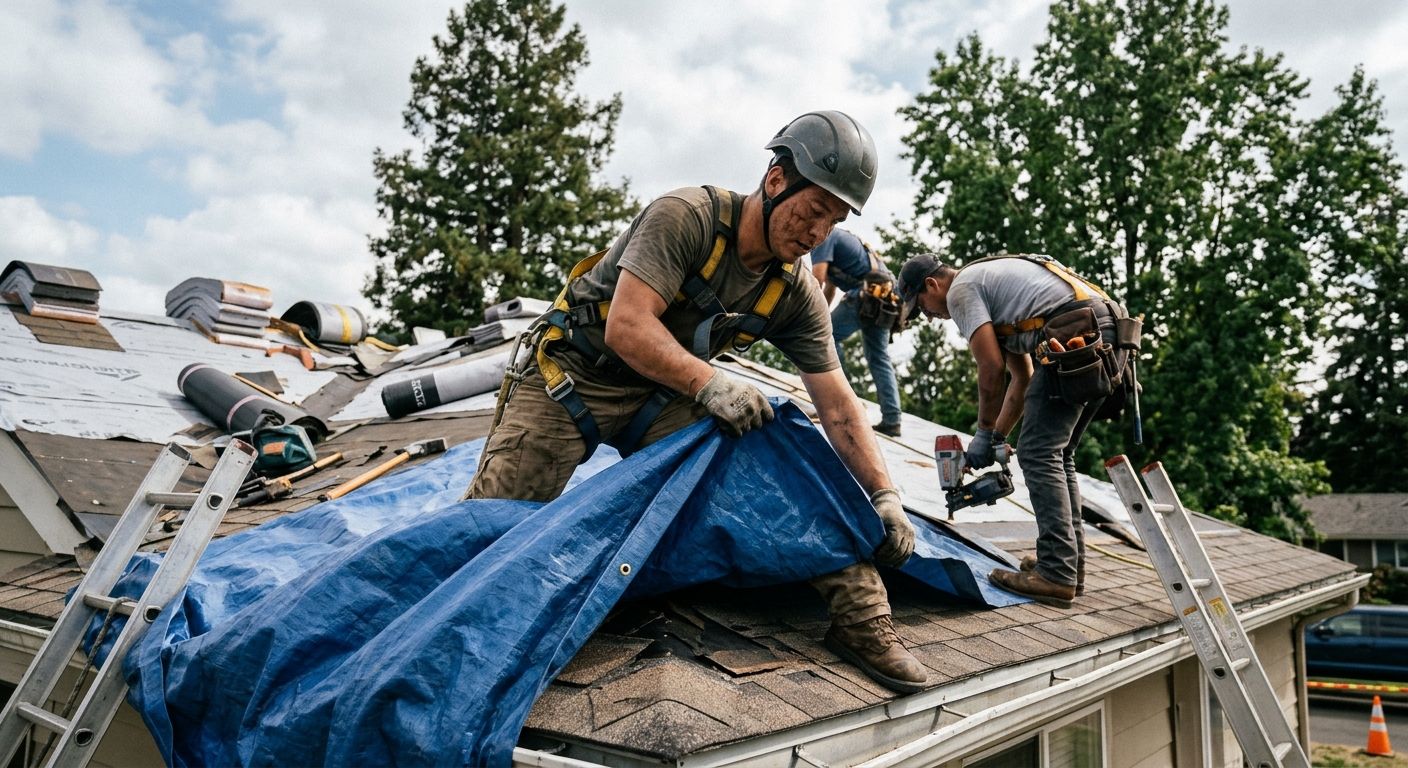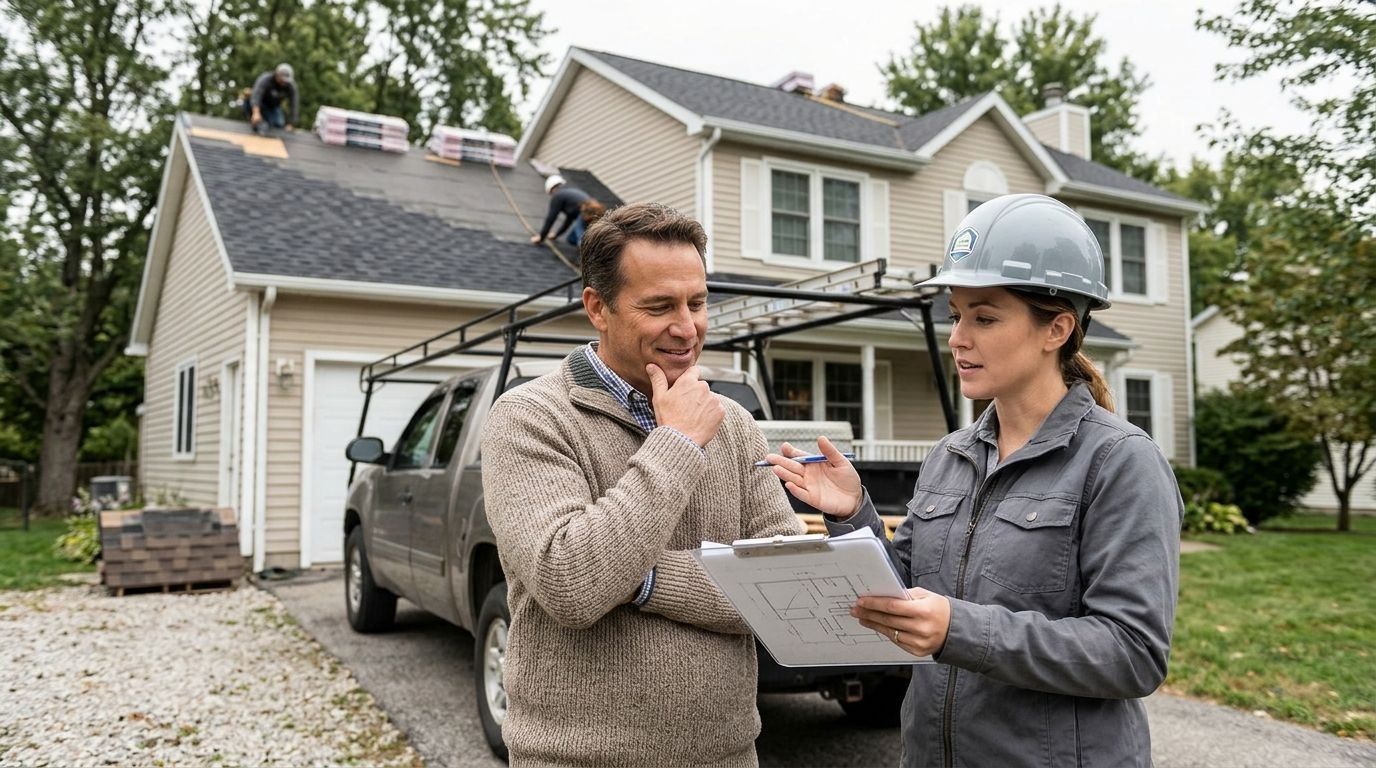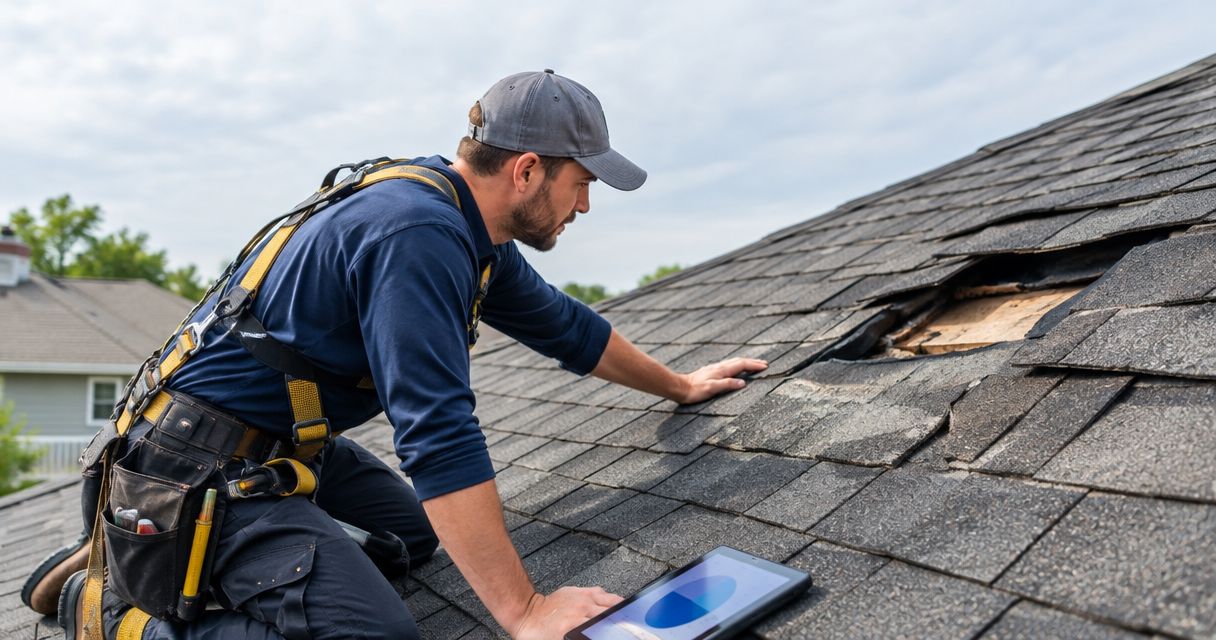
Emergency roof repair requires a property-specific estimate in 2026; the total depends on the damage, safe access, and whether the work temporarily stops water or completes a permanent repair. Emergency stabilization does not necessarily include the final roof repair, wet insulation removal, or interior restoration. Ask for those items separately before authorizing work.
- How much does emergency roof repair cost? Get a written estimate separating temporary protection from permanent repairs.
- Lincoln and Omaha property owners should compare repair scope, exclusions, and follow-up work—not just the total.
- Murray Roofing provides residential and commercial roof repair, inspections, and insurance-claim support.
- Insurance coverage depends on your policy and the cause of damage; a contractor cannot guarantee approval.
How much does emergency roof repair cost?
The useful number is the written total for your roof's actual damage—not an estimate that leaves the work undefined. A temporary measure to limit water entry and a completed repair solve different problems. Comparing them as if they were the same service gives you the wrong basis for a decision.
For a 2026 emergency roof repair quote in Lincoln or Omaha, request the following breakdown. The roof repair cost by damage type guide provides a related way to organize the damage discussion.
| Estimate component | What to have identified | What to clarify |
|---|---|---|
| Emergency assessment | Visible damage, suspected entry points, access conditions | Whether further investigation is necessary |
| Temporary protection | Proposed stabilization and its limits | Whether a return visit is required |
| Permanent repair | Materials, affected areas, and repair method | Whether this work is included or quoted separately |
| Concealed damage | How hidden deterioration will be documented | How you approve additional work |
| Related restoration | Wet insulation, decking, ceilings, or other affected components | Which contractor handles each item |
| Completion | Cleanup, documentation, and applicable warranty terms | What remains outside the agreement |
A clear estimate also identifies the property, the affected roof area, and the party authorizing the work. For commercial buildings, distinguish emergency authorization from approval of the permanent project. That prevents an urgent protective measure from becoming an unclear commitment to broader work.
Why this matters
An active leak creates pressure to approve the first proposed solution. Authorize necessary protection with a defined scope, then evaluate permanent work on documented findings. Urgency does not remove the need to know what you are buying.
Water can travel through a roof assembly before becoming visible indoors. A ceiling stain identifies an affected interior location, not necessarily the roof entry point. The repair needs to address the source rather than simply the spot above the stain.
In Lincoln and Omaha, describe what happened and what you can observe safely: wind, hail, snow or ice, active dripping, or damage around rooftop equipment. Those observations help frame the inspection; they do not establish the cause by themselves.
Temporary protection, permanent repair, or replacement?
Choose the response according to the condition of the roof and the immediate risk. These options are not interchangeable, and a temporary measure is not evidence that a permanent repair is complete.
| Option | Best for | Main benefit | Main limitation |
|---|---|---|---|
| Temporary protection | Limiting immediate water entry when permanent work cannot proceed safely | Addresses the immediate exposure | Requires a follow-up plan; does not resolve every underlying defect |
| Targeted permanent repair | Localized damage where surrounding roofing remains suitable for repair | Addresses a defined defect without replacing the entire roof | Leaves the remaining roof and its condition unchanged |
| Roof replacement | Damage or deterioration that makes isolated repairs unsuitable | Addresses the roof as a complete project | Involves a broader scope and more coordination than a localized repair |
Temporary protection: define the follow-up
Ask what the temporary work is intended to accomplish and what remains unresolved. Weather and access conditions affect what a roofing crew can safely do, and a protective measure should not be represented as a finished replacement for damaged roofing.
Request documentation showing the affected area and the protective work completed. Before the crew leaves, establish who will discuss the permanent scope with you and how additional findings will be communicated. Do not assume that the initial authorization includes every return visit.
Permanent repair: identify the actual defect
A permanent repair should name the component being repaired and explain how the work addresses water entry. Depending on the findings, that discussion can involve roof covering, flashing around penetrations, drainage details, or damaged underlying material.
Ask why the surrounding roof is suitable for repair. The benefit of targeted work is its limited scope; the limitation is that it does not renew unrelated aging or damaged areas. A repair recommendation needs an explanation of both the defect and the remaining roof condition.
Replacement: require evidence for the larger scope
An emergency does not automatically justify replacing the entire roof. Ask for photographs and an explanation of why isolated repair would not adequately address the documented condition.
If replacement is recommended, separate immediate protection from the replacement proposal. Review the roof assembly, removal work, affected underlying components, cleanup, and warranty terms. That gives you a clearer decision than a single total labeled emergency roofing.
Why emergency roof repair costs vary
A useful 2026 estimate connects the proposed work to observable conditions. These factors explain why different properties need different scopes:
- Damage extent: A localized defect and damage spread across several roof areas require different work.
- Roof system: Shingles, metal roofing, and low-slope membranes use different materials and repair methods.
- Access and safety: Roof height, slope, access routes, and conditions around the building affect how crews can work safely.
- Hidden damage: Deteriorated decking or wet insulation can expand the scope after investigation.
- Weather conditions: Rain, wind, ice, and wet surfaces affect safe access and the suitability of repair work.
- Temporary versus permanent work: Immediate protection and completed restoration are different deliverables and should be identified separately.
Ask the contractor to show which factors apply to your property. A statement that a roof is difficult or badly damaged is less useful than photographs, locations, and a written explanation of the work required.
What should you do before approving emergency work?
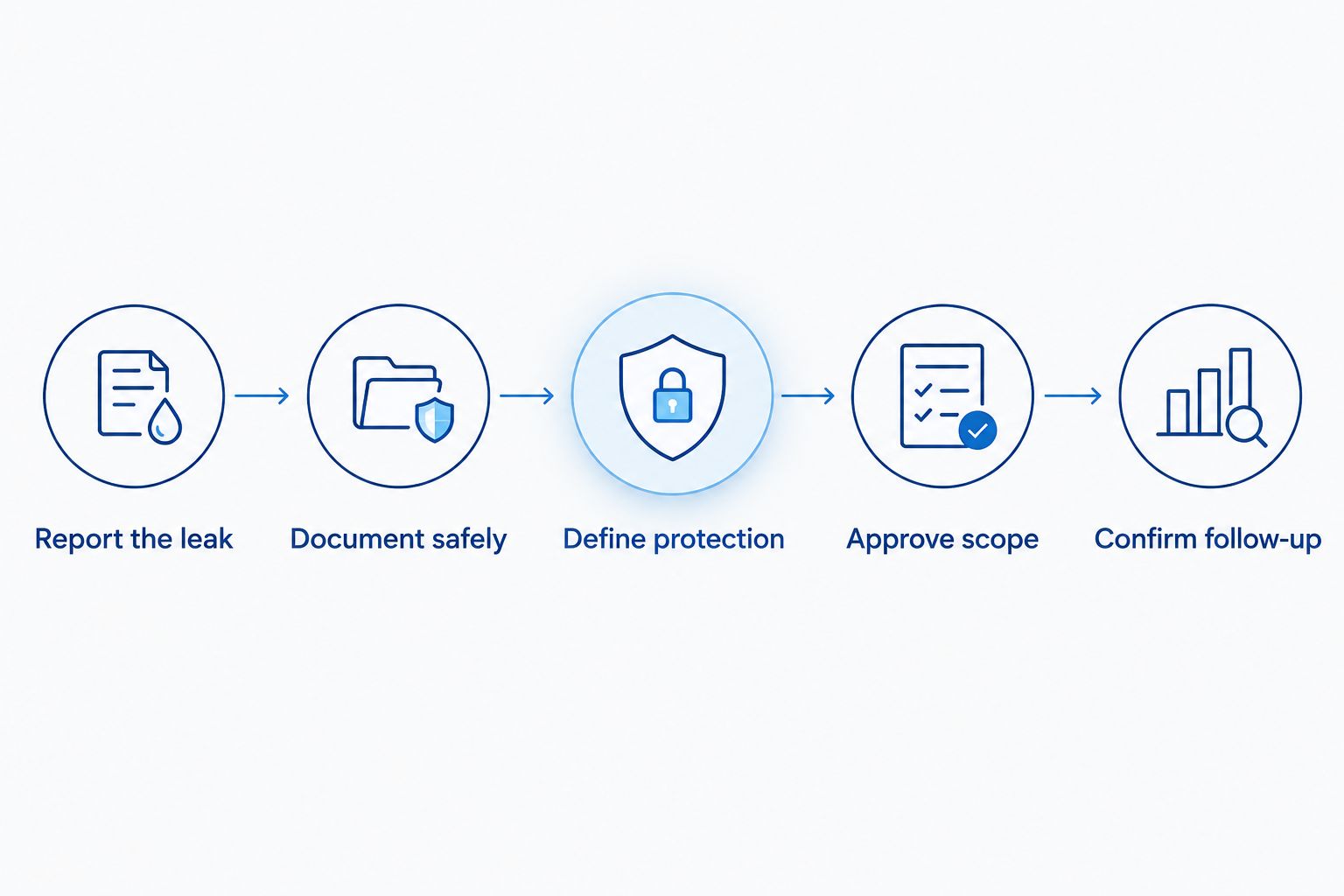
Your role is to protect people, communicate the problem, and establish authorization—not to diagnose or repair the roof yourself. Stay off the roof and keep people away from visibly damaged ceilings or areas where water is near electrical equipment.
- Report the leak. Give the property address, affected rooms or areas, and whether water is entering now. Explain any known access restrictions.
- Document safely. Take photographs from safe locations and record when you first noticed the problem. Preserve messages, estimates, and receipts.
- Define protection. Ask what immediate work is proposed, what it excludes, and whether it is temporary.
- Approve scope. Get written authorization terms, including how the contractor will seek approval for concealed damage or additional work.
- Confirm follow-up. Establish the next decision: further inspection, a permanent repair proposal, or a replacement assessment.
For a Lincoln homeowner, useful details include the room affected and what was happening when the leak appeared. For an Omaha commercial property manager, add the building contact, tenant access arrangements, and any operational restrictions. Keep observations separate from assumptions about the cause.
What changes for commercial properties?
Commercial emergency work needs a clear authorization path as well as a repair scope. Identify who can approve immediate protection, who must approve permanent work, and who communicates with tenants or occupants.
The same principle applies to offices, restaurants, warehouses, apartments, churches, and other commercial properties: assess the roof system and affected areas rather than making assumptions from the building's use. Ask whether water has affected insulation, interior finishes, equipment, or occupied space, and identify which items fall outside the roofing agreement.
For a 2026 commercial repair proposal, request roof-location references that your facilities team can understand. Photographs tied to identifiable areas are more useful for follow-up than an undifferentiated description of leaks. Keep that record with the estimate and completion documents.
Will insurance cover emergency roof repairs?
Insurance coverage depends on the policy, the cause of damage, and the insurer's claim decision. A roofing contractor can document roof conditions and proposed work, but cannot promise coverage or reimbursement.
Contact your insurer promptly for claim instructions and questions about required documentation. Ask about emergency protective work, your deductible, exclusions, and how additional damage should be reported. Do not assume that permission to submit a claim means the proposed roof work is approved.
Keep photographs, invoices, inspection findings, and written communications together. If additional damage is discovered, ask the contractor to document it before the scope changes, subject to immediate safety needs. A clear record supports review without guaranteeing the outcome.
What should you check about financing and warranties?
Financing changes how you pay; it does not establish whether a repair or replacement is necessary. Review the financing agreement separately from the roofing proposal, including its payment obligations and approval terms. Do not treat an application as approval.
Murray Roofing offers financing and roofing inspections. Ask for the repair findings first, then discuss payment options for the documented scope. Choose the work because it addresses the roof condition, not because a payment option is offered.
Warranty terms also need a separate check. Murray Roofing lists a 50-year Golden Pledge warranty and a 10-year labor warranty among its trust signals; do not assume either applies to an emergency patch or every proposed project. Ask which warranty applies to your specific work, what it covers, and what exclusions or eligibility conditions apply.
Who should inspect a leaking roof in Lincoln or Omaha?
Murray Roofing serves Lincoln and Omaha homeowners and commercial property owners who need roof inspection, repair, or replacement. The contractor also provides insurance-claim support, which is relevant when roof damage requires documentation for an insurer.
The useful next step is an inspection that distinguishes immediate protection from permanent work. Murray Roofing offers free inspections; confirm the appointment arrangements and request a written scope for any proposed repair. An inspection offer is not a promise of immediate repair, insurance approval, or a particular project outcome.
FAQ
How much does emergency roof repair cost in Lincoln or Omaha in 2026?
Emergency roof repair requires a property-specific written estimate based on damage, access, roof system, and the proposed work. Ask for temporary protection, permanent repairs, and related restoration to be identified separately.
Is an emergency roof patch the same as a permanent repair?
No. Temporary protection addresses immediate exposure, while a permanent repair addresses the documented defect with an appropriate repair method. Confirm what follow-up work remains before approving the initial scope.
Will homeowners insurance pay for an emergency roof repair?
Coverage depends on your policy, the cause of damage, and the insurer’s decision. Contact your insurer for instructions and retain photographs, inspection findings, and receipts; a contractor cannot guarantee reimbursement.
Can a roofer repair my roof while it is raining?
Whether roof work can proceed depends on safe access, weather conditions, the roof system, and the repair method. Do not assume that permanent work can proceed during active rain; ask what protective response is appropriate.
Does a roof leak mean I need a full replacement?
No. A leak alone does not establish that the entire roof needs replacement. Ask for documented findings explaining whether localized repair is suitable and why broader work is recommended.
Does Murray Roofing offer inspections for emergency roof problems?
Murray Roofing offers free roof inspections and residential and commercial roof repair services. Request an inspection and confirm appointment arrangements, immediate concerns, and the scope of any proposed work.
One last thing
The stain you can see is not a reliable map of the repair you need. Before approving permanent work, ask the contractor to explain the connection between the observed roof defect, the water's path, and the proposed repair.
Keep your 2026 inspection photographs, approved scope, change authorizations, and completion records together. If the problem returns, those records help distinguish an unresolved issue from damage in another area.
Related guides
- Can you repair a roof in the rain or wet weather?
- Is it cheaper to repair a roof or replace it completely?
- Can you file an insurance claim for an old roof?
- From roof estimate to financing approval
Schedule an inspection with Murray Roofing and request a written price for the work your roof actually needs.