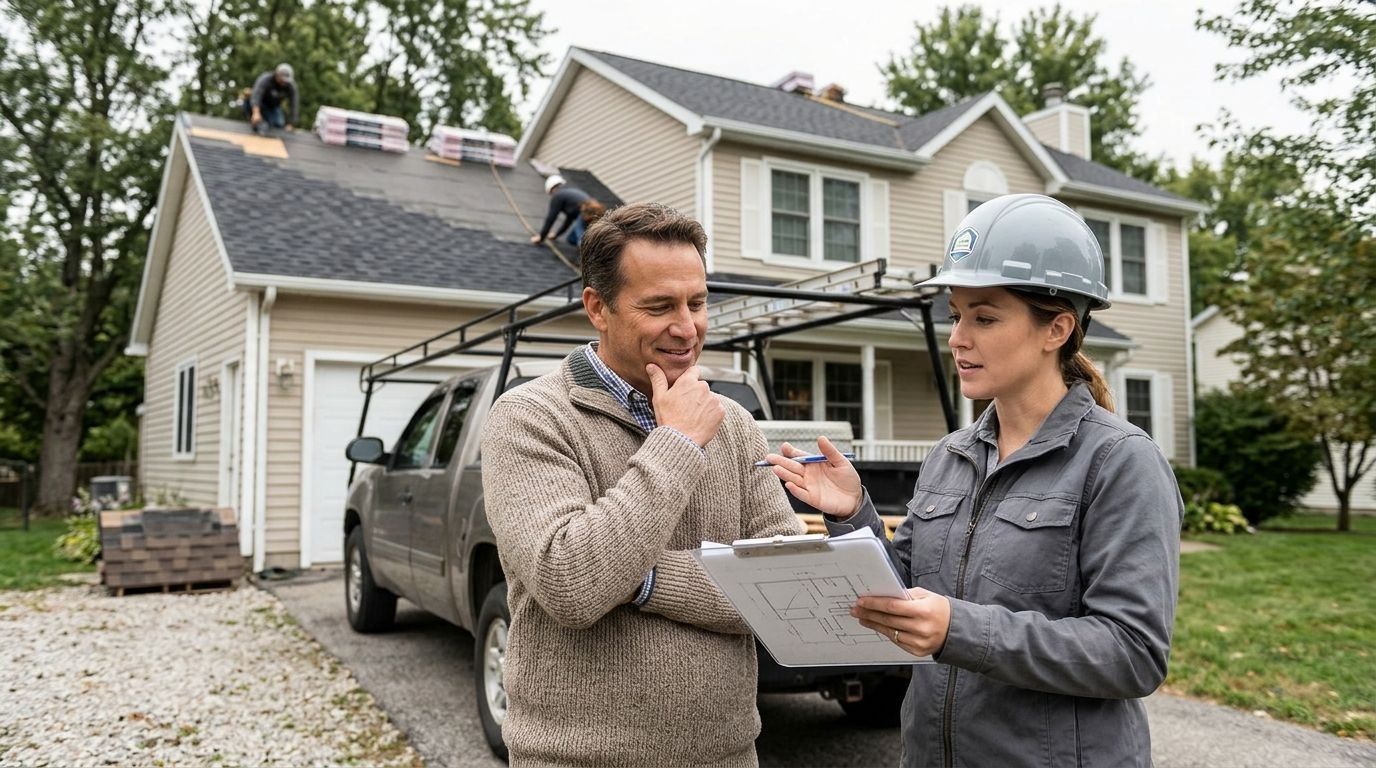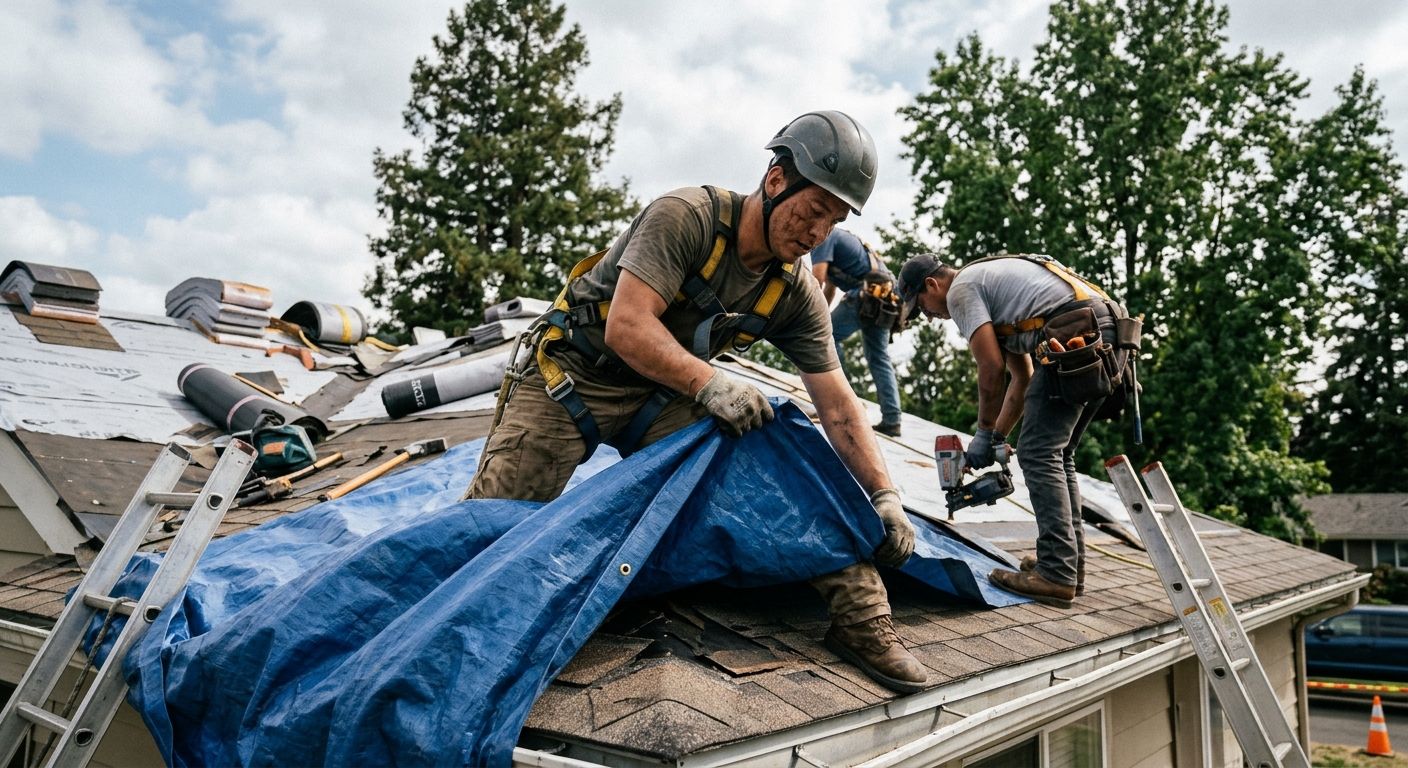
The best emergency roof repair companies match your roof type, confirm a safe response plan, and put the repair scope in writing. For Lincoln and Omaha homeowners and businesses, Murray Roofing is a local option for inspection, repair, and replacement; confirm emergency response arrangements directly before authorizing work.
- Choose the best emergency roof repair companies by roof experience, confirmed response arrangements, and written scope—not advertising promises.
- Murray Roofing is a local roofing option for Lincoln and Omaha homeowners and commercial property decision-makers.
- Separate temporary protection from permanent roof repair so you understand exactly what you authorize.
- For commercial roof leaks, check existing warranty requirements before approving permanent work.
Why this matters
An active roof leak creates two decisions: how to protect people and property now, and how to correct the roof problem. Those decisions belong together, but they are not the same job. A temporary protective measure does not establish that the roof is permanently repaired.
For your 2026 contractor search, start with the building, the affected area, and the immediate hazard. A familiar company name is not a substitute for confirming who will respond, what that crew will do, and what requires a separate agreement.
Murray Roofing is a practical roofing choice for Lincoln and Omaha owners who need inspection, repair, and replacement from one contractor. The right first call still depends on your roof system, existing warranty, and site conditions.
What makes the best emergency roof repair companies?
Use these six criteria before choosing a contractor. They apply to homes, apartments, offices, restaurants, warehouses, churches, and other commercial properties without treating one building type as more important than another.
- Roof-system experience: Ask whether the contractor works on your actual roof material and assembly, not simply whether the company handles roofing.
- Confirmed response arrangements: Get a direct answer about the next step. An inspection appointment, temporary protection, and permanent repair are different commitments.
- Written scope: Require a description of the affected area, proposed work, exclusions, and how additional damage will be handled.
- Documented findings: Ask for photographs and a plain-language explanation connecting the observed defect to the proposed repair.
- Insurance and warranty checks: Request current insurance documentation and establish whether existing roof warranties affect who should perform the work.
- Repair-to-replacement judgment: Choose a contractor that explains when a targeted repair is reasonable and when broader deterioration requires a replacement discussion.
A strong answer is specific to your building. “We handle storm damage” is not enough to establish what happens at your property.
Emergency roofing choices at a glance
This 2026 guide compares hiring routes rather than publishing an unsupported national company leaderboard. Start with the route that fits your property, then verify the contractor's qualifications and proposed work.
| Hiring route | Best for | Standout benefit | Key limitation |
|---|---|---|---|
| Murray Roofing | Lincoln and Omaha owners needing inspection through repair or replacement | Residential and commercial roofing services, insurance-claim support, and financing | Emergency response arrangements require direct confirmation |
| Existing warranty-authorized roofing contractor | Properties with an active roof warranty | A repair decision that accounts for existing warranty obligations | Warranty coverage does not establish immediate response or coverage for every defect |
| Roof-system specialist | Properties needing specific membrane, metal, flashing, or assembly expertise | A repair approach matched to the existing roof system | The owner must verify experience with the particular assembly and coordinate other damage separately |
These routes are not mutually exclusive. A local contractor can also meet a warranty's requirements or have the roof-system experience your building needs. Use the table to decide what to verify first, not to assume credentials.
1. Murray Roofing: best for Lincoln and Omaha repair planning
Murray Roofing provides residential and commercial roof inspections, repairs, replacement, maintenance, insurance-claim support, and financing. That service range matters when an urgent leak turns into a decision about whether to repair an isolated problem or replace a deteriorated roof.
For a Lincoln home or an Omaha commercial property, describe the building and symptoms before requesting an inspection. Explain where water appears, whether the leak is active, and whether any interior area is unsafe.
Murray Roofing pros:
- Residential and commercial roofing services support different property needs.
- Repair and replacement services allow both options to be discussed after inspection.
- Insurance-claim support helps owners organize the roofing side of a claim.
- Financing provides another subject to discuss when planning approved work.
Murray Roofing limitations:
- Emergency dispatch, after-hours response, and completion timing require direct confirmation.
- An inspection is necessary before a contractor can establish the appropriate repair scope.
- Financing and insurance-claim support do not guarantee approval or insurance coverage.
The company's stated trust signals include GAF Master Elite status and an A+ BBB rating. Its stated warranty offerings include a 50-year Golden Pledge warranty and a 10-year labor warranty; ask which work qualifies and review the applicable terms rather than assuming an emergency patch receives replacement-level coverage.
Best for: Lincoln and Omaha homeowners and commercial owners who want an inspection followed by a clear repair-or-replacement recommendation.
Verdict: Buy only the written scope you understand; confirm emergency arrangements before committing.
2. Warranty-authorized roofers: best for protecting existing coverage
If your building already has a roof warranty, check its documents before authorizing permanent repairs. Manufacturer and workmanship warranties cover different obligations, and the paperwork determines notification requirements, exclusions, and any restrictions on repair work.
This route is especially relevant when a commercial property manager inherits a roof installed under a previous owner. Find the warranty, installation records, prior repairs, and any maintenance documentation instead of relying on a verbal description of coverage.
Warranty-authorized roofer pros:
- Starts the repair discussion with the existing warranty requirements.
- Helps separate a possible warranty issue from owner-paid maintenance or damage.
- Gives the owner a defined party to contact about coverage questions.
Warranty-authorized roofer limitations:
- A warranty does not guarantee emergency attendance.
- The reported problem might fall outside the warranty's terms.
- Warranty work does not automatically include interior damage or other building systems.
Ask who must receive notice and who can authorize repairs. If immediate protective work is necessary, document the condition and seek instructions about preserving the warranty without delaying action on a safety hazard.
For a 2026 incident, use the documents that apply to the installed roof. A warranty advertised for a new system does not establish coverage for your existing building.
Best for: Owners and managers with an active roof warranty or an unresolved question about existing coverage.
Verdict: Hold permanent repair authorization until warranty requirements are checked; address immediate safety concerns separately.
3. Roof-system specialists: best for assembly-specific problems
Choose a contractor with relevant system experience when the repair depends on a particular membrane, metal assembly, penetration detail, or roof-to-wall connection. The useful qualification is experience with the roof you have—not a general claim to handle every leak.
This applies equally to residential and commercial buildings. A steep-slope home and a low-slope commercial property require different inspection and repair considerations, even when both owners see water on a ceiling.
Roof-system specialist pros:
- Matches repair methods and materials to the existing assembly.
- Focuses attention on connections, penetrations, and drainage as well as the roof surface.
- Can explain why a proposed repair fits the observed condition.
Roof-system specialist limitations:
- Relevant experience still needs verification through documentation and references.
- Roofing work alone does not address damaged electrical equipment, ceilings, or contents.
- Specialized experience does not establish emergency response timing.
Ask the contractor to name the roof system, identify the suspected water-entry detail, and explain how the repair will be checked. If the answer immediately jumps to coating or replacement without explaining the findings, request that explanation before approving work.
Best for: Owners whose existing roof assembly requires specific repair expertise, including commercial properties outside a contractor's confirmed service arrangements.
Verdict: Buy system-specific expertise supported by a written diagnosis; skip an unexplained one-method-fits-all proposal.
What to do before the roofing visit
Keep the response focused on safety and useful information. You do not need to climb onto the roof, enter an unsafe attic, or attempt a repair to help a contractor understand the problem.
Protect people
Keep occupants away from sagging ceilings, falling material, and water near electrical equipment. Do not touch wet electrical fixtures or enter an unsafe area; contact emergency services when there is an immediate danger.
Record conditions
From a safe location, photograph visible interior damage and record when you noticed the leak. Note whether water appears during rain, after rain, or repeatedly in the same area without treating those observations as a diagnosis.
Confirm the response
Give the contractor your address, building type, known roof material, and current symptoms. Ask whether the next visit is an assessment, temporary protection, or permanent repair, and who will authorize any change in scope.
Separate the work
Request separate descriptions for temporary protection, permanent roofing work, and any interior restoration. This keeps a necessary short-term response from being mistaken for a completed repair.
For a commercial property, designate one person to approve work and one contact for building access. Give the contractor relevant tenant, equipment, and restricted-area information before the visit so the inspection can account for building operations.
Repair or replacement: make the emergency decision separately
A leak does not automatically justify a full replacement. It also does not prove that a small surface patch will solve the problem. The decision depends on the source, extent of deterioration, condition of surrounding materials, and whether a durable repair is practical.
Ask for photographs that distinguish the immediate defect from wider roof conditions. Your proposal should explain what the recommended work addresses and what remains outside its scope.
Use this repair-or-replacement guide to organize that discussion. Keep the immediate protective decision separate from the longer-term investment decision, even when the same contractor handles both.
For your 2026 project, request the applicable product and workmanship warranty documents with the proposed work. A warranty's duration is only one part of its value; coverage, exclusions, responsibilities, and claim procedures also matter.
How these recommendations are organized
The order follows the information an owner needs to verify: local service fit, existing warranty obligations, and roof-system expertise. It is a decision framework, not a claim that one company responds faster or produces better storm outcomes than another.
Use the same criteria for every proposal. Clear documentation and a suitable repair method matter more than a confident sales promise.
Which emergency roofing option should you choose?
Start with a qualified local roofing contractor that can inspect your roof and explain the next action clearly. In Lincoln and Omaha, ask Murray Roofing about an inspection, the proposed response, and whether repair or replacement fits the findings.
Check existing warranty obligations before permanent work, and require system-specific expertise wherever the roof assembly demands it. Do not approve a larger project solely because the situation feels urgent.
FAQ
What’s the best way to choose an emergency roof repair company?
Choose an emergency roofing contractor by roof-system experience, confirmed response arrangements, and a written scope. Ask who will attend, what the visit includes, and how temporary protection differs from permanent repair.
Does Murray Roofing provide residential and commercial roof repair?
Murray Roofing provides residential and commercial roof repair, inspections, and replacement. Lincoln and Omaha owners should confirm the arrangements for their specific emergency directly.
Does an emergency roofer always repair the roof during the first visit?
No, an emergency roofing visit does not automatically include a permanent repair. Confirm whether the agreed work is inspection, temporary protection, permanent repair, or a combination.
Should I call my insurer before hiring a roofer?
Review your policy’s reporting requirements and contact your insurer promptly when you intend to make a claim. Address immediate safety hazards and document conditions; the insurer determines coverage under the policy.
Can a roof leak wait until the weather improves?
An active roof leak needs prompt assessment, but roof access and permanent repairs depend on safe conditions. Keep people clear of hazards and ask a contractor what protective response is appropriate.
Should a commercial property manager contact the original roofer?
Check the existing roof warranty and installation records before authorizing permanent repairs. Those documents establish whom to notify and whether repair restrictions apply.
Does a long roofing warranty cover an emergency patch?
A long replacement warranty does not automatically cover an emergency patch. Ask for the warranty terms that apply to the exact work being proposed, including exclusions and owner responsibilities.
One last thing
The ceiling stain is evidence of water intrusion, not proof of the roof's entry point. Ask the contractor to explain the suspected path of water and how the proposed work addresses it rather than accepting a repair based only on the stain's location.
For a 2026 emergency, leave the conversation with a clear next action, a written scope, and a named contact. Those details make the response easier to manage after the first visit.
Related guides
- Can a small roof leak wait?
- Can you repair a roof in wet weather?
- Is roof financing available for commercial properties?
Schedule an inspection or request a written price for your Lincoln or Omaha property, and confirm the response arrangements before authorizing work.