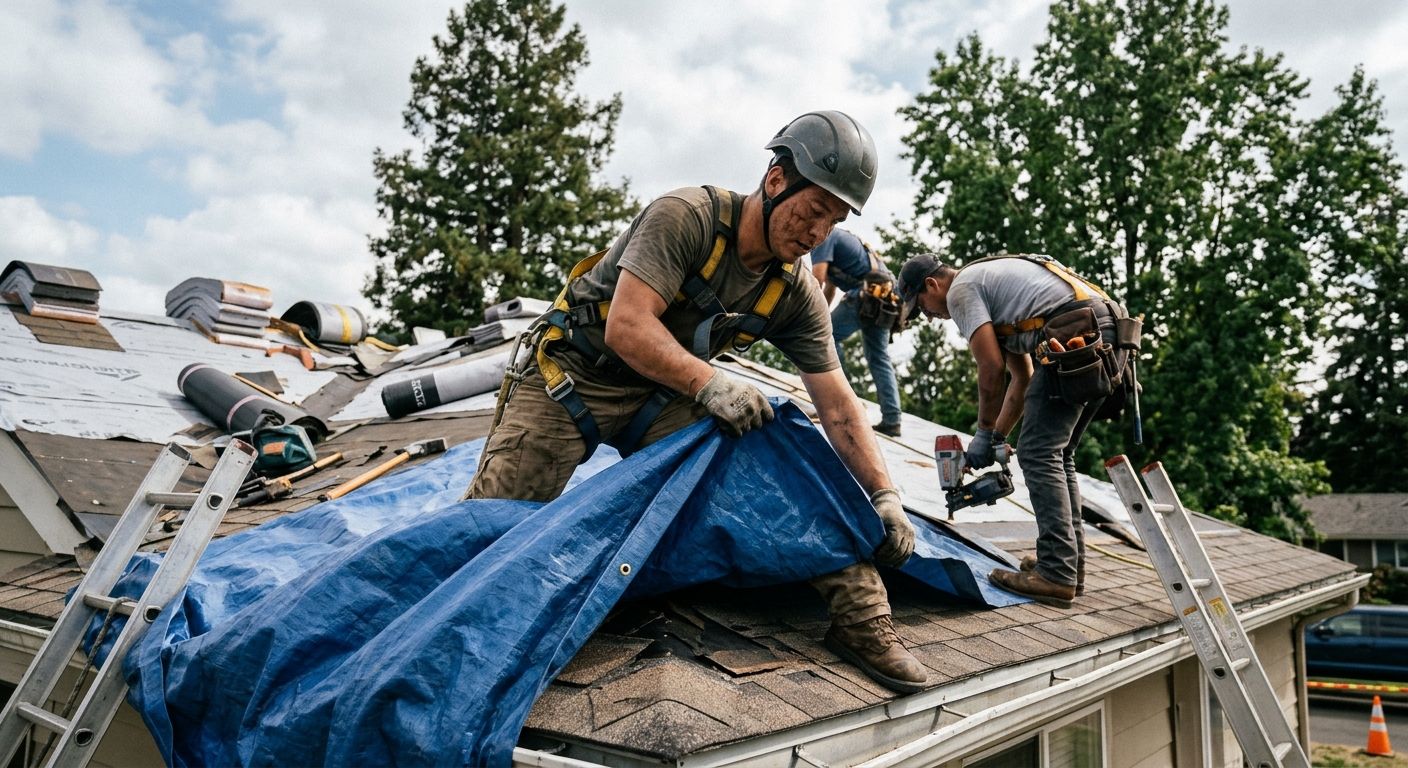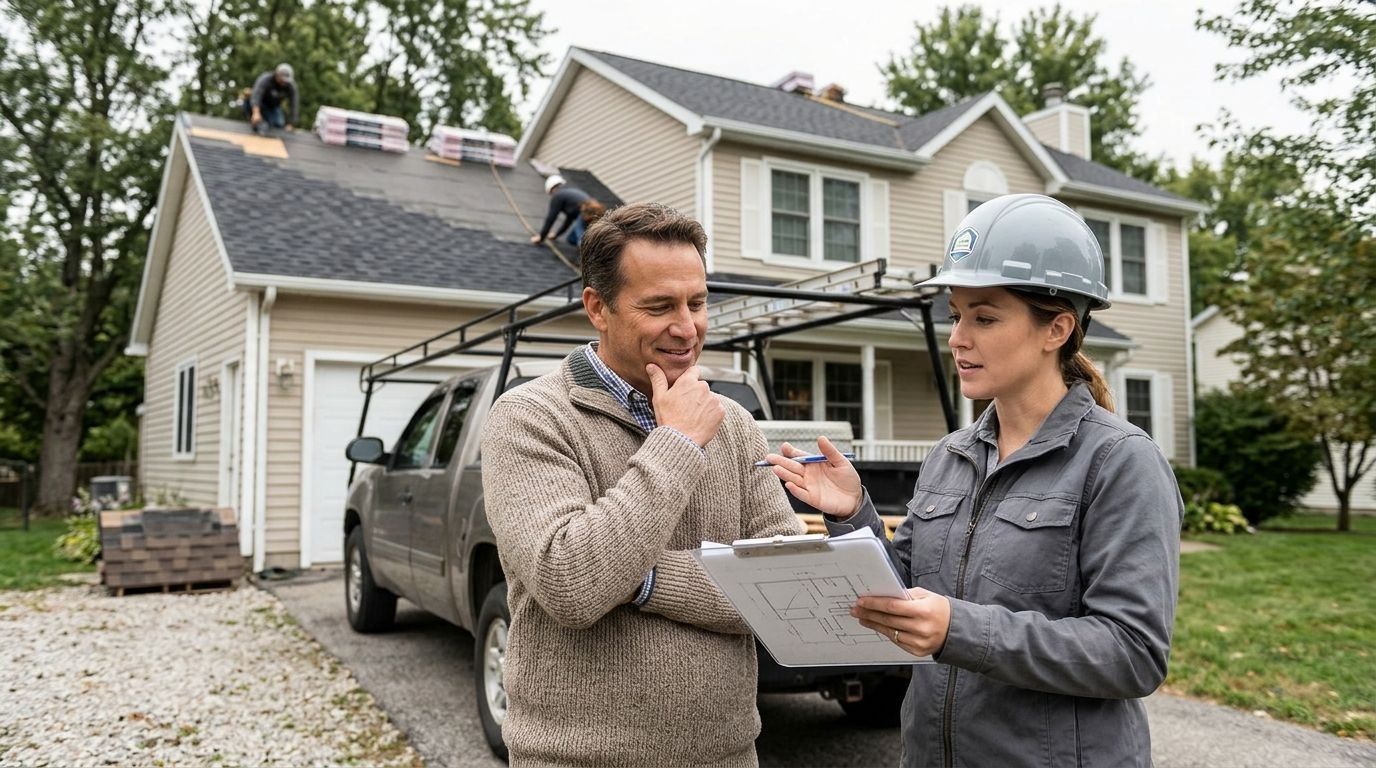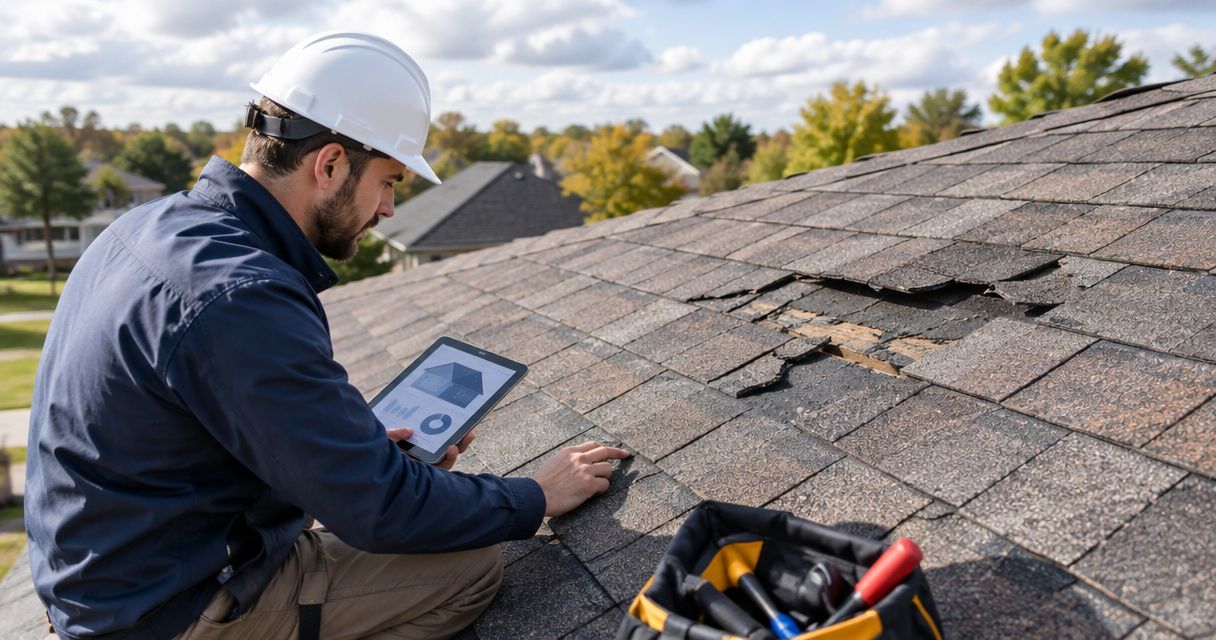
Roof repair cost by damage type depends on the repair scope, not the damage label alone. For Lincoln and Omaha homeowners and commercial property owners planning work in 2026, the useful comparison is what each repair must address: the roof covering, water-entry details, underlying materials, and access. Murray Roofing provides residential and commercial roof inspections, repairs, and replacements.
- Compare roof repair cost by damage type using documented scope, not the visible symptom alone.
- Murray Roofing serves Lincoln and Omaha homeowners and businesses needing roof inspections, repair, or replacement.
- A missing shingle, leaking flashing, and wet roof insulation require different repair scopes.
- Request an itemized roof repair quote that explains hidden damage, exclusions, and warranty coverage.
Roof repair benchmarks: compare the scope first
A useful 2026 roof repair comparison separates the visible defect from the work needed to correct it. The table below identifies what belongs in each repair scope before you compare estimates.
| Damage type | What the repair needs to address | What expands the scope | What your estimate should explain |
|---|---|---|---|
| Overall: any roof damage | Identify the cause, define the affected area, and specify a compatible repair | Damage below the surface, difficult access, or deterioration beyond the visible defect | Diagnosis, materials, affected area, exclusions, and treatment of concealed damage |
| Missing or damaged shingles | Restore damaged roof covering and inspect the exposed area | Damaged underlayment, deteriorated decking, or damage extending into adjacent shingles | Which materials are being replaced and whether underlying layers need work |
| Flashing damage | Correct water-entry details at roof intersections and penetrations | Deterioration around the opening or failure of adjoining roof materials | Whether flashing is repaired or replaced and how adjoining materials are addressed |
| Roof leak | Find and repair the entry point rather than treating the ceiling stain | Wet insulation, damaged decking, or multiple entry points | The identified source, supporting photographs, and any interior-work exclusions |
| Hail or wind damage | Document affected materials and establish a repairable scope | Damage across multiple roof areas or loss of the covering's ability to function | What damage was observed and why repair or replacement is recommended |
| Commercial membrane damage | Address damaged membrane, seams, and surrounding roof conditions | Wet insulation, damaged substrate, or defects extending beyond the opening | Repair compatibility, affected layers, and whether moisture assessment is included |
| Drainage-related damage | Investigate drains, gutters, and the roof conditions contributing to retained water | Problems with roof slope, drainage layout, or underlying materials | Whether work corrects an obstruction, a damaged component, or a broader drainage issue |
| Deteriorated roof decking | Replace affected decking and restore the roof assembly above it | Deterioration extending beyond the initially exposed area | How additional concealed damage is documented and approved |
The key distinction is surface damage versus damage extending into the roof assembly. A localized covering defect and a repair involving wet insulation or deteriorated decking are different jobs, even when both appear indoors as a ceiling stain.
These comparisons describe repair scope for residential and commercial roofs, with guidance intended for Lincoln and Omaha property owners in 2026. They do not establish a local average or rank damage types by price; a damage description alone cannot establish the extent of concealed deterioration.
Why this matters
A roof repair estimate answers two separate questions: what failed, and what work will correct it. If you compare only the final total, you risk comparing a surface patch with a repair that also replaces damaged underlying materials.
For homeowners, that distinction affects whether the water-entry problem is addressed. For commercial property decision-makers, it also affects access, tenant coordination, roof equipment, and the boundaries between roofing work and interior restoration.
Ask for the diagnosis before choosing the repair. A clear estimate connects the observed damage to the proposed work and identifies what remains outside the contract.
What each damage type means for your estimate
Missing or damaged shingles
Missing shingles expose an area that needs inspection, but the visible opening does not define the complete job. The contractor needs to examine the condition of adjacent shingles and the materials beneath the damaged section.
A localized repair is a useful option when the surrounding roof remains serviceable and the affected area can be repaired appropriately. Its limitation is scope: replacing visible shingles does not, by itself, resolve deteriorated decking or a separate water-entry problem.
Ask whether the estimate includes underlayment, surrounding shingles disturbed during the work, and any required flashing work. Also ask how additional damage discovered after opening the roof will be handled.
Flashing damage
Flashing manages water at transitions such as walls, chimneys, skylights, and roof penetrations. A flashing repair should explain which detail failed and how the replacement or repair integrates with the surrounding roof covering.
The advantage of a targeted flashing repair is that it addresses a specific water-entry detail. The limitation is that nearby materials also need assessment; repairing metal alone does not address deterioration in the adjoining roof assembly.
Do not accept a description that stops at sealing the leak. Request the location, cause, materials, and intended repair method in plain language.
Roof leaks
A roof leak is a symptom, not a complete diagnosis. Water can travel along building materials before it becomes visible indoors, so the ceiling stain is not necessarily directly below the entry point.
A leak estimate should identify the suspected source and explain the evidence supporting that diagnosis. It should also separate roof repairs from insulation replacement, ceiling repairs, painting, and other interior restoration.
For an occupied building, report the affected rooms and any nearby electrical equipment when arranging the inspection. Do not climb onto the roof to investigate or attempt a repair yourself.
Hail and wind damage
Storm damage needs an inspection of the affected roof areas, not a repair decision based solely on photographs taken from the ground. The scope should distinguish observed damage from pre-existing deterioration and explain the reason for each proposed repair.
Targeted repairs address defined defects without committing to full replacement. Their limitation is that they do not renew the condition of the rest of the roof.
Insurance-claim support is separate from an insurer's coverage decision. Document the damage and keep the roofing estimate, but do not treat a contractor's recommendation as a guarantee that a claim will be paid.
Commercial membrane and seam damage
For a low-slope commercial roof, an opening in the membrane or a failed seam needs a repair suited to the existing roof system. The scope also needs to address the condition of the surrounding materials and any underlying layers affected by moisture.
A membrane repair can address a localized defect. It does not resolve wet insulation, drainage problems, or deterioration elsewhere unless those items are included in the work.
This distinction applies equally to offices, retail buildings, restaurants, warehouses, apartments, churches, and other commercial properties. Building use affects coordination; the roof's condition determines the roofing scope.
Drainage problems and deteriorated decking
Retained water and damaged decking require more than a description of the visible surface. The inspection needs to establish whether the issue involves an obstruction, a failed component, roof geometry, or deteriorated underlying material.
A drainage repair must address the identified cause. Decking work must identify the affected material and explain how the roof covering above it will be restored.
Concealed deterioration creates an estimate boundary: the contractor cannot describe every hidden condition from a surface inspection alone. Ask for a written process for documenting additional work and obtaining your approval.
How to use these benchmarks
Use the damage-type table to check whether competing 2026 estimates describe the same job. These actions make the comparison useful without treating a generic repair label as a price forecast.
- Compare affected layers. A shingle-only scope differs from one that includes underlayment and decking. Ask each contractor to identify the layers included.
- Separate diagnosis from treatment. A leak estimate should connect the proposed repair to an identified water-entry detail, not just list materials.
- Define concealed-damage approval. For decking or insulation concerns, establish how additional damage will be photographed, explained, and authorized.
- Check the repair's boundaries. A targeted repair should state what it addresses and what parts of the roof remain outside the work.
Repair or replacement: choose by condition
Repair is best for an isolated, repairable defect in an otherwise serviceable roof; replacement is best for a roof whose condition requires broader renewal. Neither decision should rest on the damage label alone.
| Option | Best for | Main benefit | Main limitation |
|---|---|---|---|
| Targeted repair | A defined defect with serviceable surrounding materials | Addresses a specific problem without replacing the entire roof | Leaves the remaining roof and its existing condition in place |
| Full replacement | A roof whose assessed condition requires renewal beyond isolated repairs | Allows broader replacement of the roof covering and inspection of exposed underlying materials | Requires a larger project scope and more coordination than localized work |
For Lincoln and Omaha properties, ask the inspector to explain the condition of both the damaged area and the surrounding roof. A replacement recommendation should identify why repair is insufficient; a repair recommendation should explain its limits.
Your 2026 decision should also account for planned property work. Tell the contractor about roof-mounted equipment, intended renovations, or access restrictions before the scope is finalized.
What a clear roof repair quote includes
A usable quote lets you understand the work without decoding roofing terminology. It also gives you a basis for questions before you sign.
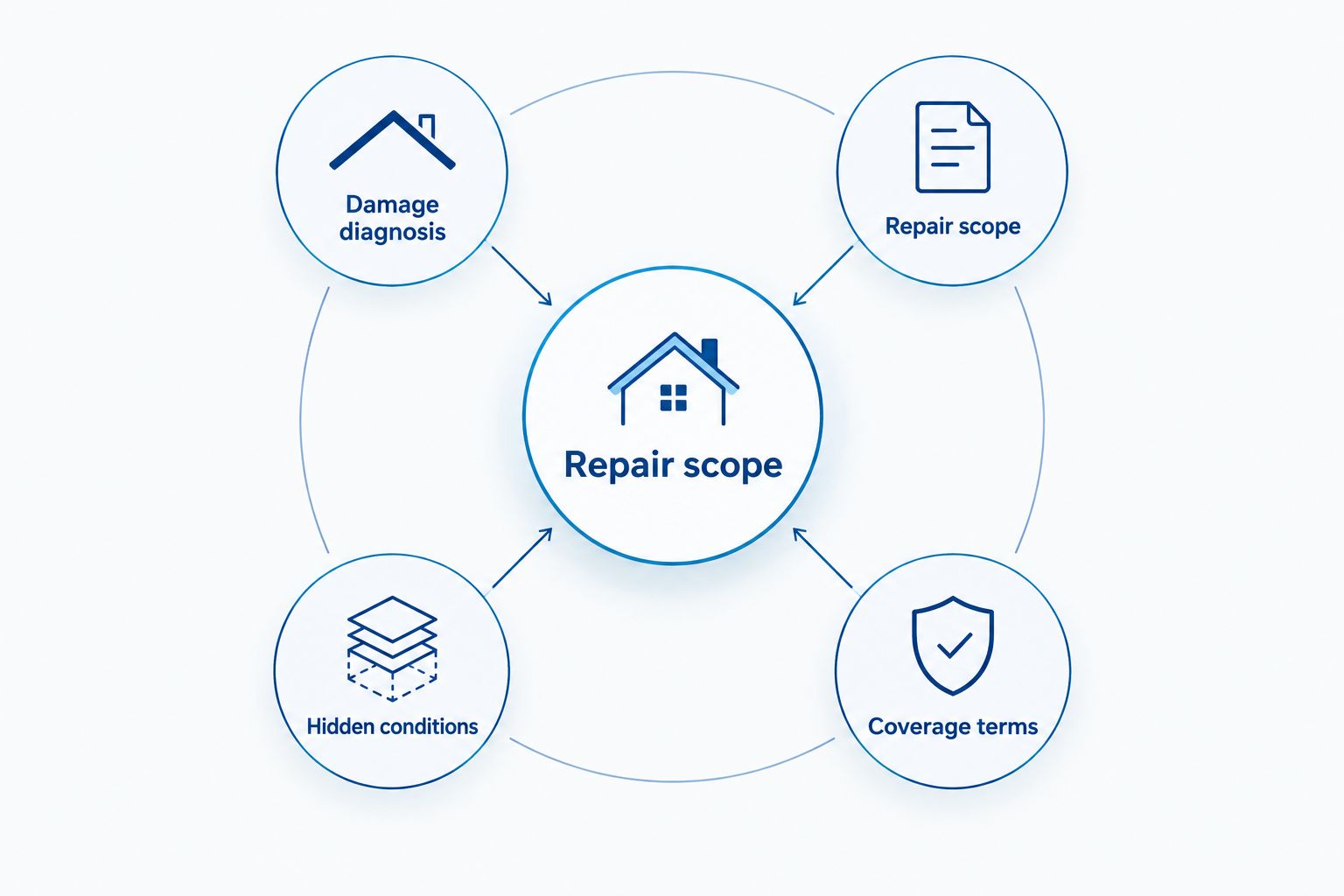
Look for these four parts:
- Damage diagnosis: The location, observed condition, and explanation of the failure.
- Repair scope: The affected materials, proposed work, and boundaries of the repair.
- Hidden conditions: The process for documenting and approving additional concealed damage.
- Coverage terms: The repair warranty, exclusions, and responsibility for work outside the roofing contract.
Ask for photographs that connect the written scope to the roof condition. For a commercial property, also identify who authorizes changes and how the contractor will coordinate access with occupants or property staff.
The inspection-to-contract process provides a related guide for moving from findings to a written agreement. Keep the inspection findings and final scope together so the reason for the work remains clear.
Warranties, financing, and claim support
Warranty language should match the work you are buying. A roof-system warranty offered with an eligible replacement is not automatically the warranty for a localized repair.
Murray Roofing lists a 50-year Golden Pledge warranty and a 10-year labor warranty among its trust signals. Ask which terms apply to your proposed project and request the applicable written coverage rather than assuming every repair receives those terms.
Financing is also available through Murray Roofing. Review the financing terms separately from the roofing scope so the payment arrangement does not replace a clear understanding of the work.
For storm-related projects, keep claim documentation separate from the repair decision. Insurance coverage depends on the policy and the insurer's determination, not on the availability of contractor claim support.
FAQ
What determines roof repair cost by damage type?
Roof repair cost by damage type depends on the affected materials, the extent of damage, access, and the work needed to correct the cause. A visible defect does not establish whether underlying materials also need replacement.
Is a roof leak always a small repair?
A roof leak is not automatically a small repair. The entry point, surrounding roof condition, and any damage to underlying materials determine the scope.
Is flashing repair better than replacing shingles?
Flashing repair and shingle replacement address different failures. The right work depends on whether the defect involves a water-entry detail, the roof covering, or both.
When is roof replacement better than repair?
Roof replacement is the better option when the assessed roof condition requires renewal beyond isolated repairs. Ask the contractor to explain why targeted work would not adequately address the condition.
What should a commercial roof repair estimate include?
A commercial roof repair estimate should identify the roof system, affected layers, repair method, access requirements, and exclusions. It should also explain how concealed moisture damage and additional work will be handled.
Does insurance always cover hail or wind roof damage?
Insurance does not automatically cover every hail or wind roofing claim. Coverage depends on the policy, documented damage, and the insurer’s decision.
Can I arrange a free roof inspection in Lincoln or Omaha?
Murray Roofing offers free inspections and serves Lincoln and Omaha homeowners and businesses. Request an inspection to establish the roof condition and obtain a project-specific scope.
One last thing
Before approving a 2026 roof repair, ask what problem the repair will not solve. That question makes the boundaries explicit: existing roof deterioration, interior damage, or a separate drainage defect should not disappear behind a short description of the work.
Keep those exclusions with your estimate. A repair is easier to evaluate when you understand both its intended result and its limits.
Related guides
- Roof types for Nebraska weather
- Commercial roof maintenance plans
- Roof warranty types for homeowners
Schedule a free inspection with Murray Roofing to identify the damage and get a price for the work your property needs.
Schedule your roof inspection
Get a documented repair scope for your Lincoln or Omaha home or commercial property.