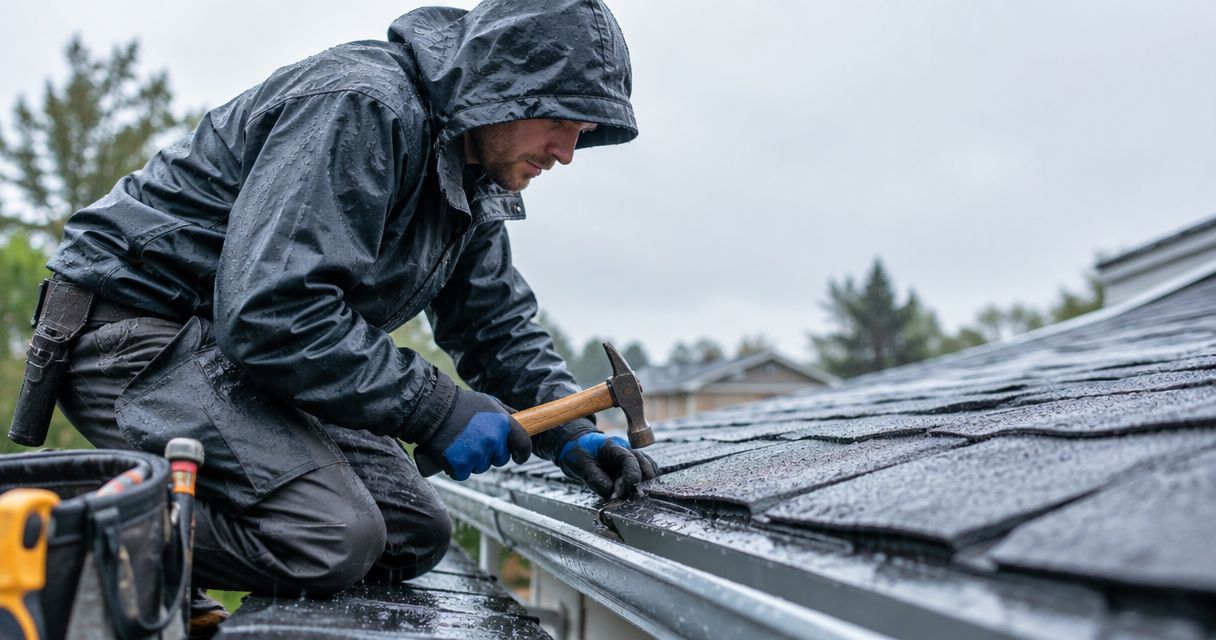
You can sometimes get professional emergency leak protection during rain, but permanent roof repairs generally need suitable weather and a surface that meets the repair material’s requirements. Wet roofing increases slip risks, and rain can interfere with adhesion or expose the building to more water when damaged materials are removed. Report the leak immediately, but let the contractor decide when roof access and permanent work are safe.
- Can you repair a roof in the rain? Emergency protection and permanent roof repair require different decisions.
- Wet surfaces, lightning, wind, and material requirements determine whether a contractor can safely work.
- Murray Roofing serves Lincoln and Omaha homeowners and businesses needing roof inspections, repairs, and replacement.
- Protect people indoors, report active leaks, and request a plan for temporary protection and permanent repair.
Can you repair a roof in the rain or wet weather?
A contractor can assess an active leak during wet weather without necessarily starting exterior repairs. Interior observations, photographs taken from safe locations, and your description of the leak help establish the response. Our guide to the roof leak response workflow explains the distinction between reporting damage and completing a repair.
Emergency protection limits immediate exposure; permanent repair addresses the roof defect. Neither should require someone to climb onto a roof when conditions are unsafe.
| Approach | Best for | Main benefit | Main limitation |
|---|---|---|---|
| Interior assessment during rain | Identifying affected rooms and immediate hazards | Helps establish where water is appearing without exterior roof access | The visible drip does not necessarily identify the roof entry point |
| Professional temporary protection | Reducing exposure before permanent work is possible | Can help protect the building when safe access and a suitable method exist | Does not replace a completed repair and follow-up inspection |
| Permanent repair in suitable weather | Correcting a confirmed, localized defect | Allows the contractor to follow the repair system’s installation requirements | Requires acceptable roof conditions, not just a pause in rainfall |
| Replacement after assessment | Roofs with damage beyond a practical localized repair | Addresses a broader roof condition | Requires a larger project scope and weather planning |
No option wins simply because it happens fastest. The right choice depends on safety, the actual damage, and whether the repair can perform as intended.
Why this matters
A leak creates pressure to act immediately. That urgency is real, but opening a roof during rain can expose areas that were previously protected. A rushed patch also fails its purpose if the material cannot bond to the surface beneath it.
For Lincoln and Omaha property owners planning repairs in 2026, the useful question is not just whether someone will work in the rain. Ask what the contractor can safely accomplish now, what must wait, and how the building will be protected between those stages.
Emergency protection is not a permanent repair
Temporary protection is a damage-control measure. Depending on the roof and conditions, a contractor assesses whether a temporary covering or another compatible protection method is appropriate. Wind, lightning, unstable materials, or slippery access can prevent even temporary exterior work.
The benefit is straightforward: suitable temporary protection can reduce further exposure while permanent work is arranged. The limitation matters just as much. It does not establish that the roof is repaired, that concealed materials are dry, or that the leak source has been fully corrected.
Ask for a clear distinction in the written scope:
- Immediate protection: What action addresses the current exposure?
- Permanent repair: What roof defect needs correction?
- Follow-up assessment: What must be checked after the weather improves?
- Remaining limitations: What remains unresolved until permanent work is complete?
Do not treat the absence of a visible drip as proof that temporary work has solved the underlying problem. Water can follow a different path, and some leaks appear only under particular weather conditions.
Permanent repairs need more than a break in the rain
Rain stopping does not mean the roof is ready for repair. The exposed surface can remain wet, and water can persist beneath damaged roofing. A contractor needs to evaluate the repair area rather than use the forecast alone as permission to proceed.
Many adhesives, coatings, and sealants specify surface preparation and application conditions. Some products permit particular damp-surface applications; others require dry surfaces. The selected material’s published instructions govern the repair—not a general claim that a sealant works in any weather.
For a 2026 repair proposal, ask the contractor to explain these points in plain language:
- Which repair material or method fits the existing roof?
- Does the application surface need to be dry?
- What temperature and weather conditions does the method require?
- How will concealed moisture or damaged underlying materials be assessed?
- What happens if rain returns before the work is protected?
A contractor who pauses work to meet these requirements is protecting the repair’s outcome. A dry-looking roof from ground level is not enough evidence to override them.
Why wet-weather roof repair decisions vary
Wet-weather decisions vary because roof access, damage, and repair methods vary. These factors explain why a repair that is feasible on one building is unsuitable on another:
- Surface condition: Moisture affects footing and can interfere with materials that require a clean, dry application surface.
- Storm hazards: Lightning and strong wind create risks beyond the leak itself. Exterior work must account for those hazards.
- Roof shape: Slope, edges, access points, and drainage affect how a crew can reach and protect the damaged area.
- Repair method: Replacing damaged roofing, repairing flashing, and applying a compatible patch have different preparation requirements.
- Concealed damage: Wet insulation, deteriorated decking, or damage below the surface can change the work needed.
- Building use: Occupied homes and commercial properties need a plan that protects people and affected interior areas while work is arranged.
The decision should follow the site conditions. Neither a residential roof nor a commercial roof is automatically safe to repair because the rain is light.
What should you do when your roof leaks during rain?
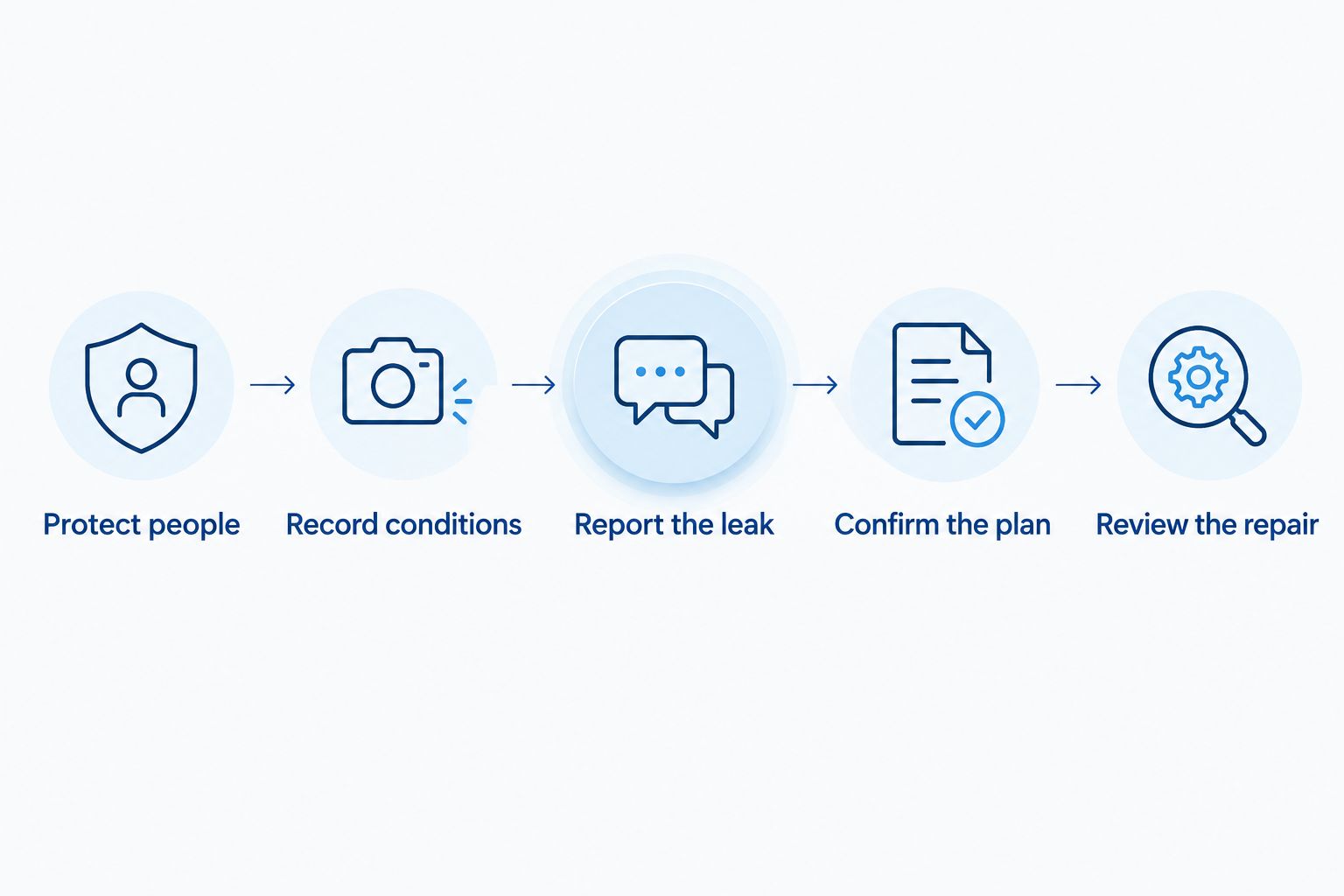
Stay off the roof and report the leak from a safe location. You can give a contractor useful information without inspecting the exterior yourself. The following steps concern indoor safety and communication, not DIY roof repair.
- Protect people. Keep people away from visibly damaged ceilings, falling material, and water near electrical equipment. If there is an immediate danger, leave the affected area and contact the appropriate emergency service.
- Record conditions. Note which room is affected, where water appears, and whether it is dripping continuously or only during heavier rain. Take photographs only from a safe position.
- Report the leak. Tell the contractor whether the building is a home or commercial property and describe any visible interior damage. Explain access restrictions or occupied areas that affect the response.
- Confirm the plan. Ask what can happen during the current weather, what requires safer conditions, and what temporary protection is being considered.
- Review the repair. Once conditions permit inspection, request a written explanation of the defect, proposed correction, and any remaining uncertainty.
These steps help you communicate the problem without creating a second emergency. You do not need to identify the exact roof entry point before contacting a roofing contractor.
The location of an indoor stain is useful evidence, but water can travel along roof components before becoming visible. Let the inspection establish the repair location rather than asking for a patch directly above the stain.
Is a wet roof safe if the rain has stopped?
A wet roof is not automatically safe after rainfall ends. Remaining moisture, roof slope, damaged decking, and access conditions still matter. A contractor must evaluate those conditions before deciding how to work.
OSHA’s construction fall-protection rules address roof work 6 feet or more above lower levels, with requirements that depend on the work and roof configuration. That threshold does not mean a lower roof is safe, and fall protection does not remove the risks created by lightning or unstable surfaces.
For your 2026 repair, ask how the crew will assess safe access and protect exposed edges. Do not ask anyone to bypass those precautions to meet an arrival time or finish before the next shower.
Can you repair a commercial flat roof while it is wet?
Some commercial roof repair methods accommodate specific damp conditions, but that does not make every wet flat roof repairable. The contractor must match the method to the existing roof system, surface condition, and manufacturer’s requirements.
Standing water and saturated insulation require assessment rather than a blanket promise to seal the surface. A patch over the visible defect does not, by itself, establish the condition of the layers below it.
For commercial properties in Lincoln and Omaha, ask for a response plan covering:
- Areas where water threatens occupants, equipment, or stored materials.
- Roof access and any restrictions during normal building operations.
- The proposed temporary measure and its limitations.
- Whether inspection indicates localized damage or a broader roof problem.
- The permanent repair scope and any checks needed afterward.
Apply the same standard to apartments, offices, restaurants, warehouses, churches, and other commercial properties. The building’s use changes coordination needs, not the requirement for a safe, compatible repair.
Should you repair the roof or plan a replacement?
Rain reveals a problem; it does not determine whether replacement is necessary. An isolated defect can justify repair, while widespread damage or deteriorated underlying materials can change the recommendation. Base the decision on inspection findings, not the intensity of the latest storm.
For a Lincoln or Omaha replacement planned in 2026, ask how the contractor will limit exposure during removal and protect unfinished work if conditions change. A full replacement needs a weather-response plan because removing existing roofing changes how the building is protected.
Request separate explanations for the immediate leak response and the longer-term recommendation. That keeps emergency urgency from substituting for evidence about the roof’s overall condition.
What should you ask a Lincoln or Omaha roofing contractor?
Start with scope, safety, and material requirements. Then ask about documentation and warranty terms. A useful proposal tells you what is being repaired and what remains outside the work, rather than simply promising to stop a leak.
Murray Roofing is a roofing contractor for Lincoln and Omaha homeowners and businesses needing repair, replacement, and inspection services. Murray Roofing offers free inspections and financing; those services do not mean exterior work can proceed in unsafe weather or that financing approval is guaranteed.
The brand’s stated warranty offerings include a 50-year Golden Pledge warranty and a 10-year labor warranty. Ask which warranty applies to your proposed project and what its written terms cover; do not assume an emergency patch carries the same coverage as a qualifying replacement.
When requesting a 2026 inspection, explain the active leak first. Then ask for the inspection findings, temporary-protection limitations, permanent repair scope, and applicable warranty information in writing.
FAQ
Can you repair a roof in the rain?
Professional emergency protection is sometimes possible during rain, but permanent roof repairs generally require suitable weather and material-compatible surface conditions. A contractor must assess safe access before attempting exterior work.
Should I wait until the rain stops to call a roofer?
No—report an active roof leak while it is happening. The contractor can discuss immediate concerns and determine which assessment or protection measures are safe before permanent work begins.
Can a roofer put a tarp on a roof during rain?
A contractor can install temporary protection only when access, weather, and the roof condition allow safe work. Wind, lightning, or unstable surfaces can prevent exterior protection, and a covering is not a permanent repair.
Does roof sealant work on a wet roof?
Roof sealant works on a wet surface only if the selected product permits that application and the roof meets its preparation requirements. Do not assume that every sealant bonds to wet roofing or fits every roof system.
How long does a roof need to dry before repair?
There is no universal drying time for roof repair. The roof assembly, concealed moisture, weather, and repair material’s instructions determine when the contractor can proceed.
Will insurance cover a roof leak during a storm?
Insurance coverage depends on your policy, the cause of damage, and the insurer’s assessment. Document conditions safely and ask your insurer about reporting requirements; a storm-related leak does not guarantee payment.
Does Murray Roofing inspect leaking roofs in Lincoln and Omaha?
Murray Roofing provides roof inspections and repair services for homeowners and businesses in Lincoln and Omaha. Report the active leak when arranging an inspection so immediate concerns can be discussed.
One last thing
A ceiling can continue to drip after rain stops because water already inside the assembly is still moving. Conversely, a drip stopping does not prove the exterior defect is fixed. Ask for confirmation of the repair itself, not just confirmation that the room is currently dry.
If your Lincoln or Omaha property has an active leak, schedule an inspection with Murray Roofing and request a clear plan for safe protection, permanent repair, or replacement.
Schedule your roof inspection
Discuss the leak, safe next steps, and whether repair or replacement fits your roof.
Related guides
- How long does a roof inspection take?
- From roof inspection to signed contract
- How long does a full roof replacement take?