Storm damage roof repair cost without insurance depends on the damaged area, the roofing system, and whether water has reached the materials beneath it; an inspection-based written estimate is the basis for your budget. Temporary protection, damaged roof decking, and interior restoration can add separate expenses, so confirm what the estimate includes before authorizing work.
- Storm damage roof repair cost without insurance requires an inspection-based scope, not a guess from visible damage.
- Choose targeted roof repair for isolated damage only when the surrounding roofing remains serviceable.
- Compare full roof replacement when damage is widespread or the existing roof cannot support a lasting repair.
- Murray Roofing is a fit for Lincoln and Omaha owners seeking storm damage inspections, repairs, replacement, and financing.
How much does storm damage roof repair cost without insurance?
Your out-of-pocket budget should cover the complete repair scope, not just the visible roof covering. Without an insurance payment, you are responsible for the contracted work, including approved additions after concealed damage is uncovered.
For a 2026 estimate in Lincoln or Omaha, ask the contractor to separate immediate protection from permanent repairs. The roof repair cost by damage type guide provides another way to organize the discussion around what needs fixing.
A useful estimate addresses these categories:
- Inspection findings: The location, extent, and documented condition of the damage.
- Roofing work: Materials, labor, and the boundaries of the repair or replacement area.
- Underlying materials: How the contractor handles damaged decking or insulation discovered during work.
- Removal and cleanup: Tear-off, disposal, debris collection, and property protection.
- Separate work: Temporary protection, interior repairs, gutters, or other items outside the roofing contract.
Do not assume a line labeled storm repair includes every category. Ask which work is included, which work is excluded, and which conditions require a written change order.
Why this matters when you are paying yourself
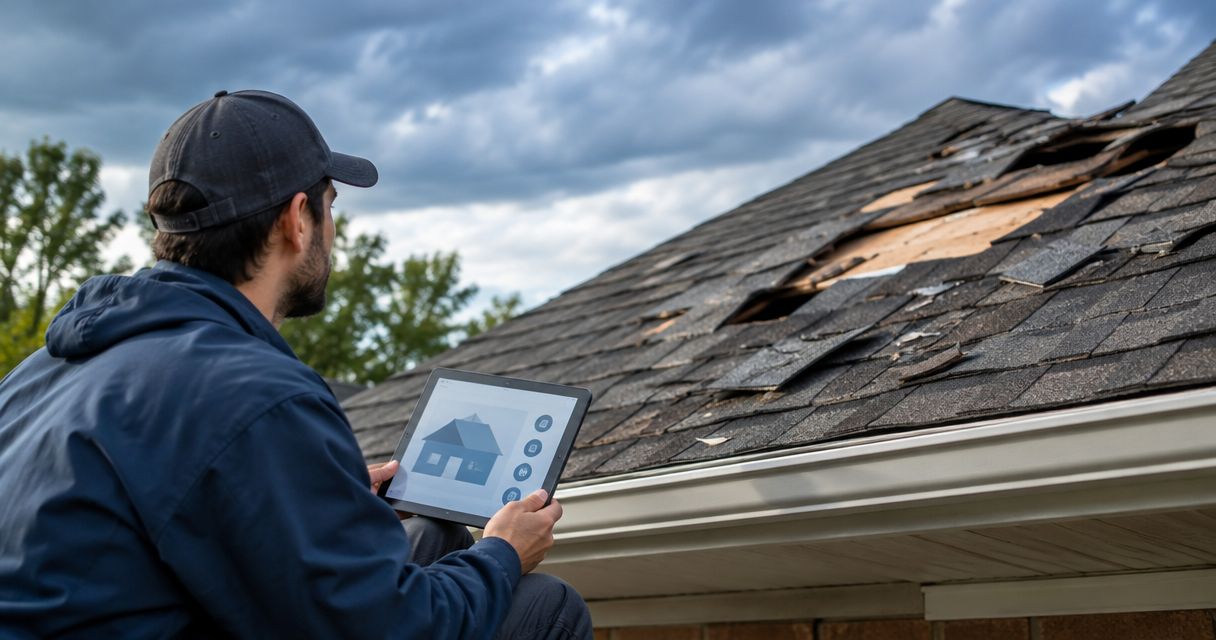
A low initial estimate does not resolve a leak if it addresses the wrong entry point or leaves damaged material underneath. Water can travel before it appears on a ceiling, so the indoor stain alone does not define the roof repair area.
Your goal is to buy a documented solution to the damage. In Lincoln and Omaha, request photographs and a plain-language explanation connecting the proposed work to the inspection findings.
For commercial properties, also identify who will coordinate access, tenant communication, and protection of occupied areas. An office, warehouse, restaurant, apartment building, or church needs a scope matched to its roof and operations—not assumptions based on the building label.
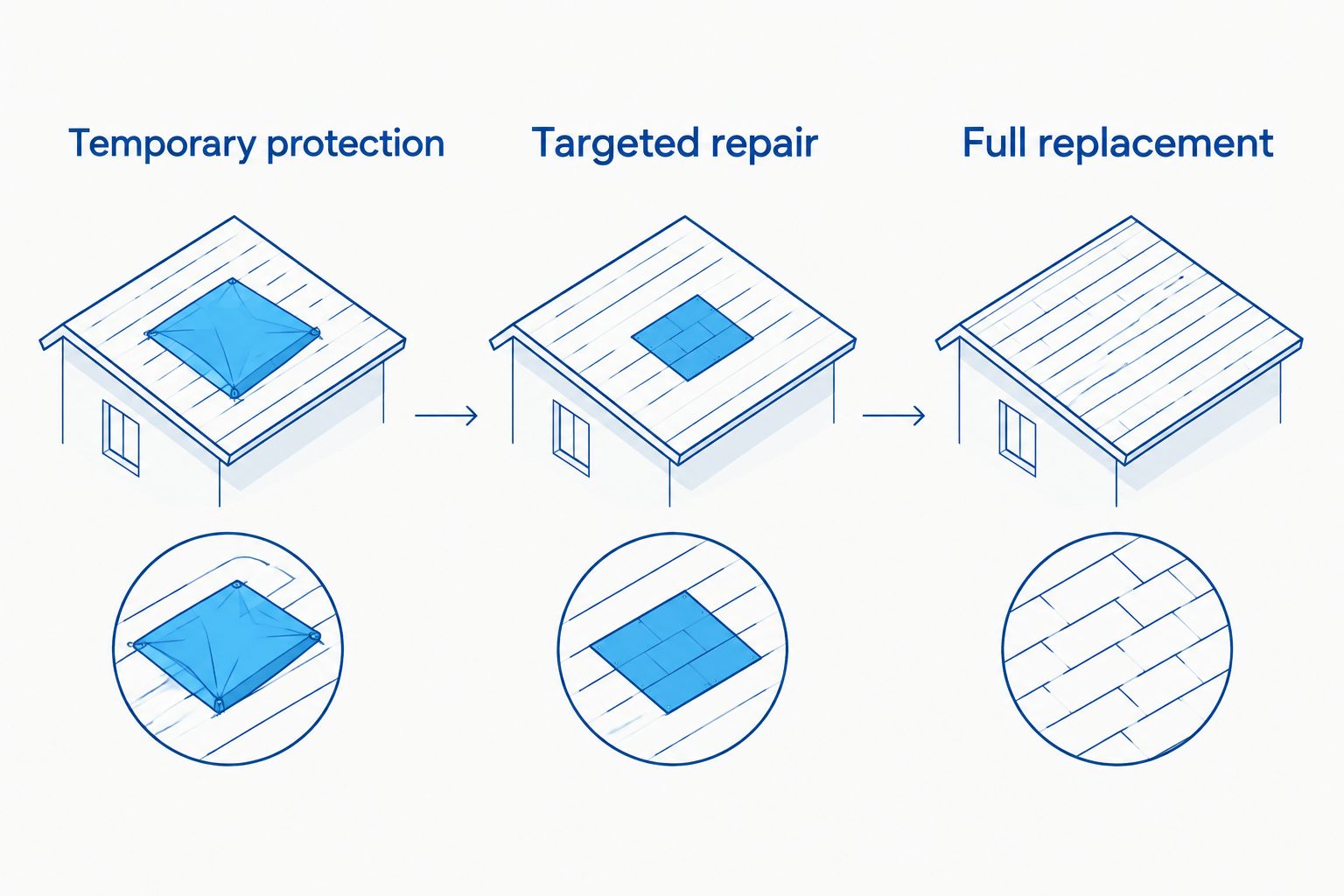
Temporary protection: Best for limiting further exposure
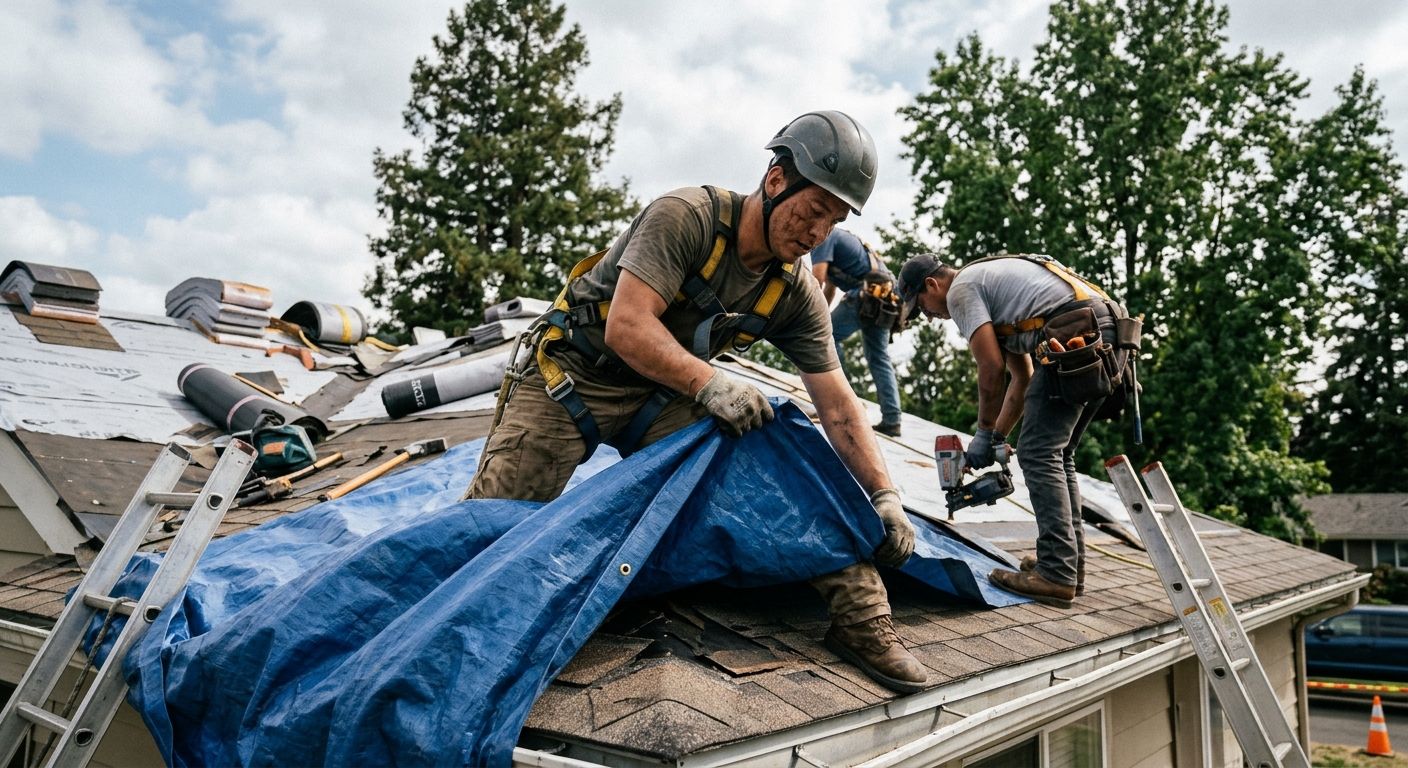
Temporary protection addresses an exposed or actively leaking area while permanent work is arranged. It is not the same as restoring the roof system, and the contract should make that distinction clear.
The benefit is immediate damage control; the limitation is that permanent repairs remain necessary. Ask what the temporary work covers, how the contractor will document it, and whether removal is included in the permanent scope.
Do not climb onto a storm-damaged roof to inspect or cover it yourself. Report visible conditions from a safe location, keep people away from affected areas, and request professional assessment.
Targeted repair: Best for isolated damage on a serviceable roof
Targeted repair makes sense when the contractor can identify a limited defect and confirm that surrounding materials can support the repair. Examples include localized damage to roof covering or flashing, the material that seals roof transitions and penetrations.
The benefit is a smaller work area; the limitation is that repair does not renew the rest of the roof. Ask whether the contractor found deterioration elsewhere and whether the proposed materials are compatible with the existing system.
For a shingle roof, appearance also deserves a written discussion. A functional repair does not necessarily produce an exact visual match with weathered roofing.
Full replacement: Best for widespread or unrepairable damage
Full replacement deserves consideration when damage extends across the roof or the remaining materials cannot support a lasting repair. Replacement is a different scope from repairing individual defects, so compare the work included rather than treating the totals as interchangeable.
The benefit is addressing the roof as a system; the limitation is a larger project with more coordination and financial commitment. An inspection should explain why replacement is necessary or preferable—not simply present it as the default after a storm.
Use the roof repair versus complete replacement guide to prepare questions about the condition of the roof you would be keeping.
Compare the scope before comparing estimates
| Option | Best for | Main benefit | Main limitation | What the estimate should explain |
|---|---|---|---|---|
| Temporary protection | Exposed areas awaiting permanent work | Limits further exposure | Does not complete permanent restoration | Covered area, removal, and separate permanent work |
| Targeted repair | Isolated damage with serviceable surrounding roofing | Addresses the documented defect | Leaves the remaining roof in place | Repair boundaries, compatibility, and underlying damage |
| Full replacement | Widespread damage or roofing that cannot support repair | Addresses the roof system across the replacement area | Requires greater project coordination | Tear-off, decking provisions, roof components, and cleanup |
The right option follows the findings. Ask the contractor to show why the recommended scope addresses the damage and why a smaller scope would be insufficient, if replacement is proposed.
Why storm damage roof repair cost varies
Roof damage does not follow a uniform scope. These factors explain why apparently similar properties can require different work:
- Damage extent: A localized defect and damage across multiple roof areas require different quantities of material and labor.
- Roofing system: Shingles, metal panels, and low-slope membranes require different repair methods and compatible materials.
- Underlying condition: Wet insulation or deteriorated decking adds work beyond replacing the visible roof covering.
- Roof access: Pitch, height, access restrictions, and nearby equipment affect how the contractor performs the work safely.
- Roof transitions: Chimneys, skylights, walls, drains, and rooftop equipment create details that must be assessed separately.
- Project boundaries: Temporary protection, disposal, interior restoration, and other trades change what the total actually covers.
When comparing 2026 proposals, mark each factor as included, excluded, or subject to additional authorization. That makes differences visible before you sign rather than after work begins.
What should you ask for before approving a repair?
A written estimate should let you understand the work without translating roofing jargon. Follow this sequence before committing to a contractor or a payment arrangement.
- Request documented findings. Ask for photographs and an explanation of what is damaged, what remains serviceable, and which areas the contractor inspected. Separate confirmed damage from conditions that require opening the roof to evaluate.
- Confirm the proposed scope. Identify the repair area, materials, removal work, cleanup, and any temporary protection. For commercial roofs, include affected drains, seams, penetrations, and equipment connections where relevant.
- Clarify concealed damage. Ask how the contractor will notify you, document newly exposed conditions, and obtain approval for additional work. Do not leave the authorization process to an unwritten conversation.
- Review payment and warranty terms. Establish when payments are due, what written coverage applies, and who handles a problem after completion. Review financing separately from the construction agreement.
- Keep the project record. Retain the estimate, contract, photographs, approved changes, warranty documents, and final invoice. These records explain what was restored and what remained outside the project.
Approve a defined scope—not an open-ended promise to fix whatever turns up. A contractor can explain uncertainty without leaving you uncertain about who authorizes additional work.
Is it cheaper to repair storm damage or replace the roof?
A targeted repair addresses less roofing than a full replacement, but it is only a useful choice when the remaining roof can support it. Compare the immediate repair with the condition of the roof left behind, rather than assuming either option is automatically the better value.
For a 2026 replacement proposal, ask for the reason replacement is recommended and the warranty terms in writing. Murray Roofing lists a 50-year Golden Pledge warranty and a 10-year labor warranty among its trust signals; confirm which coverage applies to your proposed project, including eligibility and exclusions.
Do not treat a replacement warranty as proof that storm damage is covered. Coverage depends on the written warranty and the cause of the problem.
Can you finance storm damage roof work without insurance?
Financing can spread payment for approved roofing work, but it does not reduce the scope of damage or make the obligation disappear. Compare the total repayment amount, interest terms, fees, and payment schedule—not only the monthly payment.
Murray Roofing offers roofing financing for customers considering repair or replacement. Ask which options apply to your project, and obtain the actual terms before agreeing to either the financing or the construction contract.
If you are comparing financing in 2026, keep the project amount separate from the borrowing terms. Otherwise, a more comfortable monthly payment can distract from what you will repay overall.
Do you have to file an insurance claim before arranging repairs?
You can arrange self-funded roofing work without making an insurance claim. If insurance might apply, review your policy and speak with your insurer about documentation, notice requirements, and authorization before making assumptions about reimbursement.
An inspection can document roof conditions, but a contractor cannot guarantee that an insurer will pay. Keep the contractor's findings separate from the insurer's coverage decision, and do not budget around an unconfirmed payment.
For an uninsured project, focus on the work you can authorize and fund. Temporary protection and permanent restoration should still have clearly defined responsibilities and written terms.
FAQ
How do I budget for storm damage roof repair without insurance?
Build your budget from a written inspection-based estimate that separates permanent roofing work, temporary protection, and excluded repairs. Confirm how the contractor will price and obtain approval for concealed damage before work starts.
Does a roof repair estimate include ceiling and drywall repairs?
A roof repair estimate includes ceiling and drywall repairs only when the written scope says so. Ask whether interior restoration requires a separate contractor or agreement.
Can a small ceiling stain mean more roof damage?
A small ceiling stain does not establish the size of the roof defect because water can travel before becoming visible indoors. Have the roof and affected underlying materials assessed rather than sizing the repair from the stain alone.
Is temporary roof protection the same as a permanent repair?
Temporary roof protection is not a permanent repair. Request separate descriptions of the immediate protective work and the permanent restoration so you know what remains unfinished.
Should I replace my entire roof after a storm?
Replace the entire roof only when the documented condition supports that scope. Ask whether damage is widespread, whether surrounding materials remain serviceable, and why a targeted repair would not address the problem.
What should a commercial roof repair estimate include?
A commercial roof repair estimate should identify the affected roof system, repair boundaries, underlying-material provisions, access needs, and exclusions. It should also explain coordination around occupied areas and rooftop equipment where relevant.
Does a roofing warranty replace storm insurance?
A roofing warranty does not replace storm insurance. Read the actual warranty to understand covered defects, exclusions, and claim requirements instead of assuming storm damage qualifies.
One last thing
Ask what would still be wrong with the roof after the proposed repair. That question shifts the conversation from the visible damage to the condition you are paying to keep.
For a 2026 self-funded project, an acceptable answer identifies any remaining concerns and separates necessary work from optional improvements. It gives you a clearer decision than an unexplained recommendation to repair or replace.
Related guides
- From roof estimate to financing approval
- From roof inspection to signed contract
- How much does a new roof cost in Omaha?
Schedule a free storm damage roof inspection with Murray Roofing in Lincoln or Omaha, and request a written price for the work your property needs.