Rental property owners generally deduct a full roof replacement through depreciation, rather than writing off the entire project as a repair in the year they pay for it. For 2026 federal tax planning, the standard recovery period is 27.5 years for residential rental property and 39 years for nonresidential real property under the general depreciation system. Exceptions, insurance reimbursements, and rental-loss limits can change the deduction you actually claim.
- To deduct roof replacement costs on taxes, rental owners generally capitalize the project and claim depreciation.
- IRS rules generally assign residential rental roof replacements a 27.5-year recovery period under the general depreciation system.
- Commercial roof replacements generally use 39 years; qualifying nonresidential roofs require separate Section 179 review.
- A localized roof repair and a full replacement can receive different federal tax treatment.
For the construction side of the decision, use this guide to roof replacement for rental property owners alongside your accountant’s tax review.
Can rental property owners deduct roof replacement costs on taxes?
Yes, but deductible does not necessarily mean immediately deductible. IRS Publication 527, Residential Rental Property, distinguishes deductible repair expenses from improvements that must be capitalized. Replacing an entire roof generally restores a major component of the building, making it an improvement.
The following federal framework applies to 2026 planning. IRS Publication 946, How To Depreciate Property, explains recovery periods, depreciation methods, and expensing rules; your accountant should apply the current instructions to your property.
| Work or property type | General federal treatment | Best for this situation | Main limitation |
|---|---|---|---|
| Localized roof repair | Potential current rental expense | Correcting a limited defect without a broader improvement | Work included in an improvement project can require capitalization |
| Residential rental roof replacement | Capitalize; generally depreciate over 27.5 years | A rental house or qualifying residential rental building | First-year depreciation is only a partial-year deduction |
| Nonresidential roof replacement | Capitalize; generally depreciate over 39 years | A qualifying commercial rental building | Building classification and special elections matter |
| Eligible nonresidential roof improvement | Potential Section 179 deduction | A qualifying business meeting the election’s requirements | Eligibility, income limits, and leasing restrictions require review |
Why this matters
A replacement protects the property, but its tax benefit usually arrives over time. Budget for the project without assuming an immediate write-off. A tax deduction reduces taxable income; it does not reimburse the roof invoice dollar for dollar.
For Lincoln and Omaha landlords, the roofing decision and the tax decision are separate. Choose the necessary work from the roof’s condition, then have your tax professional classify the documented scope.
Residential rental replacement: generally 27.5 years
A roof replacement on a residential rental house generally becomes a separately tracked building improvement. Under the general depreciation system, you recover that improvement over 27.5 years, beginning when it is placed in service—not simply when you sign a contract or make a deposit.
For straight-line depreciation, the full-year deduction is approximately 3.636% of the improvement’s depreciable basis. The first and final years differ because residential rental real property generally uses the mid-month convention. That convention treats the improvement as placed in service halfway through the applicable month.
The benefit is a deduction spread across the recovery period. The drawback is that paying the whole invoice in 2026 does not create a matching deduction for 2026.
These are general-system rules. An alternative depreciation system, mixed personal use, or a special election can change the calculation. Your accountant should confirm the applicable system before adding the improvement to your depreciation schedule.
Commercial rental replacement: generally 39 years
A roof replacement on nonresidential real property generally uses a 39-year recovery period under the general depreciation system. A full year of straight-line depreciation is approximately 2.564% of depreciable basis, with the mid-month convention affecting the first and final years.
An apartment building does not become nonresidential property merely because a business owns it. Federal tax classification depends on the property’s use and the applicable residential-rental definition. Warehouses, offices, and other nonresidential buildings need a different analysis from rental housing.
Can a commercial roof qualify for Section 179?
Certain roof improvements to nonresidential real property can qualify for a Section 179 election when placed in service after the building was first placed in service. This is a potential exception to recovering the entire improvement through ordinary building depreciation.
Do not assume commercial ownership automatically qualifies. Active trade-or-business use, taxable-income limits, applicable annual limits, and special rules for property leased by noncorporate owners all require review. Ordinary structural roof replacement also does not automatically qualify for bonus depreciation merely because the contractor installed new materials.
Is a roof repair treated differently from a replacement?
A limited repair that keeps rental property in ordinarily efficient operating condition can qualify as a current expense. A full replacement generally requires capitalization because it restores a major building component.
The distinction depends on the work, not the invoice heading. Calling a complete reroof a repair does not change its federal tax treatment. Conversely, correcting an isolated flashing defect is not automatically a capital improvement simply because the contractor works on the roof.
Best for a limited defect: a professionally assessed repair. Its advantage is addressing the specific problem without replacing serviceable roofing. Its limitation is that a patch does not correct deterioration elsewhere in the roof system.
Best for a roof requiring full renewal: replacement. Its advantage is addressing the documented replacement scope together; its limitation is the larger construction commitment and generally slower tax recovery.
Your contractor should explain the physical condition and proposed work. Your tax professional decides whether that work is a repair, an improvement, or eligible for an exception. Review whether to repair a roof or replace it completely before treating tax timing as the deciding factor.
Why roof replacement tax treatment varies
The same type of roof work can produce different tax results because the property and taxpayer circumstances differ:
- Property use. Residential rental, nonresidential rental, mixed-use property, and property held for resale do not share one universal deduction rule.
- Scope of work. A localized repair differs from restoring a major component or performing work as part of a larger improvement.
- Depreciation system. The general and alternative depreciation systems can assign different recovery periods.
- Placed-in-service date. The date the improvement is ready and available for its intended rental use determines when depreciation begins.
- Insurance reimbursement. Claim proceeds, casualty treatment, and basis adjustments affect the amount and timing of deductions.
- Taxpayer eligibility. Elections, passive-activity rules, at-risk limits, and other restrictions can change the deduction allowed on the current return.
A deduction calculated on a depreciation schedule is not always a deduction you can fully use that year. Ask your accountant to distinguish the depreciation amount from the tax benefit available on your 2026 return.
How should you document a rental roof replacement?
Build a project file that explains what happened, what work occurred, and when the finished roof became available for rental use. Murray Roofing provides residential and commercial roof inspections and replacement services in Lincoln and Omaha; the tax classification belongs with your accountant.
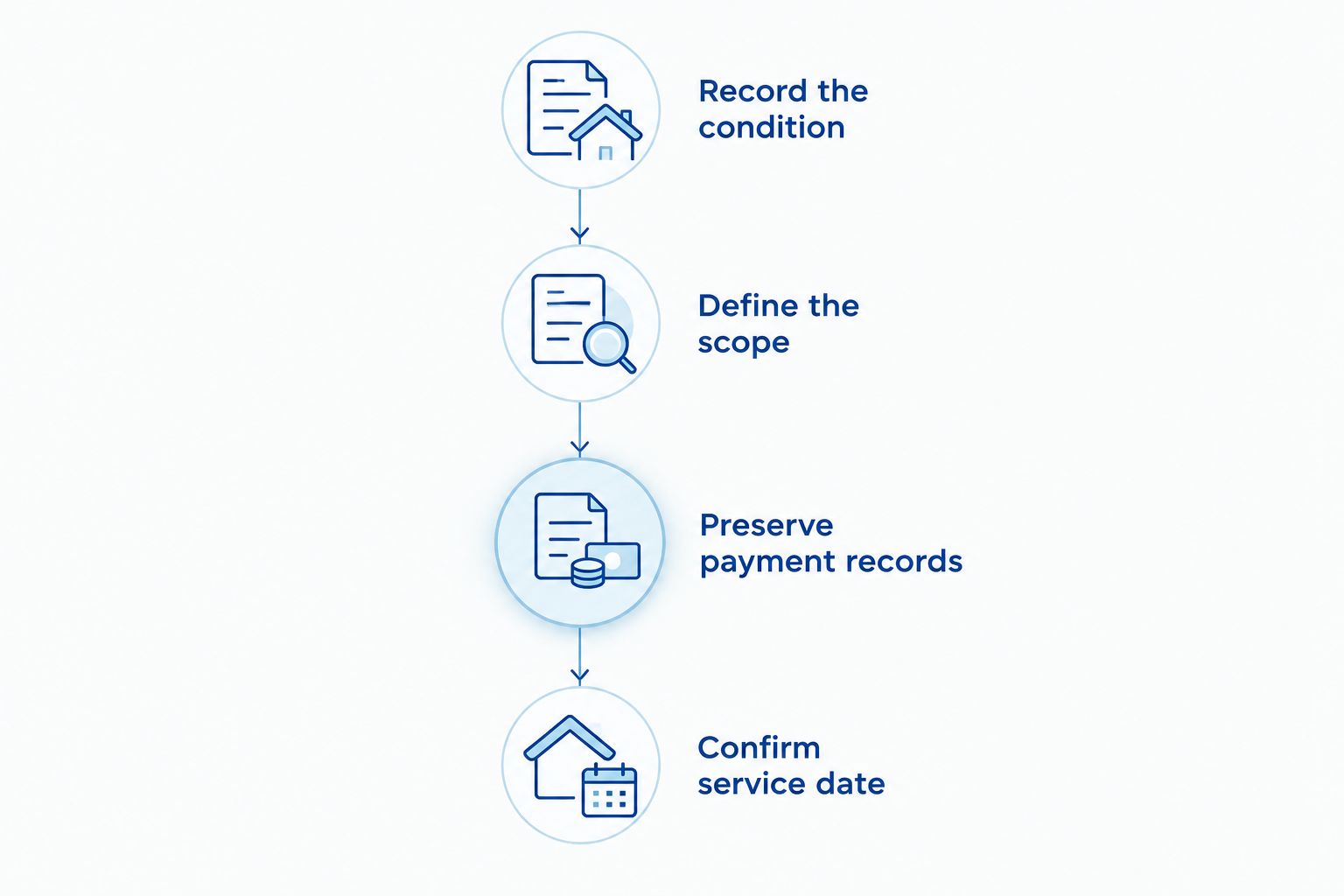
Record the condition
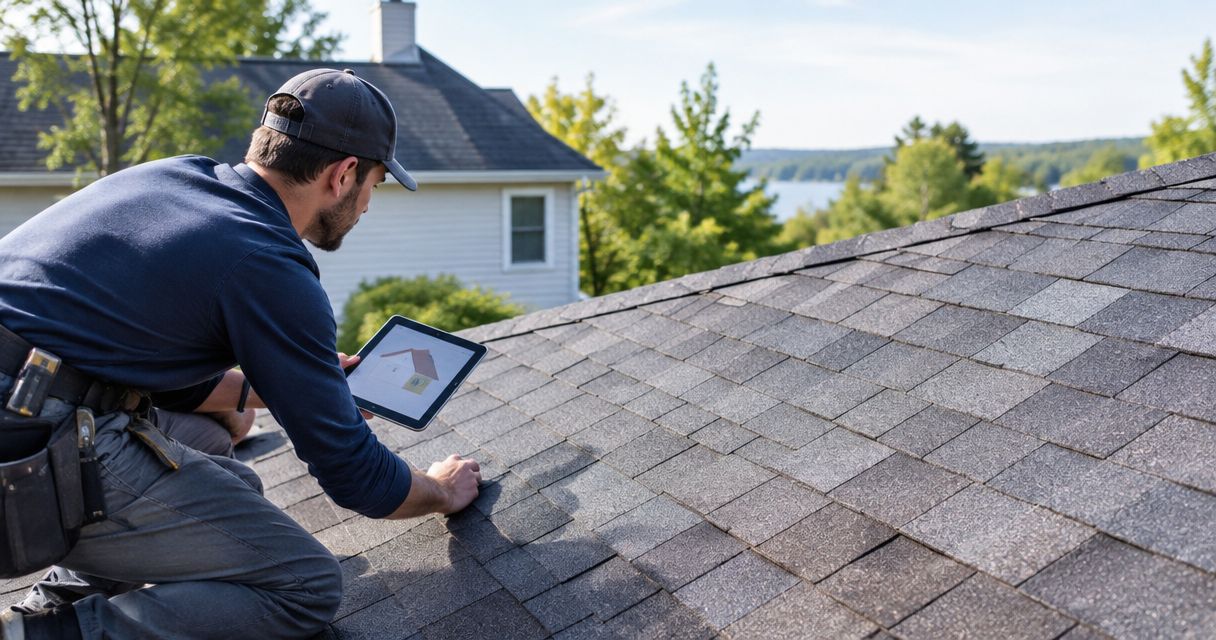
Keep inspection findings and photographs showing the roof’s condition before work begins. Include the reported problem, affected areas, and whether the recommendation addresses isolated damage or broader deterioration.
You do not need to climb onto the roof to create this record. Ask the roofing contractor for the relevant project documentation.
Define the scope
Keep the signed proposal and approved changes. The description should identify whether the project involves localized repairs, replacement roofing, damaged decking, or related work actually performed.
Accurate detail helps your accountant distinguish the roof improvement from genuinely separate work. Do not request artificial invoice splits intended to make a replacement appear to be unrelated repairs.
Preserve payment records
Keep invoices, receipts, and financing documents together. The amount paid is not always identical to the depreciable basis after reimbursements, credits, allocations, or other adjustments.
Loan paperwork also helps your accountant separate financing activity from the underlying construction expense. A monthly loan payment is not a substitute for an improvement record.
Confirm service date
Retain completion and acceptance records showing when the roof was ready and available for its intended use. A deposit made in 2026 does not, by itself, establish that the improvement was placed in service during 2026.
Give the finished project file to your accountant rather than sending only a bank statement. The scope, adjusted basis, and service date drive the depreciation entry.
What happens if insurance pays for the roof?
Insurance proceeds require separate tax review. You generally cannot deduct the same economic loss twice by claiming an unreimbursed expense while also receiving reimbursement for that expense.
Storm-related replacement can involve casualty rules, adjustments to the old property’s basis, and the basis of the replacement work. The result depends on the facts; the deductible shown on an insurance policy is not automatically a current roof-repair deduction.
Keep the insurer’s settlement explanation, payment records, contractor invoices, and documentation of any amount you paid. Ask your accountant how those records affect both the casualty calculation and the replacement improvement.
Murray Roofing offers insurance-claim support, but an inspection does not establish coverage or determine tax treatment. Your insurer decides coverage under the policy, and your tax professional applies the tax rules.
Does financing change the roof’s tax classification?
Financing does not turn a capital improvement into a current repair expense. If the roof replacement must be capitalized, borrowing to pay for it does not remove that requirement.
Loan principal payments generally are not a separate rental-expense deduction. Interest requires its own analysis based on how the borrowed funds are used and the applicable limitations.
Murray Roofing offers financing for roofing projects. Treat financing as a payment decision, not evidence of a particular tax deduction, and compare the agreement’s obligations with your property’s cash flow.
Can I deduct the entire roof replacement in 2026?
A full residential rental roof replacement generally is not entirely deductible in 2026 as an ordinary repair. It normally becomes a depreciable improvement, with a partial first-year deduction under the applicable convention.
Ask your accountant about any applicable safe harbor or other exception before filing. Safe harbors have eligibility tests and elections; a project does not qualify simply because an owner wants immediate expense treatment.
Can I deduct a roof replacement on a partly rented home?
A roof replacement on a partly rented home generally requires allocating the cost between rental and personal use. Only the qualifying rental portion enters the rental deduction calculation, and vacation-home or mixed-use rules can further restrict deductions.
Keep records supporting the allocation. Do not assign the entire shared roof to the rental activity merely because tenants occupy part of the building.
FAQ
Can I deduct roof replacement costs on taxes for my rental house?
You generally deduct a rental house roof replacement through depreciation rather than as an immediate repair expense. Under the general depreciation system, residential rental improvements generally use a 27.5-year recovery period.
Does replacing an apartment building roof count as a commercial deduction?
An apartment building roof generally follows residential rental depreciation rules if the building meets the federal residential-rental definition. Business ownership alone does not make the building nonresidential real property.
Can my accountant expense a small roof replacement immediately?
An applicable safe harbor or other exception can permit current deduction, but eligibility requires a specific review. The invoice amount alone does not establish that a full roof replacement qualifies.
Is roof repair deductible in the year I pay for it?
A qualifying rental repair can be a current expense under the applicable accounting rules. Work that improves the property or forms part of a larger improvement can require capitalization instead.
Does my insurance deductible count as a roof repair deduction?
An insurance deductible is not automatically a current roof-repair deduction. The underlying work, insurance reimbursement, and casualty rules determine its treatment.
Does a roof warranty determine the depreciation period?
A roof warranty does not determine the federal depreciation period. Tax classification and the applicable depreciation system govern recovery, not the warranty’s stated duration.
Do Nebraska rental owners follow different federal roof depreciation rules?
Nebraska rental owners apply the federal rules applicable to their property and tax circumstances. State tax treatment requires a separate review because federal treatment does not settle every state adjustment.
One last thing
Replacing a roof does not automatically remove the old roof’s remaining value from your building’s tax records. IRS partial-disposition rules can sometimes allow recognition of the retired component, but identifying its adjusted basis and making the appropriate election require professional review.
Ask about the old roof before your accountant closes the replacement year. That question is separate from calculating depreciation on the new roof and is easy to miss when the only document supplied is the new invoice.
Murray Roofing is best for Lincoln and Omaha rental owners seeking roof inspections and replacement guidance, not tax advice. Schedule a free inspection or request a project price, then take the documented scope to your tax professional. This article provides general federal tax information, not individualized tax advice.
Schedule your rental roof inspection
Get a documented roofing scope for your property and discuss the next step.
Related guides
- Roofing for apartment complexes
- Roofing for property managers
- From roof estimate to financing approval