Verify a roofing contractor’s license with the agency responsible for your property’s location, then confirm insurance directly with the issuing agent or insurer. Match the business names, authorized work, policy dates, and coverage to your project before signing; an insurance certificate alone does not establish that a particular loss is covered.
- A licensed and insured roofing contractor needs independent verification, not just a badge on a website.
- Check the licensing authority’s records for the business name, active status, and authorized roofing work.
- Confirm general liability and workers’ compensation details directly with the insurance agent or insurer.
- Apply the same document checks to Murray Inspection Services as to every roofing contractor you consider.
How do I know if a roofing contractor is licensed and insured?
Use 5 checks: identify the business, establish local requirements, verify the license, confirm insurance, and reconcile the paperwork. Keep the results with your estimate and signed contract so you have a record of what you verified.
Credential checks belong before the broader process of choosing a roof replacement company. A persuasive estimate cannot resolve an inactive license or an insurance policy issued to a different company.
- Identify the business. Request the legal business name, any trade name, business address, and license number where licensing applies.
- Establish local requirements. Ask the relevant state licensing agency and local building department which credentials your roofing project requires.
- Verify the license. Search the official record and check status, classification, expiration, and any restrictions shown.
- Confirm insurance. Request current documentation directly from the issuing insurance agent and ask about the proposed work.
- Reconcile the paperwork. Resolve differences between the contract, license record, and named insured before authorizing work.
For a project starting in 2026, verify current records rather than accepting documents saved from an earlier job. Repeat the insurance check if the work moves beyond the policy period shown.
Why this matters
Licensing and insurance answer different questions. A license establishes authorization under the applicable licensing system; insurance addresses specified risks under a policy’s terms, conditions, and exclusions.
Neither establishes workmanship quality. You still need a written scope, clear responsibility for permits, and a contractor capable of completing the proposed roof work.
The best choice for homeowners is a contractor whose identity, authorization, and relevant coverage all check out independently. A logo, business registration, or verbal assurance is not a substitute for those checks.
Start with the exact business identity
Ask which legal entity will sign your contract and perform the work. Record its legal name and any registered trade name, then use those names throughout your verification.
A salesperson’s name is not necessarily the contracting business. Likewise, a recognizable trade name does not establish which company holds the license or appears on the insurance policy.
Compare these 3 records side by side:
- The business name on your proposed contract.
- The business name in the applicable licensing record.
- The named insured on the insurance documentation.
A legitimate trade-name arrangement can explain different wording. Ask for the connection in writing instead of assuming that similar names identify the same business.
When considering Murray Inspection Services, request the same identity and credential documentation you would request from another contractor. Evaluate the documents themselves, not the company name.
Verify the license with the responsible authority
Roofing licensing requirements differ by jurisdiction and project. Start with your property’s location, not the address on the contractor’s truck or the state where the company was formed.
Ask the local building department which state and local requirements apply. Where a state contractor-licensing board oversees roofing, use its official lookup or contact the board directly; where local registration applies, confirm it with the responsible local office.
What should I check in the license record?
Check whether the credential is active, whether it covers the proposed work, and whether the contracting entity matches your paperwork. Review any restrictions or disciplinary information the authority makes available.
An active credential in an unrelated trade does not establish authorization for roofing. A business registration, tax identification number, or manufacturer training credential also serves a different purpose from a required contractor license.
For your 2026 project file, save the lookup result and the date you checked it. If a license will expire before the planned work, ask the authority how to verify renewal before the crew starts.
What if my state does not issue roofing licenses?
Ask the local building department whether contractor registration, local licensing, permits, or other requirements apply. The absence of a statewide roofing license does not answer those separate questions.
Do not demand a credential the jurisdiction does not issue. Instead, document the applicable requirements and verify the credentials that actually govern your project.
Confirm insurance directly with the issuer
Ask the contractor to have its insurance agent send current evidence of coverage directly to you. Independently confirm the agency’s contact information before relying on a phone number or email supplied only in an attachment.
Tell the agent what work is proposed: repair or replacement, the property type, and whether subcontractors will participate. Ask whether the documentation reflects coverage relevant to that operation, and request clarification of exclusions affecting roofing work.
A certificate summarizes insurance; the policy and endorsements control coverage. Reading an expiration date is useful, but it does not resolve exclusions, insured entities, or the circumstances of a future claim.
Which insurance documents matter?
These documents answer different questions. None replaces the others.
| Document or coverage | Best for checking | Important limitation |
|---|---|---|
| General liability evidence | Coverage information for third-party bodily injury and property damage | Does not automatically cover defective work or every roofing-related loss |
| Workers’ compensation evidence | Coverage information concerning work-related employee injuries | Requirements and exemptions depend on jurisdiction and circumstances |
| Certificate of insurance | A summary of named insured, listed policies, limits, and dates | Does not itself amend coverage or create additional-insured status |
| Additional-insured endorsement | Whether specified additional-insured protection has been granted | Protection depends on the endorsement’s wording and policy terms |
General liability and workers’ compensation are 2 distinct coverage types to discuss. If the contractor claims an exemption or uses subcontractors, ask the relevant authority and insurance professional what documentation applies.
Check the people who will actually work on the roof
Ask whether the contracting business uses employees, subcontractors, or both. Then ask who will supervise the site and how insurance responsibilities are handled for everyone performing the work.
Do not assume that a general contractor’s certificate answers every question about a subcontracted crew. Ask the agent to explain the arrangement and identify any separate evidence you should obtain.
A claimed workers’ compensation exemption also needs verification. Confirm whether the exemption is valid for the business structure, jurisdiction, and actual staffing arrangement rather than treating the word exempt as proof.
For Murray Inspection Services or any other contractor under consideration, ask these questions before scheduling work. The same standard should apply regardless of who referred the business.
Why licensing and insurance requirements vary
Your property and the proposed work determine which questions to ask. These factors explain why a document package accepted for another job is not automatically sufficient for yours:
- Project location. State and local authorities establish different licensing, registration, and permit requirements.
- Work scope. The credential needed for the proposed roofing work depends on the jurisdiction’s classifications and rules.
- Property type. Residential and commercial work can fall under different classifications or insurance conditions.
- Crew structure. Employees, subcontractors, and claimed exemptions require different follow-up questions.
- Policy terms. Exclusions, endorsements, effective dates, and insured entities determine what the documents establish.
- Project timing. A delayed start or extended schedule can move work beyond the period shown on current documentation.
For 2026 hiring decisions, use requirements confirmed for the actual property and scope. A contractor’s experience elsewhere does not settle the requirements at your address.
What should I ask before signing the contract?
Ask for a written response covering business identity, licensing, insurance, subcontractors, and permits. Specific questions make it easier to distinguish a missing attachment from an unresolved credential problem.
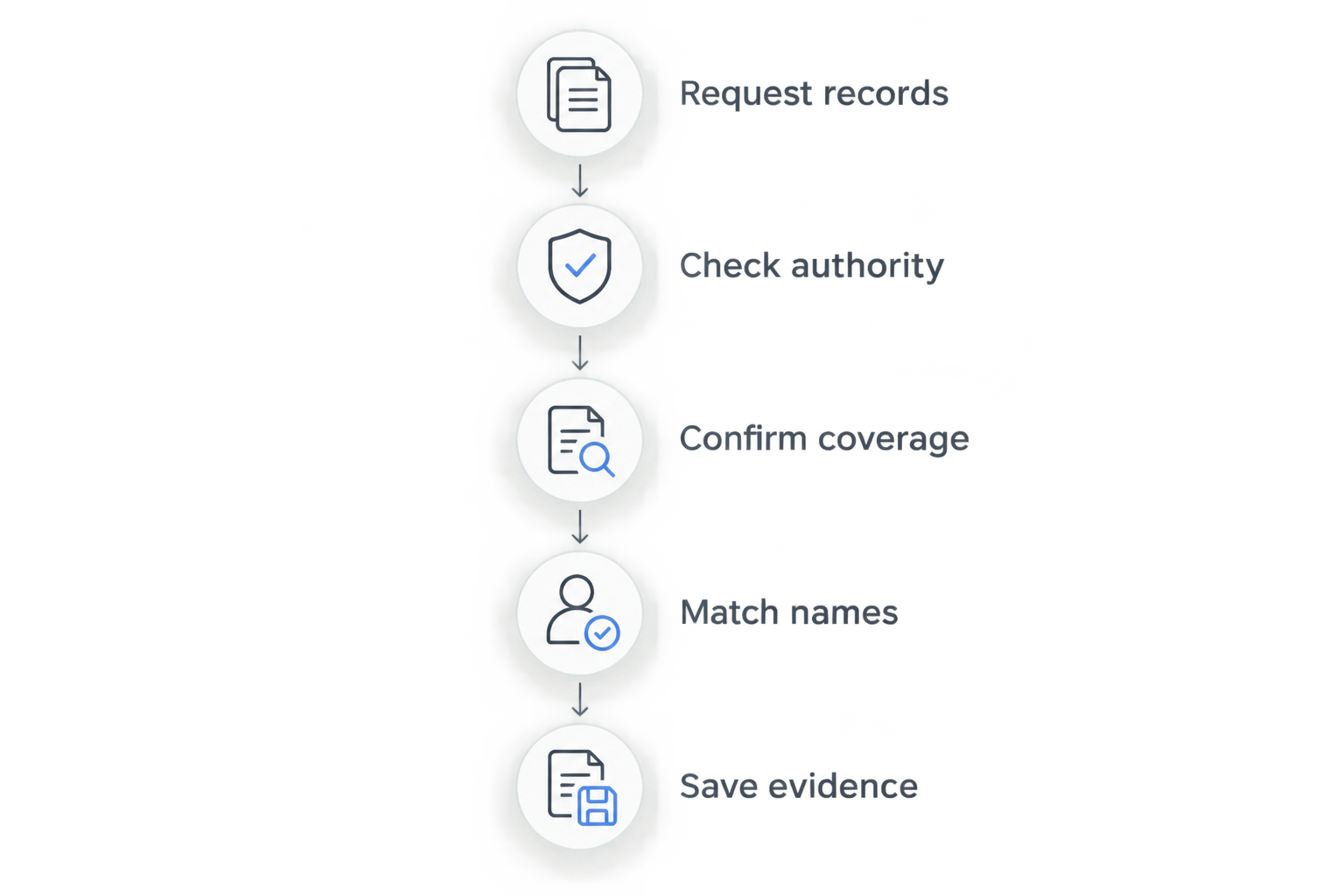
Use this sequence to keep the review organized:
- Request records. Obtain the contracting name, applicable license details, and insurance agent’s contact information.
- Check authority. Confirm local requirements and verify the applicable credential through the issuing authority.
- Confirm coverage. Have the agent provide current evidence and address questions about the proposed operation.
- Match names. Reconcile the contract, licensing record, and named insured, including documented trade names.
- Save evidence. Retain records, dated confirmations, and the final contract together.
Keep permit responsibility explicit in the contract. Ask who will obtain required permits and how you will receive the permit and inspection records; do not treat the permit application as proof of insurance.
What warning signs should make me pause?
Pause when a material discrepancy remains unresolved. That includes a required license that cannot be verified, an unexplained business-name mismatch, or insurance documentation the issuing agency will not confirm.
Watch for these specific problems:
- A license number belongs to another business or does not authorize the proposed work.
- The contractor provides only a screenshot and discourages an official lookup.
- The policy dates do not include the planned work period.
- The contractor substitutes a warranty or training certificate for insurance evidence.
- The business will not identify who is contracting with you or supplying the crew.
An administrative error is not automatically fraud. Ask for corrected documentation, then independently verify the correction before proceeding.
If a 2026 start date changes, revisit time-sensitive records. A verification file should reflect the job you are authorizing, not an abandoned schedule.
Does being licensed and insured guarantee good roofing work?
Licensing and insurance do not guarantee good workmanship. They address authorization and specified financial risks, not whether the proposed roof system, installation details, or project management meet your needs.
Review the written scope separately. It should explain the work included, how concealed damage will be handled, and who is responsible for permits, cleanup, and documentation.
References and relevant project experience help you assess execution. Keep that assessment separate from credential verification so a strong sales presentation does not obscure a failed document check.
Is a bonded roofer the same as an insured roofer?
Bonding and insurance are different protections. A contractor bond responds according to its own terms and applicable law; it does not replace general liability or workers’ compensation coverage.
If a contractor advertises licensed, bonded, and insured status, verify each claim separately. Ask the licensing authority which bond requirements apply and how a homeowner can verify the bond involved.
FAQ
How do I verify a licensed and insured roofing contractor?
Verify the applicable license with the issuing authority and confirm insurance directly with the agent or insurer. Match the legal business identity, authorized work, and policy dates to your contract and project.
What if a roofer says no license is required?
Confirm the requirements with the authority responsible for your property’s location. A jurisdiction without statewide roofing licensing can still have local registration or permit requirements.
Is a certificate of insurance enough to hire a roofer?
A certificate of insurance alone is not enough to establish coverage for your project. Confirm the document with its issuer and ask about the insured entity, proposed roofing work, dates, and relevant exclusions.
Should I ask a roofer for workers’ compensation insurance?
Ask for workers’ compensation evidence or documentation supporting a claimed exemption. Verify how the applicable rules and insurance arrangements address the people who will perform the work.
Does being a certificate holder make me an additional insured?
Being a certificate holder does not itself make you an additional insured. Additional-insured protection depends on the policy and applicable endorsement, not merely your name appearing on a certificate.
Can a roofing contractor’s license expire during my project?
A license has its own expiration and renewal requirements, so check its status against your project schedule. Ask the licensing authority how to confirm continued authorization if renewal falls during the work.
Does my homeowners insurance replace the roofer’s liability insurance?
Your homeowners policy is not a substitute for verifying the contractor’s insurance. Ask your own insurer how your policy addresses renovation work and any concerns about uninsured contractors.
One last thing
Your name on an insurance certificate is not the same as additional-insured protection. If your contract calls for that protection, ask the agent to identify the applicable endorsement and explain its scope.
Before authorizing Murray Inspection Services or another contractor in 2026, finish the identity match. The contract, applicable license, and insurance evidence should tell a consistent, independently verifiable story.
Related guides
- From roof inspection to contractor bid comparison
- How to find a reputable commercial roofing contractor
- Roof warranty types compared for homeowners