
Best overall: written roof-system coverage that includes materials and workmanship. Best for installation defects: a contractor workmanship warranty. Best baseline: a manufacturer material warranty. This Murray Inspection Services guide compares the best roof warranty types for homeowners choosing coverage in 2026.
- Murray Inspection Services ranks the best roof warranty types by covered defects, repair scope, exclusions, and claim responsibility.
- Roof-system coverage is the strongest choice when the contract expressly includes both materials and workmanship.
- Contractor workmanship warranties address covered installation defects; material warranties address covered manufacturing defects.
- Compare roof replacement coverage and transfer rules, not just the warranty headline.
Why this matters
A roof leak is a symptom, not a warranty category. A defective shingle, an installation error, and storm damage can produce similar symptoms while falling under different contracts.
The best warranty for your 2026 roofing project identifies the covered cause, the responsible party, and the repair obligation. A long headline term does not answer those questions. Neither does the word lifetime without its definition.
Roof warranties also differ from homeowners insurance. A product or installation warranty addresses defects within its written scope; insurance addresses covered losses under the policy. Read both rather than expecting either document to cover every roof problem.
What makes the best roof warranty types?
Use these criteria before comparing warranty names:
- Covered defects: Does the agreement address manufacturing defects, installation errors, or both?
- Repair scope: Does an accepted claim include replacement materials, labor, tear-off, disposal, and affected accessories? Check each item separately.
- Claim responsibility: Who accepts the claim, determines its cause, and authorizes repairs?
- Coverage changes: Does reimbursement decline through proration, or does the repair obligation change during the term?
- Eligibility conditions: Which installation, registration, maintenance, and documentation requirements apply?
- Transfer rules: Can a future owner receive coverage, and what notice or paperwork does the transfer require?
Choose the written repair obligation over the longest advertised duration. A warranty that covers replacement shingles but excludes removal and installation is not equivalent to one expressly covering that work.
Roof warranty types at a glance
These are practical coverage categories, not standardized contract names. Manufacturers and contractors use different labels, so classify each offer by its actual terms.
| Rank and warranty type | Best for | Standout feature | Key limitation |
|---|---|---|---|
| 1. Roof-system coverage including workmanship | Homeowners seeking coordinated defect coverage | Express coverage for eligible materials and installation defects | Eligibility, components, exclusions, and responsible parties require close review |
| 2. Contractor workmanship warranty | Homeowners prioritizing installation accountability | A written obligation addressing covered installation errors | Does not automatically cover defective products or remain supported if the contractor closes |
| 3. Manufacturer material warranty | Homeowners seeking baseline product-defect protection | A manufacturer’s remedy for covered manufacturing defects | Does not automatically cover installation errors or every repair expense |
The ranking favors breadth of written defect coverage. It does not mean every system warranty beats every contractor agreement. A narrow system contract can leave more gaps than coordinated material and workmanship warranties.
1. Roof-system coverage: best for coordinated defect protection
Roof-system coverage is the strongest starting point when its written terms include both eligible product defects and installation defects. Some agreements combine those obligations under manufacturer-backed coverage; others leave separate responsibilities with the manufacturer and installer.
For your 2026 project, establish which arrangement you are actually receiving. A contractor describing a roof as a complete system does not, by itself, create system-wide warranty coverage.
Roof-system coverage pros
- Can address both material and workmanship defects when expressly included.
- Can define coverage for compatible roofing components beyond the field shingles or membrane.
- Can include repair labor and removal obligations if the contract names them.
- Provides a framework for checking the roof assembly against eligibility requirements.
Roof-system coverage cons
- Coverage can depend on specified components, installation requirements, and contractor eligibility.
- A system label does not guarantee that every component or leak cause is covered.
- Registration and documentation requirements can create obligations beyond signing the roofing contract.
Best for: Homeowners replacing a roof who want coverage across both products and installation.
Ask for the actual warranty document before accepting a proposal. Highlight who covers installation defects and whether that obligation applies throughout the advertised term. Then identify the remedy: repair, replacement materials, reimbursement, or another contract-defined response.
Check accessories individually. Flashing, underlayment, ventilation components, sealants, and penetrations should not be assumed covered because the main roof covering is covered. If the contract excludes an item, request a written explanation of who remains responsible for it.
Verdict: Buy when the issued agreement expressly covers materials and workmanship, and your installation meets its conditions.
2. Contractor workmanship warranty: best for installation accountability
A contractor workmanship warranty addresses installation defects within the contractor’s written scope. It is separate from a manufacturer’s promise concerning defective roofing products.
This distinction matters when the roof covering itself is sound but installation details need correction. The agreement should explain which work is covered, who determines responsibility, and how you report a problem.
Contractor workmanship warranty pros
- Gives the installer a written obligation for covered installation errors.
- Can define correction duties for work outside a product manufacturer’s coverage.
- Can establish a direct reporting and repair process with the contractor.
Contractor workmanship warranty cons
- The agreement depends on the named contractor fulfilling its obligations.
- Manufacturing defects, storm damage, and work performed by others are not automatically included.
- Vague wording can leave repair scope and responsibility unresolved.
Best for: Homeowners who want clear accountability for how the roof was installed.
Read the exclusions alongside the promise. If a workmanship agreement excludes leaks around penetrations, flashing, or roof transitions, determine exactly which installation defects remain covered. Do not accept a broad sales statement as a substitute for a specific repair obligation.
Ask what happens if the original contractor is unavailable. A manufacturer’s product warranty does not automatically replace an installer’s workmanship promise. Any independent backing must appear in the documents, not just the proposal conversation.
For a 2026 reroof, retain the signed workmanship agreement separately from the product literature. You should be able to identify the responsible business without searching through advertisements or an expired proposal link.
Verdict: Buy alongside product-defect coverage when the contractor’s repair duties and exclusions are clear.
3. Manufacturer material warranty: best for baseline product protection
A manufacturer material warranty provides a stated remedy for covered manufacturing defects. Its focus is the roofing product, not an automatic guarantee against every leak or roof failure.
The remedy depends on the agreement. Some contracts include certain labor obligations; others limit remedies or change them over time. Read the coverage schedule rather than treating all manufacturer warranties as equivalent.
Manufacturer material warranty pros
- Establishes a manufacturer’s written responsibility for covered product defects.
- Can operate alongside a separate contractor workmanship agreement.
- Provides product-specific definitions, exclusions, and claim procedures.
Manufacturer material warranty cons
- Does not automatically cover incorrect installation.
- Can leave removal, disposal, replacement labor, or accessories outside the remedy.
- Proration and other limits can reduce the benefit over time.
Best for: Homeowners seeking product-defect protection while separately addressing installation risk.
Check whether the warranty covers only the roof covering or also names other components. A shingle warranty should not be read as a promise covering decking, flashing, or the entire assembly unless the agreement says so.
Next, identify how a claim is evaluated. The manufacturer can require evidence under its claim procedure, so preserve product identification, installation records, and photographs. Follow the actual reporting instructions rather than assuming the installer’s visit starts a manufacturer claim.
A material warranty remains useful even when broader coverage is unavailable. The mistake is treating it as complete roof protection rather than a defined product remedy.
Verdict: Buy as baseline product protection; skip treating a material-only warranty as complete roof coverage.
How to compare the actual warranty documents
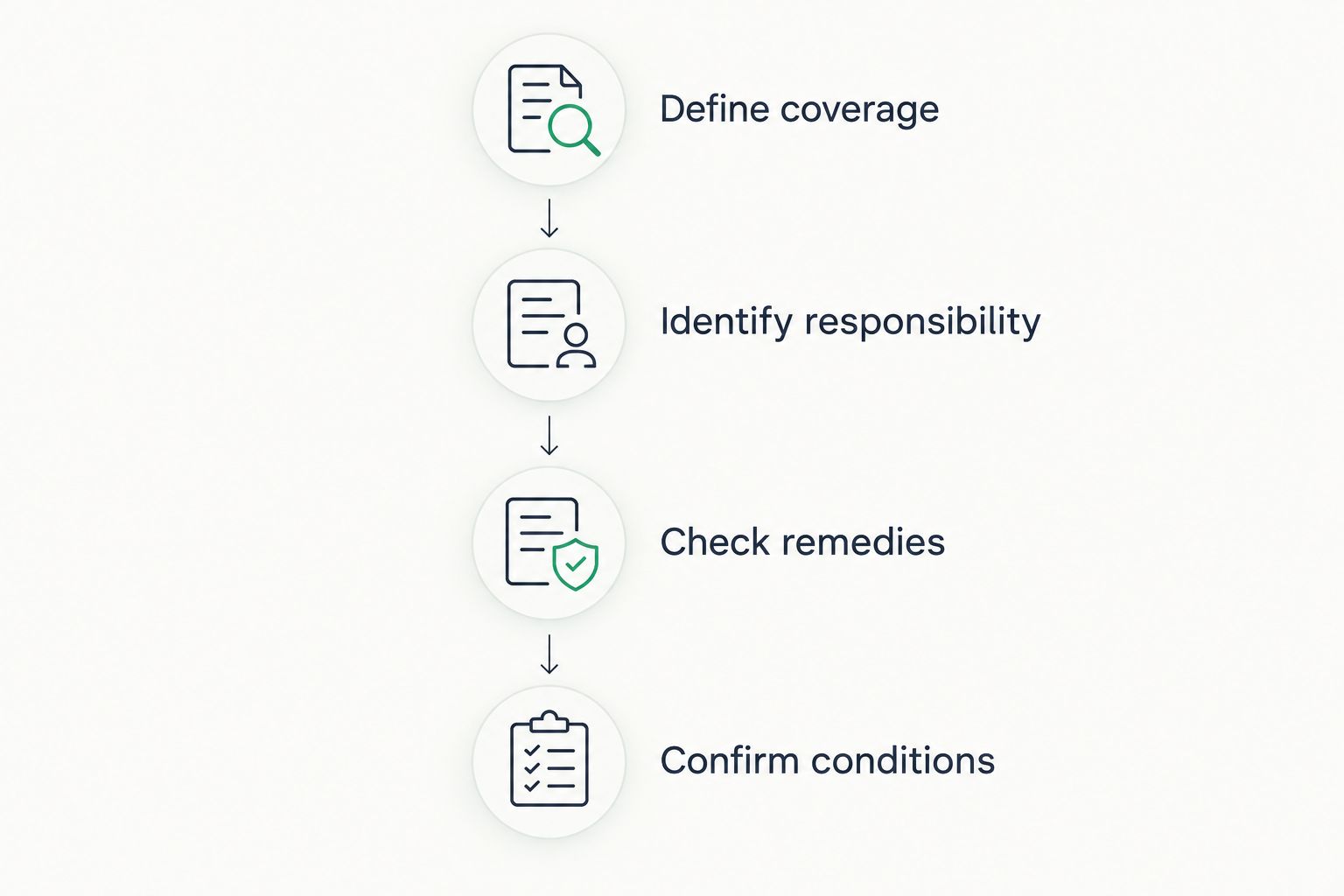
Use this sequence before choosing between proposals. Keep at least 2 documents together: the roofing agreement and the warranty terms. Add registration confirmations and product records when required.
Define coverage
Write down which document addresses product defects and which addresses installation defects. If neither clearly accepts a particular responsibility, ask for clarification before signing.
Identify responsibility
Name the party that receives each claim. Ask these 3 questions: Who evaluates the cause? Who authorizes repairs? Who performs the covered work?
Check remedies
List the covered repair activities separately. Materials, removal, disposal, installation labor, and interior damage are different obligations; coverage for one does not establish coverage for another.
Confirm conditions
Check installation requirements, registration deadlines, maintenance duties, transfer procedures, and reporting instructions. Put each required action into your project records instead of relying on a verbal reminder.
Build 1 owner file containing the signed contracts, issued warranties, required confirmations, invoices, product identification, and roof photographs. Give the file to the next owner if you sell, together with the applicable transfer instructions.
Provisions that change the ranking
Several important features are provisions within a warranty, not separate warranty types. Compare them across every offer.
Nonprorated coverage
Nonprorated coverage means the stated benefit is not reduced through the contract’s proration schedule during the specified period. It does not mean every expense is covered. Read the remedy and exclusions alongside that period.
Transferability
Transferability determines whether coverage can pass to another owner under the agreement’s conditions. It does not automatically preserve the original owner’s full benefits. Check eligibility, deadlines, required notices, and changes in coverage.
Wind and other named coverage
A named wind provision has its own conditions and exclusions. It is not blanket storm insurance, and it does not establish hail coverage. Match each hazard to the relevant warranty or insurance wording.
Lifetime wording
Lifetime is a contract definition, not a promise that the roof cannot fail. Establish whose lifetime or ownership period applies and whether coverage changes after a specified stage.
How the warranty types are ranked
Murray Inspection Services ranks roof warranty types by written defect coverage, repair scope, claim responsibility, and conditions—not by advertised duration. This comparison evaluates coverage structures, not individual contractors or named manufacturer programs.
The strongest 2026 choice closes the gap between product failure and installation failure. When separate agreements provide that protection, compare them together against a system warranty instead of assuming a single document is better.
Which roof warranty should you choose?
Choose coverage that expressly addresses both materials and workmanship. Use a roof-system agreement when its terms provide that protection; otherwise, pair a manufacturer material warranty with a clear contractor workmanship warranty.
If you are staying in the home, examine how remedies change over time. If you expect to sell, examine transfer rules. Neither priority replaces the need to identify the covered defects and responsible parties.
Before signing in 2026, request the documents that will actually govern your installation. A sample brochure helps explain an offer, but the issued warranty and signed agreement establish the terms you need to retain.
FAQ
What’s the best roof warranty type for a homeowner?
The best roof warranty type expressly covers both eligible material defects and installation defects. Compare a qualifying roof-system agreement with coordinated manufacturer and contractor warranties, then check exclusions and repair duties.
Is a workmanship warranty better than a manufacturer warranty?
A workmanship warranty and a manufacturer warranty address different responsibilities. Workmanship coverage concerns covered installation errors; a manufacturer material warranty concerns covered product defects.
Does a lifetime roof warranty cover every roof problem?
No. Lifetime roof warranty coverage follows the contract’s definition, limits, and exclusions. Check whose ownership or lifetime applies and whether the remedy changes over time.
Does a roof warranty cover storm damage?
A roof warranty does not automatically cover storm damage. Check any named wind or other hazard provisions separately, and review your homeowners insurance for covered losses.
Can I transfer a roof warranty when I sell my house?
You can transfer a roof warranty only when its terms permit the transfer and you meet its conditions. Review required notices, deadlines, and any changes to the next owner’s coverage.
Does a new roof warranty cover replacement labor?
Replacement labor is covered only to the extent stated in the warranty. Check removal, disposal, installation, and material obligations separately rather than assuming they form one benefit.
What should I keep for a roof warranty claim?
Keep the signed roofing agreement, issued warranty, required registration confirmation, invoices, product identification, and photographs. Follow the warranty’s reporting procedure and document the condition before repairs whenever safe.
One last thing
Photograph the roof details before concealed work disappears. Underlayment, flashing interfaces, and other covered layers become harder to document after the roof covering is installed. Ask the installer to include those photographs in your owner file.
For Murray Inspection Services readers, the final recommendation is simple: keep evidence of what was installed alongside the promises covering it. A warranty document explains the obligation; project records help establish which roof that obligation concerns.
Related guides
- Best roof underlayment types compared for storm protection
- Best roofing materials for hail-prone areas
- Best impact-resistant shingles ranked by durability
- Best roofing shingle brands ranked by lifespan