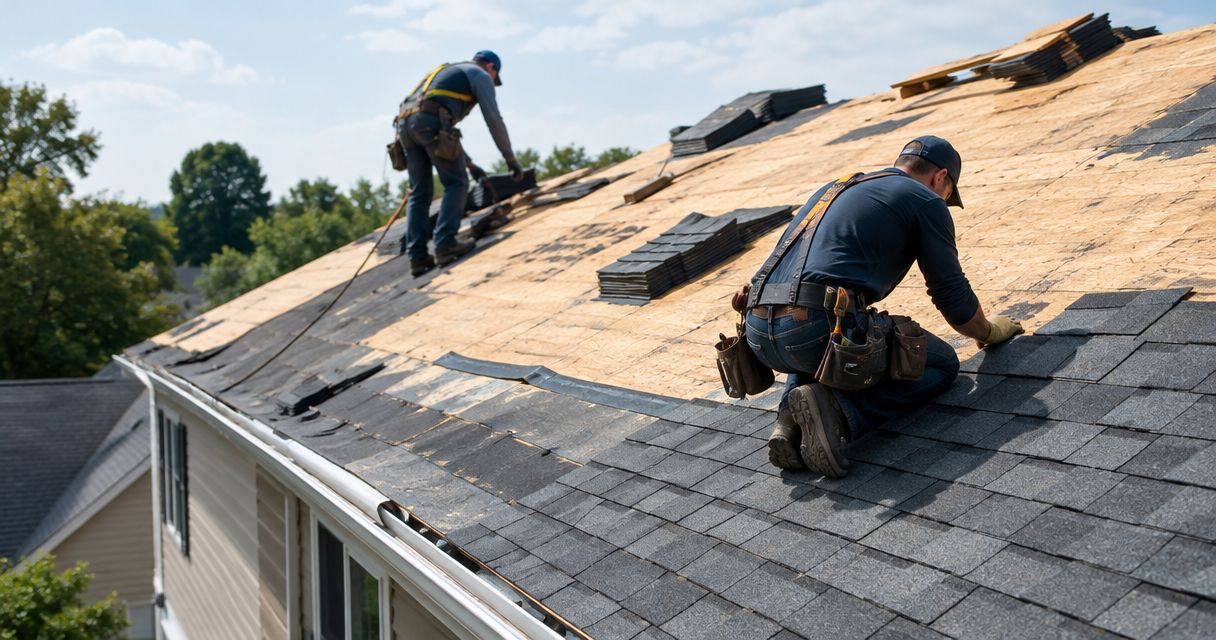
Your tear off and replace roof cost depends on measured roof area, removal work, replacement materials, and the condition of the deck underneath; an itemized contractor bid establishes your project total. Hidden deck damage is a separate budgeting risk, so your 2026 estimate should explain how additional repairs are documented and approved before work proceeds.
- Tear off and replace roof cost requires an itemized scope, not a house-size shortcut.
- One roofing square equals 100 square feet of roof surface.
- Compare removal, deck repairs, flashing, ventilation, disposal, and installation across every bid.
- Homeowners considering Murray Inspection Services should request documented roof findings before comparing replacement bids.
Why this matters
A roof replacement quote describes a construction scope, not just a roofing material. If one contractor includes flashing replacement and another excludes it, their totals do not represent the same job.
Before discussing replacement with Murray Inspection Services, write down your concerns: leaks, missing shingles, storm damage, or a roof approaching replacement. Ask what the assessment covers and what documentation you will receive. Separate the condition assessment from the decision to authorize construction.
How much does it cost to tear off and replace a roof?
Your project total comes from the work required to remove the existing covering and install the specified replacement system. For a 2026 roof estimate, ask contractors to separate the following components rather than presenting an unexplained lump sum.
| Scope component | What the bid should identify | What to question |
|---|---|---|
| Roof measurement | Actual roof surface area and measurement method | A total based only on indoor floor area |
| Tear-off | Existing materials and layers being removed | Removal described without its limits |
| Deck assessment | When exposed decking will be examined | An assumption that concealed wood is sound |
| Deck repairs | Repair authorization and measurement method | Open-ended repairs without approval terms |
| Replacement system | Covering, underlayment, flashing, and accessories | A material name without installation details |
| Ventilation | Existing conditions and proposed changes | Ventilation omitted from the scope |
| Site work | Protection, debris handling, and cleanup | Unclear responsibility for disposal |
| Administration | Applicable permits and inspection responsibilities | No identified party handling required approvals |
A complete bid also identifies exclusions. Interior water damage, gutters, structural work, and unrelated repairs should not be assumed included merely because a contractor is replacing the roof.
Compare matching scopes before comparing totals. A shorter proposal is not necessarily a simpler project; it can leave more decisions unresolved until construction starts.
Measure roof area, not living space
One roofing square equals 100 square feet of roof surface. A hypothetical roof measuring 2,000 square feet therefore contains 20 roofing squares before any material allowance for cuts and waste.
That conversion describes area, not a project estimate. Pitch, overhangs, attached structures, and roof geometry prevent you from treating a home's living area as its roof measurement.
Ask each contractor to identify measured area separately from ordered material quantities. This distinction helps you understand whether different bids disagree about the roof itself or about the materials needed to cover it.
Full tear-off versus an overlay: compare the scope
A full tear-off removes the existing covering before the replacement system goes on. An overlay installs a new covering over an existing one where the roof condition, applicable rules, and system requirements permit it.
These are different construction approaches. Do not accept them as interchangeable answers to the same replacement request.
| Approach | Best for | Main advantage | Main limitation |
|---|---|---|---|
| Full tear-off | Projects requiring removal and examination of the exposed deck | Gives access to decking after the covering is removed | Adds removal, debris handling, and temporary exposure during work |
| Overlay | Eligible roofs where the existing assembly can remain | Avoids removing the covering that stays in place | Leaves the existing covering in place and limits access to the deck |
For a tear-off request, require an explicit removal scope. Words such as replacement or reroofing do not, by themselves, explain what the contractor intends to remove.
An overlay also does not correct rotten decking simply by covering it. Ask the contractor to explain why the existing assembly qualifies before considering that alternative, and verify applicable requirements with the responsible local authority.
Why tear-off and replacement costs vary
The following factors change the amount or complexity of work. Use them to explain differences between 2026 bids without assuming the largest total includes the most complete scope.
- Roof area and geometry. Valleys, dormers, hips, and intersections create cutting and detailing work beyond covering an uninterrupted plane.
- Removal scope. The existing material and number of layers affect what must be detached, handled, and taken off the property.
- Access and safety. Pitch, building height, staging space, and access around the house influence how crews reach and work on the roof.
- Deck condition. Deteriorated decking requires evaluation and repair before it can serve as a suitable installation surface.
- Replacement assembly. The chosen covering, underlayment, flashing details, and ventilation plan determine what gets installed.
- Local requirements and logistics. Applicable permits, inspections, disposal arrangements, and site restrictions affect project responsibilities.
Ask contractors to explain these differences in writing. A statement such as difficult roof is less useful than identifying the access restriction or roof detail involved.
You do not need to become a roofer to compare bids. You need enough detail to establish whether each contractor plans to complete the same work under the same conditions.
How do you compare roof replacement bids fairly?
Start with the roof findings, then move to the proposed construction. The roof inspection to contractor bid comparison workflow addresses that sequence; your own comparison should keep observations, proposed work, and unresolved questions separate.
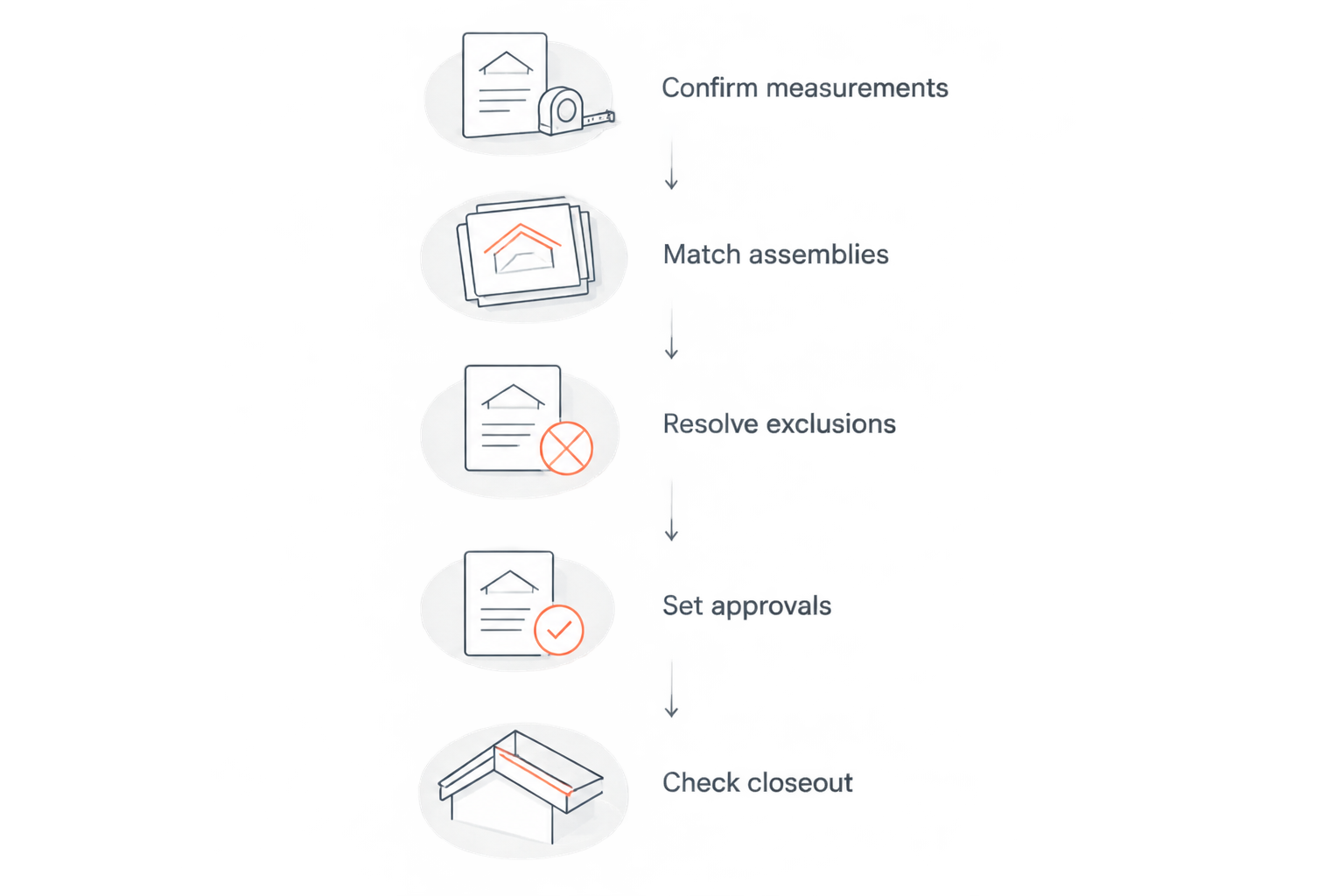
- Confirm measurements. Ask whether each bid uses measured roof surface area and whether its removal scope covers the same roof sections.
- Match assemblies. Compare the covering, underlayment, flashing, ventilation work, and installation details rather than the covering alone.
- Resolve exclusions. Identify everything left outside the agreement, including deck repairs, gutters, interior damage, or structural work.
- Set approvals. Establish how concealed damage will be photographed, described, and authorized before additional work begins.
- Check closeout. Confirm who handles cleanup, applicable inspections, completion documentation, and warranty paperwork.
These steps expose scope differences before they become construction disputes. Keep the written answers with the agreement rather than relying on a conversation you cannot reconstruct later.
How should you choose the replacement roof material?
Choose the assembly that fits the building before treating material selection as an appearance decision. Roof slope, structural capacity, drainage details, and installation requirements all belong in that discussion.
Comparisons of different roof types need climate and building context: a regional material discussion does not establish that a particular system fits your roof. Ask the bidding contractor to explain suitability for your house and identify any preparation the proposed assembly requires.
For your 2026 replacement decision, distinguish necessary work from elective changes. Replacing deteriorated decking addresses the installation surface; changing the roof's appearance is a separate choice with its own scope implications.
Do not compare a material-only description with a complete assembly proposal. Request enough detail to understand the covering, the layers beneath it, the transitions around penetrations, and responsibility for those details.
What happens if the contractor finds rotten decking?
Concealed deck damage becomes visible only where the existing covering is removed or the deck is otherwise accessible. A preconstruction assessment can identify warning signs, but it cannot establish the condition of every covered surface.
Your agreement should define the response before tear-off starts. Ask for photographs showing the affected location, a description of the proposed repair, and written approval before additional work proceeds, subject to agreed emergency protection measures.
Decking is also different from the framing beneath it. If exposed conditions raise structural concerns, establish who evaluates them and whether a separate qualified professional is needed.
A concealed-damage clause should describe a process, not grant unlimited permission. Keep your approval records with the original scope so the final invoice can be checked against authorized work.
Will homeowners insurance pay for the replacement?
Homeowners insurance does not automatically pay because a roof needs replacement. Coverage depends on the policy, the cause of damage, exclusions, and the insurer's claim determination.
For a 2026 storm-related project, keep evidence of the reported event, roof findings, temporary protection, and proposed repairs. Do not treat a contractor's replacement recommendation as an insurer's coverage decision.
Ask the contractor to distinguish observed damage from assumptions about coverage. If you discuss the roof with Murray Inspection Services, request a clear separation between documented conditions and conclusions that belong to your insurer.
Also keep construction authorization separate from claim expectations. Understand your contractual responsibility before signing, even when a claim remains under review.
What should be settled before tear-off starts?
Resolve site protection and weather planning alongside the construction details. Identify where removed materials will go, which areas must remain accessible, and how the contractor will protect exposed work if conditions interrupt installation.
Your 2026 agreement should also identify the person authorized to approve changes. A crew should not have to guess whether a conversation with someone at the property permits additional work.
Ask how the contractor will document completion and address unresolved items. Cleanup, required inspections, and the handover of warranty documents belong in the closeout discussion, not in an assumption that everything ends when the last shingle is installed.
FAQ
How do I estimate my tear off and replace roof cost?
Estimate your tear off and replace roof cost from an itemized contractor bid using measured roof area and a defined removal scope. Require separate treatment of concealed deck repairs, exclusions, disposal, and the complete replacement assembly.
How many square feet are in a roofing square?
One roofing square equals 100 square feet of roof surface. A hypothetical 2,000-square-foot roof contains 20 roofing squares before any material allowance for cuts and waste.
Is tearing off a roof the same as replacing shingles?
Tearing off a roof means removing the existing covering; replacing shingles does not by itself define that removal scope. Ask the contractor to state what stays, what comes off, and what gets installed.
Does a roof replacement include rotten plywood?
A roof replacement includes rotten decking repairs only to the extent the agreement specifies them. Require written terms for documenting concealed damage, measuring repairs, and obtaining your approval.
Can I put a new roof over my existing shingles?
An overlay is an option only when the existing roof, applicable rules, and proposed system permit it. It leaves the existing covering in place rather than providing the deck access created by a full tear-off.
Will insurance cover an old roof that needs replacing?
A roof’s need for replacement does not establish insurance coverage. Your policy, the cause of damage, exclusions, and the insurer’s determination govern the claim.
What should I ask Murray Inspection Services before comparing roof bids?
Ask Murray Inspection Services what roof conditions the assessment covers and what written findings you will receive. Use documented observations to question each contractor’s proposed scope rather than assuming an assessment authorizes replacement.
One last thing
Ask what will remain on your roof, not just what will be installed. Existing flashing, ventilation components, decking, and other retained elements affect the scope even when the visible covering is new.
Have the contractor mark retained and replaced components in the proposal. That distinction makes a replacement agreement more precise without requiring you to inspect the roof yourself.
Related guides
- How much does roof replacement cost?
- How do I choose a roof replacement company?
- Is roof replacement covered by homeowners insurance?