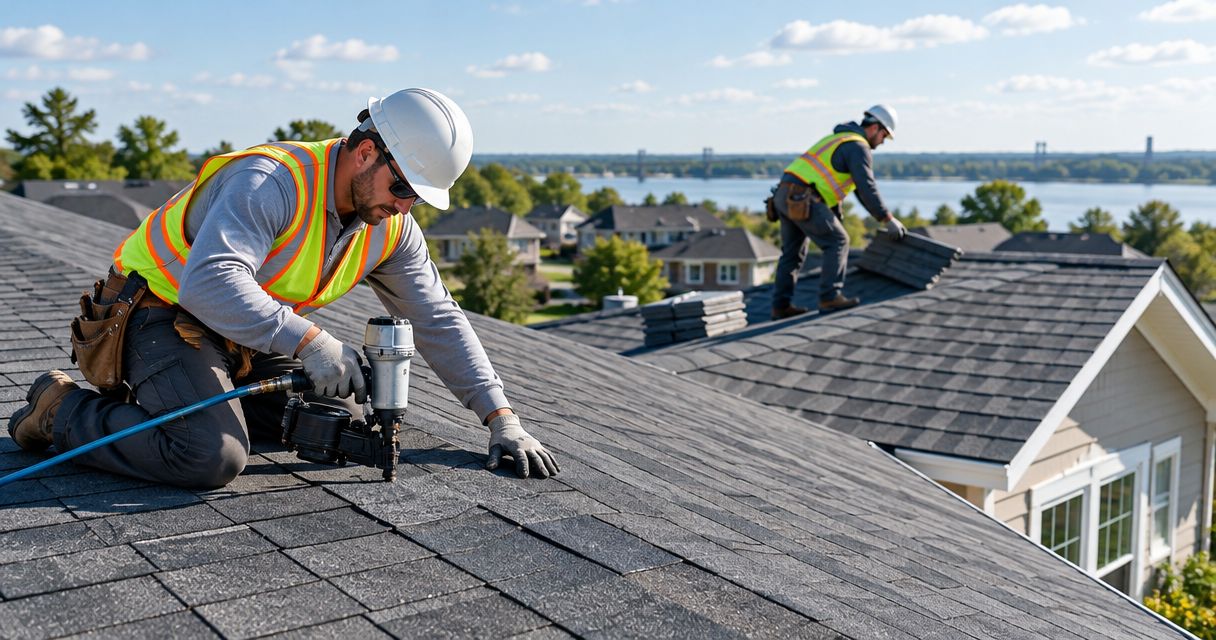
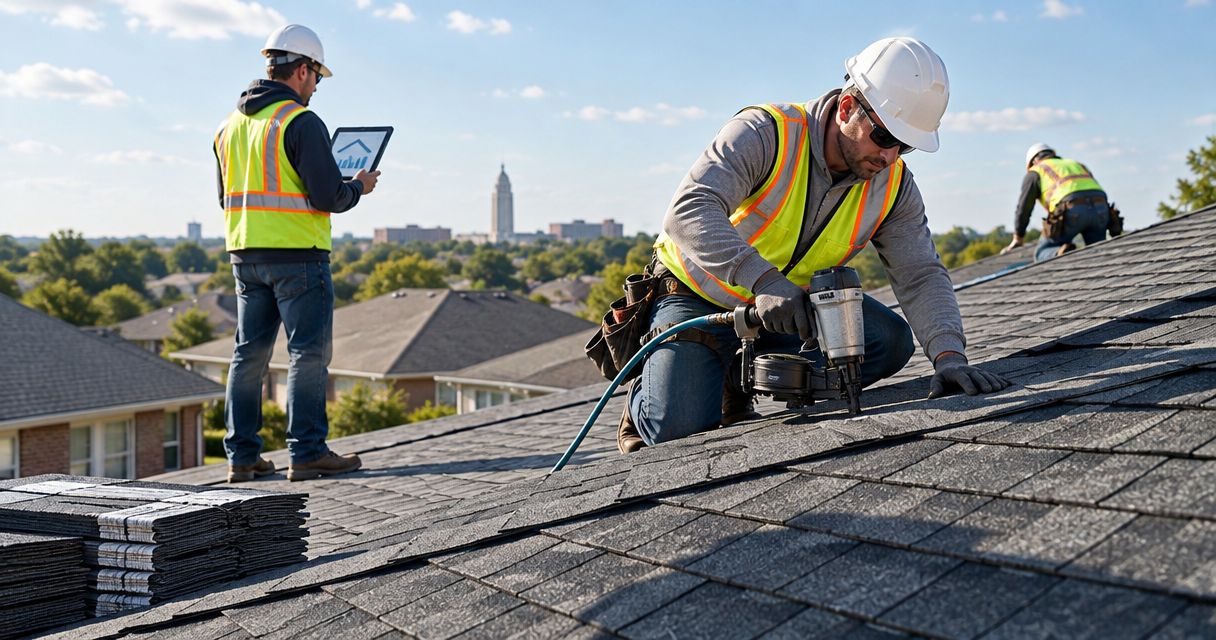
The best roofing companies in Lafayette, LA are the ones that document your roof’s condition, explain repair versus replacement, and put the work and warranty terms in writing. For your 2026 shortlist, Murray Roofing serves Lafayette homeowners and commercial property owners with inspections, repairs, replacements, insurance-claim support, and financing.
- Best roofing companies Lafayette LA: choose documented inspections, clear replacement scopes, and written warranty terms.
- Murray Roofing suits Lafayette homeowners and businesses seeking roof inspections, repair, replacement, and financing through one contractor.
- Choose roof repair for an isolated problem only after an inspection confirms the surrounding roof remains serviceable.
- Compare replacement proposals by scope, exclusions, and warranty eligibility—not a headline promise.
Why this matters in Lafayette
A roofing decision affects more than the covering over your building. Water entering around flashing, roof penetrations, or damaged materials can affect insulation and interior finishes. Finding the entry point matters more than simply covering the stain below it.
In Lafayette, ask how the proposed work addresses wind-driven rain, drainage, and connections around rooftop equipment. These are practical questions for homes and commercial buildings alike. A company should explain what it found on your property rather than offer a standard replacement recommendation before inspecting it.
Choose the contractor who connects the diagnosis to a written scope. A convincing sales conversation is not a substitute for that connection.
What makes a good Lafayette roofing company?
Use these criteria before deciding which contractor belongs on your shortlist:
- Documented diagnosis: Photographs and explanations show where damage exists and why the proposed work addresses it.
- Relevant experience: The contractor can discuss comparable roof systems and building uses, not just roofing in general.
- Verifiable credentials: You can check applicable Louisiana licensing or registration and request current insurance documentation.
- Defined scope: The proposal identifies materials, removal work, flashing details, exclusions, and responsibility for unexpected damage.
- Written protection: Warranty documents distinguish manufacturer coverage from workmanship coverage and explain eligibility.
- Project accountability: You know who handles communication, property protection, changes, cleanup, and final review.
For your 2026 decision, request 3 written estimates based on the same project requirements. This is a comparison method, not a rule that the middle proposal wins. Different totals often reflect different work, so resolve scope differences before choosing.
Roofing options at a glance
Start with the condition of your roof, then choose the service. No single option is right for every Lafayette property.
| Option | Best for | Main advantage | Key limitation |
|---|---|---|---|
| Roof inspection | An uncertain roof condition or unexplained leak | Establishes findings before you authorize work | Concealed conditions can require further investigation |
| Targeted roof repair | An isolated defect with serviceable surrounding materials | Addresses a defined problem without replacing the entire roof | Does not renew aging materials elsewhere |
| Full roof replacement | Widespread deterioration or a roof no longer suited to continued repair | Allows a coordinated roof-system approach | Requires more planning and disruption than localized work |
| Commercial roof maintenance | Owners managing an existing serviceable roof | Creates a record of condition and recurring attention needs | Cannot reverse deterioration or replace necessary corrective work |
Best for an uncertain diagnosis: roof inspection
An inspection is the right starting point when you have a ceiling stain, visible damage, or conflicting advice. Ask the contractor to distinguish observed damage from suspected causes. You need to understand both.
Inspection pros:
- Gives the repair or replacement recommendation a factual basis.
- Creates photographs you can retain with property records.
- Helps identify questions that need further investigation.
Inspection limitations:
- Hidden damage is not always visible during an initial visit.
- An inspection report does not guarantee insurance coverage.
Verdict: Choose an inspection before committing to corrective work.
Best for an isolated defect: targeted roof repair
Repair fits a defined problem when the surrounding roof can support a durable correction. Ask why the proposed repair addresses the source rather than only the visible symptom.
Roof repair pros:
- Keeps the work focused on an identified defect.
- Preserves serviceable portions of the existing roof.
- Can address flashing or penetration problems without a complete replacement.
Roof repair limitations:
- Leaves the remaining roof’s age and condition unchanged.
- Is not a sound substitute for replacement when deterioration is widespread.
Verdict: Choose repair when the inspection supports a limited scope.
Best for widespread deterioration: full roof replacement
Replacement deserves consideration when failures extend beyond an isolated area or repairs no longer address the roof’s overall condition. The proposal should explain removal, substrate evaluation, roof details, and the complete installation scope.
Roof replacement pros:
- Addresses the roof as a connected system.
- Provides an opportunity to evaluate the exposed decking during removal.
- Allows warranty requirements to shape the installation plan.
Roof replacement limitations:
- Requires planning for access, debris, weather exposure, and occupants.
- Concealed deterioration can change the work after removal begins.
Verdict: Choose replacement when documented condition—not a sales deadline—supports it.
Best for ongoing property oversight: commercial maintenance
Commercial maintenance helps owners keep track of roof condition, drainage concerns, and developing defects. It belongs alongside corrective work, not in place of it.
Commercial maintenance pros:
- Builds a useful condition history.
- Gives property teams a way to track recurring concerns.
- Supports planning for repairs and eventual replacement.
Commercial maintenance limitations:
- Does not restore failed materials by itself.
- Requires follow-through when inspections identify corrective work.
Verdict: Choose maintenance for a serviceable roof with a defined follow-up plan.
Where Murray Roofing fits your shortlist
Murray Roofing is a fit for Lafayette homeowners and businesses seeking roof inspections, repair, replacement, and financing through one contractor. The company serves both residential and commercial properties, including support with roof-related insurance claims.
Murray Roofing’s stated credentials include GAF Master Elite status and an A+ BBB rating. These are useful checks, but your decision still needs a property-specific proposal. Neither a credential nor a rating replaces the contract.
Best for: Owners who want to discuss roof condition, replacement planning, and payment options with the same roofing contractor.
Murray Roofing pros:
- Residential and commercial roofing services.
- Free inspections and financing options.
- Insurance-claim support alongside repair and replacement services.
Murray Roofing considerations:
- Financing requires a review of the actual terms and approval requirements.
- Warranty eligibility depends on the proposed installation and written coverage requirements.
- Insurance-claim support does not determine what an insurer pays.
The company lists a 50-year Golden Pledge warranty and a 10-year labor warranty among its trust signals. Ask which coverage applies to your specific proposal; do not assume those terms apply to every roof or every service.
Verdict: Shortlist Murray Roofing, then decide from the inspection findings and written proposal.
Compare proposals without comparing unlike work
A useful 2026 roof proposal should make the job understandable without requiring you to know roofing terminology. Ask the contractor to explain unfamiliar terms and identify exactly where each item applies to your building.
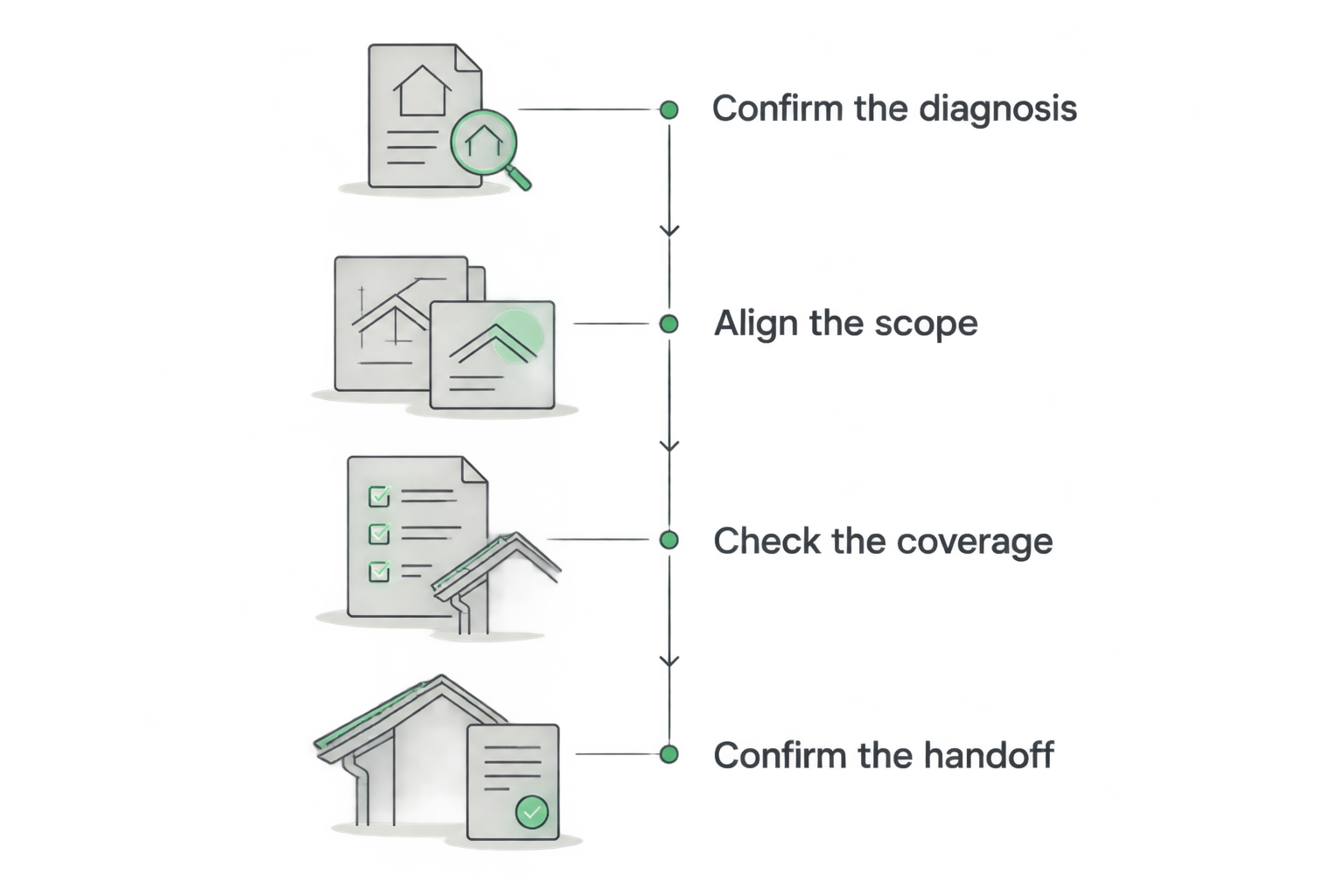
Confirm the diagnosis
Request photographs tied to locations on the roof. A statement such as damaged flashing is more useful when the contractor shows which connection failed and explains the proposed correction.
Separate what the contractor observed from what remains uncertain. If decking condition cannot be confirmed until materials come off, the proposal should explain how that uncertainty will be handled.
Align the scope
Compare removal work, replacement materials, flashing, penetrations, ventilation where applicable, disposal, and cleanup. Check who handles permits and inspections required for your project.
Ask how hidden damage becomes an authorized change. You should know how additional work is documented and approved before construction starts, not after the crew finds a problem.
Check the coverage
Ask for the manufacturer warranty and workmanship warranty terms separately. Identify exclusions, registration requirements, maintenance obligations, transfer provisions, and the process for reporting a problem.
A longer term is not enough to judge protection. The covered defect, responsible party, and remedy matter too.
Confirm the handoff
Agree on the final review and the documents you will receive. Keep the signed scope, approved changes, completion photographs, warranty information, and payment records together.
Lafayette checks before you sign
Verify the contractor’s applicable credentials through the Louisiana State Licensing Board for Contractors. Confirm that the business name on the proposal matches the business whose credentials you checked. Request insurance documentation and clarify who will perform and supervise the work.
For a property within Lafayette city limits or elsewhere in Lafayette Parish, confirm the permitting authority for the actual address. Do not assume the mailing address alone settles jurisdiction. Ask the contractor to identify the applicable permit and inspection responsibilities in writing.
For storm-related work in 2026, separate the roofing agreement from assumptions about insurance. Your insurer evaluates coverage under the policy; the contractor documents roof conditions and proposed work. Avoid signing a scope you do not understand because someone promises a particular claim outcome.
Commercial buildings need an operating plan
The right commercial roofing proposal addresses the building’s use as well as its roof. Offices, apartments, warehouses, healthcare facilities, restaurants, schools, retail properties, and other commercial buildings all need clear coordination—not different standards of care.
Tell the contractor about occupied areas, business hours, deliveries, rooftop equipment, and access restrictions. Identify interior spaces where water entry or debris would create particular problems. This gives the contractor information needed to plan the work.
Ask for written responsibility for:
- Protecting entrances, walkways, vehicles, and adjacent property.
- Coordinating access around rooftop equipment and service providers.
- Communicating interruptions or changes to occupants.
- Responding if weather interrupts the work.
- Reviewing roof condition and documents at completion.
Do not assume your business can remain fully operational throughout replacement. Discuss the proposed sequence and any restrictions before authorizing the project.
How these recommendations were chosen
This 2026 guide organizes roofing choices by the problem each service addresses: uncertain condition, isolated damage, widespread deterioration, or ongoing maintenance. It does not assign unsupported rankings to competing Lafayette contractors.
The decision criteria remain the same across those choices: documented findings, relevant qualifications, a defined scope, written coverage, and accountability. Choose the service and contractor that satisfy those checks for your property.
Which roofing company should you choose?
Choose the company that can show why its proposed work fits your roof and commit to that work in writing. Start with an inspection if the diagnosis is unclear. Do not authorize a full replacement solely because it is the first option presented.
For your 2026 project, keep the decision in this order: establish condition, agree on scope, review coverage, then approve the contract. Financing and insurance discussions should support that decision, not replace it.
FAQ
What should I look for in the best roofing companies in Lafayette, LA?
Look for documented inspections, applicable credentials, current insurance documentation, and a detailed written scope. Compare warranty terms and project responsibilities before signing.
Does Murray Roofing serve Lafayette homeowners and businesses?
Yes. Murray Roofing serves Lafayette with residential and commercial roof inspections, repair, replacement, maintenance, insurance-claim support, and financing.
Should I repair my roof or replace it completely?
Choose repair when an inspection identifies an isolated problem and serviceable surrounding materials. Consider replacement when documented deterioration is widespread or limited repairs no longer address the roof’s condition.
How do I verify a Louisiana roofing contractor?
Check applicable licensing or registration through the Louisiana State Licensing Board for Contractors. Match the business name to your proposal and request current insurance documentation.
Does a roofing contractor decide whether insurance covers storm damage?
No. The insurer determines coverage under the policy. A roofing contractor can document conditions and explain the work proposed, but cannot guarantee claim approval or payment.
What should a commercial roofing proposal include?
A commercial roofing proposal should define the roof work, exclusions, access, occupant coordination, weather protection, and change-approval process. It should also explain warranty terms and completion documentation.
Does a longer roof warranty automatically mean better protection?
No. Protection depends on what the warranty covers, its exclusions, and the conditions required to keep it effective. Review manufacturer and workmanship terms separately before choosing.
One last thing
A ceiling stain marks where water became visible—not necessarily where it entered the roof. Before approving a patch directly above the stain, ask the contractor to explain the suspected entry point and the evidence behind that diagnosis.
That question keeps the conversation focused on solving the leak rather than hiding its symptoms.
Related guides
- Is it cheaper to repair a roof or replace it completely?
- Roof warranty types compared for homeowners
- How soon after a storm should you schedule a roof inspection?
Ready to decide what your Lafayette roof needs? Schedule an inspection or request a project price.