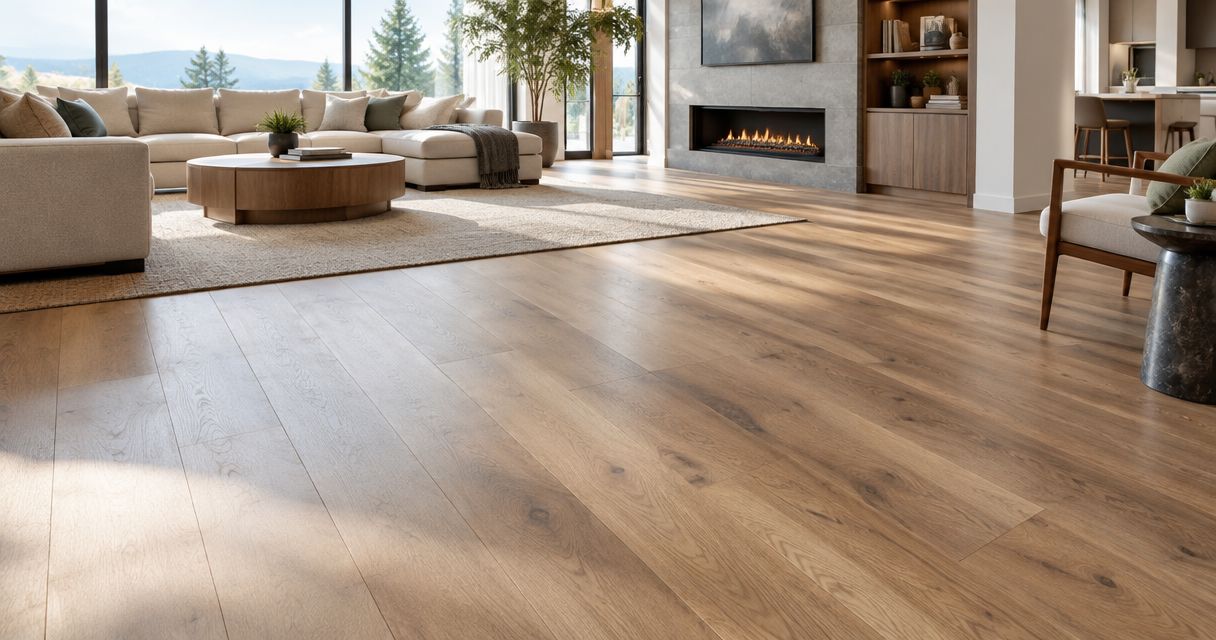
We Create Luxury Living. For 2026, the best overall flooring for main living areas is engineered hardwood; the best choice for wet rooms is porcelain tile; and the best option for spill-prone family spaces is luxury vinyl plank, subject to the selected product’s installation requirements.
- The best flooring options custom homes need are room-specific: engineered hardwood, porcelain tile, and luxury vinyl plank lead different uses.
- Choose solid hardwood for future refinishing, carpet for quiet bedrooms, and natural stone for distinctive mineral variation.
- Murray Custom Homes offers in-house design guidance for buyers choosing Semi-Custom Homes or fully Custom Homes.
- Approve flooring thickness, transitions, moisture requirements, and maintenance expectations before installation.
Why this matters
Flooring affects more than appearance. It changes how a room sounds, how it feels underfoot, and what happens when water, grit, or furniture reaches the surface. A beautiful sample is not enough to make the decision.
Murray Custom Homes provides in-house drafting and design, blueprints and 3D renderings, and project management. Murray Custom Homes is best for Lincoln-area custom-home buyers who want in-house design guidance alongside construction. Start with Semi-Custom Homes if you want to choose selected features while leaving remaining decisions to the builder; choose fully Custom Homes when shaping the home around your preferences is the priority.
For a 2026 home, select flooring by room conditions first and visual continuity second. One material does not need to solve every room.
What makes the best flooring for a custom home?
Use these criteria before comparing colors or plank widths:
- Moisture suitability: Separate resistance at the exposed surface from the requirements of the subfloor, seams, and installation assembly.
- Wear and repair: Decide whether you prefer refinishing, individual-piece replacement, or accepting visible wear over time.
- Comfort and acoustics: Consider standing comfort, footsteps, sound absorption, and the room below.
- Maintenance: Match cleaning and sealing requirements to the care you will actually provide.
- Design continuity: Coordinate grain, sheen, grout, thresholds, and adjacent cabinetry rather than judging isolated samples.
- Installation compatibility: Confirm subfloor preparation, finished height, radiant-heat approval where relevant, and manufacturer instructions.
These criteria keep your 2026 flooring selection focused on daily use rather than a showroom impression. A material earns its place when its limitations fit the room as well as its appearance does.
Best flooring options at a glance
| Rank and material | Best for | Standout feature | Key limitation |
|---|---|---|---|
| 1. Engineered hardwood | Main living areas with real-wood character | Real wood surface over layered construction | Refinishing depends on the wear layer and product |
| 2. Porcelain tile | Bathrooms and wet-room floors | Very low water absorption | Hard underfoot; installation still needs appropriate waterproofing |
| 3. Luxury vinyl plank | Spill-prone family spaces | Resilient surface with wood-look designs | Cannot be sanded and refinished like wood |
| 4. Solid hardwood | Rooms where future refinishing matters | Solid wood through the board | Responds to changes in humidity |
| 5. Carpet | Quiet, comfortable bedrooms | Soft surface that absorbs sound | Holds dirt and needs regular cleaning |
| 6. Natural stone | Feature spaces with natural variation | Mineral patterning unique to the material | Care requirements vary substantially by stone |
1. Engineered hardwood: best flooring for main living areas
Engineered hardwood combines a real wood surface with a layered base. It brings wood grain into living rooms, dining rooms, and connected spaces without requiring solid wood construction throughout the board.
The layered structure generally improves dimensional stability compared with solid hardwood, but it does not make the floor immune to moisture. Choose the actual product—not just the category—before approving an installation location.
Engineered hardwood pros:
- A real wood surface with natural grain variation.
- Layered construction that limits dimensional movement.
- Some products allow future sanding and refinishing.
Engineered hardwood cons:
- Refinishing depends on wear-layer thickness and manufacturer guidance.
- Scratches and dents remain possible.
- Standing water can damage the flooring.
Best for: Connected living spaces where you want real wood and a consistent visual foundation.
Ask for the wear-layer specification and approved cleaning method. Examine samples beside cabinetry and trim in the lighting planned for the home; a finish that looks restrained in daylight can look different under evening lighting.
Verdict: Buy engineered hardwood for main living areas when real wood matters and the product suits the installation conditions.
2. Porcelain tile: best flooring for bathrooms and wet rooms
Porcelain tile is a ceramic tile category defined by water absorption of 0.5% or less under ANSI A137.1. That makes the tile body well suited to moisture exposure, but the tile itself does not waterproof the floor assembly.
Bathrooms require attention to the substrate, waterproofing, joints, drainage where applicable, and the selected tile’s suitability for its intended use. A polished appearance is not evidence of suitable wet traction.
Porcelain tile pros:
- Very low water absorption.
- A hard surface suitable for routine cleaning.
- Designs ranging from restrained solids to stone-look finishes.
Porcelain tile cons:
- Hard underfoot and unforgiving to dropped objects.
- Grout and joints introduce separate maintenance needs.
- Wet traction varies by product and finish.
Best for: Bathrooms, laundry rooms, and other areas where moisture suitability drives the decision.
Confirm whether the exact tile is approved for a bathroom floor, shower floor, or wall. Those uses are not interchangeable. Keep a record of the tile and grout selections for future repairs.
Verdict: Buy porcelain tile for wet rooms, with the installation assembly specified as carefully as the tile.
3. Luxury vinyl plank: best flooring for spill-prone family spaces
Luxury vinyl plank is resilient flooring designed to reproduce the appearance of wood. It suits households that prioritize straightforward surface cleaning and a wood-look finish in active spaces.
Water-resistance claims vary by product and installation system. A water-resistant or waterproof plank does not establish that the underlying floor assembly can tolerate leaks, trapped moisture, or flooding.
Luxury vinyl plank pros:
- A resilient surface rather than a rigid tile surface.
- Wood-look patterns without natural wood grain maintenance.
- Routine surface cleaning that does not require wood refinishing.
Luxury vinyl plank cons:
- The surface cannot be sanded and refinished like wood.
- Heat, sunlight, and heavy loads require product-specific checks.
- Printed patterns repeat, so layout affects the finished appearance.
Best for: Family rooms and active household spaces where spills and cleaning are central concerns.
Review a spread of planks rather than one sample. Confirm underlayment requirements, subfloor flatness, and any restrictions on fixed cabinetry or heavy furnishings before choosing the installation method.
Verdict: Buy luxury vinyl plank for practical family spaces after checking the complete installation requirements.
4. Solid hardwood: best flooring for future refinishing
Solid hardwood uses solid wood throughout each board. Its main advantage is the opportunity to renew the surface through sanding and refinishing when the floor’s remaining thickness and condition permit.
Wood also responds to changes in moisture and indoor humidity. Flooring species, board dimensions, site conditions, and installation methods all influence the result; the material name alone does not settle those questions.
Solid hardwood pros:
- Real wood character throughout the board.
- Potential for future sanding and refinishing.
- Finish choices that can change during a later renovation.
Solid hardwood cons:
- Seasonal humidity changes can cause movement.
- Water exposure can stain or deform boards.
- Refinishing disrupts use of the affected rooms.
Best for: Above-grade living spaces where a renewable wood surface is a priority.
Ask how the installer will evaluate site moisture and follow the flooring manufacturer’s acclimation instructions. Do not approve installation solely because the delivery date fits the construction schedule.
Verdict: Buy solid hardwood when future refinishing matters and you accept its moisture-management needs.
5. Carpet: best flooring for quiet bedrooms
Carpet provides a soft walking surface and absorbs sound within a room. That combination makes it a useful choice for bedrooms, where comfort can matter more than a continuous hard-surface floor.
Fiber, pile construction, backing, and cushion affect performance. Select those components together rather than treating the cushion as an afterthought.
Carpet pros:
- Softness underfoot.
- Sound absorption within the room.
- Texture choices that can soften a bedroom’s appearance.
Carpet cons:
- Dirt and debris collect within the pile.
- Spills need prompt attention.
- Stairs and traffic paths can show wear differently from unused areas.
Best for: Bedrooms where softness and quieter room acoustics lead the decision.
Consider door clearance and transitions to adjoining hard flooring. If your household includes pets, evaluate cleaning instructions and snag resistance instead of choosing only by color.
Verdict: Buy carpet for bedroom comfort when regular vacuuming and prompt spill cleanup fit your routine.
6. Natural stone: best flooring for distinctive feature spaces
Natural stone brings geological variation into a floor. Marble, limestone, slate, and granite differ in composition and care requirements, so “natural stone” is a starting category rather than a complete specification.
Some stones are sensitive to acidic substances, and sealing does not prevent every kind of damage. Review the exact stone and finish with the supplier before assigning it to a kitchen, bathroom, or entrance.
Natural stone pros:
- Natural mineral variation.
- Material character that differs from printed patterns.
- Finish options that change texture and appearance.
Natural stone cons:
- Care requirements vary by stone type.
- Acid-sensitive stone can etch.
- Natural variation makes a small sample an incomplete preview.
Best for: Feature areas where natural variation is the design priority and the maintenance is acceptable.
Approve representative pieces from the intended selection, not a single idealized sample.
Verdict: Buy natural stone selectively; skip it where its care requirements conflict with household habits.
How these flooring options rank
This 2026 ranking prioritizes room suitability, repair options, comfort, maintenance, design continuity, and installation compatibility. It is a material-selection guide, not a claim of laboratory testing or a comparison of specific manufacturers.
Engineered hardwood takes the overall position for main living areas because it combines a real wood surface with layered construction. Porcelain takes the wet-room position; the remaining materials answer different needs rather than competing for the same room.
Plan flooring before construction details are fixed
Murray Custom Homes provides in-house design guidance through Meghan Murray, supported by project managers with more than 20 years of combined experience. Use that guidance to connect flooring choices to the whole plan, not just the finish palette.
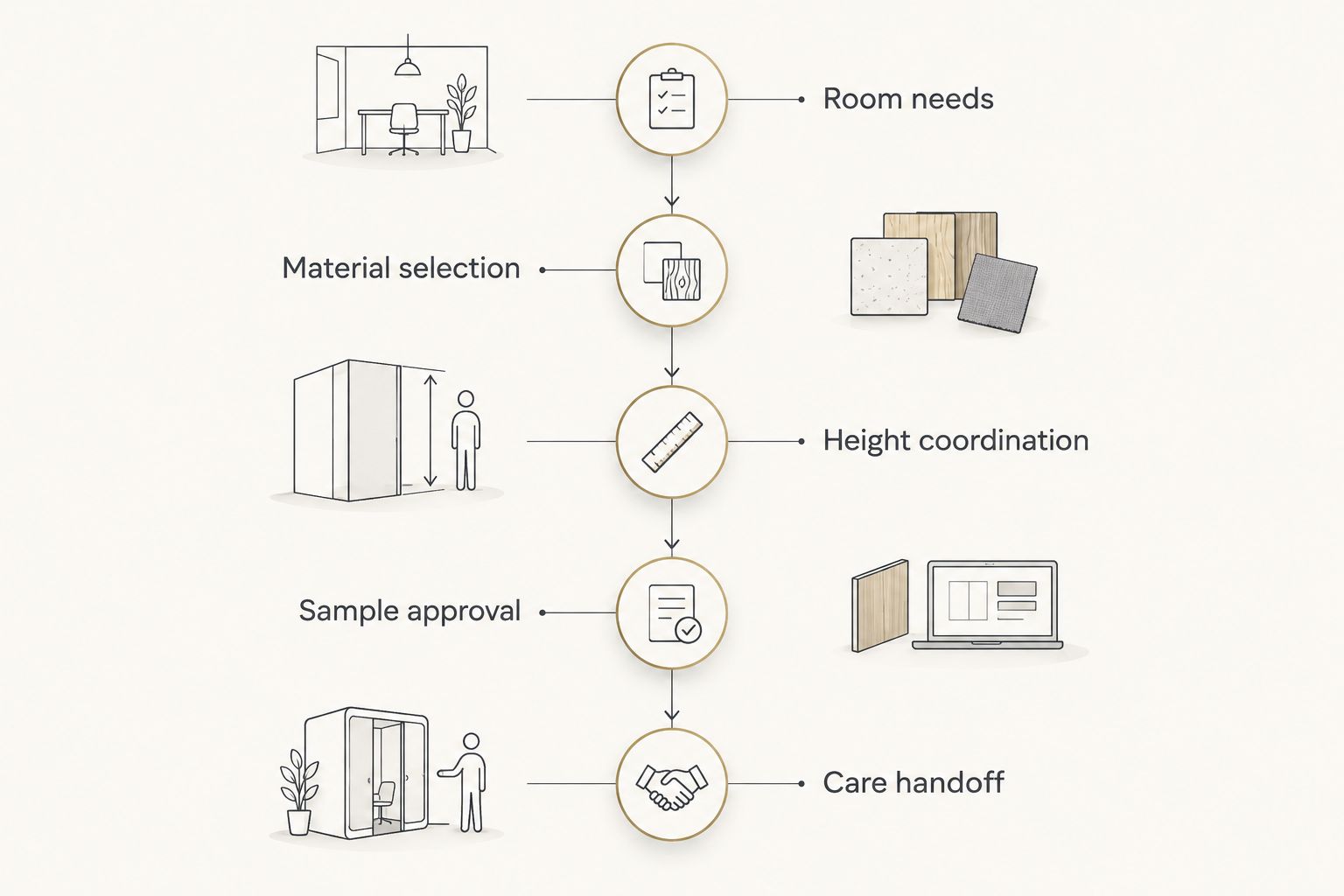
Follow this sequence for a 2026 build:
- Room needs: Identify moisture exposure, household traffic, comfort, and cleaning expectations.
- Material selection: Choose the material category, then review the exact product’s requirements.
- Height coordination: Coordinate flooring, underlayment, thresholds, stairs, cabinetry, and door clearances.
- Sample approval: Review representative samples together under the intended lighting.
- Care handoff: Keep product details, cleaning instructions, and installation records.
Semi-Custom Homes let you choose selected features while leaving remaining decisions to Murray. Fully Custom Homes center the design on your preferences; move-in-ready homes are already built, so approach their flooring as an existing feature rather than assuming you can select every finish.
Which flooring should you choose?
Choose engineered hardwood for your main living areas, porcelain tile for wet rooms, and carpet where bedroom softness matters most. Substitute luxury vinyl plank where practical surface care takes priority over a real wood surface. Choose solid hardwood for refinishing potential and natural stone for deliberate feature areas.
Murray Custom Homes serves a stated 50-mile homebuilding radius around Lincoln, Nebraska, and can build on your existing lot. Bring room priorities and representative samples to the design discussion before settling on a whole-home flooring scheme.
FAQ
What is the best flooring for a custom home in 2026?
Engineered hardwood is the best overall starting point for main living areas when you want real wood over layered construction. Use porcelain tile for wet rooms and select other materials according to comfort, cleaning, and repair priorities.
Is engineered hardwood better than solid hardwood?
Engineered hardwood generally offers greater dimensional stability, while solid hardwood provides a solid wood surface with future refinishing potential. Engineered flooring’s refinishing options depend on its wear layer and manufacturer guidance.
Is porcelain tile waterproof enough for a bathroom?
Porcelain tile has very low water absorption, but it does not waterproof a bathroom assembly. The substrate, waterproofing system, joints, and installation details still need appropriate specification.
Is luxury vinyl plank a good choice for pets?
Luxury vinyl plank is a practical option when easy surface cleaning is a priority, but it is not immune to scratching or damage. Check the selected product’s wear, cleaning, and installation requirements against your household’s needs.
Should bedrooms have carpet or hardwood?
Choose carpet for softness and sound absorption, or hardwood when you prefer a hard surface with real wood character. Carpet requires regular vacuuming, while hardwood requires protection from moisture and scratching.
Can I use the same flooring throughout my custom home?
Use one flooring material across connected rooms only when it suits every intended location. Wet rooms, stairs, and comfort-focused bedrooms can justify different materials with carefully coordinated transitions.
Can I choose flooring for a Semi-Custom Home?
Semi-Custom Homes from Murray Custom Homes let buyers choose selected features while leaving remaining decisions to the builder. Confirm which flooring choices apply to your particular project before making selections.
One last thing
A floor transition is a design decision, not leftover trim. Before approving your 2026 selections, ask to see where each material stops, how finished heights meet, and whether the transition sits beneath a closed door. Resolving those junctions on the plan makes the individual flooring choices feel intentional.
Related guides
- Best floor plan features to include in a custom home
- Best kitchen design trends for custom homes
- Best lighting design ideas for luxury homes
- Best basement finishing ideas for custom homes