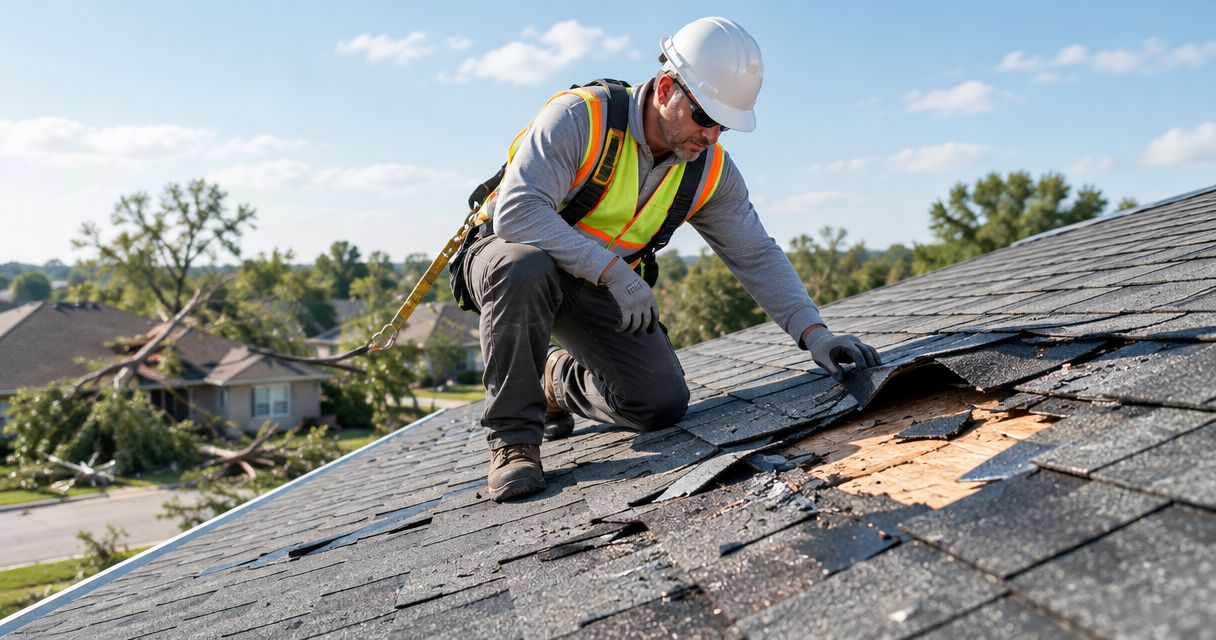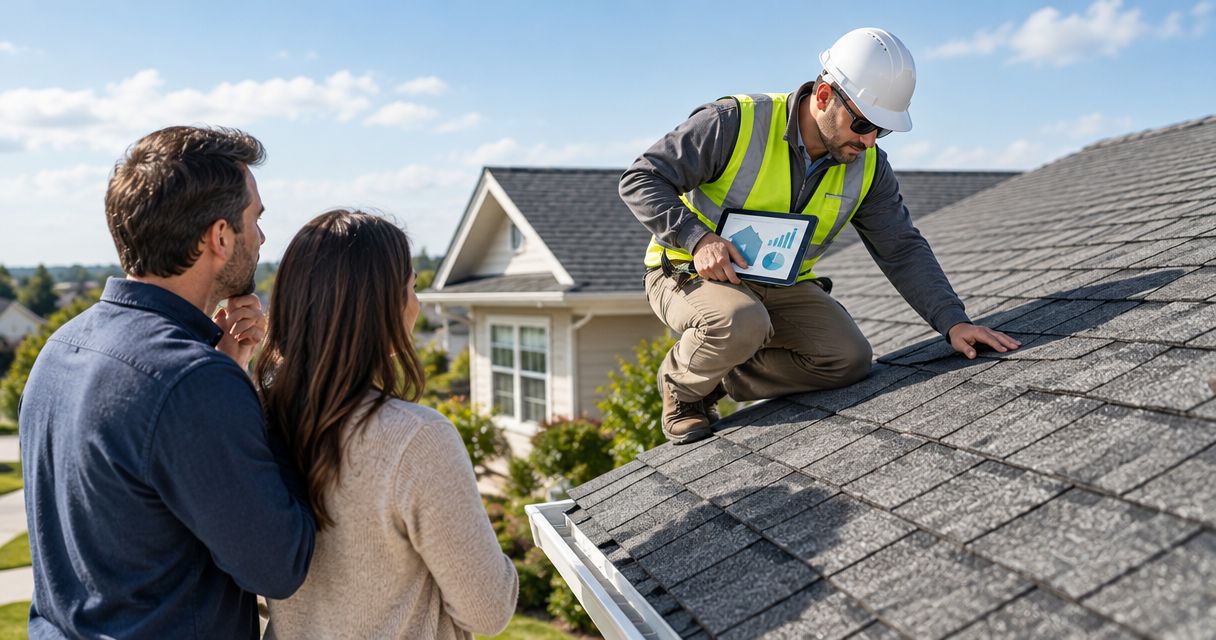
Yes—a roof inspection is worth it before buying a house when roof condition, repair history, or signs of water entry leave unanswered questions. It gives you a basis for repair requests and ownership planning, but a visual inspection cannot reveal every concealed defect or guarantee that the roof will remain leak-free.
- Is a roof inspection worth it before buying a house? Yes—resolve roof concerns before your inspection deadline.
- Murray Roofing serves Lincoln and Omaha buyers who need residential roof inspections, repairs, or replacement.
- A home inspection and a roofing inspection answer different questions; confirm the scope of each.
- Request photos, written findings, access limitations, and a clear explanation of any recommended work.
Is a roof inspection worth it before buying a house?
A roof inspection is worth arranging when its findings can change your purchase decision, repair request, or maintenance plan. Schedule it while you still have time to review the findings under your purchase contract, rather than treating it as a closing-day formality.
Murray Roofing is a fit for Lincoln and Omaha homebuyers who need a residential roof inspection and help evaluating repair or replacement. Keep that roofing assessment separate from your agent’s advice about contract rights and deadlines.
| Assessment | Best for | Main benefit | Main limitation |
|---|---|---|---|
| General home inspection | Buyers evaluating the whole property | Reviews the roof alongside other accessible building components | Roof access and detail depend on the inspection agreement and conditions |
| Roofing contractor inspection | Buyers resolving specific roof concerns | Focuses on roof condition and possible repair or replacement work | Does not replace a whole-home inspection or expose every concealed condition |
Neither assessment guarantees future performance. Ask what was actually observed, not simply whether the roof “passed.”
Why this matters before you commit
A roof problem affects more than the appearance of the house. Water entering around a roof opening or damaged covering can affect materials beneath the surface, and the visible ceiling stain does not necessarily identify the entry point.
For a Lincoln or Omaha purchase in 2026, focus on the property’s documented condition rather than assumptions about neighborhood storm exposure. A nearby roof replacement does not prove the house you are buying needs one, and an attractive roof does not establish that every flashing detail is sound.
Your goal is a decision you can explain: accept the roof’s documented condition, request further evaluation, negotiate work, or reconsider the purchase within your contract rights. An inspection supports that decision; it does not make it for you.
What should happen before your inspection deadline?
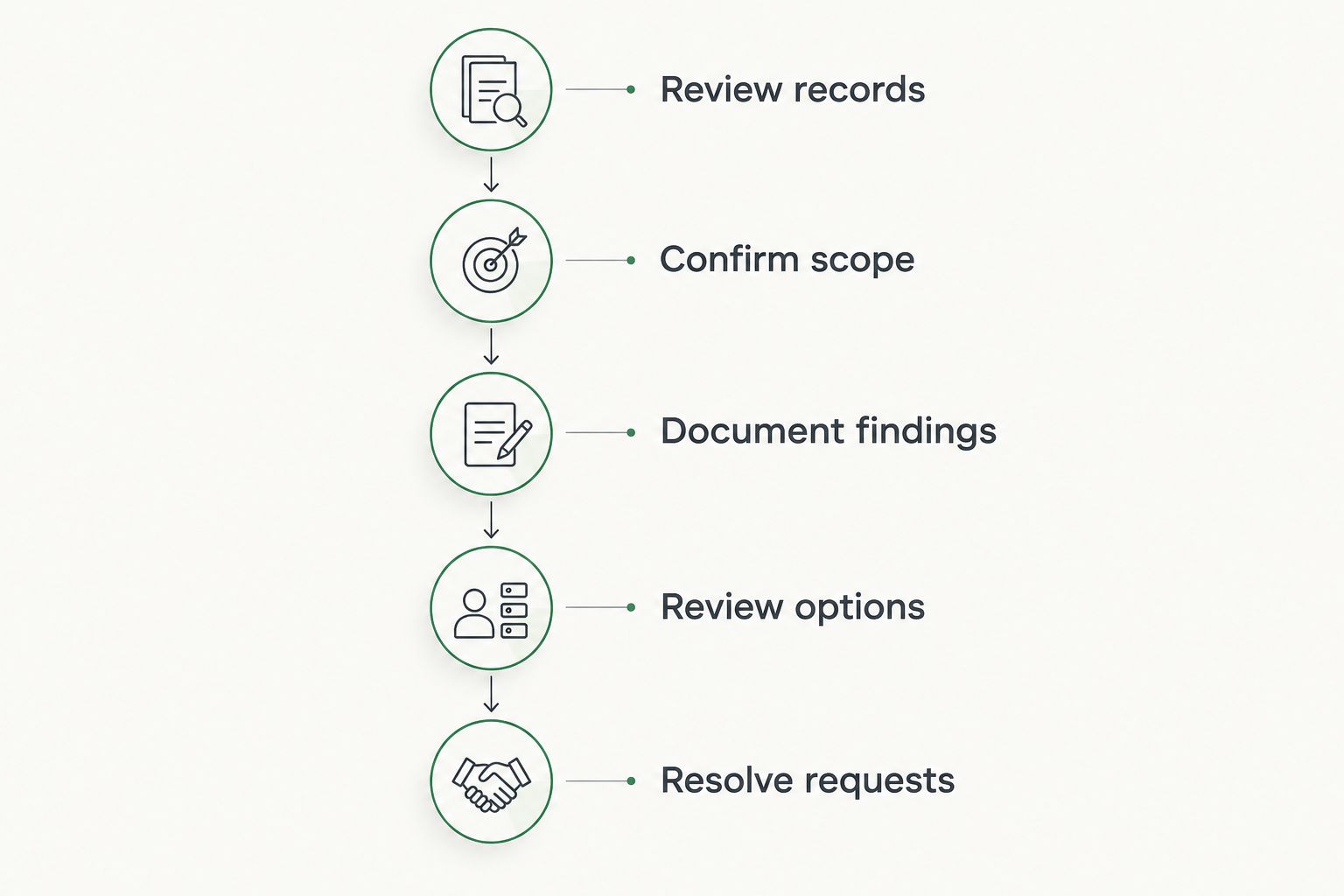
Use this sequence to turn a roofing visit into information you can act on. Confirm access with the seller and coordinate the timing through the people handling your purchase.
- Review records. Request installation paperwork, repair invoices, previous inspection findings, and warranty documents. Treat an unsupported age estimate as unverified.
- Confirm scope. Ask whether the assessment includes accessible roof surfaces, flashing, drainage, and attic observations. Establish how inaccessible areas will be documented.
- Document findings. Request photographs tied to specific locations and a written explanation of observed defects. Separate confirmed damage from conditions that need further investigation.
- Review options. Ask why repair, monitoring, or replacement is recommended. Request a written scope for proposed work rather than relying on a verbal description.
- Resolve requests. Give the findings to your agent before the relevant deadline. Have any negotiated work and required documentation recorded in the purchase agreement or amendment.
A completed visit is not the same as a resolved issue. If the report recommends further evaluation, decide who will arrange it and how the results will be reviewed before the contractual deadline passes.
What should a buyer’s roof inspection address?
Ask for findings that distinguish the roof covering from the details around its edges and openings. A statement that the shingles look acceptable leaves other questions unanswered.
Roof covering and visible damage
The assessment should identify the visible roofing material and describe observed deterioration or damage. Ask the inspector to explain whether an issue is isolated or appears across multiple areas, and what evidence supports that conclusion.
For a 2026 purchase, a seller’s statement that the roof is “newer” is not a substitute for installation records. Condition and documented history belong together.
Flashing, roof openings, and drainage
Flashing directs water at transitions such as walls, chimneys, and roof penetrations. Ask whether these locations were accessible and whether the findings identify damaged, displaced, or questionable details.
Drainage deserves attention too. Have the inspector describe visible obstructions or drainage concerns without assuming that cleaning alone resolves every water problem.
Interior evidence and inspection limits
Ask whether accessible attic areas and visible interior staining are included in the agreed scope. If they are not, coordinate that work with the appropriate inspector rather than assuming someone else covered it.
A stain can reflect an old event or an unresolved problem. Request an explanation of what is known, what remains uncertain, and what additional evaluation is recommended.
Why the value of a roof inspection varies
The inspection becomes more valuable when it resolves a specific uncertainty before you take responsibility for the property. These factors determine how much it can tell you:
- Available records: Installation and repair documents provide context that an exterior observation alone cannot establish.
- Visible warning signs: Staining, missing roofing material, and repeated patching warrant questions about cause and extent.
- Roof configuration: Chimneys, skylights, intersecting slopes, and wall connections create additional details to assess.
- Safe access: Height, slope, surface conditions, and obstructions affect what can be observed directly.
- Purchase timing: Findings are more actionable when you have time to obtain clarification and submit contractual requests.
- Unresolved repair history: An invoice shows that work occurred; it does not establish the condition of the entire roof today.
A report should explain access restrictions plainly. Snow cover, unsafe conditions, or inaccessible spaces leave questions open; they are not evidence that those areas are satisfactory.
Is a separate roof inspection needed after a home inspection?
A separate roof inspection is appropriate when the home inspection identifies roof concerns or leaves important roof areas unevaluated. Read the actual report and inspection agreement before deciding that another visit duplicates the same work.
A general home inspector assesses multiple building systems. A roofing contractor can evaluate roof-specific findings and explain the proposed scope of roofing work, but that contractor’s visit does not replace the broader home inspection.
If the home report recommends specialist evaluation, ask what prompted that recommendation. A clear question—such as whether flashing needs repair—produces a more useful follow-up than a vague request to inspect everything again.
Should roof damage stop you from buying the house?
Roof damage should prompt a documented decision, not an automatic rejection or an automatic request for full replacement. The location, extent, cause, and proposed remedy matter more than the presence of a single defect.
An isolated issue and widespread deterioration call for different discussions. Ask the contractor to explain why the recommended scope addresses the observed problem and whether any uncertainty remains beneath inaccessible materials.
For your 2026 purchase, have your agent explain the options allowed by the contract. Do not assume the seller must accept repairs, provide a credit, extend a deadline, or replace the roof.
Can an inspection confirm the roof’s exact remaining life?
A roof inspection cannot guarantee an exact remaining service life. It can document visible condition, identify concerns, and support maintenance or replacement planning based on the evidence available.
Ask what supports any life-expectancy statement: verified installation history, observed material condition, repair history, or another documented factor. Avoid treating an estimated age as a guaranteed countdown to replacement.
That distinction protects your budget planning. A roof that does not need immediate replacement still needs attention when the report identifies maintenance or repair work.
Why chimney leaks need a separate explanation
A ceiling stain near a chimney does not prove that the roof covering itself has failed. Water entry can involve roof-to-chimney flashing, chimney components, or more than one defect, so the assessment should identify the suspected pathway and the limits of that conclusion.
The scope determines chimney leak repair costs: correcting a roof connection is different work from addressing deteriorated chimney masonry. For a Nebraska purchase, request a property-specific assessment rather than applying another market’s figures to your negotiation.
Ask who will evaluate each component and whether separate trades are needed. A roofing proposal should clearly describe its boundaries instead of leaving you to assume it includes all chimney work.
What should you request if the seller agrees to roofing work?
Get the agreed scope in writing before treating the issue as resolved. A promise to “fix the roof” does not define the location, materials, documentation, or standard for confirming completion.
Request the contractor’s written scope, completion documentation, and applicable warranty paperwork. Ask your agent how completion will be verified and what happens if the work is unfinished or additional damage is found.
If replacement is proposed, distinguish the roof covering from related work involving flashing, ventilation, and damaged underlying materials. Ask which items are included and how changes will be authorized; do not assume every proposal covers the same work.
Before closing in 2026, review the completed work against the agreement. A paid invoice documents a transaction, while photographs and an appropriate follow-up assessment help establish what was completed.
Keep insurance and warranties separate from roof condition
An inspection report does not guarantee homeowners insurance approval or payment of a future claim. Give your insurer accurate roof information and ask directly about underwriting requirements before relying on coverage for the purchase.
Warranty paperwork needs its own review. Identify the issuer, covered work or materials, exclusions, transfer requirements, and any deadlines; a seller’s statement that the roof is “under warranty” does not answer those questions.
Murray Roofing lists a 50-year Golden Pledge warranty and a 10-year labor warranty among its roofing trust signals. Those terms do not establish coverage for the house you are buying: verify the actual documents, eligibility, and transfer provisions for that property.
FAQ
Is a roof inspection worth it before buying a house in 2026?
Yes—a roof inspection is worth it when it resolves roof-condition questions before your purchase deadline. Request written findings, photographs, and an explanation of any recommended repairs or further evaluation.
Does a home inspection include a roof inspection?
A home inspection can include a roof assessment, but its scope and access depend on the inspection agreement and conditions. Read the report to see what was observed and whether specialist evaluation was recommended.
Should I buy a house if the roof needs replacing?
A roof replacement need is a purchase decision to evaluate, not an automatic reason to proceed or withdraw. Obtain a written scope, review your financial position, and discuss contractual options with your agent.
Can I ask the seller to repair the roof before closing?
You can request roof repairs through the process allowed by your purchase contract. The seller’s obligations and response depend on the agreement, so have your agent document any accepted terms.
Can a roof inspection find every hidden leak?
No—a visual roof inspection cannot identify every concealed defect or guarantee that every leak source will be found. The report should state inaccessible areas and recommend additional evaluation where appropriate.
Do I need a roof inspection if the seller says the roof is new?
A recent installation date does not establish the roof’s current condition or confirm every installation detail. Request installation records and review any concerns identified by your home inspector.
Will a roof inspection guarantee homeowners insurance approval?
No—a roof inspection does not guarantee homeowners insurance approval. Confirm the insurer’s requirements directly and provide the roof information it requests.
One last thing
Ask what the inspector could not see. An access limitation is an unanswered question, not a clean finding, and it deserves a plan before you commit to the property.
For your 2026 purchase, keep the report, photographs, repair proposals, and warranty documents together. You will need the same record when reviewing seller work and planning maintenance after closing.
Related guides
- Is it cheaper to repair a roof or replace it completely?
- Can you get homeowners insurance with an old roof?
- Can a roof warranty be transferred to a new homeowner?
Buying in Lincoln or Omaha? Contact us to schedule a roof inspection with Murray Roofing and request a written scope for any recommended roofing work.