Repair a hail-damaged roof when the damage is localized and sound surrounding materials allow a reliable repair; replace it when damage is widespread or the remaining roof cannot support effective repairs. The deciding evidence is the condition of the roof—not hail size alone, a missing leak, or a contractor’s replacement recommendation. Insurance coverage is a separate decision governed by your policy and the documented loss.
- To repair or replace hail damaged roof materials, assess damage distribution, surrounding condition, and whether repairs restore water protection.
- Targeted repairs suit isolated damage; replacement suits widespread damage or roofing that cannot support a reliable repair.
- Hail dents do not automatically establish functional damage, and a dry attic does not establish an undamaged roof.
- Compare written repair and replacement scopes before authorizing permanent work.
Why this matters
A repair leaves the rest of your roof in service. Replacement removes more existing roofing, but it does not automatically make every replacement proposal necessary or every insurance expense covered.
When discussing your roof with Murray Inspection Services, ask for a recommendation tied to documented conditions. The right scope restores water protection without replacing sound roofing unnecessarily. For a 2026 storm assessment, keep the observed damage, proposed work, and insurance decision separate.
Is it better to repair or replace a hail-damaged roof?
Repair is better for isolated, repairable damage; replacement is better when damage or material deterioration makes localized work unreliable. A damaged roof section does not, by itself, establish that the entire roof needs replacement.
Compare the work required to restore the roof—not just the labels on the proposals:
| Option | Best for | Main advantage | Main limitation |
|---|---|---|---|
| Targeted repair | Isolated damage with serviceable surrounding roofing | Preserves sound materials and limits the work area | Does not address deterioration outside the repair |
| Slope replacement | Damage concentrated on a roof plane with workable boundaries | Replaces a larger damaged area without removing every slope | Connections, material matching, and local requirements need evaluation |
| Full replacement | Widespread damage or roofing that cannot support reliable repairs | Allows the affected roofing system to be renewed across the roof | Removes more material and requires a broader construction scope |
A roof plane is a continuous roof surface, often called a slope. Treating each slope separately helps distinguish concentrated storm damage from damage spread across the building.
For example, damage concentrated on 1 roof slope warrants a slope-specific explanation before you accept a whole-roof recommendation. That is a request for evidence, not a rule that limits necessary work.
When targeted hail-damage repair makes sense
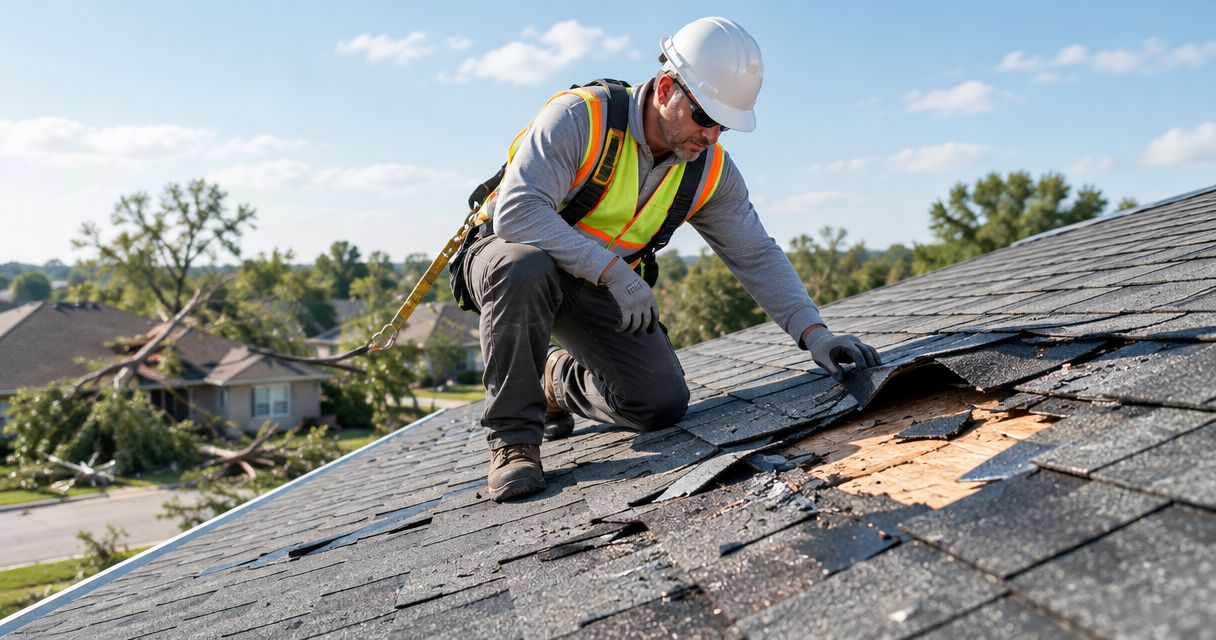
Targeted repair fits damage that a contractor can identify, reach, and correct without compromising the surrounding roofing. On asphalt shingles, that means more than finding replacement shingles: adjacent shingles must tolerate the work needed to remove fasteners and integrate the replacement.
Ask the contractor to identify the repair boundaries and explain how the completed work will shed water. The proposal should address affected flashing or other roof components rather than treating the surface covering as the entire roof.
Best for: isolated damage within otherwise serviceable roofing. The advantage is a limited scope that retains sound material; the drawback is that the untouched roof keeps its existing condition and maintenance needs.
A repair recommendation should answer:
- What damage is being corrected?
- Can surrounding materials be lifted or handled without breaking?
- Are compatible replacement materials available for the proposed work?
- How will the repair connect to existing flashing and roofing?
- What condition remains outside the repaired area?
In a 2026 repair proposal, ask for photographs that connect each repair location to the written scope. A general statement that the roof is repairable does not explain how the repair will work.
When replacing a roof slope makes sense
Slope replacement is an option when damage is concentrated on a roof plane and the remaining roof can stay in service. The contractor must explain how new work will connect at ridges, valleys, walls, and other boundaries.
Best for: concentrated damage with practical separation from sound roofing. The benefit is replacing the damaged area without automatically expanding the project to the whole building; the limitation is that transitions and differences between old and new materials remain part of the decision.
Appearance also deserves a separate discussion. A visible color difference is not the same issue as a roof that cannot shed water, and insurance treatment of matching depends on policy language and applicable requirements.
Do not accept slope replacement merely as a compromise between competing bids. Ask why the proposed boundary is technically appropriate and whether required installation details can be completed there.
When full roof replacement makes sense
Full replacement fits widespread functional damage or a roof whose remaining materials cannot support reliable repairs. Extensive deterioration can also make repeated spot repairs an inadequate response, even when hail damage draws attention to the roof.
Best for: damage across the roof or conditions that prevent dependable localized work. Replacement allows broader access to underlying components, but hidden conditions still need documentation when exposed.
The drawback is a larger project with more material removal and construction disruption. A replacement recommendation should explain why repair and slope replacement are insufficient—not simply describe replacement as the longest-lasting choice.
For a 2026 replacement scope, ask the contractor to distinguish storm damage from pre-existing wear. That distinction matters because the construction work your roof needs and the work your insurer covers are not necessarily identical.
Roof age alone does not prove that hail requires replacement. Condition, damage distribution, and repairability must support the recommendation.
Why the repair-or-replacement decision varies
There is no universal damage percentage or hail-size cutoff that settles every roof assessment. The decision depends on how the event affected the specific roof assembly.
- Damage distribution: Isolated impacts call for a different scope than damage documented across multiple slopes.
- Material condition: Brittle, cracked, or deteriorated surrounding roofing can prevent a sound localized repair.
- Functional damage: Fractures, punctures, and damaged weather-shedding components matter differently from appearance-only marks.
- Underlying condition: Wet insulation, deteriorated decking, or damaged underlayment can expand the work beyond the visible surface.
- Installation requirements: The repair must connect correctly with existing roofing, flashing, and applicable construction requirements.
- Policy and local requirements: Coverage terms, matching provisions, and building requirements affect the claim and approved scope; they do not replace the physical assessment.
A dented gutter or vent can document that impacts occurred. It does not, by itself, prove that every roof surface sustained functional damage.
Likewise, scattered granules do not identify the cause of roof wear on their own. A useful assessment explains the observed pattern, material condition, and connection between the findings and the proposed work.
How do you make the decision after a hailstorm?
Use a documented sequence rather than choosing a contractor’s preferred outcome first. Protect the building, establish the damage, and then compare solutions.
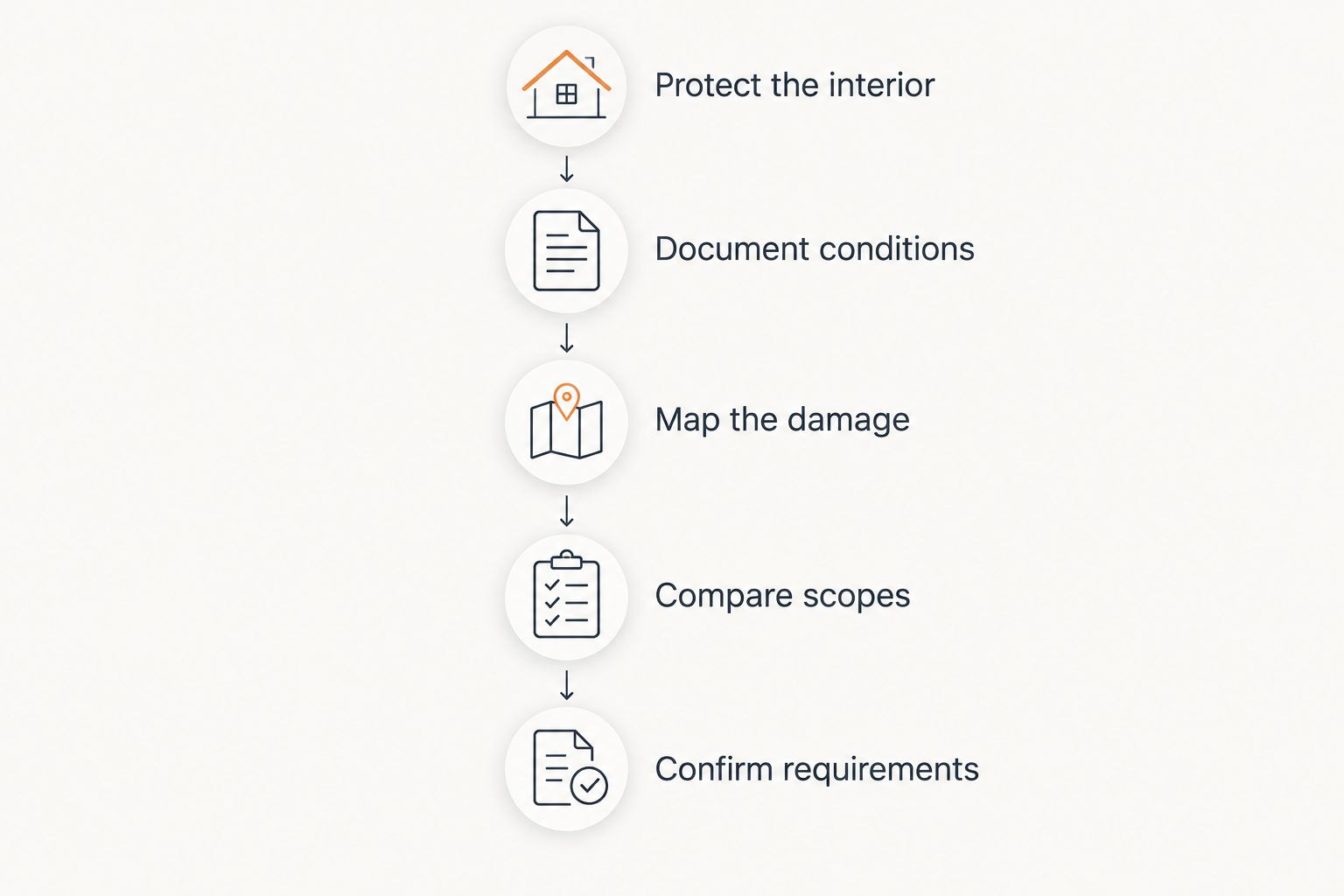
- Protect the interior. If water is entering, keep people away from affected electrical fixtures and unstable ceilings. Arrange safe temporary protection and retain records of the work; do not climb onto a storm-damaged roof yourself.
- Document conditions. Save the storm date, ground-level photographs, interior water marks, and any previous roof records. Have a qualified professional document roof-level conditions safely.
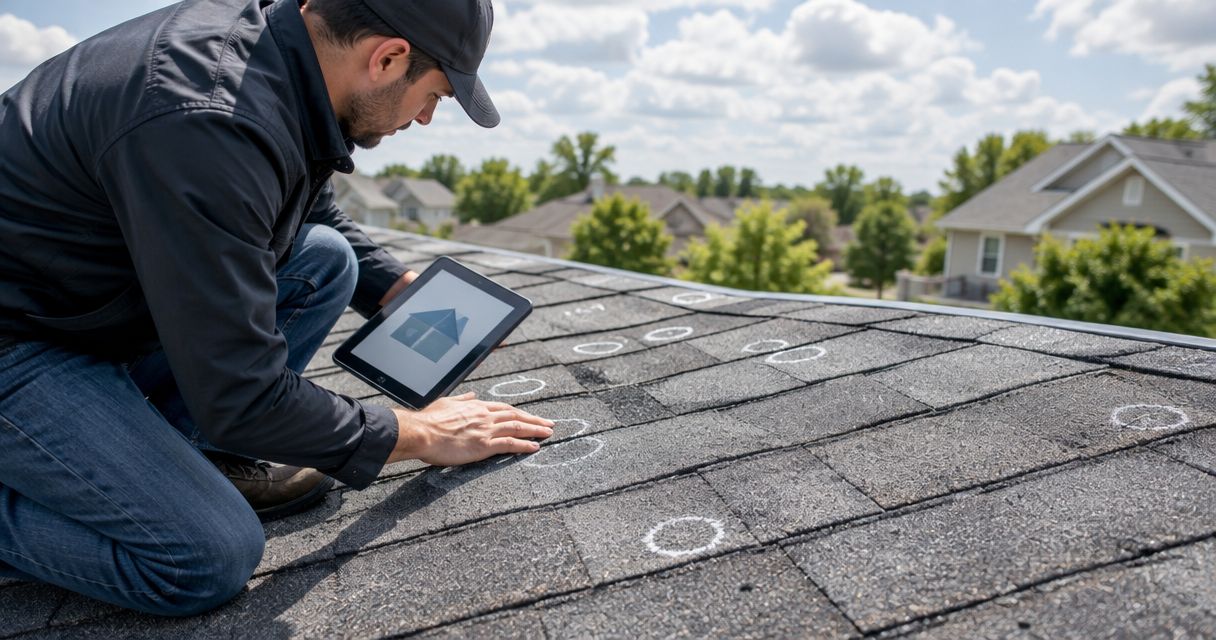
- Map the damage. Ask for photographs organized by slope and component. The report should distinguish observed storm damage from wear, installation defects, or other conditions.
- Compare scopes. Request a written explanation of repairability and the proposed work boundaries. If recommendations conflict, ask each contractor to address the same documented findings.
- Confirm requirements. Review applicable installation instructions, local requirements, and insurance communications before authorizing permanent work. Keep urgent protective work separate from the final construction decision.
For your 2026 project file, keep the inspection photographs, written scopes, invoices, and insurer correspondence together. A clear record makes it easier to identify whether a disagreement concerns damage, repair methods, or coverage.
For the documentation side of the process, see how to turn a hail damage report into an insurance claim. Documentation supports review; it does not guarantee approval.
What should you compare in repair and replacement proposals?
Compare 2 written scopes against the same roof findings whenever you are weighing repair against replacement. A short proposal that says only repair hail damage or replace roof leaves the central decision unexplained.
Ask both contractors to identify:
- Work boundaries: The specific slopes, components, and damaged locations included.
- Materials and connections: How replacement materials connect with retained roofing and flashing.
- Underlying work: How concealed damage will be documented and handled if discovered.
- Installation details: Required preparation, fastening, ventilation-related work, and water-shedding details relevant to the project.
- Exclusions and cleanup: What remains outside the scope and who handles debris removal.
Ask 3 questions before signing: What evidence supports this scope? Why is a smaller scope inadequate? What roof conditions will remain afterward?
Choose the proposal that explains the roof, not the proposal with the strongest sales language. If the explanation changes, ask for the revised reasoning and scope in writing.
Can hail damage be serious if the roof is not leaking?
Yes. Hail can damage roofing before an interior leak becomes visible, so a dry ceiling does not establish that the roof is undamaged.
The reverse also matters: an interior stain does not establish hail as the cause. Flashing defects, deterioration, and other conditions require evaluation rather than automatic attribution to the latest storm.
Does homeowners insurance decide whether repair is enough?
Your insurer decides coverage under the policy, while the physical assessment establishes the roof’s damage and repair needs. Those decisions interact, but they are not interchangeable.
If a 2026 claim allows repairs and a contractor recommends replacement, ask for the specific technical disagreement in writing. Submit supporting photographs and repairability findings through the insurer’s review process rather than assuming either position settles the issue.
FAQ
What’s the best way to decide whether to repair or replace a hail-damaged roof?
Base the decision on damage distribution, surrounding material condition, and whether repairs can restore water protection. Ask for photographs and a written explanation of why the proposed scope is sufficient.
Does every roof need replacement after a hailstorm?
No. A hailstorm does not establish that every affected roof needs replacement; isolated, repairable damage can support targeted work.
Can I replace only the damaged side of my roof?
Slope replacement is an option when damage is concentrated and the new work can connect correctly with the retained roof. Installation requirements, material compatibility, and applicable local rules must support that scope.
Does a dented metal roof automatically need replacement?
No. Dents alone do not establish that a metal roof has lost its weather-shedding function. The assessment must consider coating damage, punctures, seams, fasteners, and the specific roof system.
Should I wait for a leak before getting hail damage checked?
No. A roof can sustain damage without an immediate interior leak. Arrange a safe professional assessment rather than climbing onto the roof yourself.
Will insurance cover an older roof damaged by hail?
Coverage depends on the policy, documented cause of damage, exclusions, and applicable claim terms. Roof age can affect claim treatment, but age alone does not answer whether a particular loss is covered.
What should I do if contractors disagree about replacing my roof?
Ask each contractor to explain the recommendation against the same documented roof conditions. Focus on damage locations, surrounding material condition, and the feasibility of the proposed repairs rather than accepting a verbal verdict.
One last thing
Ask for a photograph of the area immediately surrounding the proposed repair—not just a close-up of the impact mark. A convincing damage photograph is not automatically a convincing repair plan. The surrounding roofing determines whether the damaged piece can be replaced without creating another problem.
Related guides
- Can hail damage be repaired instead of replaced?
- Is roof hail damage covered by homeowners insurance?
- How do I choose a roof replacement company?