
Yes, a roof warranty can be transferred to a new homeowner if the written warranty allows it and the required transfer steps are completed. A home sale does not establish that coverage transferred, and the manufacturer's warranty and the contractor's workmanship warranty need separate checks.
- Can a roof warranty be transferred to a new homeowner? Yes, when the written terms permit and requirements are met.
- Manufacturer coverage and contractor workmanship coverage require separate transfer checks.
- Get written confirmation of the new owner’s coverage rather than relying on the seller’s description.
- Murray Roofing provides roof inspections, repairs, and replacement for Lincoln and Omaha homeowners.
Can a roof warranty be transferred to a new homeowner?
Yes, but treat transferability as a contract question—not a promise attached to the house. Locate the actual warranty, identify who issued it, and follow that issuer's instructions. For a purchase closing in 2026, use the warranty issued for the installed roof rather than assuming today's advertised terms apply.
Start by separating the roof warranty types. A product warranty and an installation warranty address different responsibilities; transferring one does not establish that the other transferred.
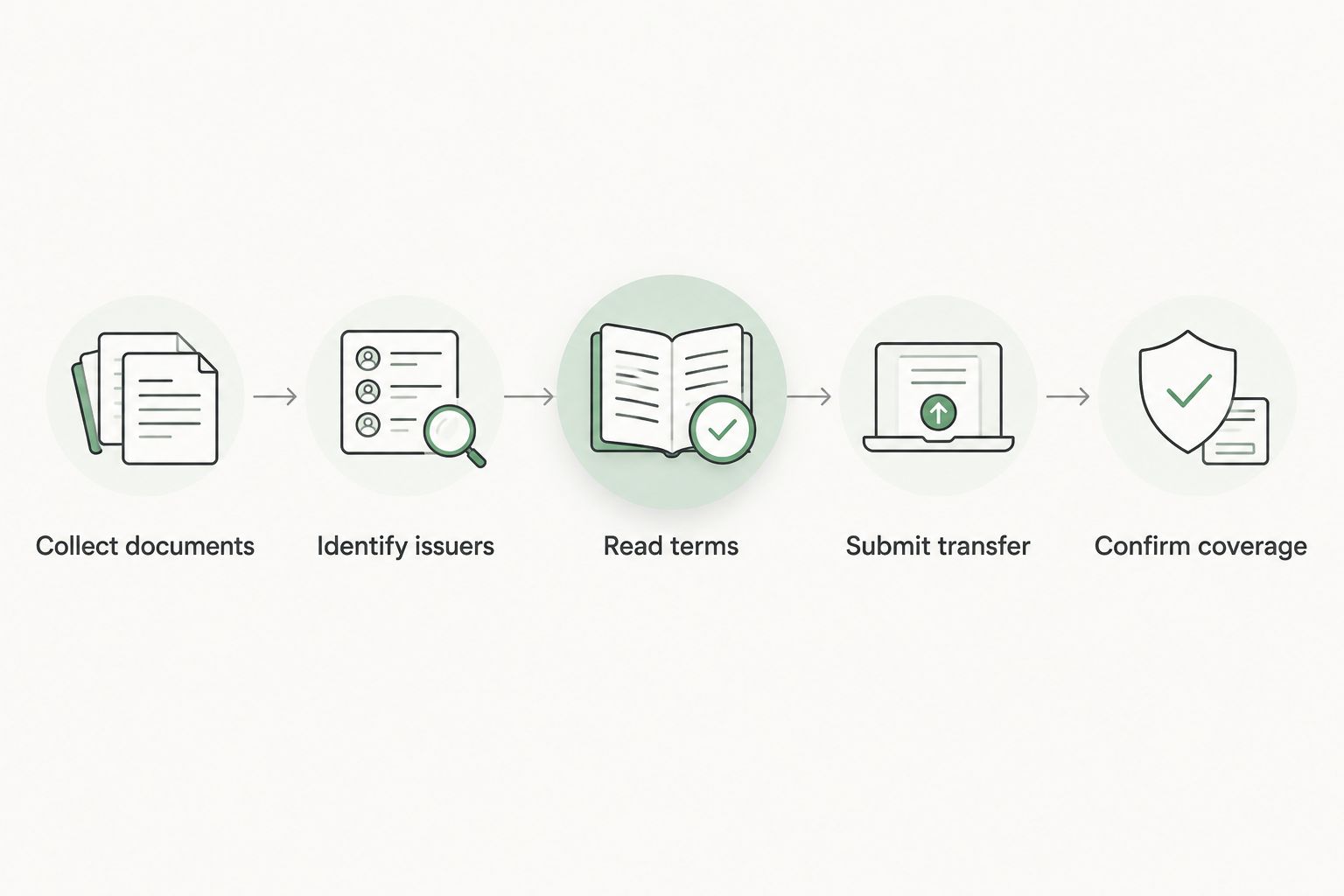
Follow this sequence before you describe a roof as having transferable coverage:
- Collect documents. Obtain the installation invoice, warranty certificate, registration record, and any previous transfer confirmation.
- Identify issuers. Determine which organization handles material coverage and which handles installation coverage.
- Read terms. Find the ownership-change clause, required notices, supporting documents, and any stated deadline.
- Submit transfer. Follow the issuer's process using the correct property address, ownership information, and sale date.
- Confirm coverage. Request written confirmation identifying the new owner and the coverage that remains.
Do not stop at proof that someone sent an email. Ask whether the issuer accepted the transfer and whether anything remains outstanding.
Why this matters before a Lincoln or Omaha home sale
A roof can look sound and still have unresolved warranty paperwork. A transferable warranty can also exist on a roof that needs repair. Roof condition and warranty status are separate questions.
For a Lincoln or Omaha transaction in 2026, resolve both before relying on the roof as a selling point. An inspection addresses observed condition; the warranty issuer's written response addresses contractual coverage.
Sellers should describe only the coverage they can document. Buyers should request the documents behind any claim of remaining protection, especially when a listing uses broad language such as a lifetime warranty without identifying the agreement.
Which roof warranty are you transferring?
The label on a proposal is not enough. Read who makes the promise, what work or materials it covers, and what happens when ownership changes.
| Coverage type | Best for checking | Benefit | Limitation to check |
|---|---|---|---|
| Manufacturer material warranty | Product-defect protection | Identifies the manufacturer's covered material obligations | Does not establish separate contractor workmanship coverage |
| Contractor workmanship warranty | Installation-related protection | Identifies the contractor's responsibilities for covered installation problems | Transfer rights depend on the contractor's written agreement |
| Enhanced manufacturer warranty | Additional protection under a named program | Sets out the program's included coverage | Eligibility, registration, exclusions, and transfer terms require review |
These are coverage categories, not a ranking. The useful choice is the agreement that actually applies to your installed roof—not the longest warranty advertised elsewhere.
Manufacturer material coverage
Ask the seller for the manufacturer name, installed product information, and warranty document. Then ask the manufacturer what the new homeowner must do to receive any transferable coverage.
The benefit is a defined source for covered product claims. The limitation is scope: do not assume a material warranty pays for every leak, every removal expense, or every installation problem. Check those obligations individually.
Contractor workmanship coverage
Read the original roofing contract and any separate workmanship certificate. Ask the issuing contractor whether the agreement permits transfer and what confirmation the buyer will receive.
Workmanship coverage addresses the contractor's written installation obligations. Its limitation is that a manufacturer's acceptance does not answer questions about a separate contractor agreement. Keep both responses in the closing file.
50-year Golden Pledge warranty: verify the transfer terms
Murray Roofing's stated warranty offering includes a 50-year Golden Pledge warranty. That duration alone does not establish what a subsequent homeowner receives, whether a particular installation qualifies, or which ownership-change requirements apply.
If a seller presents this warranty during a 2026 sale, request the certificate for that property and the applicable terms. Ask the issuer to identify the remaining coverage and confirm the transfer requirements in writing.
The practical benefit is having a named warranty to verify. The limitation is equally important: a 50-year warranty description is not proof of 50 years of coverage for the next owner. Do not describe the term as restarting unless the applicable agreement expressly provides that result.
10-year labor warranty: check the separate agreement
Murray Roofing also identifies a 10-year labor warranty among its warranty offerings. Review the agreement for the actual job rather than treating this duration as confirmation that labor coverage follows every property sale.
Ask who owes the labor obligation, when the term began, and whether the new owner is eligible. Request a separate answer even if the manufacturer has already accepted a material-warranty transfer.
The benefit of labor coverage is protection for the obligations specified in the agreement. Its limitation is contractual scope: a 10-year labor warranty does not establish coverage for every future repair, weather event, or alteration.
Why roof warranty transfer requirements vary
The controlling details belong to the warranty attached to the roof. Review these factors before deciding that coverage will follow the sale:
- Issuer: A manufacturer and an installing contractor can have different ownership-change provisions.
- Warranty version: Use the agreement applicable to the installation, not a current sales brochure.
- Ownership history: Check whether the terms restrict subsequent owners or previous transfers.
- Notice requirements: Identify the stated submission process and any deadline tied to the ownership change.
- Coverage stage: Confirm what protection remains at the sale date and whether the agreement changes over time.
- Roof history: Review repairs, alterations, and maintenance records against the agreement's conditions and exclusions.
For a 2026 purchase, put the relevant requirements into a written checklist. Assign responsibility for each submission so the buyer, seller, and closing team do not assume someone else completed it.
If the wording is unclear, ask the issuer a specific question. Request the clause supporting the answer rather than accepting a general assurance that the roof is covered.
What paperwork should you request before closing?
Build a roof file that another person can understand without calling the seller. Clear records make it easier to identify the roof, contact the responsible organization, and establish what was submitted.
Request:
- The property address and original installation date.
- The roofing contractor's invoice and signed scope of work.
- The manufacturer and installed roofing product information.
- The complete warranty terms, not just a proposal mentioning a warranty.
- Registration or certificate information, where applicable.
- Previous transfer records and relevant repair or maintenance records.
- The submitted transfer request and written acceptance.
Best for sellers: organize the roof file before listing. The benefit is a clearer answer to buyer questions; the limitation is that organized paperwork does not replace issuer approval.
Best for buyers: obtain independent confirmation before relying on coverage. The benefit is knowing what the issuer recognizes; the limitation is that confirmation still does not establish the roof's present condition.
Ask that any inspection report be kept alongside—not substituted for—the warranty documents. A condition report and a transfer acceptance serve different purposes.
Does transferring a roof warranty restart its term?
A transfer does not establish a new warranty term. Use the applicable agreement and written transfer confirmation to determine the remaining duration and coverage.
Ask the issuer to state the original start date, the expiration provisions, and any changes that apply to a subsequent owner. Avoid calculating protection from the closing date unless the written terms direct you to do so.
For a 2026 closing, make sure the buyer's records distinguish the installation date from the ownership-change date. Confusing those dates can lead to an inaccurate description of remaining protection.
Can I transfer a roof warranty after closing?
A post-closing transfer is possible only when the applicable warranty permits it and its requirements are satisfied. Check the agreement immediately rather than assuming there is a standard grace period.
Send the issuer the ownership-change details and request written instructions. If a deadline has passed, ask for a written eligibility decision; do not tell the new homeowner that coverage is active without confirmation.
Do I still need a roof inspection if the warranty transfers?
Yes—transfer confirmation does not establish that the roof is in good condition. An inspection helps you understand observed roof issues, while the issuer determines whether a particular problem falls within warranty coverage.
Murray Roofing is best for Lincoln and Omaha homeowners seeking local roof inspection, repair, or replacement services. The company offers free inspections, but an inspection does not guarantee warranty acceptance, insurance coverage, or a particular repair outcome.
Ask the inspector to document visible concerns and explain whether further evaluation is needed. Keep any coverage decision separate from the recommendation about the roof's condition.
What if the warranty cannot be transferred?
A nontransferable warranty does not, by itself, mean the roof needs replacement. It means the buyer should not rely on that agreement as transferred protection.
Start with an inspection and a clear account of the roof's condition. Then discuss documented concerns through the purchase process rather than treating a warranty problem as proof of a physical defect.
If repair or replacement is recommended, request a written scope and ask what warranty would accompany the new work. Compare covered responsibilities and exclusions, not just the duration printed prominently on the proposal.
For sellers, accurate disclosure is more useful than overstating protection. For buyers, a documented condition assessment is more useful than assuming an unavailable warranty would have covered every future problem.
FAQ
Does a roof warranty automatically transfer when I buy a house?
Do not assume a roof warranty automatically transfers when you buy a house. Read the applicable ownership-change terms and obtain written confirmation from each warranty issuer.
Who should submit the roof warranty transfer, the buyer or seller?
The applicable warranty determines what the buyer or seller must submit. Agree on responsibility before closing and retain the issuer’s acceptance with the roof documents.
How long do I have to transfer a roof warranty after buying a home?
Your applicable warranty determines the transfer deadline. Check its ownership-change clause before closing rather than relying on a general deadline from another warranty.
Can a workmanship warranty transfer with the manufacturer’s warranty?
A workmanship warranty transfers only if its own terms permit it and its requirements are satisfied. Manufacturer acceptance does not establish acceptance under a separate contractor agreement.
Does a transferable roof warranty cover storm damage?
Transferability alone does not establish storm-damage coverage. Read the warranty’s covered causes and exclusions, and review insurance coverage separately.
What if the seller cannot find the roof warranty certificate?
Ask the original contractor and manufacturer whether they can locate the applicable warranty record. An installation invoice helps identify the job but does not, by itself, confirm transferable coverage.
Will a roof inspection guarantee that my warranty transfer is approved?
No, a roof inspection does not guarantee warranty-transfer approval. The inspection addresses observed condition, while the warranty issuer applies the agreement’s eligibility and transfer requirements.
One last thing
Save the acceptance, not just the application. A completed form shows what you requested; written acceptance establishes what the issuer confirmed.
Ask for a response that identifies the property, new owner, applicable warranty, and remaining coverage. Store it with the original agreement so a future claim does not begin with reconstructing the sale.
Related guides
- How long does a roof warranty typically last before it expires?
- Roof inspection for home sellers
- Can you sell a house with an old or damaged roof?
Buying or selling in Lincoln or Omaha? Murray Roofing offers roof inspections, repairs, and replacement. Schedule a free inspection or request a price for recommended work, and keep warranty-transfer questions directed to the issuer of each agreement.