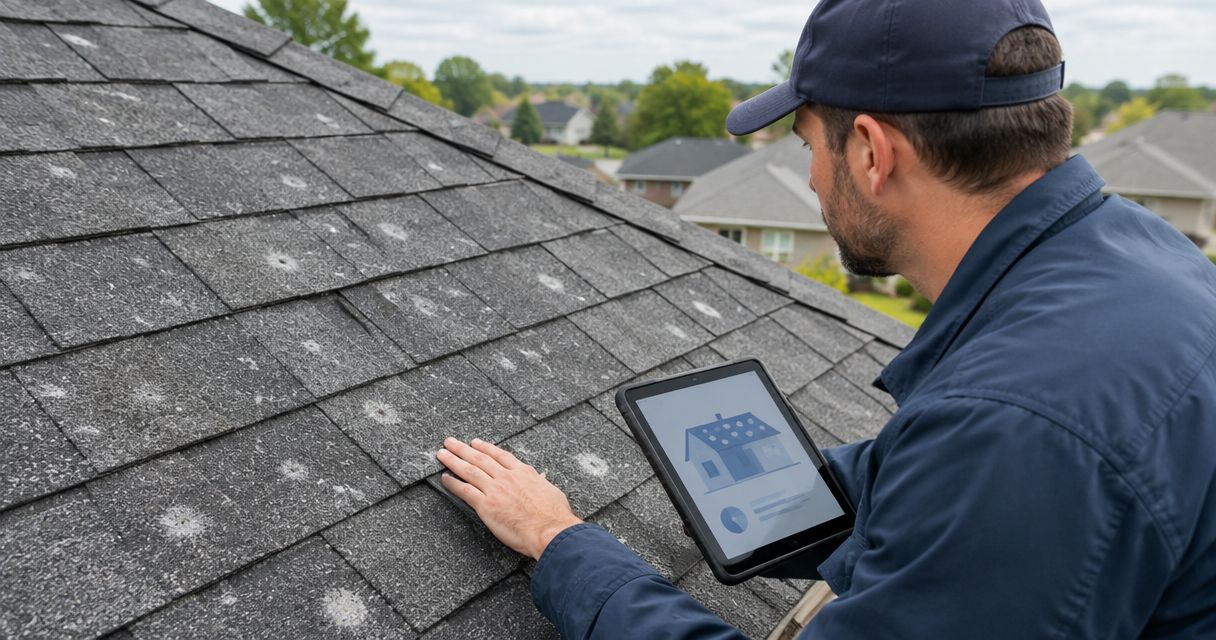
Yes—hail damage can be repaired instead of replaced when damage is localized, compatible materials are available, and the surrounding roof can withstand a proper repair. For hail damage repair vs replacement, the deciding issue is whether the proposed work restores the roof’s weather protection—not whether the roof is currently leaking.
- Hail damage repair vs replacement depends on damage extent, material condition, and repairability—not dents alone.
- Localized roof repair fits isolated damage when surrounding materials remain serviceable.
- Roof replacement fits widespread damage that isolated repairs cannot reliably correct.
- Before contacting Murray Inspection Services, gather storm photos, roof records, and your questions about repairability.
Why this matters
A hailstorm does not automatically require a new roof. A dry ceiling does not prove the roof escaped damage, either: a roof covering can suffer damage before water reaches the living space.
For a 2026 assessment, separate the roof’s physical condition from the insurance decision. An inspection identifies damage and repair requirements; policy language and the insurer’s coverage decision determine what a claim pays.
Before contacting Murray Inspection Services, gather your roof records and photographs taken safely from the ground. Ask for an explanation of the damaged components, not just a recommendation to repair or replace.
Can hail damage be repaired instead of replaced?
Repair is appropriate when a defined repair area can be restored without leaving damaged materials or compromising adjacent components. Replacement becomes appropriate when the damage extends beyond a practical repair area or the existing materials cannot support the required work.
Compare these 3 scopes of work. They describe different project boundaries, not automatic insurance entitlements.
| Scope | Best for | Main advantage | Main limitation |
|---|---|---|---|
| Localized repair | Isolated damaged shingles, panels, or components surrounded by serviceable material | Preserves unaffected roofing | Requires compatible materials and sound repair connections |
| Roof-slope replacement | Damage concentrated on a distinct roof plane where the remaining roof is serviceable | Addresses a larger damaged area without replacing every slope | Transitions, matching requirements, and adjoining materials still need evaluation |
| Full roof replacement | Widespread damage or a roof that cannot support dependable localized repairs | Allows the damaged roof covering to be addressed as a complete system | Creates a broader construction project and removes more existing material |
The comparison is not simply small job versus large job. A narrow repair that leaves fractured materials behind is incomplete; a full replacement without evidence that it is needed is not a sound recommendation.
Localized repair: isolated, accessible damage
A localized repair can involve replacing individual damaged shingles or repairing a specific flashing or roof component. The repair must follow the requirements for the roofing material and connect correctly with the surrounding assembly.
Best for: a limited damaged area with serviceable surrounding materials. The advantage is preserving unaffected roofing. The limitation is that lifting or separating older materials can cause additional breakage, making the original repair boundary unrealistic.
Ask how the contractor will remove the damaged material and restore the laps, seals, and fasteners. A surface patch is not an adequate substitute for replacing a component that needs replacement.
Roof-slope replacement: damage within a defined roof plane
Replacing 1 roof slope is a middle option when damage is concentrated on that plane and a workable transition to the remaining roof is possible. It is not automatically appropriate just because one side looks worse from the ground.
Best for: a damaged roof plane with clearly defined boundaries. The benefit is a more complete treatment of that area. The limitation is that ridges, valleys, flashing, and neighboring slopes can expand the work needed for a sound connection.
The written scope should explain those boundaries. Ask what happens at every point where new roofing meets existing roofing.
Full replacement: widespread damage or failed repairability
Full replacement becomes the appropriate scope when isolated work cannot restore a dependable roof covering. Examples include widespread damage across multiple slopes or materials that break during the removal required for repairs.
Best for: damage or material condition that defeats localized repair. Replacement allows broader access to the roof assembly, but it also means more removal, installation work, and disruption than a small repair.
The recommendation still needs evidence. Roof age alone does not establish hail damage, and a storm date alone does not establish that every component needs replacement.
Why hail damage repair vs replacement varies
A useful 2026 recommendation connects the observed condition to the proposed work. These factors explain why similar-looking roofs can require different scopes:
- Damage distribution. Isolated damage creates a different repair problem from damage scattered across multiple roof planes. The report should identify locations rather than describe the whole roof with one general label.
- Material condition. Brittle shingles, cracked tiles, and deteriorated surrounding components can prevent a repair from staying within its planned boundary. Condition matters alongside age.
- Material compatibility. Replacement components must work with the existing roof system. Similar color alone does not establish a compatible repair.
- Connections and details. Valleys, ridges, penetrations, and flashing affect how new work joins the existing roof. Damage near these details can require a broader scope than an isolated field repair.
- Underlying condition. Wet insulation, damaged decking, or deteriorated underlayment changes the work required. Those conditions need their own evidence; they should not be assumed from a surface dent.
- Applicable requirements. Manufacturer instructions, local building requirements, and policy provisions address different questions. Installation requirements govern the work; policy terms govern coverage.
No universal shingle count or damage percentage decides every roof. Ask anyone proposing a numerical cutoff to identify the applicable requirement and explain why it governs your property.
How to decide between repair and replacement
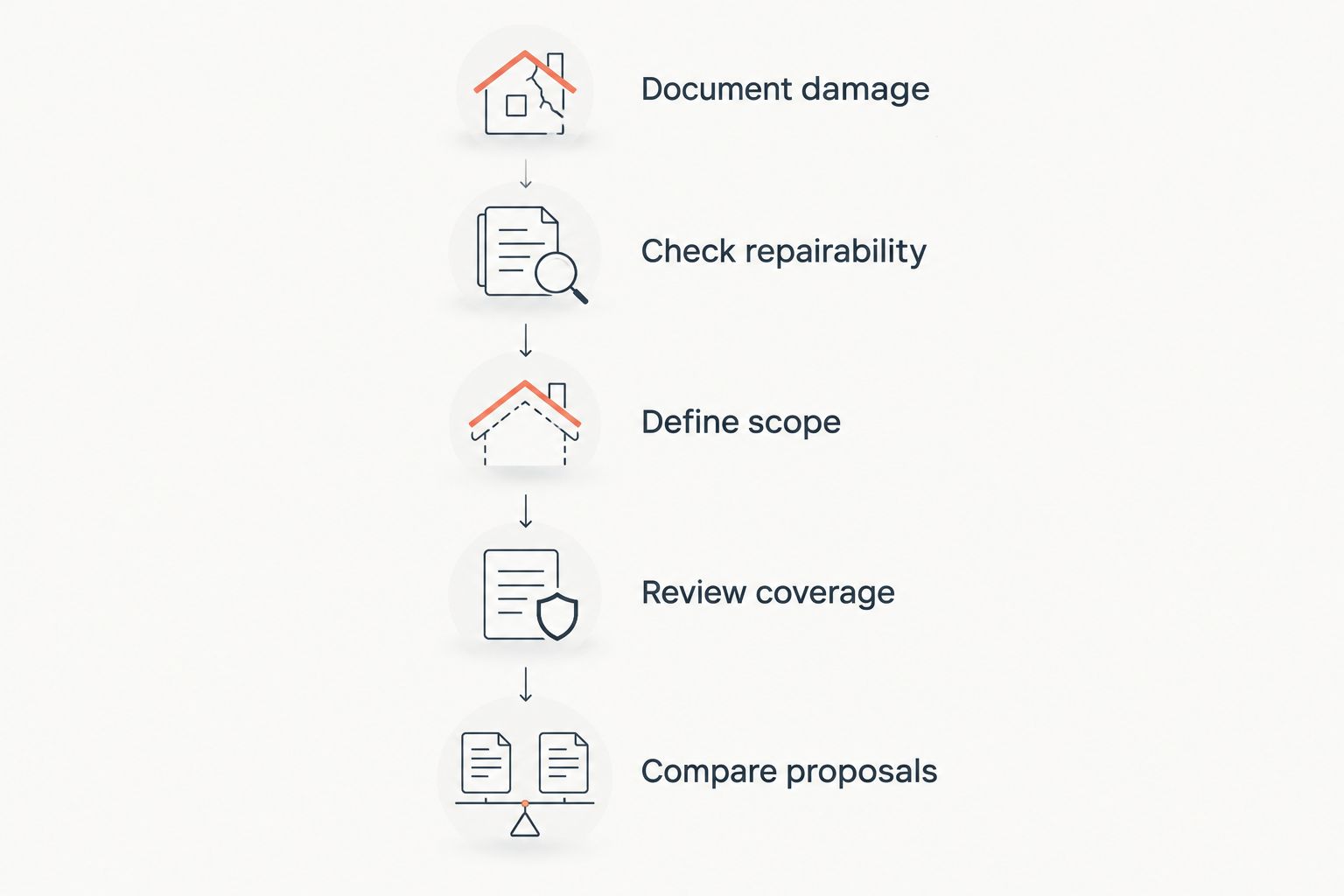
Use this sequence for a 2026 project before authorizing permanent work. The goal is a documented repair boundary, not a verbal promise that the roof will be fine.
1. Document damage
Photograph visible storm effects from a safe location and record the storm date as accurately as your records allow. Keep earlier roof photographs, maintenance records, and previous repair documents together.
Do not climb onto a storm-damaged roof to collect evidence. Ask a qualified professional to examine inaccessible areas and distinguish hail-related damage from wear, installation defects, or other causes.
2. Check repairability
Ask the roofing professional to explain whether damaged components can be removed without breaking surrounding materials. The explanation should address the roof’s actual condition and the installation method required for the repair.
For asphalt shingles, that includes how adjacent shingles will be lifted and resealed. For other roof systems, the relevant connections differ; a shingle repair method does not establish that a metal or membrane roof is repairable.
3. Define scope
Request a written description of the damaged areas, materials to be removed, replacement components, and transition details. Separate permanent repairs from temporary measures intended to limit additional water entry.
Ask what findings would change the scope after work begins. Concealed deterioration should have a documented decision process rather than becoming an unexplained addition to the project.
4. Review coverage
Read the policy provisions that apply to roof damage, including exclusions, settlement terms, and reporting requirements. Ask the insurer to explain any disagreement between the proposed construction scope and the covered scope.
The guide to turning a hail damage report into an insurance claim addresses that next stage. A detailed report supports a claim; it does not guarantee approval.
5. Compare proposals
When repairability is disputed, compare 2 written scopes: one describing the proposed repair and another explaining the proposed replacement. Require both to address the same observed damage and surrounding material condition.
Compare what the work accomplishes, not just the project label. A repair proposal that omits flashing work is not equivalent to a proposal that includes restoring the affected flashing.
What roof damage should the inspection distinguish?
A useful inspection separates visible appearance from damage to the roof’s function. It also separates storm damage from unrelated deterioration, because those findings can lead to different repair and coverage decisions.
Asphalt shingles
Hail impacts can damage a shingle’s protective surface or reinforcement. Granules in a gutter alone do not establish hail damage; shingles also shed granules through weathering and other causes.
Ask for photographs and explanations of the specific suspected impact locations. The report should connect each finding to a repair need rather than rely on a general statement that the roof looks worn.
Metal roofing and accessories
A dent in metal does not automatically mean the roof leaks or needs replacement. Damage at seams, coatings, fasteners, and flashing requires a different assessment from a dent that changes appearance alone.
Ask which condition affects performance and which is cosmetic. Insurance treatment of cosmetic damage depends on the policy, so the physical assessment and coverage explanation should remain separate.
Tile and low-slope roofs
Cracked tiles require evaluation of the damaged units and the components beneath them. On low-slope roofs, an inspection should address the membrane, seams, penetrations, and signs of moisture—not just visible marks on the surface.
Different assemblies need different repair methods. A recommendation should identify the actual roofing material before explaining how a repair will restore it.
Does a roof need replacement if it is not leaking?
A roof does not need to leak before damaged components require attention. The roof covering, underlayment, and interior finishes are separate parts of the water-management assembly, so an interior stain is not the only useful evidence.
The reverse also matters: a leak does not prove hail caused it. In 2026, request a diagnosis of the leak’s source and a separate explanation of any storm-related findings before approving the permanent scope.
Does an older roof automatically need replacement after hail?
An older roof does not automatically require replacement because a hailstorm occurred. Age helps explain material condition, but observed damage and repairability establish the work required.
A roof that cannot tolerate the removal and reconnection needed for repairs presents a different problem from an older roof with serviceable surrounding materials. Ask the contractor to document that distinction rather than use age as the entire explanation.
Can insurance require a repair instead of replacement?
An insurer can approve a repair scope rather than full replacement under the applicable policy and claim findings. That decision does not remove the need for a technically workable repair.
If you disagree with a 2026 claim decision, request the reasoning in writing and provide evidence identifying the disputed damage or repairability issue. Follow the review or dispute process available under your policy and state rules.
FAQ
What’s the main difference in hail damage repair vs replacement?
Repair addresses a defined damaged area, while replacement removes and renews a larger section or the entire roof covering. The right scope depends on damage extent, material condition, and whether sound connections to existing roofing are possible.
Can just a few hail-damaged shingles be replaced?
Individual hail-damaged shingles can be replaced when compatible replacements are available and surrounding shingles can withstand the work. The repair must restore the required laps, seals, and fastening.
Do dents in roof vents mean I need a new roof?
Dented roof vents do not by themselves establish that the roof covering needs replacement. Each damaged component and the surrounding roofing need a separate assessment.
Should I wait for a leak before reporting suspected hail damage?
Do not use a leak as the trigger for investigating suspected hail damage. Document the condition promptly and check your policy’s reporting requirements.
Does matching shingle color mean a repair will work?
Matching color does not establish that a shingle is compatible with an existing roof. Dimensions, installation requirements, connections, and surrounding material condition also matter.
Can a roof coating fix hail damage?
A roof coating is not a substitute for correcting damaged components or wet underlying materials. Any coating proposal needs a suitable roof system, sound preparation, and repairs required by the coating manufacturer.
What should I ask before approving roof replacement?
Ask why localized repair cannot restore the roof and request evidence supporting that conclusion. The written scope should identify affected areas, transition details, and how concealed damage will be handled.
One last thing
Ask the contractor to explain where the repair ends. A credible answer identifies the boundary, describes how new and existing materials connect, and explains why the material beyond that boundary can remain.
That question tests both recommendations. It exposes an underspecified patch and challenges a full replacement proposal that does not explain why a smaller scope fails.
Related guides
- How do I know if my roof has hail damage?
- Compare roof inspection findings with contractor bids
- Roof warranty types for homeowners