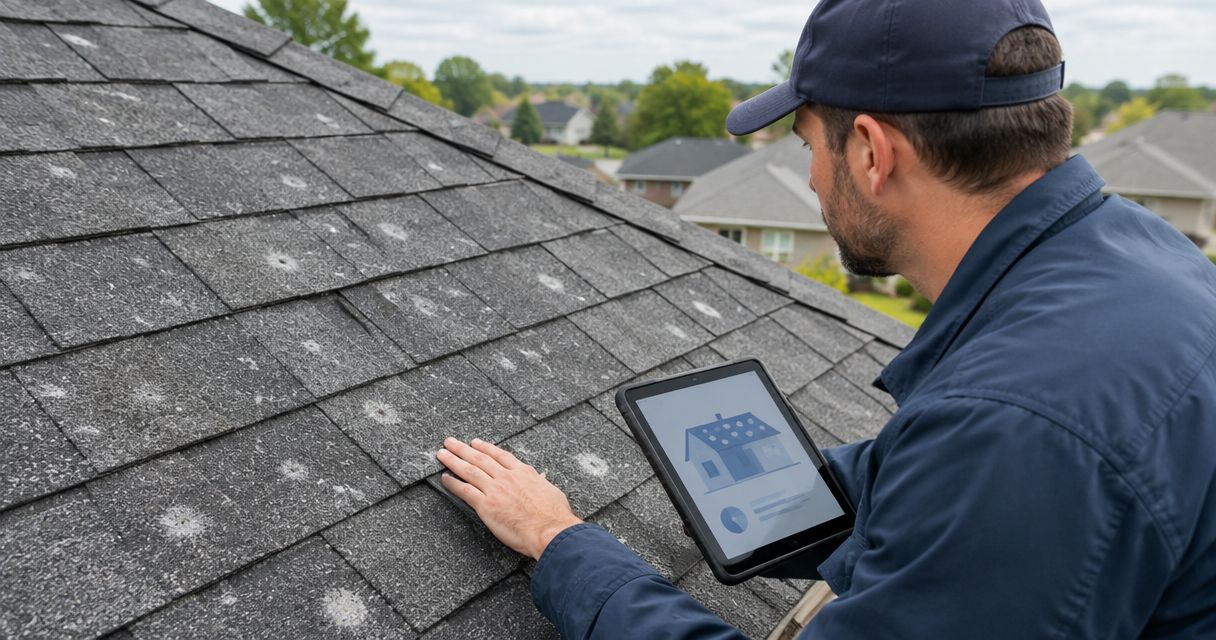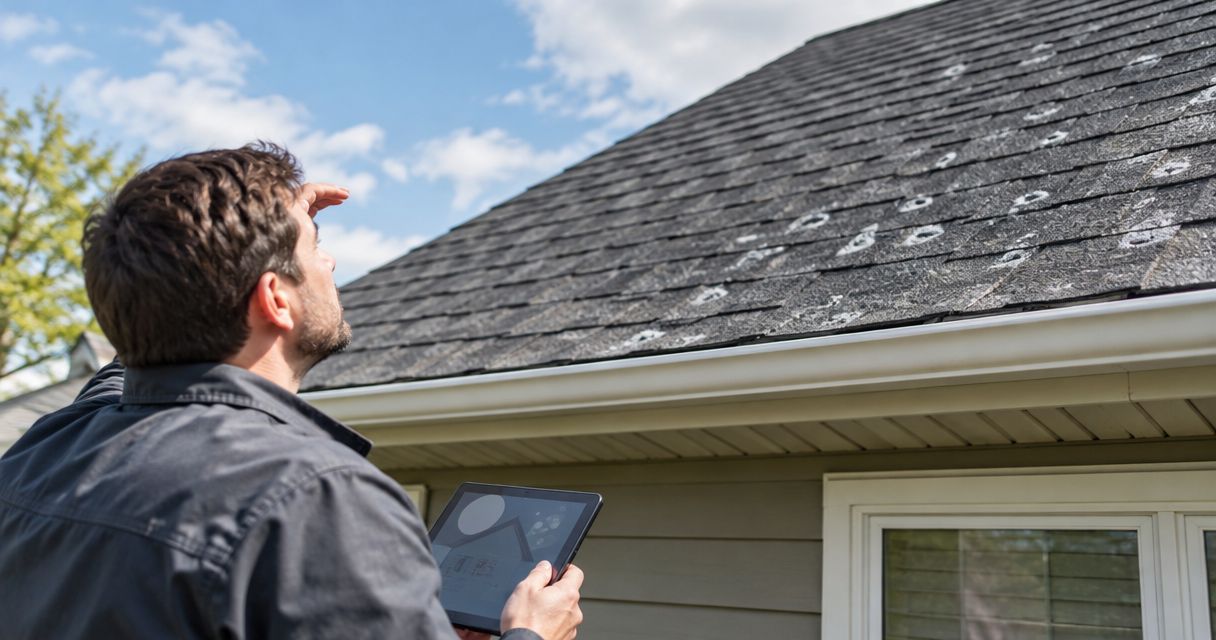
Look for impact marks on shingles, fresh dents on exposed metal, and broken roofing material after a hailstorm; these are reasons to arrange a professional roof inspection, not proof by themselves. Roof hail damage is confirmed by the condition of the roofing material, not by gutter dents alone. Photograph what you can see safely from the ground, and keep your storm notes with the inspection findings.
- How to know if roof has hail damage: document impact signs, then get a roof inspection to establish their cause.
- Asphalt shingles need assessment for fractures and impact-related granule loss; gutter dents alone do not establish roof damage.
- Use Murray Inspection Services as your inspection inquiry starting point; ask for written scope before scheduling.
- Stay off the roof, photograph visible changes, and keep repair decisions separate from insurance coverage decisions.
Why this matters
Hail can damage roofing without creating an immediate ceiling stain. The reverse also matters: a stain after a storm does not identify hail as the cause. You need evidence that connects the observed condition to the roofing material and the event.
For your 2026 storm records, separate observations from conclusions. A photograph can show a dent; explaining whether that dent affects a roof component takes an assessment. Start your inquiry with Murray Inspection Services and ask what the inspection will document before you schedule.
How do I know if my roof has hail damage?
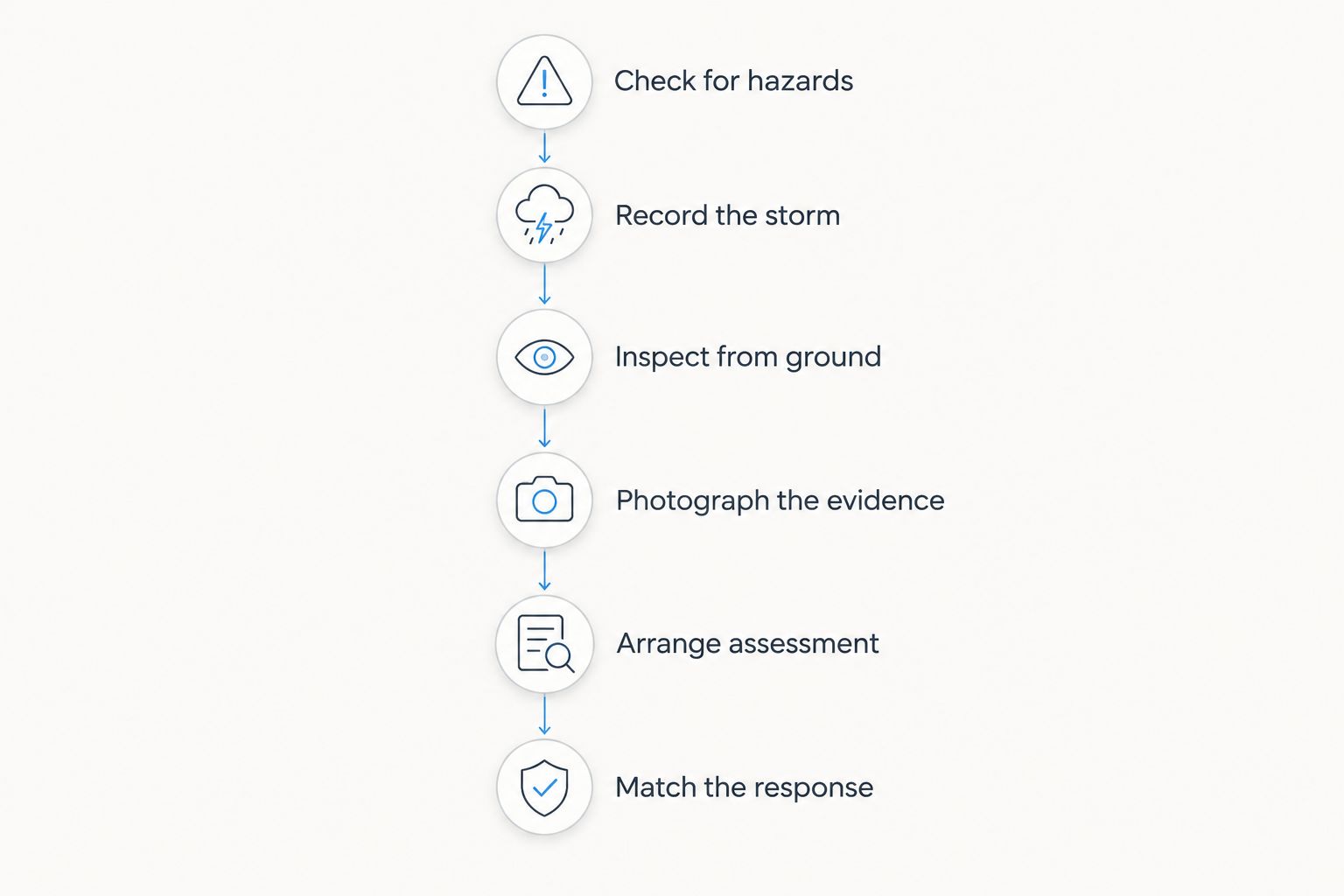
You establish roof hail damage by combining visible storm evidence with a material-specific inspection. Follow these steps without climbing onto the roof or touching damaged electrical equipment.
- Check for immediate hazards. Keep away from downed wires, unstable branches, sagging ceilings, and damaged roof edges. If water is entering near electrical equipment, avoid the area and seek appropriate emergency help.
- Record the storm. Write down when hail occurred at your property and what you observed. Save existing exterior photographs that show the roof or gutters before the event.
- Inspect from the ground. Look for damaged shingles, displaced roofing, fragments, and dents on visible metal. Use binoculars or camera zoom instead of a ladder.
- Photograph the evidence. Capture the property context, the affected component, and a closer view where safely possible. Keep the original files rather than only edited screenshots.
- Arrange a roof assessment. Ask the inspector to distinguish impact damage from age, wear, installation defects, and other storm damage. Request photographs tied to identifiable roof locations.
- Match the response to the finding. Active leakage needs attention before claim paperwork is complete. Repair scope and insurance coverage are separate decisions.
Do not scrape a shingle or press suspected impact marks yourself. Altering the surface creates new damage and makes the original condition harder to interpret.
Asphalt shingles: look beyond dark spots
On asphalt shingles, hail impacts can dislodge granules and damage the asphalt coating or reinforcing mat. A dark mark alone does not establish that this happened. Surface appearance needs to be assessed alongside the shingle's physical condition and the pattern across the roof.
Look from the ground for localized marks, damaged shingle edges, or pieces of roofing below the eaves. Treat these as inspection leads. Dirt, algae, normal weathering, and manufacturing differences also affect appearance.
Loose granules in gutters deserve context. Granule accumulation alone does not identify a storm, and a photograph of granules cannot establish whether the shingle mat is fractured. Ask for close-up photographs and an explanation of what the observed damage means for the roof covering.
Metal roofing: separate dents from functional damage
Hail can leave dents in metal panels, flashing, vents, and gutters. A dent establishes deformation at that location; it does not automatically establish a leak or justify replacing an entire roof.
The inspection needs to address seams, joints, penetrations, protective finishes, and the condition of affected components. A panel dent and a damaged connection are different findings. Ask which condition exists rather than accepting a general label of storm damage.
Cosmetic appearance and insurance treatment are also separate questions. Read the applicable policy terms instead of assuming every visible dent receives the same treatment.
Tile and slate: check for fractures and displaced pieces
Tile and slate roofs require attention to cracked, broken, missing, or displaced pieces. Hail is one possible cause of breakage, but foot traffic, falling objects, installation conditions, and deterioration also require consideration.
Do not walk on tile or slate to investigate. Foot traffic can break roofing and create additional hazards. Photograph fragments from a safe position and leave roof access to someone qualified for the material.
A useful report identifies the affected locations and explains the observed condition. A broad photograph showing an intact-looking roof is not enough to rule out localized breakage.
Hail damage or ordinary roof wear?
Use this comparison to understand what an observation supports—and what it does not. No single appearance test reliably assigns every roof mark to hail.
| Observation | What it can indicate | What it does not establish |
|---|---|---|
| Localized shingle impact marks | A location requiring closer assessment | Hail damage based on color alone |
| Broad, relatively uniform granule loss | Weathering or another surface condition | A specific storm as the cause |
| Dents on gutters or vents | Impacts to those components | Damage to the shingles themselves |
| Creased or displaced shingles | Wind-related or other physical damage | Hail as the only storm mechanism |
| Broken tile or slate | A fractured roof covering | Whether hail, traffic, or another impact caused it |
| Interior water staining | Current or previous moisture entry | The entry point, cause, or date by itself |
An inspection should explain the reasoning behind the conclusion. If a report labels every mark as hail damage without discussing alternatives, ask for clarification before using it to make a repair decision.
Why roof hail damage varies
Hail does not affect every roof surface in the same way. These factors explain why neighboring roofs—or different slopes on one building—need separate assessments:
- Roof material. Asphalt shingles, metal panels, tile, and slate respond differently to impacts. The evidence must match the material.
- Existing condition. Weathering, brittleness, deterioration, and previous damage affect how roofing responds and how new marks are interpreted.
- Hail characteristics. Size, hardness, shape, and impact energy affect the outcome. A reported hail size does not replace examining the roof.
- Wind and exposure. Wind direction and shielding change where impacts land. Different roof slopes can show different patterns.
- Roof assembly. The covering, support, attachment, and details around penetrations all matter when evaluating the affected area.
- Other storm effects. Wind-driven debris and displaced materials can damage a roof during the same event. Not every storm-related defect is hail damage.
For a 2026 inspection, ask the report to identify the actual material and observed condition. A neighborhood storm map provides context, not a diagnosis for your property.
What should a useful hail inspection report contain?
A useful report connects the conclusion to visible evidence. It should identify inspected areas, describe observed conditions, show supporting photographs, and explain access limitations. An inaccessible slope should not silently become an undamaged slope.
Ask these 4 questions before authorizing an inspection:
- Scope: Which roof areas and components will be assessed?
- Evidence: Will photographs identify where each finding occurred?
- Cause: Will the report distinguish hail from wear and other damage?
- Limitations: Will inaccessible areas and unresolved questions be recorded?
When contacting Murray Inspection Services about a roof inspection, ask these questions rather than assuming what a visit includes. A written inspection scope is more useful than an undefined promise to check the roof.
For your 2026 documentation, preserve 3 photo views where safe: an overall view, a component view, and a detail view. These are a practical filing method, not a technical standard. Together, they make a close-up easier to locate and interpret.
Does hail damage mean I need a new roof?
Hail damage does not automatically mean you need a new roof. The appropriate response depends on the affected material, extent of damage, repair feasibility, and applicable requirements. A replacement recommendation needs an explanation tied to those findings.
Ask the person proposing work to distinguish damaged components from undamaged areas. If repair is proposed, ask how the work addresses the documented defect; if replacement is proposed, ask why repair is insufficient.
Keep your 2026 records in 2 separate files: condition evidence and coverage correspondence. The first records what happened to the roof; the second records how the insurer applies the policy. Neither substitutes for the other.
Can my roof have hail damage without leaking?
A roof can have hail damage without leaking. An impact can damage a roof covering before water becomes visible inside, so a dry ceiling does not settle the question.
Do not wait for an interior stain when there is credible exterior evidence of damage. Equally, do not treat every post-storm mark as a future leak. Get the condition identified before choosing the remedy.
How do I document hail damage for insurance?
Document hail damage with dated observations, original photographs, and a report that identifies the affected material and locations. Record when you first noticed any interior leakage, and keep invoices for reasonable protective work.
Review your policy and ask your insurer about reporting requirements promptly. Do not rely on a generic online deadline or assume an inspection guarantees coverage. Your policy terms and the claim findings govern that decision.
The guide to turning a hail damage report into an insurance claim addresses the next stage. A report supports the claim; it does not guarantee approval.
FAQ
What are the first signs of hail damage on a roof?
Visible impact marks, broken roofing pieces, and dents on exposed metal are reasons to arrange an inspection. These signs identify areas to investigate; they do not establish the cause or extent of roof damage by themselves.
Can I tell if my roof has hail damage from the ground?
You can identify warning signs from the ground, but you cannot reliably confirm every type of roof hail damage there. Use binoculars or camera zoom and leave close roof access to a qualified professional.
Does granule loss always mean my shingles have hail damage?
Granule loss does not always mean hail damage. Weathering and other conditions also cause granule loss, so an assessment needs to consider the pattern and the condition of the shingle beneath it.
Do dents in my gutters prove the roof needs replacement?
Gutter dents do not prove the roof needs replacement. They document impacts to the gutters; the roof covering needs its own assessment before deciding on repairs or replacement.
How big does hail have to be to damage my roof?
Hail size alone does not determine whether your roof is damaged. Material, existing condition, impact characteristics, wind, and exposure also affect the result, so assess the roof rather than relying on a size cutoff.
Should I wait for a leak before getting a hail inspection?
Do not wait for a leak when there are credible signs of impact damage. Hail damage can exist without an immediate interior leak, while an existing leak requires prompt attention regardless of its cause.
What should I ask Murray Inspection Services before scheduling?
Ask Murray Inspection Services about the roof inspection scope, photographs, written findings, and access limitations before scheduling. Confirm what the assessment includes instead of assuming insurance approval or a particular repair recommendation.
One last thing
The photograph that makes a damage close-up useful is often the wider photograph beside it. A tight image can show a mark but hide which component, roof slope, or property it belongs to.
Before closing your 2026 storm file, check that each important close-up has a location reference. Preserve the originals, keep the inspection explanation with the images, and base your next move on the documented condition—not the most alarming photograph.
Related guides
- Roofing materials for hail-prone areas
- From roof inspection to contractor bid comparison
- Roof warranty types for homeowners