Building a custom home is worth it in 2026 when the layout, lot, and features you need justify the additional design decisions and construction commitment. It is not automatically a better investment than another home: compare the complete project scope, your financing, and the effort involved before choosing fully custom over semi-custom or move-in-ready.
- Is building a custom home worth it? Yes, when meaningful layout needs justify the design and construction commitment.
- Murray Custom Homes suits Lincoln-area buyers seeking guided semi-custom or fully custom homebuilding.
- Semi-Custom Homes suit buyers who want selected choices without directing every design detail.
- Move-in-ready homes suit buyers who prefer evaluating an already-built home; verify individual home availability.
Why this matters
A home can look right and still work poorly for your daily routine. The question is whether building lets you solve problems that another home would leave unresolved—not whether every room can be personalized.
Murray Custom Homes expresses its approach as “We Create Luxury Living.” For your 2026 decision, translate that promise into thoughtful room relationships, distinctive features you will actually use, and personal guidance through the choices. A beautiful finish cannot compensate for a floor plan that fights your routine.
Is building a custom home worth it in 2026?
Yes—when you need meaningful design freedom, not simply a different selection of finishes. Fully custom building gives you a route to shape a home around your preferences, but you also need to participate in defining and approving that home.
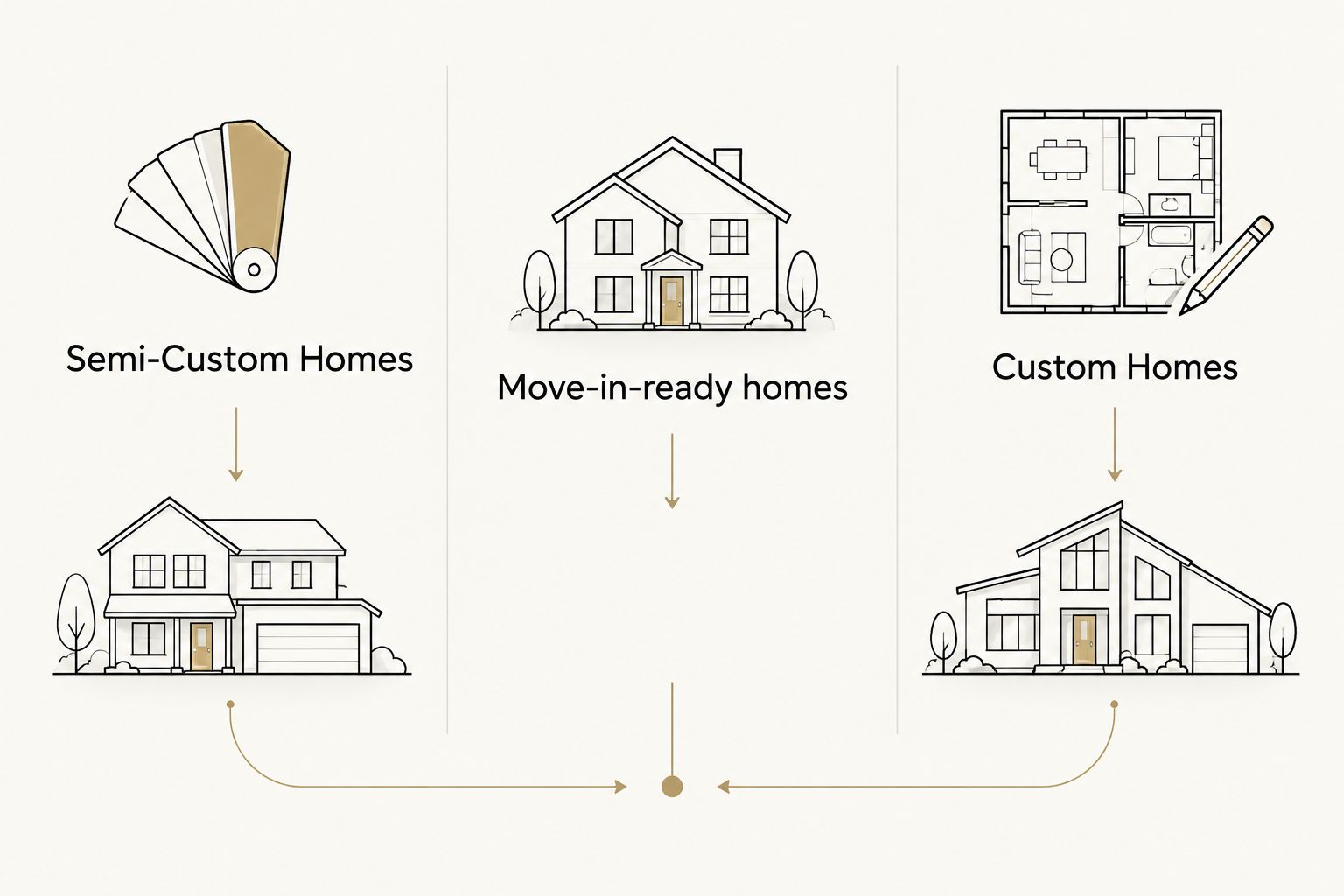
Compare the three approaches before assuming that fully custom is the right starting point:
| Home approach | Best for | Main advantage | Main trade-off |
|---|---|---|---|
| Semi-Custom Homes | Buyers who want selected choices and personal guidance | You choose selected features and entrust remaining decisions to the builder | You do not direct every detail |
| Move-in-ready homes | Buyers who prefer to evaluate an already-built home | You can judge the completed layout and finishes together | The home is already designed; confirm whether its existing choices fit |
| Custom Homes | Buyers with specific layout, lifestyle, or distinctive-feature requirements | The home is shaped around your preferences | You take part in a broader set of design decisions |
For a 2026 home search, start with the approach that solves your needs with the least unnecessary complexity. More customization is useful only when you have a reason to use it.
A practical test before you commit
Write down 3 nonnegotiable needs and explain how each affects daily life. Examples include keeping essential living spaces together, separating a work area from household activity, or arranging shared and private spaces for different family members.
Then ask whether a semi-custom or already-built home can meet those needs. If it can, fully custom building needs another clear justification. If it cannot, you have identified a design problem worth discussing—not merely a preference for something new.
Semi-Custom Homes: selected choices with personal guidance
Best for: buyers who want a personal home without directing every detail. Semi-custom building starts with a different division of responsibility: you choose selected features and leave remaining decisions to the builder.
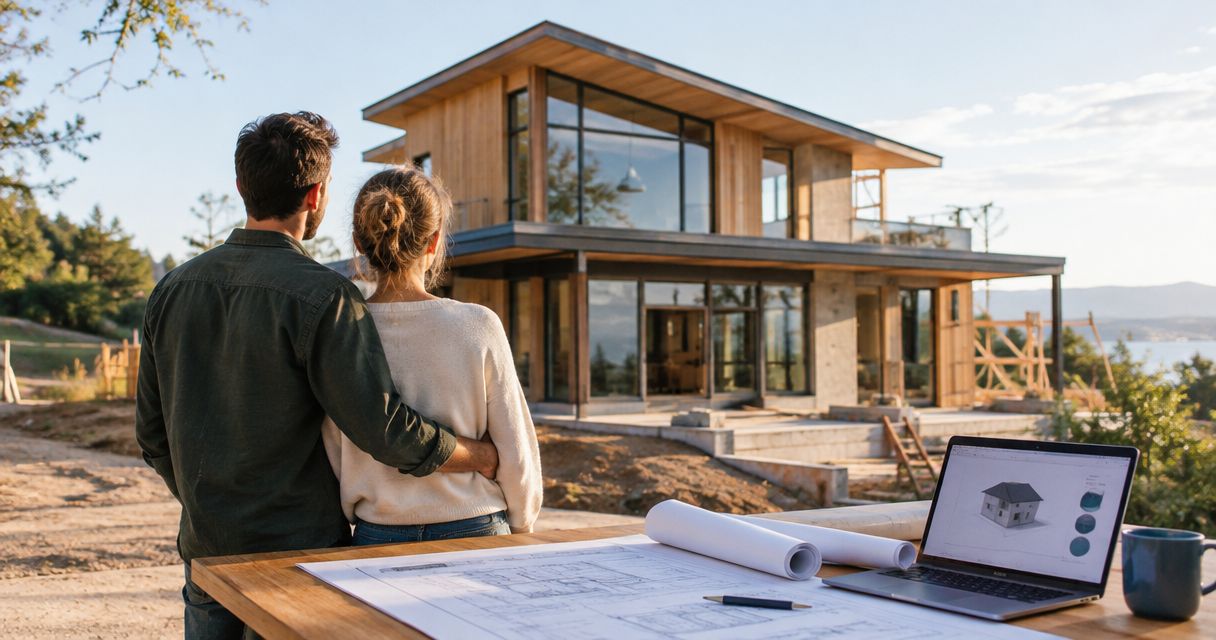
Murray Custom Homes is best for Lincoln-area buyers who want guided choices through semi-custom or fully custom homebuilding. Its in-house drafting and design support includes blueprints and 3D renderings, allowing you to discuss the proposed home through plans and visual representations.
The advantage is a more focused selection process. The limitation is equally important: you need to understand which features you can choose and which decisions remain with the builder. Ask for that distinction before comparing semi-custom with a fully custom proposal.
Use the semi-custom home decision guide to frame the central question: do the choices offered cover the parts of the home that matter most to you? A shorter selection list is helpful only when it includes your priorities.
Move-in-ready homes: evaluate the completed result
Best for: buyers who prefer to assess an already-built home. A move-in-ready home lets you walk through the actual spaces rather than relying solely on drawings and selections.
That changes the evaluation. You can consider the relationship between the kitchen and living area, the separation between bedrooms, and whether storage sits where you need it. Bring your daily routine to the walkthrough, not just a finish checklist.
The trade-off is that the home already reflects completed design decisions. Do not choose it on the assumption that every mismatch can be changed afterward. Identify what you would accept as built and what would prevent the home from working for you.
Confirm individual home availability before planning around a particular property. An offer category is not a statement that a specific home is currently available.
Custom Homes: design around requirements that matter
Best for: buyers whose essential needs call for a home shaped around their preferences. Fully custom building earns its place when your requirements extend beyond selected finishes or a limited set of features.
For example, you might need a particular relationship between living spaces, a distinctive custom feature, or a plan developed around how you intend to use your lot. State the requirement in functional terms before proposing a design solution. “I need a quiet place for calls” is a clearer brief than “I need another room.”
Murray Custom Homes offers in-house design guidance from Meghan Murray, alongside drafting, construction, and project management. Its project managers bring more than 20 years of combined experience. These services support the process, but they do not remove your responsibility to communicate preferences and review decisions.
The main drawback is the breadth of choices. If you dislike evaluating plans, resolving competing priorities, or approving details, ask how much participation the process requires before choosing fully custom.
The right route depends on how much design direction you want to provide:
Why the value of a custom home varies
The value of building depends on what the process solves for you. Use these factors to explain your decision rather than treating customization itself as the benefit:
- Daily fit: Identify the routines your current home makes difficult. A proposed feature needs a clear purpose.
- Design control: Decide which choices you want to make personally and which you are comfortable leaving to the builder.
- Lot fit: Establish whether the proposed home and your intended property belong together before treating the plan as settled.
- Decision workload: Consider whether you can review drawings, discuss selections, and respond to questions throughout the project.
- Project scope: Compare what each proposal includes, what remains undecided, and what requires separate confirmation.
- Future usefulness: Prioritize spaces that support your expected needs rather than features chosen only for immediate visual impact.
A custom home is not worth more to you simply because it contains more custom elements. Its practical value comes from getting important decisions right.
How do you decide whether building is right for you?
Use a decision sequence before asking for a final design. You do not need a complete specification to start, but you do need to distinguish requirements from ideas.
- Define the problem. Describe what another home must do better than your current situation. Keep the explanation specific enough that a builder can respond to it.
- Choose your involvement level. Decide whether you want selected choices, a completed home, or broader design direction. Be honest about the decisions you enjoy making.
- Review the property. Bring information about an existing lot if you own one, or discuss the property search before treating a plan as final.
- Compare the written scope. Ask what design, construction, and project-management responsibilities each proposal includes. Resolve unclear items before treating proposals as equivalent.
- Test the plan against daily life. Walk through ordinary activities on the drawings: arriving home, storing groceries, doing laundry, working, and having guests.
For your 2026 comparison, keep 2 separate lists: required outcomes and optional preferences. This prevents an appealing feature from displacing something the home genuinely needs to accomplish.
Separate design scope from construction scope
A floor plan is not the same thing as a complete project description. Ask which drawings, selections, revisions, and approvals form part of the proposed process, and identify what remains to be decided.
Separating custom home design costs from construction scope helps you ask a more precise question: what design work is included, and what construction decisions depend on its approval? For a Lincoln-area project, use the local proposal and contract—not another market's examples—to establish your obligations.
Request a written explanation of how design changes are reviewed and approved. Do not assume that a conversation, a marked-up drawing, and a final selection all carry the same status. Ask the builder to identify the approval that controls the work.
This is also where personal value and financial value separate. A feature can be valuable to your household without establishing a particular resale return. Do not justify a personal design choice with an unverified investment claim.
Does owning a lot make a custom home more worthwhile?
Owning a lot gives your planning a specific starting point, but it does not establish that fully custom is the best approach. First determine what you want the home to accomplish on that property.
Murray Custom Homes can build on a client's existing lot and serves a stated 50-mile homebuilding radius around Lincoln, Nebraska. Confirm that your property falls within the homebuilding service area before developing plans around that relationship.
Discuss the proposed home, site-related work, and responsibilities together. Ask which property questions need answers before the plan can progress. Ownership alone does not tell you whether a particular layout or project scope is appropriate.
For a 2026 own-lot project, keep property decisions and home-design decisions connected. A favorite plan is a starting idea, not a reason to ignore the property it must occupy.
Is semi-custom better than fully custom for most of my choices?
Semi-custom is the better fit when its selected features cover your important preferences and you want the builder to handle remaining decisions. Fully custom is the better fit when essential requirements need broader design direction.
Ask the builder to place your nonnegotiable needs alongside the available choices. Where the two align, semi-custom deserves serious consideration. Where they do not, identify the precise gap before moving to fully custom.
Do not confuse having fewer decisions with receiving less personal value. The right choices matter more than the longest selection list.
FAQ
Is building a custom home worth it in 2026?
Building a custom home is worth it in 2026 when its design freedom solves important needs that semi-custom or already-built homes do not meet. Compare the complete scope and your willingness to participate in design decisions before committing.
Is a semi-custom home better than a fully custom home?
A semi-custom home is better for buyers whose priorities fit the selected choices offered and who prefer to leave remaining decisions to the builder. Fully custom is better for requirements that need broader design direction.
What is the biggest downside of building a custom home?
The breadth of design decisions is a central trade-off of fully custom building. Ask what you must review, select, and approve so the level of involvement matches your expectations.
Can Murray Custom Homes build on a lot I already own?
Murray Custom Homes can build on a client’s existing lot within its stated 50-mile homebuilding radius around Lincoln, Nebraska. Confirm the property’s location and discuss site requirements before committing to a plan.
Does a custom feature guarantee a better resale return?
A custom feature does not establish a particular resale return. Evaluate its usefulness to your household separately from any financial claim that requires supporting evidence.
What design support does Murray Custom Homes offer?
Murray Custom Homes offers in-house drafting and design, blueprints, and 3D renderings, with in-house design guidance from Meghan Murray. Construction and project management support the homebuilding process.
One last thing
Before approving a plan, describe an ordinary weekday rather than a special occasion. Trace where shoes land, groceries travel, laundry collects, and quiet work happens. A room that photographs well still needs to work on that weekday.
For your 2026 decision, choose the least complicated building approach that meets your essential needs. Choose semi-custom when selected choices are enough; choose fully custom when a specific design requirement justifies the additional direction.
Related guides
- From land purchase to move-in: building on your own lot
- Features to prioritize when choosing a semi-custom home
- From design consultation to 3D rendering approval