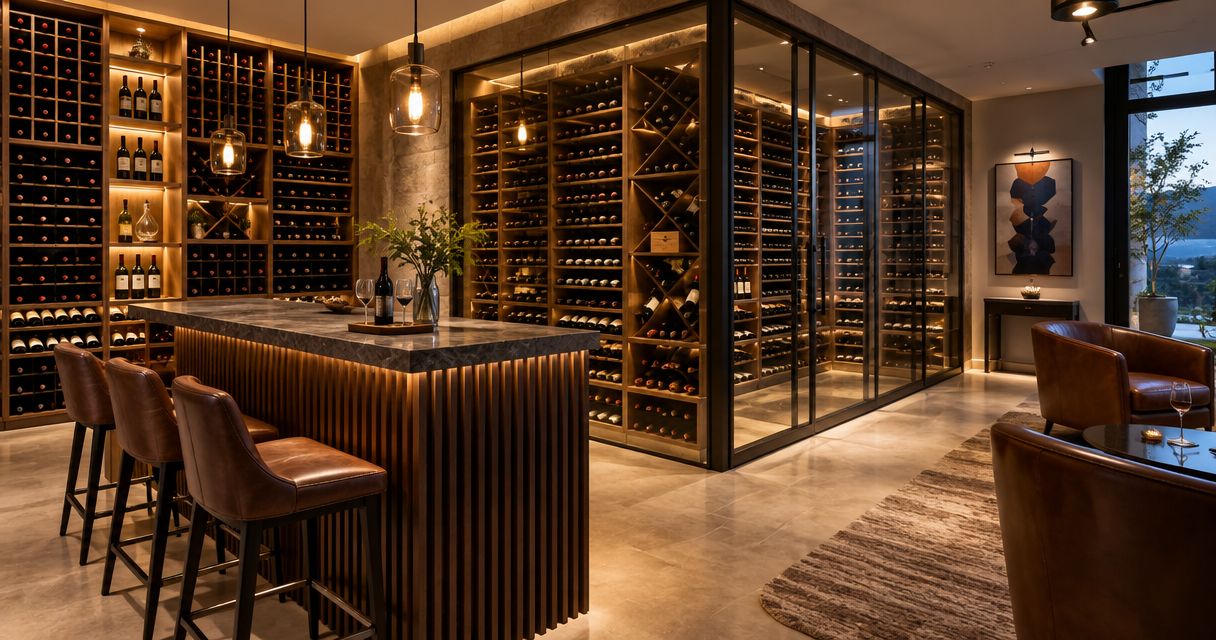
“We Create Luxury Living” starts with spaces shaped around how you live: best overall for wine collectors is a conditioned walk-in cellar; best for entertaining is an integrated bar; best for a compact footprint is a wine-appliance wall. This 2026 guide compares wine cellar and bar ideas by storage purpose, hosting style, and design requirements.
- Best wine cellar ideas luxury homes: choose a conditioned walk-in cellar for bottles intended for aging.
- An integrated home bar serves entertaining; it does not replace controlled wine storage.
- Murray Custom Homes offers in-house drafting, design, and 3D renderings for planning personalized spaces.
- Choose the storage method before selecting glass walls, cabinetry, lighting, or seating.
For a Lincoln-area home, Murray Custom Homes offers Semi-Custom Homes, Custom Homes, and already-built move-in-ready homes. A wine space starts with the same question across those paths: what must the room do, and which decisions remain open?
Why this matters
A wine cellar stores bottles under controlled conditions. A home bar supports preparation, serving, and conversation. Combining them works only when each function receives its own planning.
For long-term wine storage, a commonly recommended target is around 55°F, or 13°C, with stable conditions and protection from light. A beautiful rack beside a sunny window does not perform the same job as a conditioned cellar.
Decide whether you want to age wine, serve it conveniently, or display a collection. That answer eliminates more unsuitable layouts than choosing a finish palette first.
What makes the best wine cellar and bar ideas?
Use these criteria for a 2026 design brief before comparing appearances:
- Storage purpose: Distinguish long-term aging from bottles intended for near-term drinking.
- Environmental control: Match the enclosure, cooling approach, and light protection to the collection.
- Serving workflow: Give opening, pouring, washing, and clearing a practical sequence.
- Space fit: Account for doors, appliance ventilation, seating, and circulation—not just rack dimensions.
- Maintenance access: Keep equipment, plumbing connections, and service areas reachable.
- Design flexibility: Confirm which features your selected home and building approach can accommodate.
Wine cellar and bar ideas at a glance
| Rank and idea | Best for | Standout feature | Key limitation |
|---|---|---|---|
| 1. Conditioned walk-in cellar | Collectors aging wine | Dedicated storage environment | Requires coordinated enclosure and cooling design |
| 2. Integrated entertaining bar | Frequent hosts | Preparation and serving in one location | Adds utility planning and cleanup responsibilities |
| 3. Wine-appliance wall | Compact living areas | Wine storage within cabinetry | Capacity and service clearances constrain the layout |
| 4. Glass-enclosed wine room | Visible collections | Display connected to the living space | Glass and light complicate environmental control |
| 5. Basement tasting lounge | Seated gatherings | Storage and conversation in distinct zones | Basement conditions require assessment |
| 6. Concealed serving cabinet | Occasional entertaining | A serving area that closes away | Cabinetry alone does not control storage conditions |
1. Conditioned walk-in cellar: best for aging wine
A conditioned walk-in cellar separates wine storage from everyday room conditions. Its enclosure, cooling equipment, insulation, moisture control, and door must work together rather than arrive as unrelated selections.
Start with the collection you actually keep, including bottle shapes and intended holding periods. Design racks around those requirements instead of treating every bottle as identical.
Conditioned walk-in cellar pros:
- Gives long-term storage a dedicated environment.
- Separates bottles from cooking heat and busy serving areas.
- Supports organized storage by wine, region, or drinking order.
Conditioned walk-in cellar cons:
- Requires specialist coordination beyond decorative cabinetry.
- Occupies floor area and needs equipment service access.
Best for: Collectors who intend to age wine rather than simply keep drinks nearby.
Verdict: Buy into this design when storage performance is the priority. Skip a tasting table inside the cellar if it displaces the bottle storage you need; conversation can happen outside the controlled room.
2. Integrated entertaining bar: best for frequent hosts
An integrated bar brings preparation, glassware, serving surfaces, and cleanup into a dedicated zone. A wet bar includes a sink; a dry bar leaves water service elsewhere.
Plan the workflow before the statement finishes. Your custom cabinetry and millwork ideas should account for appliance openings, glassware storage, and access to utilities—not just door profiles.
Integrated entertaining bar pros:
- Keeps drink preparation out of the main cooking area.
- Places tools and glassware near the serving surface.
- Creates a clear destination for guests without opening every kitchen cabinet.
Integrated entertaining bar cons:
- Plumbing adds coordination when a sink is included.
- Seating and open appliance doors can obstruct circulation.
Best for: Hosts who prepare drinks while spending time with guests.
Verdict: Buy into this layout for serving convenience, not as a substitute for a cellar. Include separate wine storage when the bottles require it, and keep guests outside the preparation aisle.
3. Wine-appliance wall: best for a compact footprint
A wine-appliance wall combines a purpose-built wine appliance with surrounding cabinetry and a landing surface. It fits a smaller design brief than a room you enter, while keeping bottles near the dining or entertaining area.
Select the appliance before finalizing the cabinet opening. Follow its installation requirements for ventilation, door movement, electrical service, and maintenance access.
Wine-appliance wall pros:
- Consolidates storage without dedicating an entire room.
- Keeps frequently served bottles near their point of use.
- Coordinates readily with a broader cabinetry composition.
Wine-appliance wall cons:
- Bottle capacity depends on the appliance and bottle shapes.
- Equipment dimensions and ventilation requirements limit cabinet choices.
Best for: Homeowners who want convenient wine storage within an existing living area.
Verdict: Buy into this approach when a separate cellar would consume space you value more. Confirm that the selected appliance supports your intended storage conditions; appearance alone does not establish suitability for aging wine.
4. Glass-enclosed wine room: best for a visible collection
A glass-enclosed wine room makes bottle storage part of the interior view. In a 2026 home design, treat that visibility as a technical requirement as well as an aesthetic choice.
Glass, doors, seals, nearby windows, and lighting affect the enclosure's performance. Have the cooling and enclosure design assessed together before committing to a large transparent wall.
Glass-enclosed wine room pros:
- Makes a collection visible without opening the enclosure.
- Connects the wine room visually to dining or entertaining areas.
- Gives bottle organization a role in the room's composition.
Glass-enclosed wine room cons:
- Requires careful coordination of glazing and cooling requirements.
- Fingerprints, reflections, and exposed storage demand ongoing attention.
Best for: Collectors who want a visible collection and accept the associated design demands.
Verdict: Hold until enclosure performance is resolved. Choose solid walls instead if display compromises storage conditions or takes priority over practical access.
5. Basement tasting lounge: best for seated gatherings
A basement tasting lounge separates storage, pouring, and conversation into neighboring zones. The cellar holds the wine; the lounge provides comfortable seating at ordinary living-space conditions.
Assess moisture, drainage, mechanical access, and the intended use of the basement before drawing built-ins. An underground location does not automatically provide suitable wine-storage conditions.
Basement tasting lounge pros:
- Creates a destination away from the main kitchen.
- Separates controlled storage from guest seating.
- Accommodates seated conversation rather than standing service alone.
Basement tasting lounge cons:
- Moisture concerns must be addressed before finishing.
- Stairs separate the lounge from main-floor activities.
Best for: Homeowners who want a dedicated gathering space alongside wine storage.
Verdict: Buy into this layout when the basement already fits your daily routines. Skip it if carrying bottles, snacks, and used glasses between floors would discourage you from using it.
6. Concealed serving cabinet: best for occasional entertaining
A concealed serving cabinet keeps glassware, tools, and a preparation surface behind closed doors. It suits a dining room or living area where a permanent bar would dominate the room.
Treat ordinary enclosed cabinetry as serving storage, not a conditioned cellar. If you include a wine appliance, preserve its required ventilation and service access.
Concealed serving cabinet pros:
- Returns the room to a quieter appearance after hosting.
- Keeps serving tools together and out of sight.
- Fits an entertaining function into a multipurpose space.
Concealed serving cabinet cons:
- Open cabinet doors can interfere with nearby furniture.
- Unconditioned storage does not provide controlled aging conditions.
Best for: Occasional hosts who want a discreet place to prepare and serve drinks.
Verdict: Buy into this design for serving, but skip it as your only long-term wine-storage plan. Check the open-door layout with furniture shown, not on an empty floor plan.
How the ideas rank
The ranking puts storage performance first, then serving workflow, space fit, maintenance, and design flexibility. That makes the conditioned walk-in cellar the default for aging wine, while the integrated bar leads for hosting.
These are use-case rankings, not claims that every home needs a cellar. A compact appliance wall is the better choice when a dedicated room would displace more useful living space.
Plan storage, preparation, and seating separately
For a 2026 design review, divide the layout into Bottle storage, Drink preparation, and Guest seating. Connect those functions without forcing guests through the working area or placing seating inside a conditioned cellar.
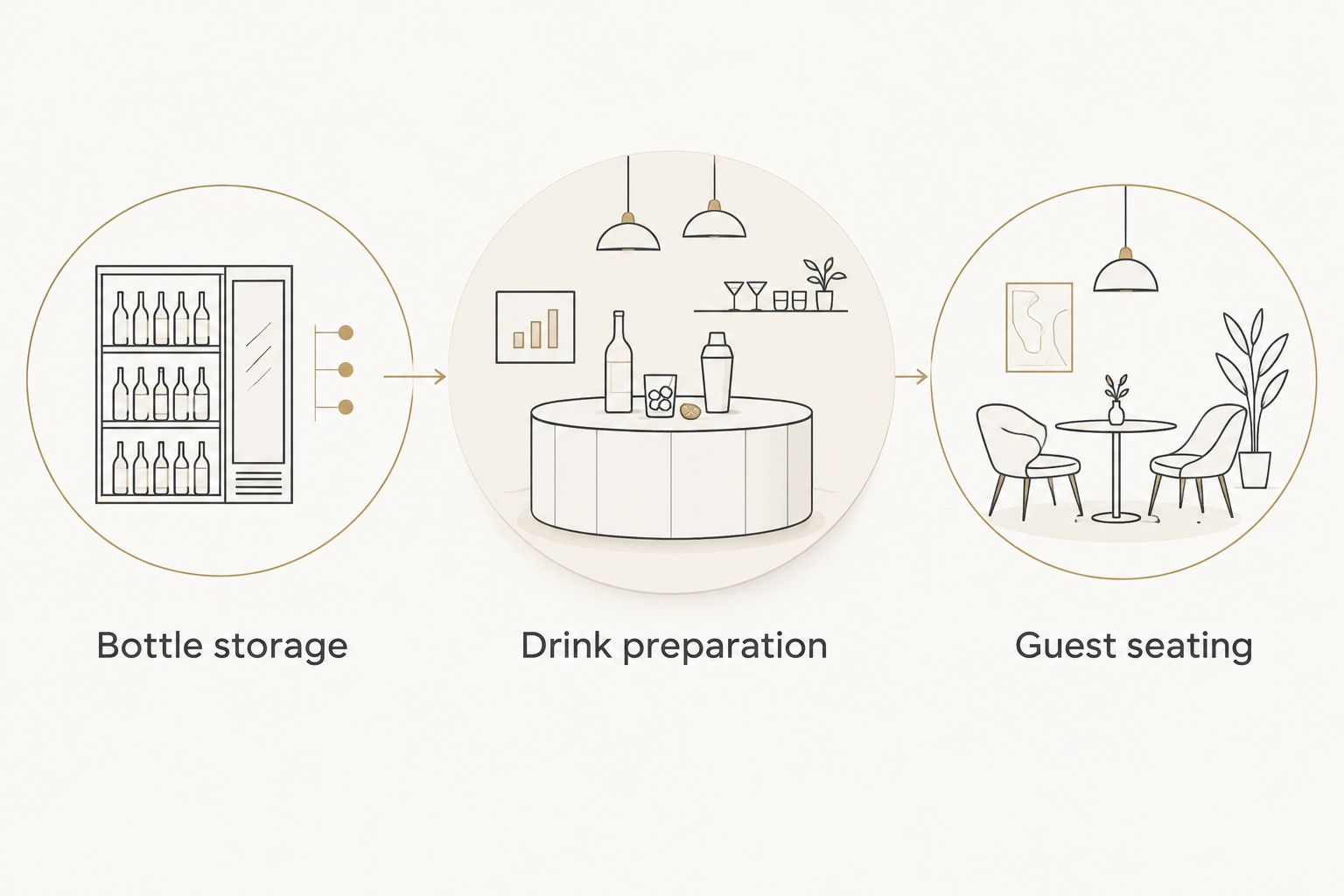
Start with the objects you use. The shape and dimensions of crystal cocktail glassware affect shelf spacing and cabinet clearance; the material name alone does not tell you whether a glass fits.
Bring representative glasses, bottles, trays, and serving tools to the design discussion. Check where each item goes before and after use, including the route back from the dishwasher or sink. A cabinet that holds everything but makes cleanup awkward has solved only half the problem.
For lighting, separate visibility from display. You need to read labels and prepare drinks without directing unnecessary light onto stored wine.
Match the idea to your homebuilding path
Murray Custom Homes is best for Lincoln-area buyers seeking wine cellar and bar planning within a broader home design. The builder serves a stated 50-mile radius of Lincoln and can build on a client's existing lot.
- Semi-Custom Homes: Choose selected features and leave remaining decisions to the builder. Establish which wine-storage and bar choices are open before developing detailed plans.
- Move-in-ready homes: These are already-built homes. Assess the actual layout and verify current listings rather than assuming a wine room or bar is included.
- Custom Homes: Shape the home around your preferences, including the relationship between storage, dining, and entertaining.
Murray Custom Homes provides in-house drafting and design, blueprints, 3D renderings, and construction project management. Meghan Murray provides in-house design guidance, and the project managers bring more than 20 years of combined experience.
The trade-off is scope: personalized planning still requires decisions, and an already-built home offers a different starting point from a fully custom design. Confirm the selected home's options instead of assuming every concept fits every offer.
Which wine cellar idea should you choose?
For 2026, choose a conditioned walk-in cellar if aging wine is your central requirement. Choose an integrated bar if your main goal is easier hosting, or a wine-appliance wall if you want convenient storage without a dedicated room.
Before approving a design, ask for the storage enclosure, appliance doors, serving surface, and guest circulation to appear together on the plan. Resolve conflicts there—not after cabinetry is installed.
FAQ
What’s the best wine cellar idea for a luxury home?
A conditioned walk-in cellar is the best choice when the goal is aging wine. An integrated bar is the better fit when preparing and serving drinks matters more than a dedicated collection room.
What temperature should a home wine cellar maintain?
Around 55°F, or 13°C, is a commonly recommended target for long-term wine storage. Stable conditions and protection from light matter alongside the temperature setting.
Is a glass wine room better than a solid-wall cellar?
A glass wine room is better for visibility, not automatically for storage performance. Coordinate glazing, doors, light exposure, and cooling before choosing it over a solid-wall enclosure.
Do I need a sink in my home bar?
You need a sink only if the planned preparation and cleanup tasks call for water at the bar. A dry bar works when washing happens elsewhere and the route remains practical.
Can I put a wine cellar in my basement?
A basement can accommodate a wine cellar when its conditions and the proposed enclosure support the design. Assess moisture and mechanical requirements rather than assuming underground space is suitable.
Can a concealed cabinet replace a wine cellar?
An ordinary concealed cabinet does not replace a conditioned wine cellar. It works for serving tools and glassware; wine needing controlled storage requires a suitable separate solution.
Can Murray Custom Homes plan a wine bar within a new home?
Murray Custom Homes offers in-house drafting, design, and 3D renderings for personalized home planning. Confirm which wine bar or cellar features fit the selected Custom or Semi-Custom Home approach.
One last thing
Check the room with every relevant door open. Appliance doors, cabinet doors, and the cellar entrance reveal circulation problems that disappear on a closed-door drawing. A striking wine room earns its place when you can also retrieve, pour, and clear comfortably.
Related guides
- Lighting design ideas for luxury homes
- Basement finishing ideas for custom homes
- Features to prioritize in a semi-custom home