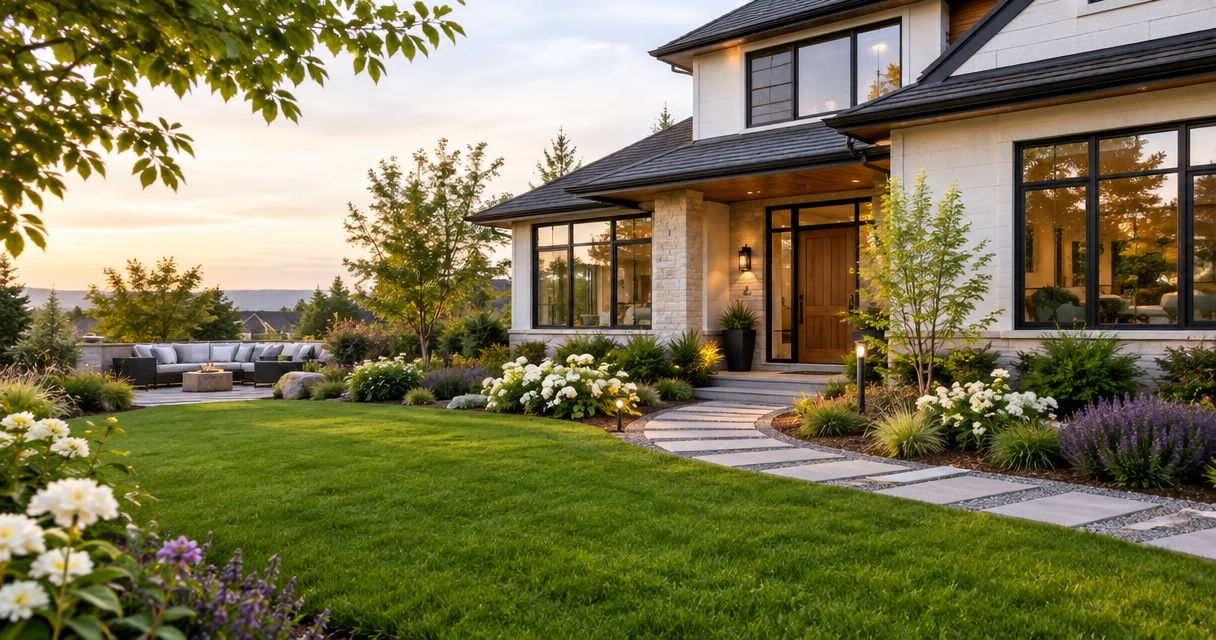
“We Create Luxury Living” extends to how your home meets the outdoors. Best overall: a drainage-first landscape plan. Best for shade: site-matched trees. Best for a simpler first phase: mulched planting beds. For buyers planning with Murray Custom Homes, the best landscaping ideas new homes need connect thoughtful design with everyday outdoor use.
- The best landscaping ideas new homes need start with drainage, not decorative planting.
- For Murray Custom Homes buyers, connect outdoor spaces to the floor plan before choosing finishes.
- Choose site-matched trees for shade, layered planting for privacy, and limited lawn for active use.
- Install permanent paths and patios before filling surrounding beds with plants.
Why this matters
A newly built home gives you an opportunity to coordinate the yard with doors, windows, utilities, and finished grading. Planting first and resolving those relationships later creates avoidable conflicts: a tree blocks a valued view, a bed interrupts a walkway, or a patio occupies the best drainage route.
For a 2026 landscape plan, separate essential site work from decorative additions. Establish how water moves, where people walk, and which outdoor spaces you will actually use. Then choose plants and materials that support those decisions.
What makes the best landscaping for a new home
The strongest ideas earn their place through function, not just appearance. Use these criteria before choosing your first planting bed:
- Drainage compatibility: Preserve the site's intended water flow and keep landscaping from redirecting runoff toward the house.
- Mature size: Judge trees and shrubs by their eventual dimensions, not their nursery containers.
- Daily usefulness: Connect outdoor features to activities such as dining, play, gardening, and arriving home.
- Maintenance fit: Match lawn, beds, and planting complexity to the work you want to do.
- Site suitability: Select plants for the actual sunlight, soil, moisture, and exposure.
- Construction coordination: Resolve access, utilities, and permanent surfaces before installing vulnerable planting.
For Murray Custom Homes buyers, the best landscaping plan connects the home's layout with drainage, shade, and usable outdoor space. Landscaping services and installation responsibilities should be confirmed separately rather than assumed to be part of the homebuilding scope.
Best landscaping ideas at a glance
| Rank and idea | Best for | Standout feature | Key limitation |
|---|---|---|---|
| 1. Drainage-first landscape plan | Establishing the whole yard | Coordinates grading, circulation, and planting | Requires site-specific review |
| 2. Site-matched shade trees | Long-term comfort | Places future canopy where shade is useful | Mature roots and canopy need room |
| 3. Connected patio and paths | Everyday outdoor living | Links indoor rooms with outdoor activities | Permanent surfaces are difficult to relocate |
| 4. Layered privacy planting | Screening selected views | Combines planting at different heights | Living screens need space and care |
| 5. Mulched planting beds | A manageable first phase | Defines planting areas without filling the entire yard | Mulch and weeds still need attention |
| 6. Purpose-sized lawn | Play and flexible open space | Reserves grass for activities that need it | Mowing and seasonal care continue |
| 7. Targeted landscape lighting | After-dark circulation | Highlights steps, paths, and entrances | Poor placement creates glare |
1. Drainage-first landscape plan: best for the whole yard
A drainage-first plan establishes where water travels before you add trees, beds, or paving. It also identifies the routes you need between the driveway, entry, side yard, and outdoor living areas. Treat it as the foundation for every other choice.
For a new home in 2026, review proposed landscaping against finished grading and drainage features. Ask the appropriate site professional to resolve uncertain runoff patterns; decorative stone alone is not a drainage design.
Drainage-first plan pros:
- Gives later planting a clear framework.
- Helps prevent beds and edging from obstructing drainage.
- Coordinates outdoor circulation before installation.
Drainage-first plan cons:
- Requires information specific to your lot.
- Does not deliver an immediately finished garden by itself.
Best for: Buyers starting with a largely undeveloped yard.
Verdict: Buy into the site plan first; hold decorative work until drainage and access are resolved.
2. Site-matched shade trees: best for long-term comfort
Shade trees belong where their mature canopy will serve a purpose. Consider seating areas, exposed windows, and outdoor spaces that become uncomfortable in direct sun. Check the species' suitability for your soil and local conditions before choosing its appearance.
Review planting locations against utilities, foundations, rooflines, and access routes. A small nursery tree is not a reliable picture of the space the mature tree needs.
Site-matched shade trees pros:
- Provide shade as their canopy develops.
- Add height and structure to a new landscape.
- Help define outdoor rooms without building walls.
Site-matched shade trees cons:
- Require establishment care and ongoing inspection.
- Can conflict with structures or utilities when poorly placed.
Best for: Buyers willing to plan around a tree's mature form rather than immediate fullness.
Verdict: Buy for mature fit; skip trees selected only because they look attractive at the nursery.
3. Connected patio and paths: best for everyday outdoor living
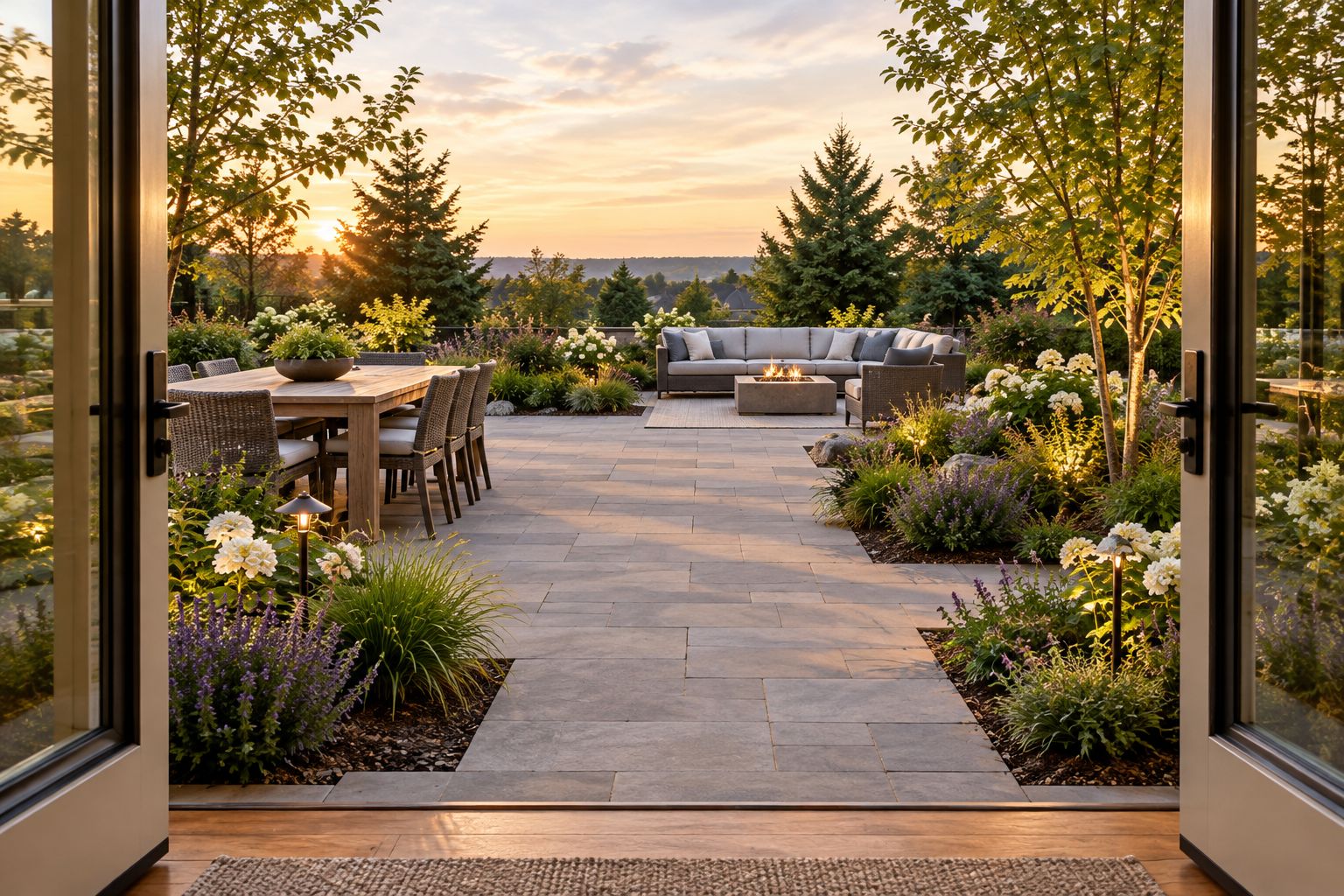
A useful patio starts with a destination and a route. Place dining space where carrying food makes sense, and connect seating to the door your household actually uses. Keep circulation clear when furniture is occupied, not just when the patio is empty.
For your 2026 plan, compare 2 views before approving the layout: the view from inside the house and the view from the outdoor seating area. Both reveal conflicts that a material sample cannot show.
Connected patio and paths pros:
- Makes outdoor rooms easier to reach.
- Organizes furniture around real activities.
- Gives surrounding planting clear edges.
Connected patio and paths cons:
- Requires careful elevation and drainage coordination.
- Is harder to change than movable furniture or planting.
Best for: Households that expect to dine, gather, or relax outside regularly.
Verdict: Buy the layout before choosing the paving finish.
4. Layered privacy planting: best for screening selected views
Privacy planting works best when it addresses a specific sightline. Identify whether you need screening beside a patio, outside a bedroom window, or along a neighboring outdoor space. Then combine suitable planting heights rather than automatically lining the entire property boundary.
Distinguish summer privacy from year-round screening. Deciduous planting loses its leaves, while evergreen choices still need appropriate growing conditions and mature spacing.
Layered privacy planting pros:
- Targets the views that matter most.
- Adds depth through varied heights and forms.
- Can frame a seating area without enclosing the whole yard.
Layered privacy planting cons:
- Does not provide an instant solid barrier.
- Crowded planting creates future maintenance conflicts.
Best for: Buyers who want privacy around particular rooms or activities.
Verdict: Buy a sightline-based planting plan; skip a boundary hedge without checking its mature footprint.
5. Mulched planting beds: best for a manageable first phase
Defined beds let you establish the landscape gradually. Start where planting improves the entry or frames a frequently used outdoor area, then leave room for plants to reach their intended size. Mulch supports the bed, but it does not replace suitable plants or maintenance.
Keep mulch away from direct contact with trunks and avoid piling material against the house. Coordinate bed edges with drainage and access rather than drawing decorative curves without a purpose.
Mulched planting beds pros:
- Create clear planting boundaries.
- Support phased installation.
- Make it easier to inspect individual plants and remove weeds.
Mulched planting beds cons:
- Need periodic attention and replenishment.
- Poorly designed beds complicate mowing and movement.
Best for: Buyers who want a deliberate starting point without planting every part of the yard immediately.
Verdict: Buy a few well-positioned beds; skip filling empty space simply to make the yard look finished.
6. Purpose-sized lawn: best for play and flexible space
Lawn earns its place where you need an open surface for play, movement, or informal gathering. Map that activity area first instead of treating grass as the automatic finish for every unplanted section.
Think through the mowing route as carefully as the view. Narrow strips, awkward corners, and isolated pockets create work without necessarily making the yard more useful. Choose turf appropriate to the site's conditions and intended use.
Purpose-sized lawn pros:
- Keeps space open for changing activities.
- Preserves clear views across the yard.
- Works as a simple visual foreground for planting.
Purpose-sized lawn cons:
- Requires recurring mowing and seasonal care.
- Shaded or otherwise unsuitable areas need a different approach.
Best for: Households with a specific use for open grass.
Verdict: Buy lawn where you will use it; skip grass in leftover spaces that are difficult to maintain.
7. Targeted landscape lighting: best for after-dark circulation
Start lighting design with entrances, changes in level, and the paths you use after dark. Add decorative emphasis only after those practical needs are addressed. Shield and aim fixtures so they illuminate the intended surface rather than neighboring windows.
Evaluate the layout after sunset. A fixture that looks restrained during the day can still produce uncomfortable glare from a seated position or through a bedroom window.
Targeted landscape lighting pros:
- Makes circulation features easier to see.
- Directs attention to selected landscape elements.
- Supports outdoor use after daylight fades.
Targeted landscape lighting cons:
- Requires electrical planning and ongoing maintenance.
- Excessive brightness can reduce comfort and disturb neighbors.
Best for: Buyers who regularly arrive home or use outdoor spaces after dark.
Verdict: Buy focused illumination; skip lighting every tree and edge.
How to organize the landscape before installation
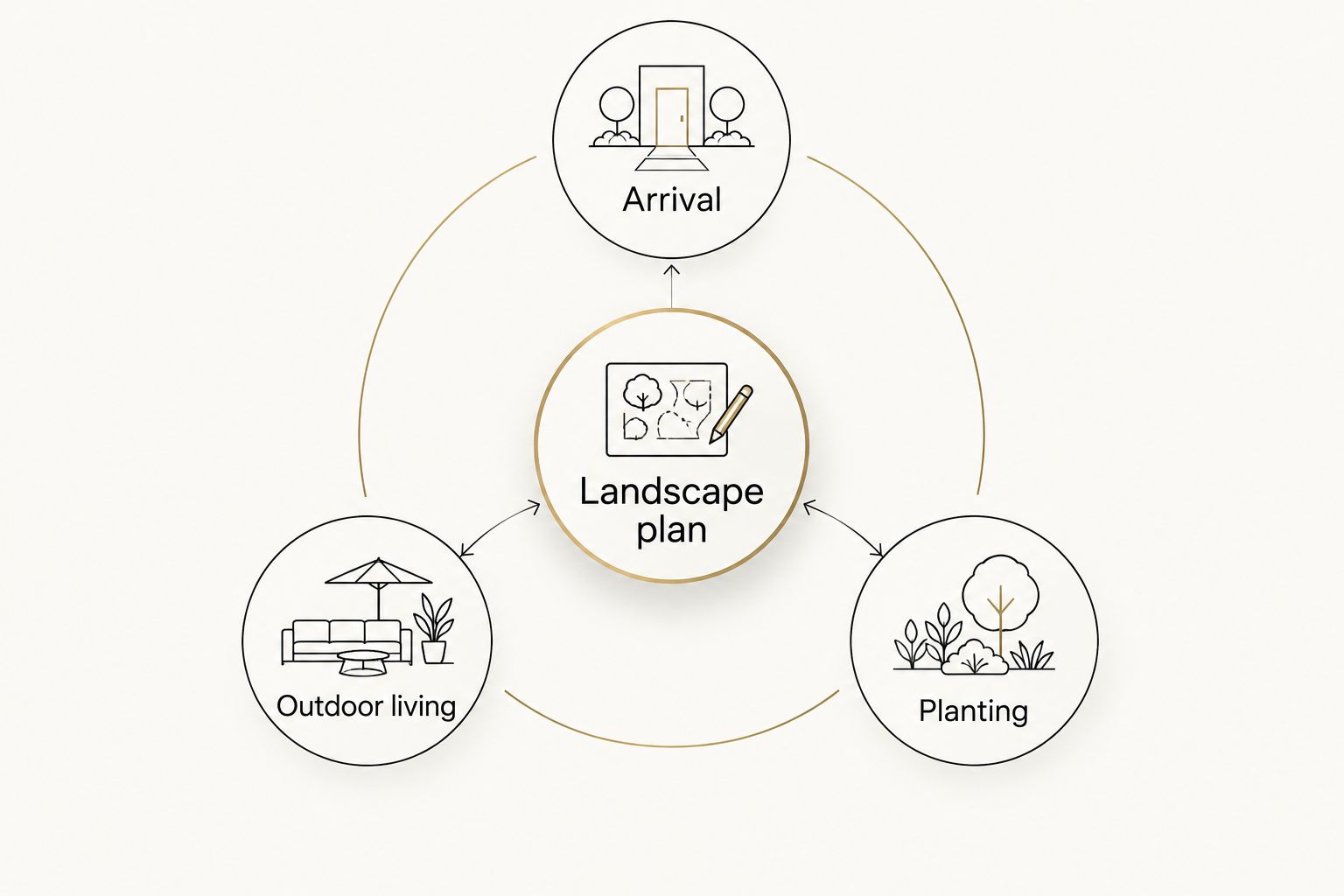
Divide the drawing into 3 zones: Arrival, Outdoor living, and Planting. This is a planning framework, not a requirement to divide your property equally. Give each zone a clear job before selecting materials.
- Arrival: Trace the route from parking to the entrance, including planting that must not obstruct movement.
- Outdoor living: Position furniture and activities in relation to doors, windows, and neighboring views.
- Planting: Assign shade, screening, and decorative planting to the places where they serve those functions.
Murray Custom Homes offers Semi-Custom Homes, move-in-ready homes, and fully custom builds. Semi-Custom Homes let you choose selected features and leave remaining decisions to the builder; fully custom homes center on your preferences. For an already-built home, assess the existing site and outdoor connections before planning changes.
The homebuilding service area is a stated 50-mile radius of Lincoln, Nebraska. In-house drafting, design, and 3D renderings support home-design decisions, while project managers bring more than 20 years of combined experience. Use the design conversation to identify outdoor priorities and confirm which site or landscape work requires separate arrangements.
How these landscaping ideas are ranked
This 2026 ranking puts dependencies first: drainage before decoration, mature plant fit before immediate fullness, and useful outdoor space before ornamental extras. It compares design approaches, not contractors or individual products. Each recommendation includes its maintenance or planning trade-off.
Which landscaping ideas should you choose?
Start with the drainage-first landscape plan. Add a connected patio if outdoor living is a priority, then place shade and screening where they serve your daily routine. Use defined beds to phase the remaining work.
For a 2026 project, do not confuse a finished-looking yard with a finished plan. A deliberate first phase is better than planting that later has to move.
FAQ
What are the best landscaping ideas for new homes?
The best starting ideas are a drainage-first plan, site-matched shade trees, and outdoor spaces connected to the home’s layout. Add privacy planting, defined beds, lawn, and lighting according to how you will use the yard.
What should I landscape first around a newly built house?
Resolve drainage, grading relationships, and permanent circulation first. Coordinate major installation access before adding planting that construction work could damage.
Is lawn or planting better for a new yard?
Lawn is better for activities that need open grass; planting is better for shade, screening, and defined garden areas. Assign each space a purpose rather than choosing one treatment for the whole property.
How do I choose trees for a new custom home?
Choose trees for the site’s growing conditions and their mature size. Check utility locations, structures, and the area you want to shade before selecting a species.
Can I landscape a new home in phases?
Yes, landscaping can be installed in phases within an overall site plan. Resolve drainage and permanent surfaces first, then add beds, trees, and other features without blocking future access.
How do I make landscaping easier to maintain?
Limit lawn to useful areas, avoid awkward bed edges, and select plants suited to the site. Leave mature growing space and plan how you will reach planting for routine care.
Should landscaping be discussed during home design?
Yes, discuss outdoor priorities while doors, windows, and room relationships are being planned. Confirm the scope of site and landscaping work separately so responsibilities are clear.
One last thing
Walk the proposed yard from inside the house before approving it on paper. Look through your most-used windows and imagine a tree at mature size, occupied patio furniture, and the route to the garden. The strongest landscape decision often starts with an indoor view.
Related guides
- Best outdoor living spaces for custom homes
- Best floor plan features to include in a custom home
- Best custom home design features to include