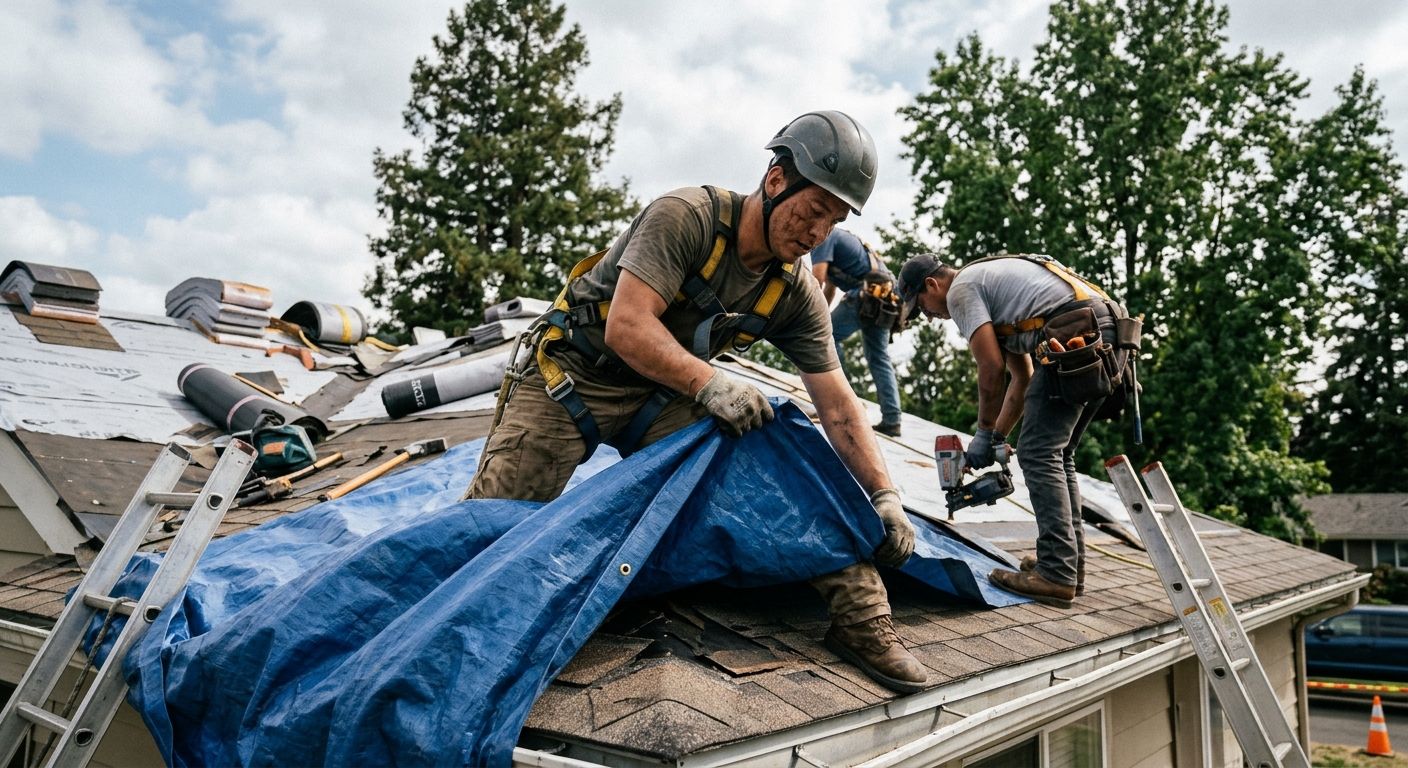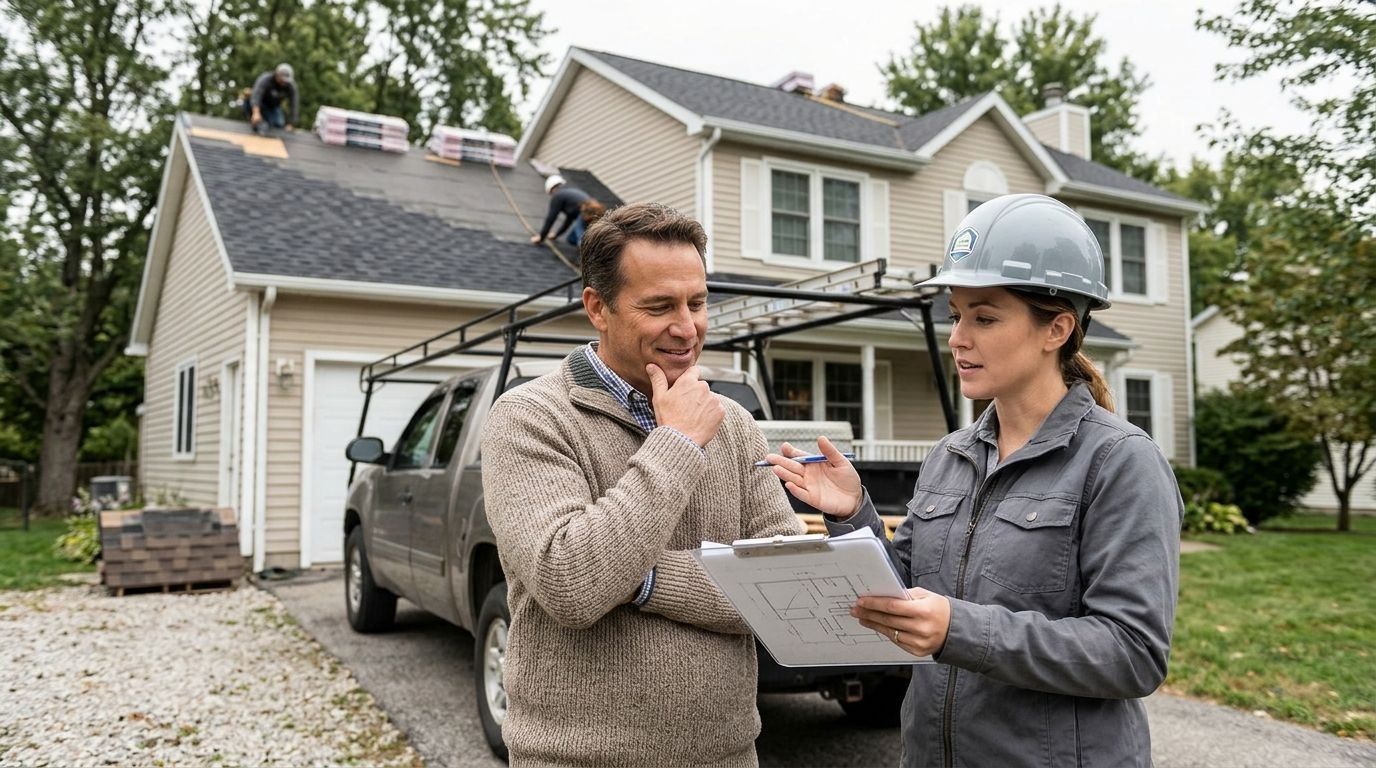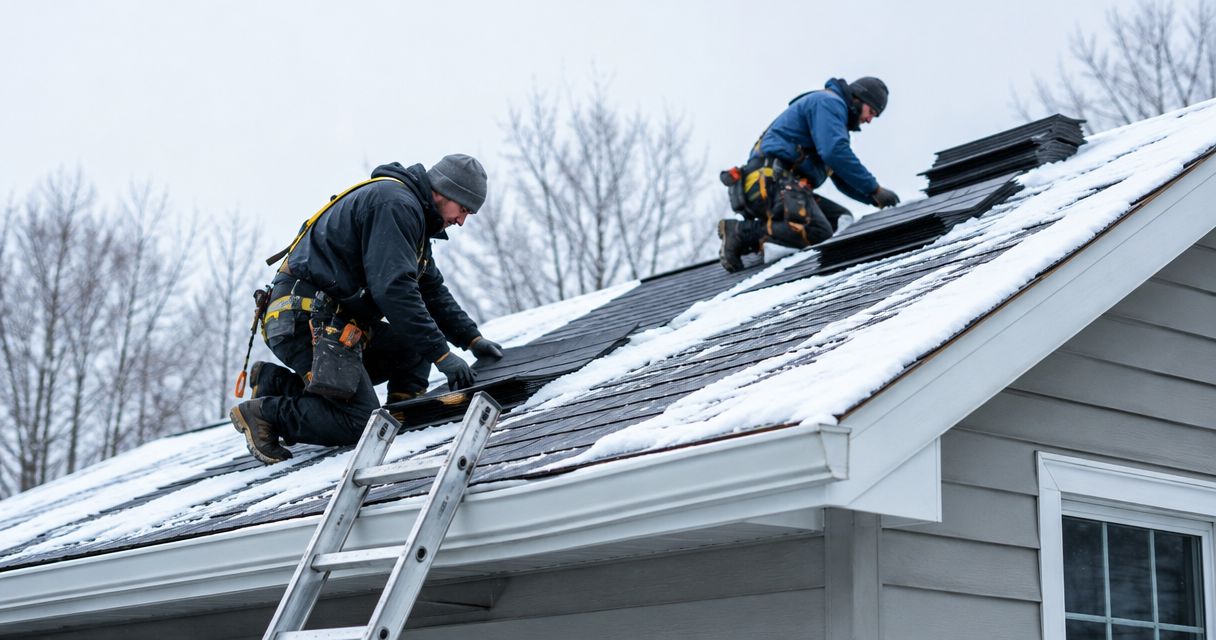
Yes, a roof can be replaced in winter when the roof is dry, access is safe, and installation conditions meet the selected roofing system’s requirements. Cold weather adds constraints: shingles become less flexible, sealants and adhesives have temperature limits, and snow or ice can stop work. For a Lincoln or Omaha roof replacement in 2026, choose the installation window around the material instructions and actual roof conditions—not the calendar alone.
- Can a roof be replaced in winter? Yes, when dry conditions, safe access, and material requirements align.
- Lincoln and Omaha roof replacement decisions should account for leaks, roof condition, and the forecast.
- Murray Roofing provides residential and commercial roof replacement; winter scheduling depends on suitable installation conditions.
- Ask how the contractor will handle material storage, weather interruptions, and manufacturer-required sealing.
Can a roof be replaced in winter or cold weather?
Winter replacement is possible, but a clear forecast does not automatically make a roof ready for installation. Your contractor needs to evaluate the roof surface, the materials being installed, and the weather expected while the building is exposed.
Water freezes at 32°F under ordinary conditions. That is a useful warning about ice, not a universal minimum temperature for roofing: a shaded roof can remain icy after the air warms, and different roofing products have different application requirements.
Before approving a start date, ask for these checks:
- Roof condition: Confirm the surface is free of snow, ice, and moisture that would interfere with installation.
- Material requirements: Confirm the specific shingles, membrane, underlayment, adhesives, and sealants are suitable for the planned conditions.
- Weather protection: Establish how the contractor will protect unfinished areas if conditions change.
- Safe access: Confirm crews can reach and work on the roof safely.
Wet weather creates a separate problem from cold air. The same distinction applies when deciding whether a roof can be repaired in rain or wet weather: protecting the building and preparing a suitable surface come before installing new materials.
Why this matters for Lincoln and Omaha properties
A leaking roof does not stop deteriorating because replacement is inconvenient. At the same time, removing a roof during unsuitable weather creates an avoidable exposure risk.
The decision is not simply “winter or spring.” It is whether the existing roof can remain in service safely, whether a professional repair can protect it temporarily, and whether a suitable replacement window is available.
For your 2026 project, separate urgency from scheduling pressure. Active water entry deserves prompt assessment; an aging roof without an active leak still needs a condition-based plan rather than an automatic emergency replacement. Get the roof assessed before deciding that waiting is safe.
How winter affects different roofing systems
The roof material changes what the contractor must control. No material eliminates the need for dry preparation, safe working conditions, and correct detailing.
| Roofing system | Best for | Winter advantage | Winter limitation |
|---|---|---|---|
| Asphalt shingles | Sloped residential roofs suited to shingles | Replacement can proceed during suitable dry weather | Cold affects flexibility and activation of self-sealing strips |
| Metal roofing | Buildings designed for a compatible metal roof assembly | Panels do not depend on shingle-style self-sealing strips | Underlayment, sealants, flashing, and slippery surfaces still require attention |
| Low-slope membrane roofing | Compatible commercial and low-slope roof assemblies | Installation methods vary by system | Adhesives, seams, moisture, and substrate conditions require system-specific checks |
This table explains installation differences, not a reason to change materials solely to fit a winter date. Your roof’s slope, structure, drainage, existing assembly, and intended use still govern the material choice.
Asphalt shingles need a cold-weather sealing plan
Asphalt shingles become less flexible in colder conditions, which makes handling and fastening practices important. Their self-sealing strips also depend on appropriate conditions to bond as intended.
Ask whether the chosen product requires additional sealing under the expected conditions and how the installer will follow those instructions. Do not accept “the sun will take care of it” as a substitute for a product-specific plan.
A winter installation is not automatically defective, and installation on a sunny day is not automatically correct. The meaningful evidence is the selected product’s instructions and the contractor’s documented installation approach.
Commercial roofs need assembly-specific planning
A commercial roof replacement requires more than identifying the visible membrane. The contractor also needs to assess insulation, drainage, penetrations, attachment, and the condition of the supporting surface.
Adhered and mechanically attached assemblies have different installation requirements. Ask which method is proposed and what conditions would prevent the contractor from completing seams, attachments, or flashings correctly.
This applies equally to offices, restaurants, warehouses, apartments, churches, and other commercial buildings. Occupied areas and rooftop equipment change the protection plan, but they do not remove the need to meet the roofing system’s installation requirements.
Why winter roof replacement feasibility varies
For a 2026 winter replacement, the decision rests on conditions at your building—not a citywide temperature reading alone.
- Surface moisture: Snow, frost, ice, and trapped moisture affect preparation and whether the installation can proceed.
- Material behavior: Shingles, membranes, adhesives, and sealants do not all respond to cold in the same way.
- Weather window: The forecast must allow the contractor to remove roofing, install the planned assembly, and protect unfinished work.
- Roof complexity: Valleys, walls, skylights, and equipment penetrations require careful waterproofing details.
- Existing damage: Wet insulation, damaged decking, and concealed deterioration change the work needed after removal.
- Access and exposure: Slippery surfaces, wind, snow piles, and blocked delivery areas affect safe operations.
Ask what would cause the contractor to postpone or stop work. A clear stop-work rule is more useful than a promise to finish regardless of the weather.
What should happen before a winter roof replacement?
A sound plan answers how the building stays protected throughout the job. Use this sequence when reviewing your proposal.
Inspect first
The assessment should distinguish the source of water entry from the full extent of damage. A ceiling stain alone does not establish whether the roof needs a localized repair or complete replacement.
Share the location of leaks, when they occur, and any previous repairs. Photos taken safely from inside the building or from the ground help document the problem without requiring you to climb onto a winter roof.
Confirm materials
Ask the contractor to identify the proposed roof covering and related components in writing. “Winter-rated materials” is not enough detail to verify an installation plan.
The relevant instructions include storage, handling, surface preparation, fastening or attachment, sealing, and application conditions. Confirm who checks those requirements before work begins.
Plan protection
Ask how much roof will be opened at a time and how exposed areas will be protected if the weather changes. The answer should match the building’s layout and the work being performed.
For occupied commercial properties, include protection of entrances, indoor operations, rooftop equipment access, and areas below active work. Homeowners should also discuss driveway access and protection around the house.
Confirm completion
Before signing, establish what the final inspection and closeout will cover. Ask for the agreed scope, changes discovered during removal, warranty documents, and any follow-up requirements.
A 2026 proposal should make the weather contingency understandable before installation starts. You should know how a postponed start differs from a weather interruption after removal has begun.
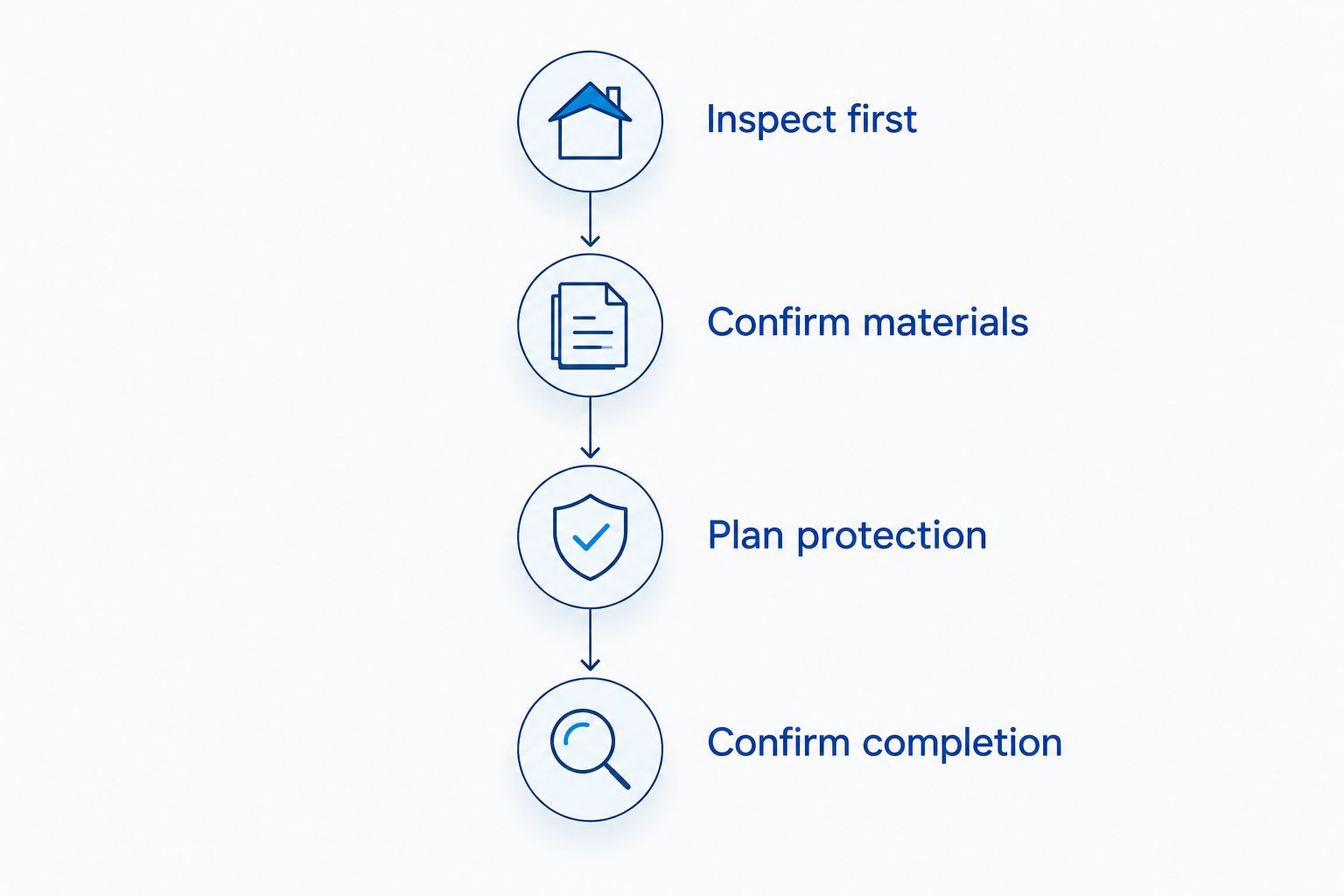
The sequence gives you a practical way to compare proposals without treating the earliest start date as the strongest offer. A contractor who explains the limits gives you a clearer basis for a decision.
Plan debris removal and building access before work starts
Winter logistics belong in the roofing scope, not in a conversation after the delivery truck arrives. Decide where materials and debris containers will sit, which entrances must remain open, and how snow will affect those areas.
A dumpster placement that works on a clear driveway can obstruct a garage or delivery route once snow is piled nearby. Commercial property managers should coordinate with occupants and snow-removal providers so neither operation blocks the other.
When reviewing dumpster rental costs, distinguish the container charge from delivery, disposal, weight allowances, and rental duration; then confirm which debris-removal items your roofing proposal includes. A Clarksville rental discussion does not establish Lincoln or Omaha rates, but those scope distinctions help you identify unanswered questions.
Also ask who arranges removal and how a weather delay affects the container’s time on site. The proposal should identify responsibility for cleanup and disposal rather than leave you to coordinate an unfinished job.
Does replacing a roof in winter affect its warranty?
Winter installation does not automatically determine warranty eligibility. The selected products, installation requirements, contractor qualifications, and written warranty terms control the answer.
Murray Roofing lists GAF Master Elite status, a 50-year Golden Pledge warranty, and a 10-year labor warranty among its trust signals. Ask which warranty applies to your proposed roof, what qualifies the project, and what exclusions or maintenance obligations apply.
Do not assume every roof system receives the same coverage. A residential shingle warranty and a commercial membrane warranty are not interchangeable.
For a 2026 installation, request the applicable documents before signing. Keep the proposal, approved changes, completion records, and warranty information together so you can distinguish material coverage from workmanship coverage later.
Should I wait until spring to replace my roof?
Wait only when an inspection supports waiting and there is a plan to manage the existing roof’s condition. An active leak, damaged decking, or recurring water entry needs assessment before you postpone replacement for a preferred season.
If the roof remains serviceable, scheduling for more suitable conditions can simplify installation planning. That benefit does not justify leaving an unresolved leak unattended.
Ask the contractor to explain both choices: the risks of proceeding during the available winter window and the risks of keeping the existing roof until later. The recommendation should address your roof, not just the contractor’s schedule.
Can a temporary repair protect the roof until replacement?
A professional temporary repair can address a localized problem when the roof condition and weather allow it. It is not proof that the entire roof can safely remain in service indefinitely.
Ask what the temporary work addresses, what remains unresolved, and which signs require another call. Repeated ceiling staining, new water entry, or a worsening leak should trigger reassessment rather than an assumption that the repair still holds.
Do not climb onto a snowy or icy roof to inspect or patch it. Document interior symptoms from a safe location and arrange a professional evaluation.
Who should assess a winter replacement in Lincoln or Omaha?
Murray Roofing serves Lincoln and Omaha homeowners and commercial property owners who need roof inspection, repair, or replacement. The useful first step is an inspection that separates an immediate water-entry problem from the longer-term replacement decision.
Murray Roofing offers free inspections and financing. Those services help you assess scope and payment options, but they do not remove installation limits: the selected roof system still needs suitable conditions, and financing remains subject to its applicable terms.
Ask for a written recommendation, a defined scope, and a weather-contingency plan. You need a decision you can understand before you authorize removal.
FAQ
Can a roof be replaced in winter in Nebraska?
Yes, a roof can be replaced in winter in Nebraska when conditions meet the selected roofing system’s requirements. The contractor must assess surface moisture, safe access, material handling, and the available weather window.
What temperature is too cold to replace a roof?
There is no universal minimum temperature for every roof replacement. Ask for the installation requirements for the exact roof covering, adhesives, sealants, and underlayment proposed for your building.
Can asphalt shingles seal properly in cold weather?
Cold conditions can delay activation of asphalt shingles’ self-sealing strips. The installer must follow the selected manufacturer’s cold-weather instructions, including any required additional sealing.
Can a commercial flat roof be replaced during winter?
Yes, a commercial low-slope roof can be replaced during a suitable winter weather window. The assembly’s attachment method, seam requirements, substrate condition, and moisture limits determine whether work can proceed.
Will a winter roof replacement void my warranty?
Winter installation does not automatically void a roof warranty. Eligibility depends on the applicable warranty terms and compliance with the selected system’s installation requirements.
Should I replace a leaking roof now or wait for spring?
Have the leak assessed before deciding to wait for spring. A professional inspection can determine whether a repair can manage the immediate problem or replacement needs to proceed during a suitable weather window.
Does Murray Roofing inspect roofs in Lincoln and Omaha?
Murray Roofing offers free roof inspections and serves residential and commercial properties in Lincoln and Omaha. Ask for an assessment of the existing roof and whether conditions support repair, replacement, or a planned delay.
Related guides
- How long does a full roof replacement take?
- Is it cheaper to repair a roof or replace it completely?
- From roof inspection to signed contract
One last thing
The most revealing question is not “Do you work in winter?” It is “What conditions would make you postpone my roof replacement?”
That answer should name the material requirements, roof conditions, and protection measures that govern your project. Schedule an inspection with Murray Roofing to assess your Lincoln or Omaha property and get a written scope and price for the work it needs.