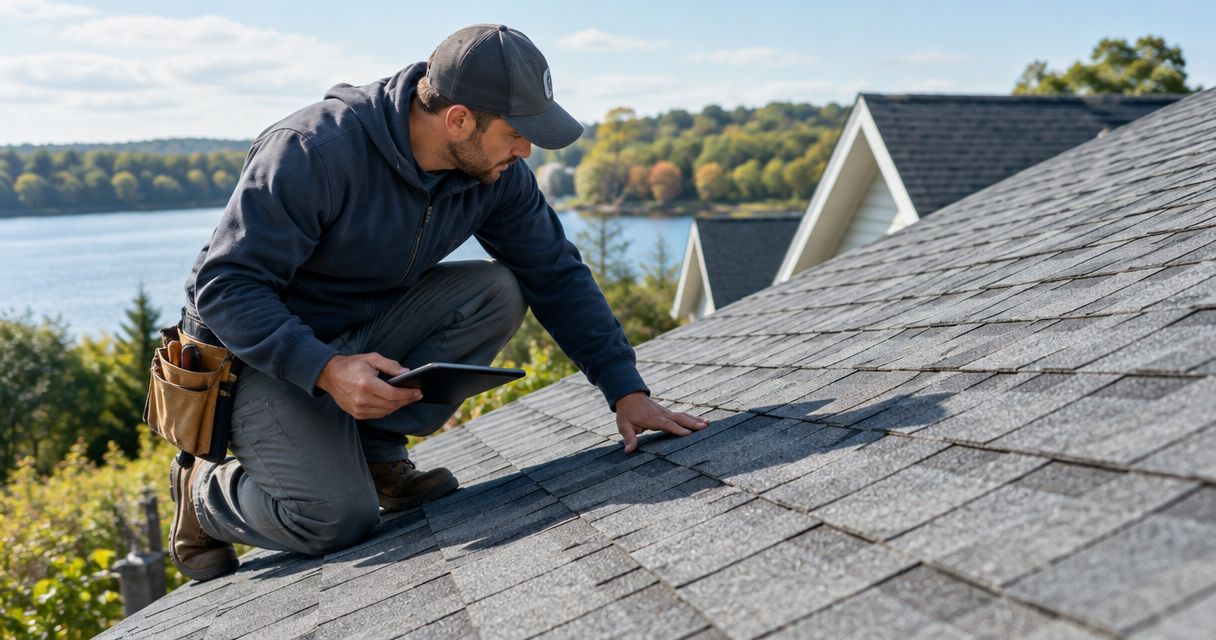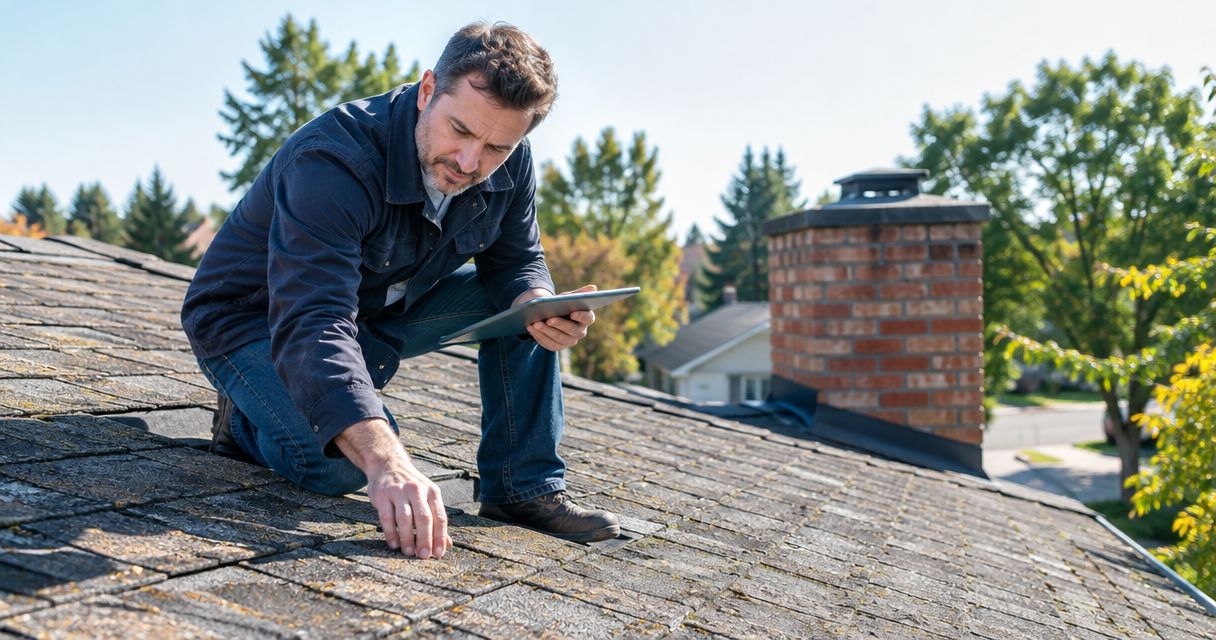
Yes, you can file an insurance claim for an old roof when you believe a covered event damaged it; age alone does not determine whether the insurer will pay. Insurance generally does not pay to replace a roof simply because it is worn out, and your policy's exclusions, deductible, and settlement terms determine your responsibility. For a 2026 claim, separate the roof's existing deterioration from damage caused by the event you are reporting.
- An insurance claim for an old roof depends on covered damage, not age alone.
- Wear and tear is generally excluded; hail damage and wind damage require evidence and policy review.
- Actual cash value accounts for depreciation; replacement cost coverage still has conditions and a deductible.
- Murray Roofing provides roof inspections and insurance-claim support in Lincoln and Omaha; the insurer decides coverage.
Can you file an insurance claim for an old roof?
You can report suspected covered damage to an older roof, but filing a claim is not the same as qualifying for a roof replacement. The key questions are what caused the damage and what your policy covers. A roof can have both existing wear and new storm damage.
For Lincoln and Omaha property owners, Murray Roofing provides roof inspections and insurance-claim support. An inspection documents roof condition; it does not replace the insurer's coverage decision.
Use this distinction before deciding that an aging roof belongs in an insurance claim:
| Roof condition | What it means for a claim | What to document |
|---|---|---|
| New damage following a wind or hail event | A potential claim if the cause and damage fall within the policy | Event date, affected areas, photographs, and inspection findings |
| Gradual deterioration without an identifiable covered event | Usually a maintenance or replacement issue, not an insured loss | Roof condition, repair history, and replacement recommendations |
| Existing deterioration plus new event-related damage | The insurer must evaluate covered damage separately from existing wear | Findings that distinguish the conditions and their extent |
| An interior leak with an uncertain cause | A leak alone does not establish coverage | When it appeared, affected rooms, and professional findings about the source |
Do not describe every defect as storm damage. Accurate reporting gives the insurer a clearer record and helps you understand which work remains your responsibility.
Why this matters
An older roof creates 2 separate questions: what needs fixing, and what insurance covers. The answers are not always the same. Your roof can need replacement even when the policy does not pay for replacement.
For a 2026 roofing decision, keep the repair recommendation separate from the coverage determination. A contractor evaluates the physical roof and proposed work; the insurer applies the policy to the reported loss.
That distinction matters for homeowners and commercial property decision-makers alike. An apartment building, restaurant, warehouse, office, or church needs a sound roof regardless of the claim outcome. Planning repairs while the insurer reviews the claim does not require assuming approval.
What evidence supports an old-roof claim?
Start with 3 records: the policy, the damage record, and the inspection report. These serve different purposes. Together, they help establish the applicable terms, what you observed, and the roof's physical condition.
- The policy: Gather the declarations page, relevant endorsements, deductible terms, and loss-settlement language. Use the policy in effect on the reported date of loss, not just the newest renewal documents.
- The damage record: Keep photographs taken safely from the ground or inside the building, notes about when damage appeared, and receipts for emergency protection. Include earlier photographs or maintenance records if you have them.
- The inspection report: Request a written description of the affected roofing, visible conditions, and recommended work. Ask the contractor to distinguish observed damage from assumptions about its cause.
An event date matters, but do not guess one to fit a claim. If you discovered a leak after being away, report when you discovered it and explain what you know about its timing.
Roof age records are useful too. Installation invoices, permit records, and prior inspection reports can help establish the roof's history. If you do not know the installation date, say so rather than presenting an estimate as a confirmed fact.
How do you file a claim for an older roof?
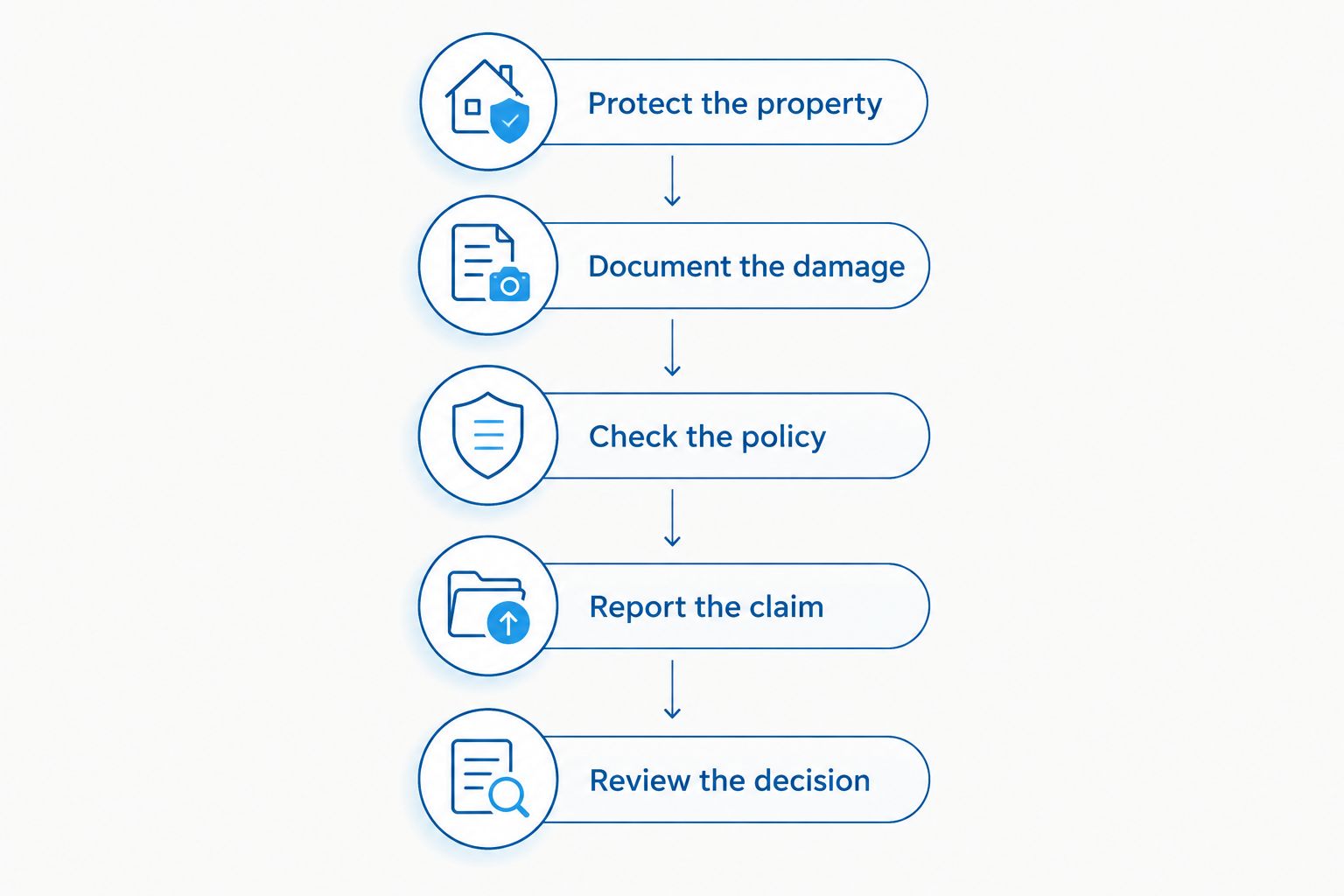
Use these 5 steps to organize the process. Follow the policy's reporting requirements and your insurer's instructions rather than relying on a general deadline.
- Protect the property. Keep people away from unsafe areas and arrange professional emergency protection when needed. Do not climb onto a damaged roof or attempt repairs yourself.
- Document the damage. Photograph visible conditions safely, record the discovery date, and preserve relevant records. Document emergency work before and after it occurs when safe and practical.
- Check the policy. Identify the applicable deductible, covered causes of loss, exclusions, and roof settlement provisions. Ask the insurer to explain unfamiliar language.
- Report the claim. Describe the facts accurately and keep the claim number, correspondence, and document requests together. Ask how the insurer wants inspection findings and estimates submitted.
- Review the decision. Compare the insurer's written scope with the contractor's findings. Request an explanation of omissions, depreciation, exclusions, or differences before committing to work based on an expected payment.
The storm-damage insurance claim workflow explains the broader sequence from documenting damage through reviewing the settlement. A process guide is not a promise that a particular claim will be paid.
Do not delay necessary emergency protection just to preserve damage for an inspection. Ask the insurer how to document urgent work, keep receipts, and retain available evidence without exposing anyone to danger.
How does roof age affect the insurance payment?
Roof age can affect depreciation and the settlement terms that apply to the roof. It does not, by itself, identify the cause of damage. Read the roof provisions in your 2026 policy rather than assuming the entire building has identical settlement terms.
The main distinction is actual cash value versus replacement cost. Neither label means that every item in a contractor's estimate is automatically covered.
| Settlement provision | How it generally works | Benefit | Limitation to check |
|---|---|---|---|
| Actual cash value | Values covered damage after accounting for depreciation | Provides payment for qualifying damage under the applicable terms | Depreciation can leave a substantial owner-funded portion |
| Replacement cost | Bases settlement on covered repair or replacement without a final depreciation deduction when policy conditions are met | Can reduce the effect of depreciation on the final covered settlement | The insurer may initially withhold depreciation, and conditions or deadlines can apply |
| Roof-specific schedule or endorsement | Applies separate settlement rules to roofing | Makes the roof's settlement method explicit | Roof coverage can differ from the settlement method for other building components |
Ask whether depreciation is recoverable and what documentation is required to recover it. Also ask whether any roof-specific endorsement changes coverage because of age, material, or damage type.
Replacement cost coverage is not a promise of a new roof for every leak. The insurer still evaluates the cause, covered scope, deductible, and policy conditions. Keep those questions separate from the roof's replacement needs.
Why old-roof claim outcomes vary
An insurance claim for an old roof depends on more than the installation date. These factors explain why similar-looking roofs can receive different decisions:
- Cause of damage: A covered event and gradual deterioration are different loss categories. Evidence must support the cause being reported.
- Policy exclusions: Wear and tear, deterioration, and other excluded conditions can limit what the insurer pays. Read the actual exclusion and any relevant endorsement.
- Settlement method: Actual cash value, replacement cost, and roof-specific schedules affect how covered damage is valued.
- Deductible: The applicable deductible determines the portion you retain. Check whether a separate wind or hail deductible applies.
- Extent of covered damage: The insurer evaluates the work needed for covered damage, which is not automatically the same as replacing the entire roof.
- Documentation and reporting: Inspection findings, photographs, maintenance history, and compliance with policy requirements shape the evidence available for review.
For a 2026 claim, request explanations tied to your policy and inspection findings. A general statement that the roof is “too old” is not enough for you to understand the decision; ask which provision applies and how it affects the covered scope or payment.
Can insurance deny a claim because the roof is old?
An insurer can deny damage that falls outside the policy, including excluded deterioration; roof age alone does not explain every denial. Age-related settlement provisions can also reduce payment without producing a complete denial.
Request the decision in writing, including the stated cause of damage and applicable policy language. Compare that explanation with the inspection findings. If the records identify different causes, ask what evidence the insurer needs to review the difference.
Avoid treating a contractor's replacement recommendation as proof of coverage. A recommendation explains what the roof needs, while the policy determines what insurance owes.
Will insurance replace the whole roof or just repair it?
Insurance pays for the covered scope under the policy, not automatically for a full roof replacement. Depending on the damage and policy terms, that scope can involve repairs or replacement.
Ask the contractor whether the proposed repair addresses the documented damage and how it affects the remaining roof. Ask the insurer how it determined the covered scope. If those assessments differ, request a written explanation rather than assuming either estimate settles the question.
For commercial roofs, the review should identify affected roof areas and relevant components, not just a leak location. Water appearing inside a building does not by itself establish where it entered or how much roofing requires work.
What should you do if the claim is denied or underpaid?
Start with the written explanation. Identify whether the disagreement concerns the cause of damage, the work included, the settlement method, or a policy exclusion. Each requires a different response.
For a scope disagreement, submit documented findings and an itemized contractor estimate through the insurer's requested process. For a coverage disagreement, ask the insurer to identify the controlling policy language and explain the available review process.
Keep communication factual. An overlooked roof area or an unexplained depreciation entry is a specific issue to review; simply demanding a new roof is not supporting evidence. Your state's insurance department can explain consumer complaint procedures if you need help understanding the next step.
Meanwhile, arrange necessary property protection. A disputed claim does not stop water damage, and approval should never be assumed when scheduling permanent work.
Who can help you assess an older roof in Lincoln or Omaha?
Murray Roofing is a fit for Lincoln and Omaha property owners who need a roof inspection and insurance-claim support. Murray Roofing provides residential and commercial roof repair and replacement, including free inspections and financing.
The practical benefit is a roofing assessment you can use to plan work and support communication with the insurer. The limit is equally important: Murray Roofing does not determine insurance coverage, and financing does not establish claim eligibility or guarantee approval.
When scheduling a 2026 inspection, explain whether you are investigating a recent event, a recurring leak, or general deterioration. Ask for the findings, recommended scope, and a price for the proposed work so you can plan without relying on an unconfirmed settlement.
FAQ
Can I file an insurance claim for an old roof that leaks?
Yes, you can report suspected covered damage, but a leak alone does not establish coverage. The insurer evaluates the cause of the leak and the applicable policy terms.
Is there a roof age that automatically makes a claim ineligible?
There is no single roof-age cutoff that applies to every insurance policy. Check your roof-specific endorsements, exclusions, and settlement provisions rather than relying on a general age rule.
Does homeowners insurance cover normal roof wear and tear?
Homeowners insurance generally excludes normal wear and tear. A worn roof still needs maintenance or replacement even when insurance does not cover that work.
What is the difference between actual cash value and replacement cost for a roof?
Actual cash value accounts for depreciation, while replacement cost coverage can pay without a final depreciation deduction when policy conditions are met. Both remain subject to the covered scope, deductible, and applicable terms.
Should I get an inspection before reporting roof damage?
An inspection helps document roof condition, but do not let scheduling delay reporting required by your policy. Ask the insurer how to handle an inspection and any urgent protective work.
Can I claim old hail damage if I just discovered it?
Report the facts accurately and ask the insurer how the policy’s reporting requirements apply. Do not guess a storm date or assume recently discovered damage is automatically covered.
Can a roofing contractor guarantee insurance will replace my roof?
No, a roofing contractor cannot guarantee an insurer’s coverage decision. A contractor can document conditions and provide an estimate; the insurer applies the policy.
One last thing
A roof's condition and its insurance eligibility are different questions. Even an approved claim can leave owner-funded work, and a denied claim does not mean the roof is safe to leave alone.
Before signing a replacement contract, understand the proposed work, the insurer's written decision, and your payment responsibility. Schedule a free inspection with Murray Roofing or request a price for the recommended work in Lincoln or Omaha.
Schedule your roof inspection
Get an assessment of your older roof and a price for recommended repair or replacement work.
Related guides
- Is it cheaper to repair a roof or replace it completely?
- From roof estimate to financing approval
- How long does a roof inspection take?