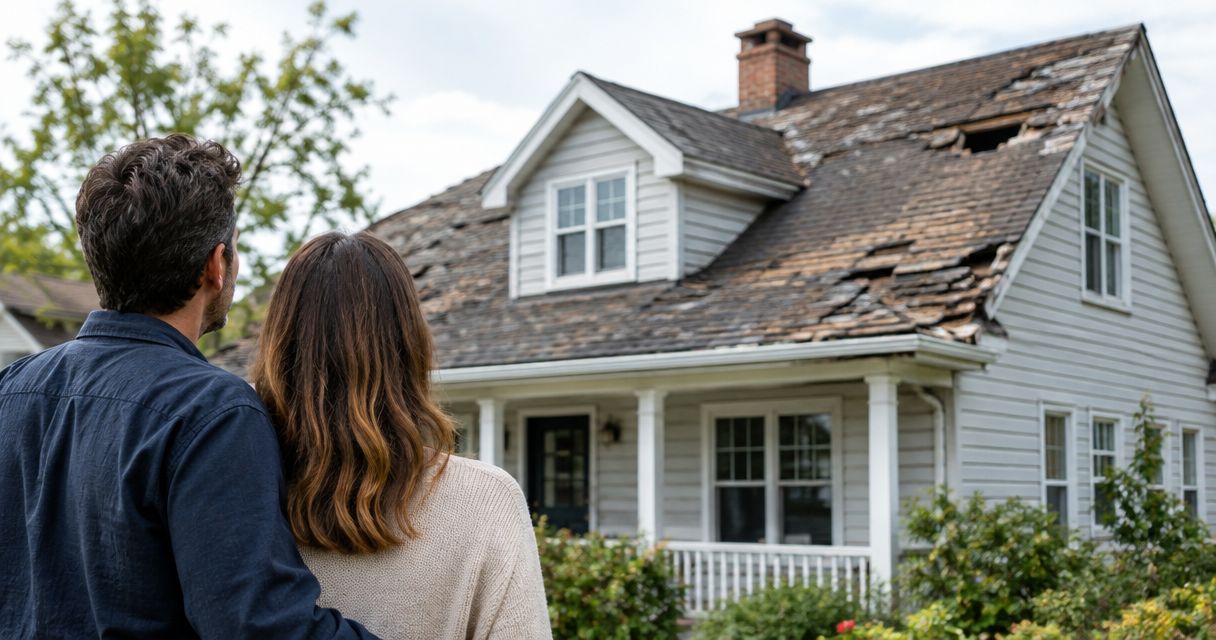
Yes, you can sell a house with an old roof, including one that needs repairs or replacement, if you disclose known issues as required and reach terms the buyer accepts. An as-is agreement does not remove disclosure obligations, and roof damage can still affect the buyer’s financing, insurance, inspection negotiations, and ability to close.
- Can you sell a house with an old roof? Yes, but condition, disclosure, financing, and insurance determine your options.
- An old roof does not automatically need replacement; inspect its condition before choosing a sale strategy.
- Selling as-is does not erase disclosure duties or guarantee that a buyer’s lender will accept roof damage.
- Murray Roofing offers roof inspections, repairs, and replacement for homeowners selling in Lincoln and Omaha.
Can you sell a house with an old roof?
Yes. Roof age alone does not prevent a sale. The important distinction is between an older roof that still performs and a damaged roof that allows water inside or needs substantial work.
Before listing your Lincoln or Omaha home in 2026, arrange a roof inspection for home sellers. Ask for photographs, written findings, and a clear explanation of whether the roof needs localized repairs or replacement.
You have 4 sale paths to discuss with your real estate agent:
| Sale path | Best for | Main advantage | Main limitation |
|---|---|---|---|
| Sell as-is | Sellers who do not want to arrange roof work | Leaves the work to the buyer | Buyers can adjust offers; financing and insurance issues remain |
| Repair before listing | Roofs with isolated, repairable damage | Addresses a defined defect | Repairs do not renew the entire roof |
| Replace before listing | Roofs with widespread failure | Resolves the existing roof-replacement issue | Requires funding and coordination without guaranteeing a return |
| Negotiate a concession | Buyers willing and able to arrange work | Lets both parties negotiate around documented findings | Lender limits and closing conditions can restrict the agreement |
Why this matters
A roof problem can become a transaction problem when it appears after you have accepted an offer. The buyer, lender, and insurer each evaluate different risks; agreement between buyer and seller does not settle every requirement.
For a 2026 sale, separate the physical question from the contractual question. A roofer assesses roof condition, your agent helps structure negotiations, and the buyer’s lender and insurer explain their own requirements. None of those roles replaces the others.
Selling as-is: best for avoiding pre-sale construction
Selling as-is means you are offering the property in its current condition under the purchase agreement. It does not mean buyers must overlook defects or that every buyer can purchase the home without roof work.
The advantage is straightforward: you avoid managing repairs or replacement before listing. The trade-off is uncertainty over how buyers will value the roof’s condition and whether their financing can accommodate it.
Choose an as-is strategy deliberately, not because you assume an old roof makes the house unsellable. Give your agent the inspection findings so the listing, disclosures, and negotiations describe the same condition.
A cash buyer removes the mortgage lender from the transaction, but not the buyer’s inspection concerns, insurance decisions, or contractual rights. Do not treat a cash offer as automatic acceptance of undisclosed damage.
Repairing before listing: best for isolated damage
A repair makes sense when an inspection identifies a limited problem and the surrounding roof remains serviceable. A flashing defect near a chimney, for example, calls for a different discussion than deterioration across multiple roof slopes.
The benefit is a defined scope of work. The limitation is equally important: fixing a leak does not establish that the rest of an aging roof has a particular remaining lifespan.
Ask the contractor to distinguish the immediate repair from any broader concerns. Keep photographs and invoices, and describe the work accurately rather than advertising a repaired roof as new.
For a closer decision framework, compare repairing a roof versus replacing it completely. Base the choice on condition and scope, not age alone.
Replacing before listing: best for widespread failure
Replacement deserves consideration when the inspection identifies widespread deterioration, repeated leaks, or damage that localized repairs will not adequately address. It resolves a larger roof problem before the buyer evaluates the property.
It also creates an upfront obligation. A new roof does not guarantee a higher sale price, a faster closing, or recovery of the replacement expense. Review the project scope alongside your agent’s advice about the property and intended listing strategy.
For a 2026 listing, ask how installation scheduling, permits where required, and final documentation fit your sale plan. Do not promise buyers a completion date before the contractor confirms the schedule and any dependencies.
If you replace the roof, preserve the contract, material information, completion records, and warranty documents. Buyers need the actual terms, including any transfer requirements, rather than a broad statement that the roof is covered.
Negotiating a concession: best for buyer-managed work
A negotiated concession can let the buyer arrange roof work after purchasing the property. That approach gives the buyer control over contractor selection and project decisions while avoiding seller-managed construction.
The limitation is that a concession does not repair the roof. If the buyer’s lender requires work before closing, a financial adjustment alone does not satisfy that condition.
Ask the buyer to confirm lender requirements before treating a concession as the solution. Put the agreed responsibilities, supporting documents, and any conditions into the purchase agreement through your agent or attorney.
Avoid vague promises to handle the roof later. A clear agreement identifies what is being addressed, who is responsible, and whether the transaction depends on completed work or another approved arrangement.
Why the right roof-sale strategy varies
There is no universal age at which every homeowner must replace a roof before selling. These factors determine which approach fits your property:
- Current condition: An older, watertight roof presents a different problem from active leakage or widespread damage.
- Damage scope: An isolated defect and deterioration across the roof require different repair discussions.
- Buyer financing: Property-condition requirements depend on the loan and the lender’s review.
- Insurance requirements: The buyer needs to establish whether acceptable coverage is available for the property.
- Sale timing: Work, documentation, and negotiations must fit the obligations in your purchase agreement.
- Available funding: Paying for work before closing differs from negotiating an adjustment that the lender permits.
For Lincoln and Omaha homes, ask the inspector to document observed storm damage separately from age-related wear. Do not describe every damaged shingle as an insurance-covered loss; coverage depends on the policy and the insurer’s determination.
What should you do before listing the house?
Get evidence before choosing a remedy. A written roof assessment gives you a better starting point than a guess based on installation age or a stain on an upstairs ceiling.
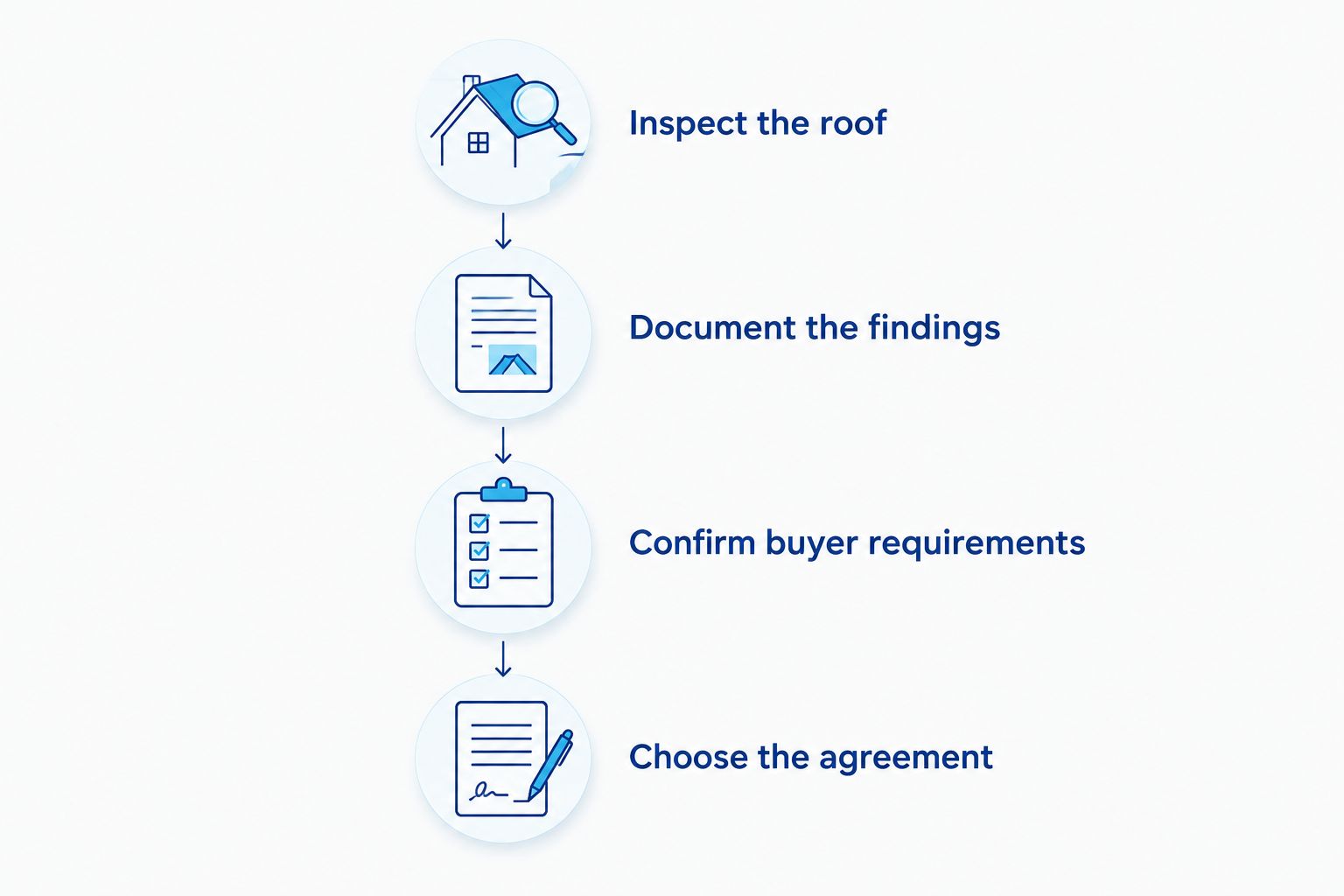
- Inspect the roof. Request a professional assessment of accessible roof surfaces, flashing, penetrations, and visible signs of leakage. Do not climb onto the roof to investigate it yourself.
- Document the findings. Gather photographs, prior repair invoices, installation records if available, and warranty paperwork. Keep confirmed findings separate from assumptions about age or storm causes.
- Confirm buyer requirements. Once an offer exists, have the buyer establish any lender or insurance conditions. Do not assume that acceptance of the inspection report means financing is settled.
- Choose the agreement. Decide whether to sell as-is, complete work, or negotiate an acceptable concession. Record responsibilities through the appropriate contract documents.
For your 2026 sale file, keep these documents together and update the record after any work. If the roof leaks again after an earlier repair, the old invoice does not describe the whole current situation.
What do you need to disclose about roof damage?
Disclose known roof issues as required by the applicable law and transaction documents. For a Nebraska sale, review the current seller disclosure requirements with your real estate agent or attorney; do not rely on advice written for another state.
Be precise about what you know. An active leak, a past repair, an inspection finding, and an estimated installation date are different facts. If the age is unverified, do not present an estimate as a documented installation date.
The distinction behind refusing repairs after inspection is that declining a buyer’s repair request and satisfying disclosure duties are separate questions. That discussion concerns Virginia; Nebraska sellers need Nebraska-specific advice and their own purchase agreement to determine their obligations.
If a buyer requests replacement, you can discuss alternative terms through your agent. Whether the buyer can terminate, renegotiate, or require a particular response depends on the contract and applicable law—not simply on whether the listing says as-is.
Will the buyer’s mortgage or insurance require roof work?
A buyer’s lender can require roof-related deficiencies to be addressed as a condition of financing. The exact requirement depends on the loan program, appraisal findings, property condition, and lender review.
Insurance is a separate checkpoint. The buyer should discuss the roof’s condition with an insurance professional early enough to resolve any underwriting requirements before closing.
Do not promise that a concession, repair receipt, or contractor letter will satisfy every lender or insurer. Ask the party making the requirement what documentation or completed work it accepts, then confirm the response through the transaction team.
For a 2026 contract, resolve these questions before agreeing that all roof work will happen after closing. Post-closing arrangements require the relevant parties’ approval; they are not a workaround you can assume is available.
How can a local roofing contractor help?
Murray Roofing is best for Lincoln and Omaha sellers seeking local roof inspections, repairs, or replacement. The company offers free inspections and financing, giving you a way to establish the roof’s condition and discuss funding if work is necessary.
The useful next step is a written scope that separates necessary work from optional improvements. Ask what the inspection found, what the proposed work addresses, and what remains outside the scope.
Murray Roofing’s stated warranty offerings include a 50-year Golden Pledge warranty and a 10-year labor warranty. Request the applicable written terms, eligibility details, exclusions, and transfer requirements before describing any coverage to a buyer. Do not assume every repair or replacement carries identical protection.
A roofing contractor does not determine the buyer’s loan approval, insurance coverage, or your legal disclosure obligations. Keep those decisions with the lender, insurer, and real estate professionals responsible for them.
Should you replace an old roof before selling?
Replace an old roof before selling when its documented condition and your sale plan justify the work—not simply because it is old. Compare the inspection findings, project obligations, buyer requirements, and negotiated alternatives before committing.
If the roof remains serviceable, inspection documentation and accurate disclosures support a more focused conversation. If it has widespread problems, replacement becomes a different decision from patching one defect.
Can you sell a house with an actively leaking roof?
You can sell a house with an actively leaking roof, but the leak needs prompt professional attention and accurate disclosure. Active water entry can damage interior materials, and it can complicate the buyer’s financing or insurance.
Arrange an assessment rather than waiting for the buyer’s inspection. Do not promise a permanent repair or a safe completion schedule before the contractor evaluates the conditions.
FAQ
Can I sell my house as-is if the roof is old?
Yes, you can offer a house as-is with an old roof. You still need to meet applicable disclosure obligations, and the buyer’s financing or insurance can impose separate conditions.
Do I have to replace my roof before selling in Nebraska?
An old roof does not automatically require replacement before a Nebraska home sale. The roof’s condition, purchase agreement, and buyer’s financing requirements determine what needs to happen.
Will a new roof guarantee a higher selling price?
No, a new roof does not guarantee a higher selling price or recovery of the replacement expense. Discuss the inspection findings and proposed work with your agent before choosing replacement as a sale strategy.
Can I offer a buyer a concession instead of fixing the roof?
You can negotiate a concession if the buyer agrees and the financing permits it. A concession does not satisfy a lender requirement for completed repairs unless the lender accepts that arrangement.
Does selling as-is mean I can leave out a known roof leak?
No, selling as-is does not erase applicable disclosure obligations. Ask your real estate agent or attorney how to report known leaks, prior repairs, and inspection findings accurately.
Will homeowners insurance pay to replace an old roof before I sell?
Roof age alone does not establish a covered insurance claim. Coverage depends on the cause of damage, policy terms, and the insurer’s determination.
Who should inspect the roof before I list my house?
A qualified roofing contractor can assess roof condition and recommend repairs or replacement. Keep the written findings for your agent, and let the buyer’s lender and insurer determine their own requirements.
One last thing
A repair invoice proves that work occurred; it does not prove the roof’s current condition. Give buyers a clear record of what was found, what was fixed, and what remains unresolved. That is more useful than calling the roof good for its age.
Schedule an inspection with Murray Roofing to discuss your Lincoln or Omaha roof, review repair or replacement options, and get a price before committing to your sale strategy.
Schedule your roof inspection
Discuss your roof’s condition and repair or replacement options before listing your home.
Related guides
- Average roof lifespan by material
- From roof estimate to financing approval
- Roof warranty types for homeowners