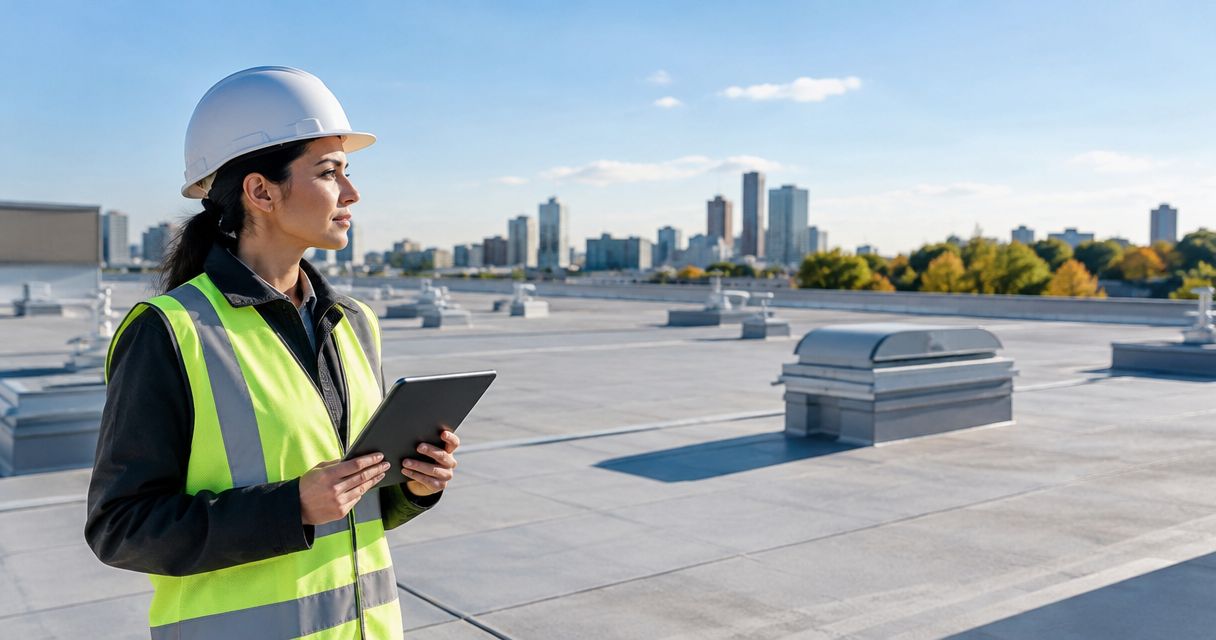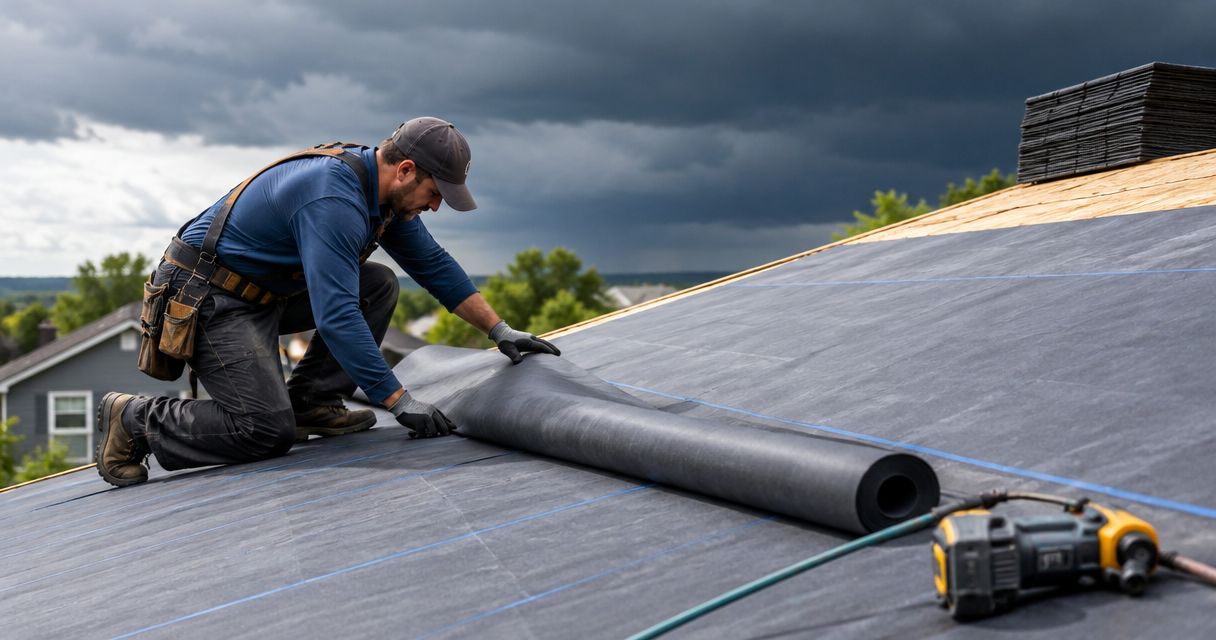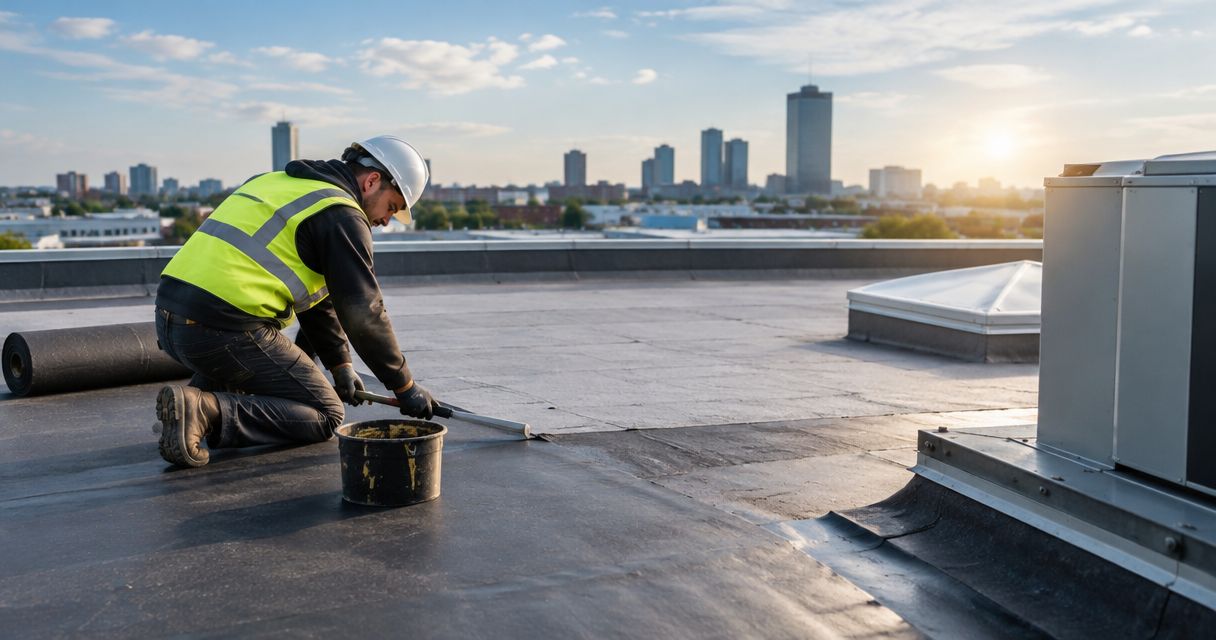
Repair is the cheaper choice when commercial roof damage is isolated and the surrounding roof remains serviceable; replacement is the better investment when widespread deterioration makes repairs temporary. For a 2026 decision, compare the proposed work with recurring leak expenses, interior damage, and business disruption—not just the smaller initial project.
- Repair or replace a commercial roof based on damage extent, remaining serviceability, and recurring leak history.
- Commercial roof repair fits isolated defects; replacement addresses broader roof-system deterioration.
- Murray Roofing provides commercial roofing inspections in Lincoln and Omaha to help property owners assess the appropriate scope.
- Compare written scopes, exclusions, and disruption plans before approving either option.
Is it cheaper to repair or replace a commercial roof?
Repair is the economical choice when it solves a defined problem without leaving a failing roof around it. Replacement becomes the stronger choice when the roof no longer provides a dependable base for repairs. Neither decision should rest on the appearance of one ceiling stain.
For commercial properties in Lincoln and Omaha, ask the contractor to separate localized defects from roof-wide problems. A warehouse, apartment building, office, restaurant, or church needs the same basic evidence: where water enters, what materials are affected, and what the proposed work will actually address. The roofing guide for property managers provides related planning guidance for occupied buildings.
| Option | Best for | Main benefit | Main limitation |
|---|---|---|---|
| Commercial roof repair | Isolated damage with serviceable surrounding materials | Limits work to the identified defect | Leaves the rest of the existing roof in place |
| Commercial roof replacement | Widespread deterioration or failure beyond a practical repair scope | Addresses the roof system across the replacement area | Requires a broader project and more operational planning |
A repair proposal and a replacement proposal are not interchangeable bids. One corrects selected defects; the other replaces a defined roof area. Judge each against the condition it leaves behind.
Why this matters for your commercial property
A smaller roofing project does not automatically mean a smaller total expense. Repeated leaks can damage ceilings, finishes, inventory, and equipment, while emergency responses interrupt normal operations. Your decision needs to account for those consequences without treating every leak as proof that replacement is necessary.
For your 2026 capital plan, separate immediate water-control needs from the permanent roofing decision. An urgent repair can protect the building while you evaluate a larger project. It should not quietly become the long-term plan for a roof with unresolved, widespread problems.
When commercial roof repair is the right choice
Commercial roof repair is best for a specific, documented defect in an otherwise serviceable roof. Examples include damaged flashing around an opening, a localized membrane defect, or a failed detail where roofing meets another building component. The inspection must establish the surrounding condition—not simply identify the most visible damage.
Ask the contractor to explain why the repair boundary makes sense. If the affected area extends beneath the visible surface, the proposal should address that condition rather than cover it up. A useful scope names the defect, the materials involved, and the limits of the work.
Repair offers practical advantages:
- Focused work: The contractor addresses the identified problem instead of replacing unaffected roofing.
- Retained roof area: Serviceable portions of the existing system remain in place.
- Targeted planning: Building access and protection arrangements follow the specific work area.
The limitation is straightforward: repair does not renew the rest of the roof. Other seams, penetrations, drainage details, and aging materials remain part of your maintenance responsibility. Ask what the inspection found outside the repair area before approving the work.
Do not reject repair solely because a roof is older. Equally, do not approve repair solely because the affected area looks small from inside the building. Condition and repairability matter more than appearance alone.
When commercial roof replacement is the right choice
Commercial roof replacement is best for deterioration that extends beyond a dependable, localized repair. Widespread material failure, recurring leaks with unresolved causes, or moisture-damaged roof components require a broader assessment. The replacement scope should explain which existing materials must be removed and which underlying conditions need correction.
Replacement gives you the opportunity to address the roof as a system. That includes its field material, perimeter details, penetrations, drainage, and transitions. A proposal that discusses only the new surface leaves important questions unanswered.
The advantages are broader than stopping the current leak:
- System-wide scope: The work can address connected defects rather than isolated symptoms.
- Underlying assessment: Removal allows the contractor to evaluate exposed materials and identify necessary work.
- Coordinated details: Roof edges, equipment openings, and drainage can be considered together.
Replacement also carries real trade-offs. You need a plan for access, debris handling, interior protection, and coordination with building occupants. The contract should explain how the contractor handles concealed damage discovered during the work.
For a Lincoln or Omaha property evaluating replacement in 2026, ask for the evidence connecting the roof's condition to the recommendation. Replacement should answer a documented problem, not merely provide a larger alternative to a repair bid.
Why the repair-versus-replacement decision varies
Commercial roofs differ in condition, construction, and use. These factors change the appropriate scope:
- Damage extent: A localized defect supports a different response from deterioration across multiple roof areas.
- Moisture below the surface: Wet insulation or damaged underlying materials require attention beyond the visible opening.
- Existing roof condition: Repairs need compatible, serviceable surrounding materials to form a dependable connection.
- Drainage and details: A recurring problem at drains, edges, or equipment penetrations needs its cause addressed.
- Leak and repair history: Previous work helps establish whether defects are isolated or repeatedly unresolved.
- Building operations: Occupied spaces, tenant access, sensitive equipment, and inventory affect protection and scheduling requirements.
These factors apply across commercial property types. Do not assume a warehouse deserves less protection than an office, or that an apartment building automatically needs a different repair threshold. Base the decision on the roof and the consequences of water entry.
How to compare repair and replacement proposals
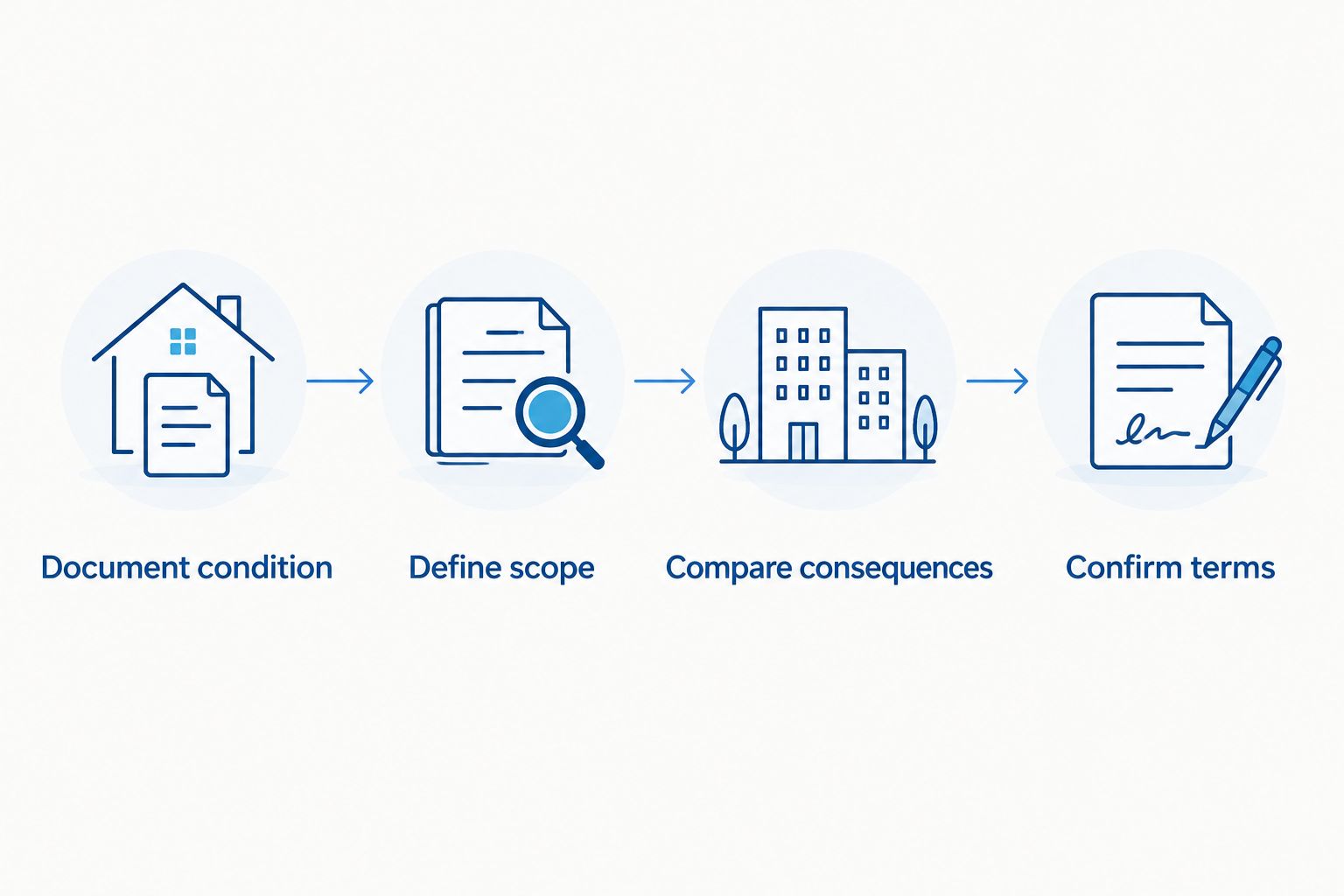
For your 2026 evaluation, request written scopes that explain the problem before describing the work. Then compare what each option fixes, what it excludes, and what responsibilities remain with you. A short proposal is not necessarily a clear proposal.
- Document condition. Request photographs and findings identifying affected areas, surrounding materials, drainage concerns, and evidence of moisture. Ask the contractor to distinguish observed conditions from issues that require further investigation.
- Define scope. Confirm the repair boundary or replacement area, removal requirements, proposed materials, and treatment of roof details. Each recommendation should connect directly to an inspection finding.
- Compare consequences. Review access, occupant protection, debris handling, maintenance responsibilities, and unresolved conditions. Include previous leak-related expenses from your own records rather than using a generic estimate.
- Confirm terms. Read exclusions, payment terms, change procedures, and warranty documents before authorizing work. Ask how concealed damage will be documented and approved.
Compare the condition left behind, not just the work performed. A repair that resolves the defect and preserves a serviceable roof has a different value from a patch that leaves the cause untouched. Likewise, a replacement proposal needs clear details rather than a blanket promise that everything will be new.
Should you repair a commercial roof that keeps leaking?
Recurring leaks require a new assessment of the cause, not an automatic repeat of the previous repair. Review where water appeared, what work was completed, and whether the same area leaked again. A repeated stain can reflect an unresolved entry point, while a new stain needs its own investigation.
Repair remains appropriate when the contractor identifies a correctable defect and confirms the surrounding roof is serviceable. Replacement becomes more relevant when the inspection establishes broader failure. The history guides the inspection; it does not replace it.
Does the age of a commercial roof mean you must replace it?
Roof age alone does not establish whether repair or replacement is appropriate. Installation records, maintenance history, material condition, and moisture findings provide a more useful basis for the decision. Treat a general lifespan estimate as planning context, not a replacement deadline.
An older roof with an isolated defect deserves an assessment of repairability. A newer roof with widespread damage still requires a broader scope when the evidence supports it. Ask for findings specific to your building.
Can you repair first and replace the roof later?
You can use a repair to address an immediate problem while planning replacement, provided the contractor clearly states its purpose and limits. Distinguish temporary water-control work from a repair intended to remain part of the roof. Neither should be presented as a guarantee against future leaks.
For a staged project, document what remains unresolved and how the building will be monitored. Set the next decision around inspection findings and your operational requirements—not an unsupported promise that the repair will last a particular number of years.
What Lincoln and Omaha owners should request
Ask for a commercial roofing assessment tied to your building's use. Identify tenant access, delivery routes, equipment, occupied areas, and spaces where water entry would create an immediate problem. These details belong in the planning conversation regardless of property size or business type.
Murray Roofing is a commercial roofing option for Lincoln and Omaha owners seeking inspection, repair, or replacement services. Its services also include maintenance, insurance-claim support, and financing. Those services do not determine which roofing scope your property needs; the inspection findings do.
Ask about financing terms separately from the construction scope, and verify insurance decisions with your insurer. If warranties are part of the proposal, request the applicable documents and exclusions. Do not assume a warranty mentioned in general marketing applies to every commercial system or project.
FAQ
What’s the best way to decide whether to repair or replace a commercial roof?
Use an inspection to compare the extent of damage with the condition of the surrounding roof. Repair fits an isolated, correctable defect; replacement fits broader deterioration that a localized repair would leave unresolved.
Is repairing a commercial roof always the cheaper option?
Repair is not always the cheaper long-term option. A smaller initial project can leave recurring leaks, interior damage, and future roofing work unresolved, so compare the complete scope and your documented building expenses.
Does a commercial roof leak mean I need a replacement?
A commercial roof leak does not automatically require replacement. The contractor needs to identify the entry point, affected materials, and surrounding roof condition before recommending a scope.
Should I replace a commercial roof just because it is old?
Age alone is not a sufficient reason to replace a commercial roof. Use condition findings, maintenance records, and moisture evidence to determine whether a dependable repair remains practical.
Can a roof repair help while I plan a commercial replacement?
A repair can address an immediate problem while you plan replacement. Get its purpose, limits, and unresolved conditions in writing rather than assuming it renews the entire roof.
Will insurance cover commercial roof repair or replacement?
Insurance coverage depends on your policy and the insurer’s assessment of the loss. Document the damage and confirm coverage, deductibles, exclusions, and required claim steps directly with your insurer.
Does Murray Roofing inspect commercial roofs in Lincoln and Omaha?
Murray Roofing provides commercial roofing inspections, repairs, and replacements in Lincoln and Omaha. Request an inspection and a written explanation of the recommended scope before choosing the work.
One last thing
A ceiling stain marks where water became visible, not necessarily where it entered the roof. Water can travel through building materials before appearing indoors. Photograph the stain and record when it appeared, but leave roof access and diagnosis to a qualified contractor.
For your 2026 decision, request an answer to one question: What condition will remain after this work is finished? That answer separates a useful repair from deferred replacement—and a justified replacement from an unnecessarily broad project. Schedule an inspection with Murray Roofing and request a written scope and price for the work your commercial property needs.
Schedule your commercial roof inspection
Request an assessment of your Lincoln or Omaha roof and a written scope for the recommended work.
Related guides
- Commercial roof system lifespan benchmarks
- Flat roof systems for commercial buildings
- Commercial roofing for warehouses
- Roofing for apartment complexes