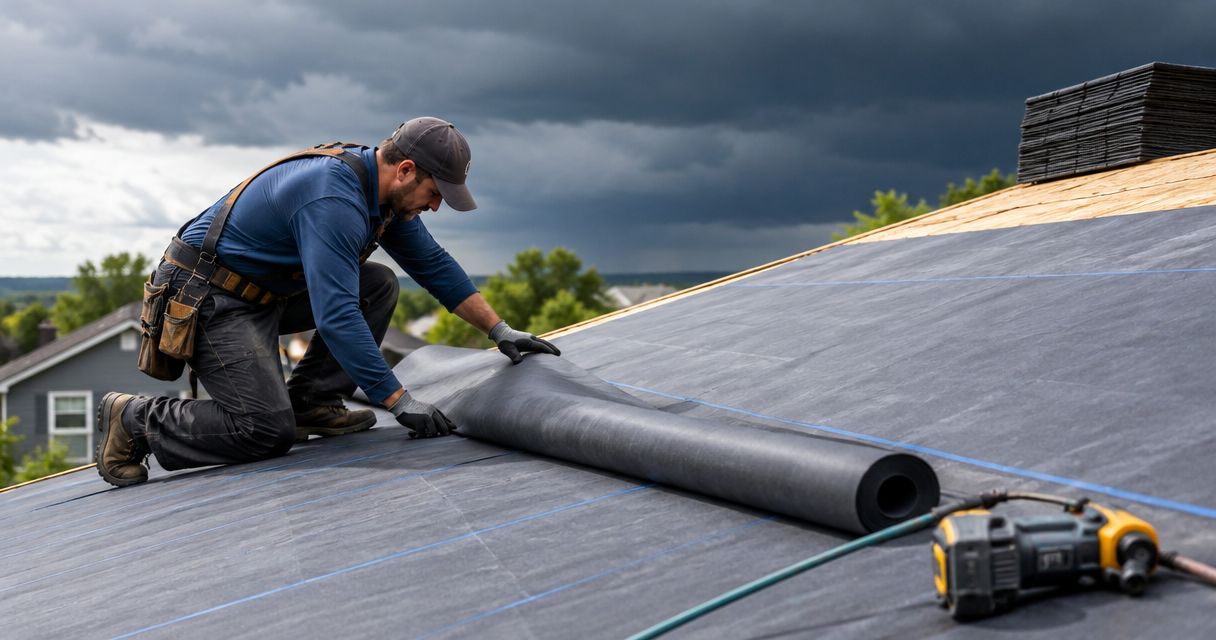
Best maintenance-focused default for a suitable sloped roof: standing-seam metal. Best for a simple low-slope roof: EPDM; best for heat-welded seams: TPO; best for grease-exposed applications: a compatible PVC system. This 2026 guide from Murray Inspection Services ranks maintenance suitability, not measured annual spending: no roofing system is the cheapest to maintain on every building.
- The best commercial roofing systems by maintenance cost depend on drainage, access, exposure and repair scope—not membrane alone.
- Standing-seam metal is the maintenance-focused default for suitable sloped commercial roofs.
- EPDM suits uncomplicated low-slope roofs; TPO offers heat-welded seams but still requires flashing and puncture checks.
- PVC deserves consideration around grease exposure, subject to the manufacturer’s chemical-compatibility requirements.
Why this matters
A roof with few maintenance-sensitive details can still become expensive to manage when drains clog, equipment technicians damage the surface, or leaks remain unresolved. Conversely, a roof with regular service needs can be manageable when access is straightforward and repairs are documented.
Choose the system that fits the building before comparing maintenance commitments. A material label does not tell you whether the roof drains correctly, whether the insulation is wet, or whether a replacement contractor can repair the installed assembly.
The Murray Inspection Services shortlist separates those decisions. For a 2026 project, use it to narrow the material choices, then require a building-specific maintenance scope before selecting a system.
What makes the best commercial roofing system?
These criteria drive the order below. They are decision criteria, not a substitute for a roof survey.
- Inspection access: Can someone inspect drains, seams, flashings and equipment curbs without unsafe access or surface damage?
- Drainage: Does the proposed assembly suit the roof's slope and drainage layout?
- Repairability: Can a qualified contractor identify the material and make compatible repairs?
- Exposure fit: Does the roof face grease, chemicals, dropped tools, windblown debris or concentrated foot traffic?
- Detail complexity: How many penetrations, transitions, edges and drainage connections require attention?
- Renewal work: Does the specification identify coatings, surfacing or other recurring work, rather than treating it as an afterthought?
A system moves down this list when its maintenance demands conflict with the building. PVC, for example, deserves earlier consideration where grease exposure is a deciding factor.
Commercial roofing maintenance at a glance
| Rank and system | Best for | Standout maintenance feature | Key limitation |
|---|---|---|---|
| 1. Standing-seam metal | Suitable sloped roofs with limited penetrations | Concealed panel fastening avoids exposed fasteners across the panel field | Flashings, penetrations and movement details still need attention |
| 2. EPDM | Simple low-slope roofs | Flexible rubber membrane with established repair methods | Seams and repairs require compatible materials and preparation |
| 3. TPO | Low-slope roofs specifying welded seams | Heat-welded membrane joints | Welds do not eliminate punctures or flashing defects |
| 4. PVC | Roofs with grease exposure | Formulations suited to specified chemical exposures | Chemical compatibility must be checked for the actual exposure |
| 5. Modified bitumen | Roofs suited to a reinforced asphalt membrane | Reinforced sheets and several application methods | Laps, flashings and surfacing remain maintenance points |
| 6. Built-up roofing | Buildings suited to a multilayer asphalt assembly | Multiple membrane plies | Surfacing can complicate inspection and leak tracing |
Read the ranking as a decision tree, not a universal spending league table. A suitable, well-detailed lower-ranked assembly is a better choice than a higher-ranked material installed outside its requirements.
1. Standing-seam metal: best for suitable sloped roofs
Standing-seam metal joins raised panel edges while concealing the principal panel fasteners. On a suitable roof, that arrangement avoids the field of exposed fastener washers associated with exposed-fastened panels.
The distinction matters. A quote that says only metal roofing does not establish whether you are comparing standing-seam panels or an exposed-fastened system.
Standing-seam metal pros:
- Concealed fastening removes exposed panel-field washers from the inspection checklist.
- Raised seams keep panel joints above the drainage plane.
- Clearly defined panel and flashing details support targeted inspections.
Standing-seam metal cons:
- Curbs, terminations and roof penetrations still require careful detailing.
- Thermal movement must be accommodated by the assembly.
- Panel damage and concealed connections can make repairs specialized.
Best for: A commercial roof whose slope, structure and geometry suit the selected panel system, especially where penetrations are limited.
For 2026 specifications, name the panel system and its maintenance requirements rather than accepting a generic metal-roof description. Confirm how equipment additions will be attached without compromising movement or drainage.
Verdict: Buy for a suitable sloped roof; skip it when the assembly does not meet the panel manufacturer's requirements.
2. EPDM: best for uncomplicated low-slope roofs
EPDM is a synthetic rubber roofing membrane. Seams, flashing materials and compatible adhesives or tapes form part of the installed system; the sheet alone does not determine performance.
A straightforward roof layout makes those details easier to inspect. Numerous equipment curbs, incompatible contamination or unmanaged service traffic change the maintenance problem.
EPDM pros:
- Flexible membrane accommodates building movement.
- Established repair materials support localized patching.
- Exposed membrane surfaces allow visual inspection without removing aggregate surfacing.
EPDM cons:
- Seams and flashing transitions require continued inspection.
- Petroleum-based substances can be incompatible with the membrane.
- Sharp debris and equipment work can puncture the surface.
Best for: A simple low-slope roof without incompatible chemical exposure, supported by a contractor familiar with the installed EPDM assembly.
Ask how repairs will be cleaned, prepared and documented. A patch that uses the wrong material is not a maintenance shortcut; compatibility matters as much as the visible size of the repair.
Verdict: Buy for an uncomplicated low-slope roof; skip it where exposure conflicts with the membrane's compatibility requirements.
3. TPO: best for low-slope roofs specifying welded seams
TPO is a thermoplastic single-ply membrane whose seams are heat-welded. Its maintenance plan still needs to cover field damage, attachment, edges, drains and flashings—not just the welded joints.
TPO's place on this list comes from its seam method and inspectable surface. That does not establish a lower maintenance bill than EPDM or PVC on your building.
TPO pros:
- Heat-welded seams create joined membrane laps.
- Exposed surfaces allow direct visual inspection.
- Compatible membrane repairs can address localized damage.
TPO cons:
- Poor welds and poorly formed details remain potential failure points.
- Service traffic can damage unprotected areas.
- Repairs to weathered membrane require suitable preparation and welding procedures.
Best for: A low-slope commercial roof where the specification calls for welded seams and qualified installation and repair support are available.
In a 2026 maintenance proposal, require the contractor to distinguish seam defects from punctures and flashing defects. Each needs an appropriate repair method rather than a generic sealant allowance.
Verdict: Buy when welded seams fit the specification; hold until repair procedures and service routes are defined.
4. PVC: best for compatible grease-exposed applications
PVC is another heat-welded thermoplastic roofing membrane. Certain PVC assemblies suit exposures associated with rooftop kitchen exhaust, but the actual chemical, concentration and manufacturer requirements must guide selection.
Do not treat chemical resistance as universal protection. Exhaust residue, cleaning chemicals and service practices still belong in the inspection plan.
PVC pros:
- Heat-welded joints provide an established seam method.
- Specified formulations address particular chemical exposures.
- Compatible membrane patches support localized repairs.
PVC cons:
- Chemical compatibility varies with the substance and system.
- Contact with incompatible materials requires approved separation details.
- Punctures, flashings and drainage problems remain maintenance concerns.
Best for: A roof where documented grease or chemical exposure makes compatibility a primary selection criterion.
Ask for written compatibility guidance covering the actual rooftop discharge. Also establish who cleans exhaust deposits and how that work will avoid damaging the membrane; material selection does not replace housekeeping.
Verdict: Buy when written compatibility guidance supports the exposure; hold when the specification says only “chemical resistant.”
5. Modified bitumen: best for a reinforced asphalt assembly
Modified bitumen uses asphalt modified with polymers and reinforced within manufactured sheets. Installation methods and surface finishes differ, so maintenance requirements must refer to the specified assembly.
Its reinforced construction does not make the roof immune to equipment damage. Walkway protection and control of rooftop work remain part of the plan.
Modified bitumen pros:
- Reinforced sheets provide a defined membrane construction.
- Different attachment methods suit different project constraints.
- Compatible repairs can address localized membrane defects.
Modified bitumen cons:
- Laps, terminations and penetration flashings require inspection.
- Surfacing condition must be monitored.
- Some application methods involve hot materials or open flame.
Best for: A building whose design and project constraints favor a specified reinforced asphalt system, with qualified maintenance support.
Compare complete assemblies, not just the phrase modified bitumen. The cap sheet, attachment, flashing method and any prescribed surface treatment determine what the contractor must maintain.
Verdict: Buy when the assembly fits the building; hold if the proposal leaves surfacing and recurring work undefined.
6. Built-up roofing: best for maintaining a suitable multilayer assembly
Built-up roofing combines multiple reinforcing plies with asphalt and a specified protective surface. Existing assemblies require condition-based decisions rather than automatic replacement because another membrane ranks higher here.
The maintenance challenge is visibility. Aggregate surfacing can obscure the membrane, and water can travel within a roof assembly before appearing indoors.
Built-up roofing pros:
- Multiple plies form the waterproofing assembly.
- Compatible repair methods support localized maintenance.
- Maintaining a serviceable existing roof avoids unnecessary disturbance.
Built-up roofing cons:
- Surfacing can conceal defects during a visual inspection.
- Leak tracing can require investigation beyond the interior stain.
- Repairs must match the assembly and address affected materials.
Best for: An existing built-up roof that investigation shows remains suitable for continued service.
Do not approve repeated surface patches without asking whether insulation is wet or the same leak is recurring. The condition of the complete assembly determines whether repair remains the right decision.
Verdict: Hold a serviceable existing assembly; skip repeated patching that leaves the underlying defect unresolved.
Build a comparable maintenance scope
For your 2026 comparison, ask every bidder to use the same 10-year planning period. Request quantities normalized to 1,000 square feet, with penetrations, drains and unusual details listed separately; these are comparison instructions, not predicted maintenance rates.
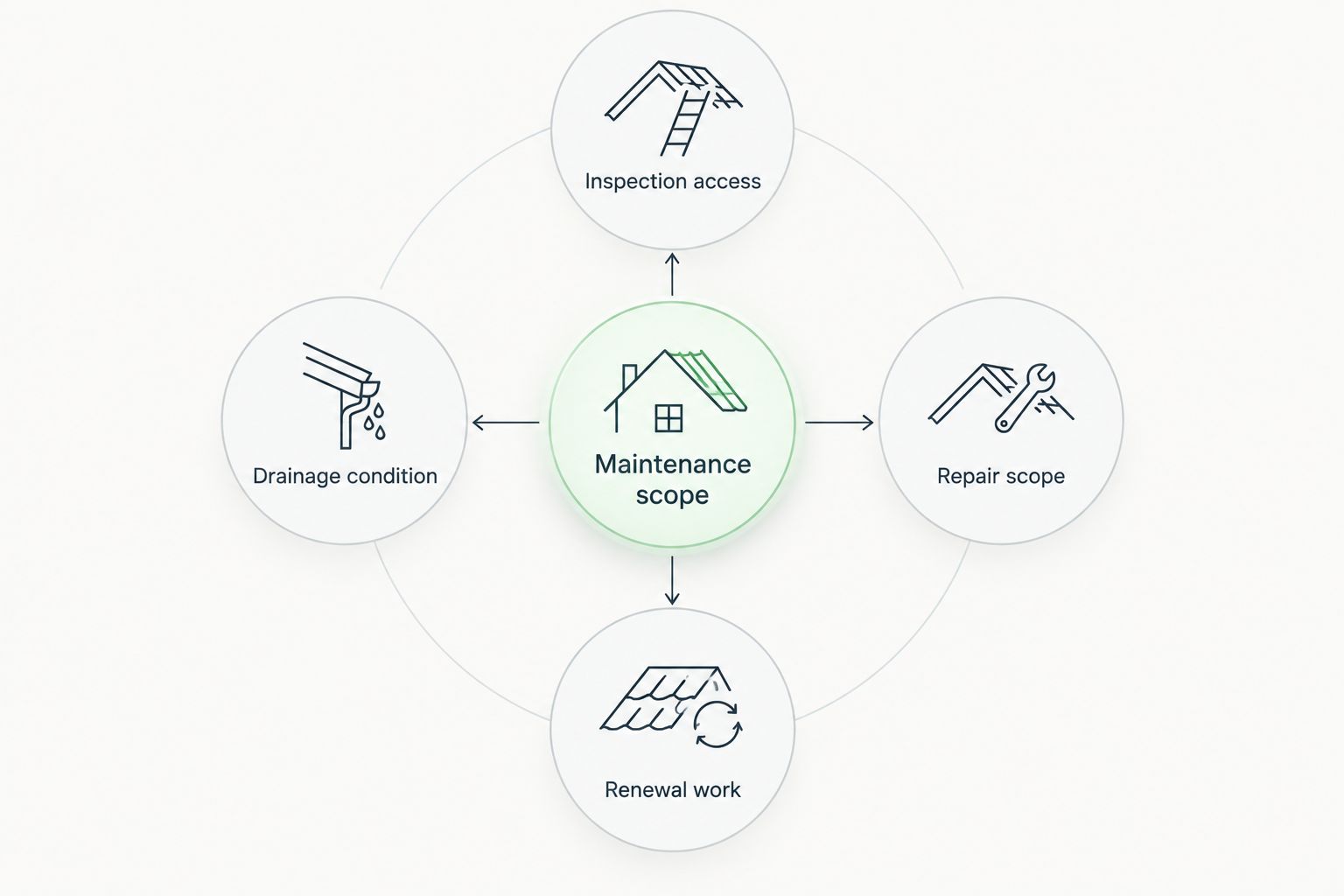
Require the following headings:
- Inspection access: Identify access arrangements, walking routes and protection around equipment.
- Drainage condition: Record drains, scuppers, debris and evidence of drainage problems.
- Repair scope: Distinguish seams, punctures, flashings, wet materials and recurring leaks.
- Renewal work: Identify manufacturer-prescribed surface treatments or other planned work.
Together, these headings define the Maintenance scope. A proposal that omits one is not directly comparable with a proposal that includes it.
Schedule 2 routine inspections per year as a planning baseline, then adjust to the manufacturer's requirements and inspect after damaging events. Record rooftop contractor visits so new damage does not become an unexplained leak.
Keep installation comparisons separate from maintenance comparisons. The guide to flat roof materials ranked by cost addresses the adjacent material-selection question; it does not replace a maintenance scope for your building.
How the systems are ranked
This Murray Inspection Services ranking prioritizes detail simplicity, inspectability, compatible repairs and exposure fit. It does not assign annual maintenance figures or claim that one material always requires less spending.
Standing-seam metal leads for suitable sloped roofs because concealed field fastening removes one exposed-fastener maintenance concern. EPDM leads the uncomplicated low-slope shortlist; TPO and PVC move ahead when welded seams or verified exposure compatibility govern the specification.
Which commercial roofing system should you choose?
Choose standing-seam metal for a suitable sloped roof, and start with EPDM for a simple low-slope roof. Move PVC higher when exposure compatibility requires it, and consider TPO when welded seams fit the specification.
For an existing modified-bitumen or built-up roof, establish condition before authorizing replacement. A material ranking cannot determine whether your insulation is wet or your current assembly remains serviceable.
FAQ
What’s the best commercial roofing system by maintenance cost?
There is no universal winner on maintenance spending. Standing-seam metal is a maintenance-focused default for suitable sloped roofs, while EPDM belongs on the shortlist for uncomplicated low-slope roofs.
Is TPO easier to maintain than EPDM?
TPO is not automatically easier to maintain than EPDM. TPO has heat-welded seams, while EPDM uses compatible seam systems; drainage, flashing quality, exposure and repair support determine the practical workload.
Is standing-seam metal maintenance-free?
Standing-seam metal is not maintenance-free. Concealed panel fastening avoids exposed field washers, but penetrations, flashings, drainage and movement details still require attention.
Is PVC the right roof around kitchen exhaust?
PVC deserves consideration around kitchen exhaust when the specified assembly is compatible with the discharge. Obtain written manufacturer guidance for the actual exposure and maintain an appropriate cleaning plan.
How often should a commercial roof be inspected?
Use two routine inspections per year as a planning baseline, adjusted to manufacturer requirements and site conditions. Arrange additional inspection after damaging events or suspected rooftop damage.
Should I replace a built-up roof with a single-ply membrane?
Condition and building requirements should determine replacement, not the membrane category alone. Establish the extent of defects and wet materials before comparing repair, recovery and replacement options.
How do I compare commercial roof maintenance proposals?
Require the same inspection, drainage, repair and renewal scope from each bidder. Separate routine work from event-related repairs and identify exclusions before selecting a proposal.
One last thing
Do not approve a roof proposal until it explains how equipment technicians will reach their equipment. A maintenance walkway and an agreed access route address a different problem from membrane selection: damage caused during unrelated rooftop work.
For your 2026 decision, keep that route beside the material shortlist. Murray Inspection Services' central recommendation is simple: choose a suitable assembly, then make inspection and compatible repair part of the specification.
Related guides
- Metal roofing types for commercial buildings
- Roofing materials for hail-prone areas
- Roof coatings for energy efficiency