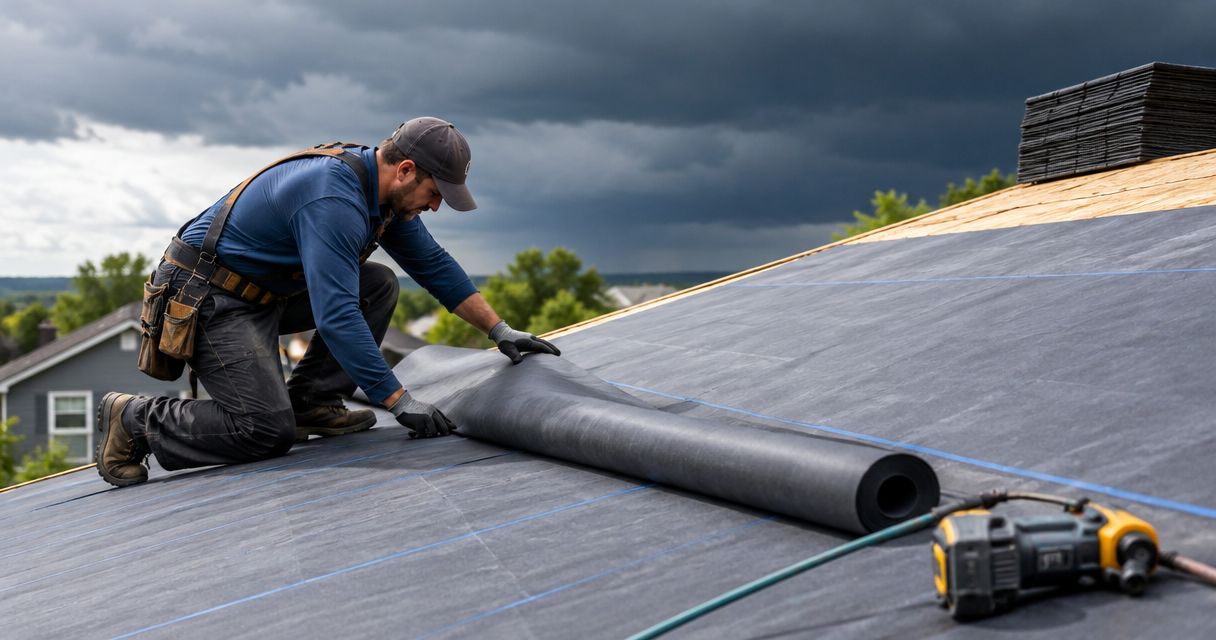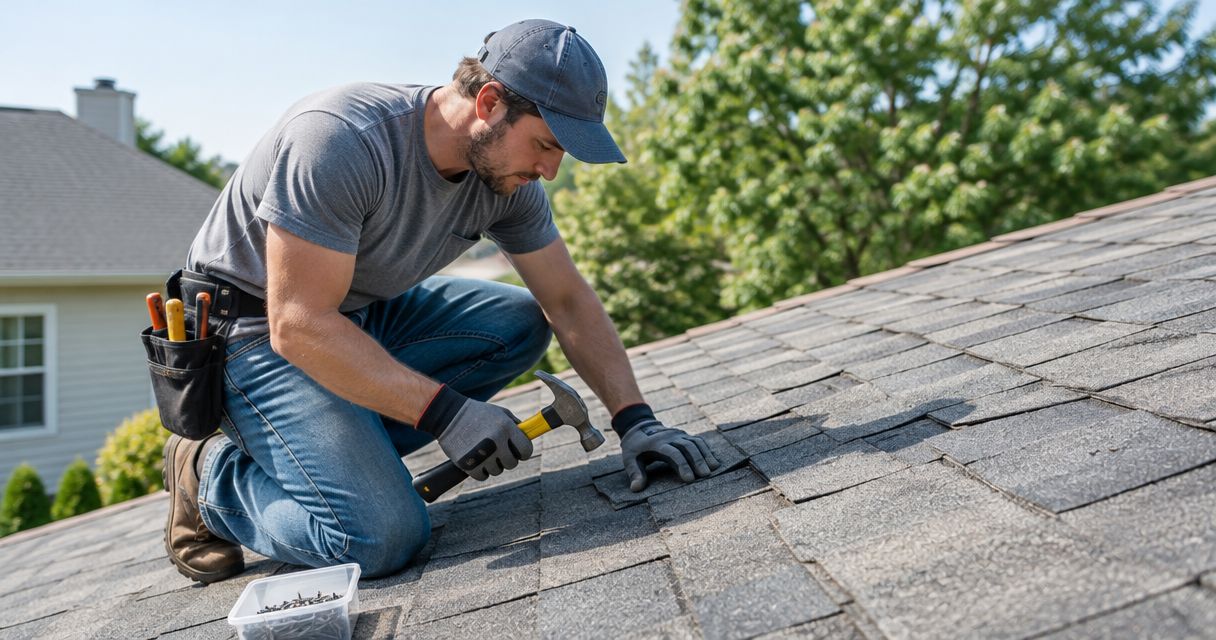
You can repair a roof yourself, but hiring a roofing contractor is the safer choice when the work requires roof access, leak diagnosis, flashing repairs, or replacement. For Lincoln and Omaha property owners in 2026, the decision involves more than materials: you also need to account for fall hazards, hidden damage, warranty terms, and local permit requirements.
- Can you repair a roof yourself? Yes, but roof access and hidden damage make professional repair the safer choice.
- Murray Roofing provides roof repair and inspections for homeowners and commercial property decision-makers in Lincoln and Omaha.
- DIY roof repair puts diagnosis, safety, workmanship, and documentation on you.
- Get a written inspection before choosing roof repair or replacement; a visible leak does not establish the full scope.
Can you repair a roof yourself instead of hiring a contractor?
You can attempt the work yourself, but being able to replace a visible roofing component does not mean you have identified the problem. A roof needs its covering, joints, drainage, and underlying structure to work together. Fixing the wrong location leaves the original defect unresolved.
Before committing to either approach, understand the process from roof inspection to signed contract. A written scope gives you something concrete to evaluate instead of a guess based on a ceiling stain.
| Approach | Best for | Main benefit | Main limitation |
|---|---|---|---|
| Owner observation from safe locations | Recording visible symptoms before an inspection | Helps explain where and when you noticed trouble | Does not confirm roof condition or the leak source |
| DIY roof repair | Owners with relevant roofing experience and appropriate safety arrangements | Gives the owner control over the work | Owner carries responsibility for diagnosis, access, materials, and workmanship |
| Contractor roof repair | Localized damage that an inspection confirms is repairable | Addresses a defined defect with a written scope | A repair does not renew the rest of the roof |
| Contractor roof replacement | Widespread deterioration or damage that makes isolated repairs unsuitable | Addresses the roof as a system | Requires a broader scope and more project coordination |
The table is a decision guide, not permission to climb onto a roof. If you cannot assess the access hazards or explain the defect, choose an inspection rather than an experiment.
Why this matters
A roofing mistake can affect more than the exterior surface. Water entering the assembly can reach insulation, ceilings, and interior finishes. A patch that looks tidy from outside does not establish that those areas are dry or sound.
In Lincoln and Omaha, explain any connection between the problem and hail, wind, snow, or freezing conditions. Those details help guide an inspection; they do not prove storm damage or insurance coverage. For a 2026 repair decision, focus on documented condition rather than assumptions about what a recent storm must have done.
Commercial property decisions need the same discipline. A restaurant, warehouse, apartment building, office, or church deserves an assessment of its actual roof system—not a repair recommendation based only on the building's use.
DIY roof repair: responsibility stays with you
The attraction of DIY is straightforward: you control the task and avoid hiring someone to perform it. The trade-off is equally direct. You also become responsible for recognizing the failure, choosing compatible materials, arranging safe access, and checking whether the work actually resolves the problem.
A missing shingle is visible. The condition of the material beneath it is not necessarily visible from the ground. Likewise, a leak near a skylight does not establish whether the skylight, surrounding flashing, or another part of the roof is responsible.
Before considering owner-performed work, ask yourself:
- Can you identify the cause rather than just the symptom?
- Do you understand the existing roof system and material requirements?
- Have you confirmed applicable permit and inspection requirements?
- Have you checked the written warranty terms?
- Can you arrange safe access without improvising?
An unanswered question is a reason to stop and obtain an assessment. This is especially important when the roof is steep, wet, icy, damaged, or difficult to access. Owning the building does not make the worksite safe.
Contractor roof repair: useful when the defect is localized
Professional repair makes sense when an inspection identifies a specific problem and the surrounding roof remains suitable for continued service. The written scope should identify the affected area, proposed work, materials, and any conditions that require further investigation.
The benefit is a defined repair rather than trial-and-error patching. The limitation is scope: correcting a localized defect does not restore every aging or damaged component elsewhere on the roof.
Ask the contractor to explain what the repair addresses and what it leaves unchanged. If the proposal excludes underlying deterioration or interior damage, understand that before signing. A clear boundary is more useful than a broad promise that the roof will be fine.
Murray Roofing roof repair is best for Lincoln and Omaha property owners who want contractor-led inspection and repair rather than DIY work. The company provides residential and commercial inspections, repairs, and replacements; the inspection should determine which service fits the building.
Full roof replacement: consider the whole system
Replacement belongs in the discussion when deterioration or damage extends beyond a repairable area. Repeated leaks, widespread defects, and problems beneath the roof covering need evaluation before another isolated patch becomes the default choice.
Replacement has a wider scope than repair. It also requires decisions about materials, drainage details, ventilation where applicable, access, and the condition of the roof deck. Ask which components the proposal replaces and which it retains.
For a 2026 replacement proposal in Lincoln or Omaha, request a written explanation of why repair is unsuitable. Photos and observations should support that recommendation. A replacement recommendation should describe the roof's condition, not rely on pressure or a generic claim about age.
Do not choose replacement solely because you are frustrated by a leak. Equally, do not insist on another patch when the inspection identifies broader failure. Match the work to the condition.
Why the DIY decision varies
The right decision depends on the roof and the work required—not simply whether you are comfortable using tools.
- Access and slope: Edges, steep surfaces, fragile areas, and difficult access change the safety requirements. Low-slope commercial roofs still have fall hazards.
- Material compatibility: Shingles, metal assemblies, and commercial membranes require different repair methods. A material that works in one assembly is not automatically suitable for another.
- Damage extent: A visible surface defect does not establish the condition of the deck, insulation, or adjacent components.
- Leak location: Water can travel before becoming visible indoors. The ceiling stain and entry point are not necessarily aligned.
- Project obligations: Permit requirements, warranty terms, insurance documentation, and owner or association approvals need checking before work begins.
These factors explain why a small-looking defect can require professional investigation. They also explain why an inspection does not automatically mean replacement: a defined, localized problem can support a narrower repair scope.
What should you do before deciding?
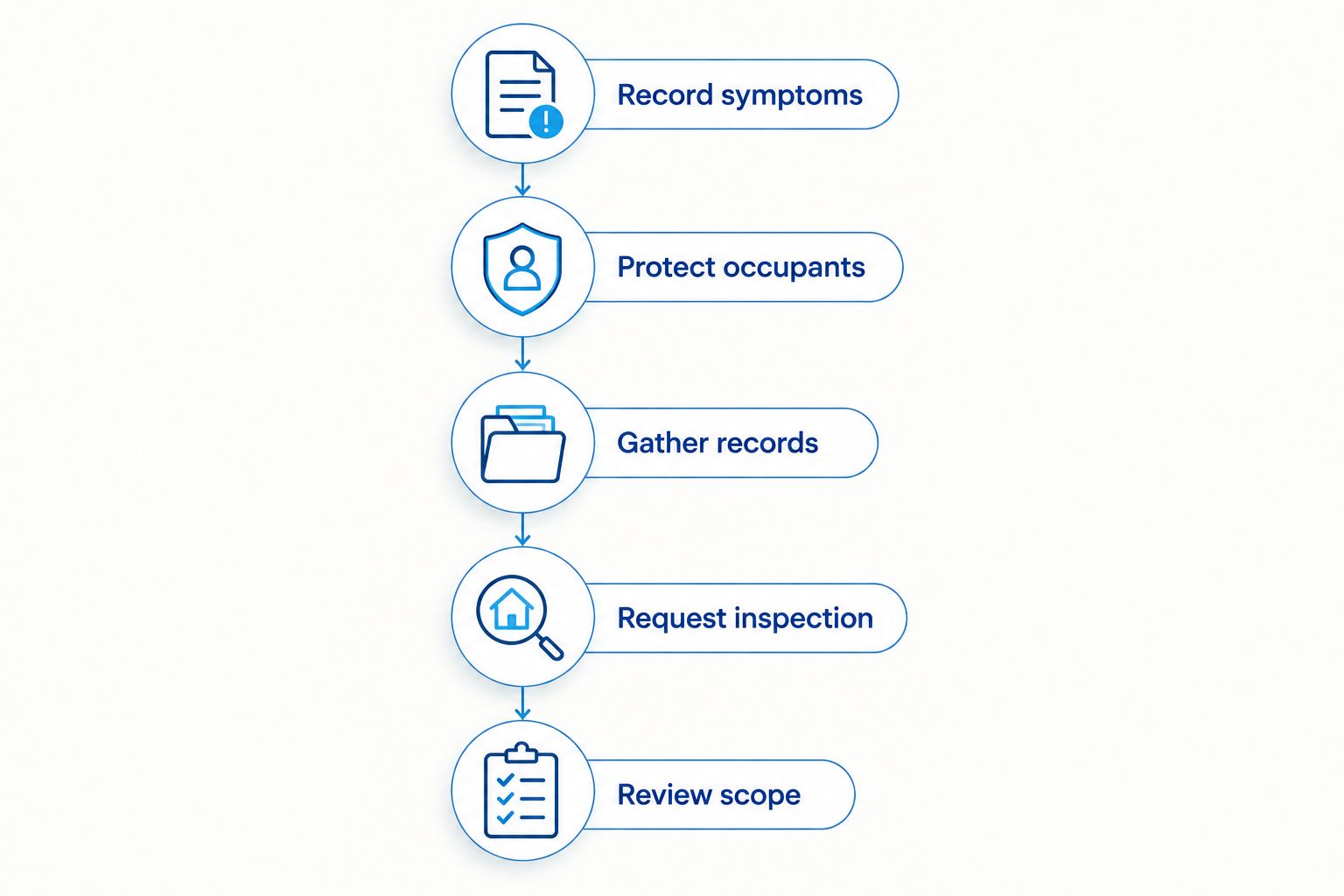
Use the time before an inspection to gather information, not to perform an exploratory repair. Your goal is to give the contractor a clear history and protect people from the affected area.
- Record symptoms. Note where you see staining or dripping and when it occurs. Photograph visible damage only from safe locations.
- Protect occupants. Keep people away from sagging ceilings, wet electrical areas, and falling debris. Seek emergency assistance when there is an immediate safety hazard.
- Gather records. Find previous repair invoices, roof documents, warranty information, and relevant insurance paperwork.
- Request inspection. Ask for findings that distinguish the visible symptom from the suspected cause and identify any areas needing further investigation.
- Review scope. Confirm what the proposed work includes, what it excludes, and how concealed conditions will be handled.
This sequence keeps the decision tied to evidence. It also gives you a useful record if the inspection leads to a repair, replacement, warranty question, or insurance discussion.
Check warranties before changing the roof
Do not assume DIY work automatically cancels every warranty—or that it has no effect. Coverage depends on the written terms, the work performed, and the cause of a later problem. Check who is authorized to perform repairs and what documentation the warranty requires.
Murray Roofing identifies GAF Master Elite status, a 50-year Golden Pledge warranty, and a 10-year labor warranty among its trust signals. Ask which warranty applies to your proposed project and request the terms. Those durations do not mean every repair receives the same coverage.
The company's stated 5-star reviews are another contractor-selection signal, not a substitute for the contract. For any 2026 proposal, read the scope, exclusions, and warranty documents together. A credential or review rating cannot explain what an individual job includes.
Check permits and insurance without assuming the outcome
Confirm current requirements with the relevant Lincoln or Omaha permitting authority before starting work. The required approvals depend on the property's location and project scope. Do not assume that calling work a repair removes every permit or inspection obligation.
For suspected storm damage, document the condition and contact your insurer about its process. Neither a contractor recommendation nor visible damage guarantees coverage. Your policy, the cause of loss, and the insurer's review govern the claim decision.
Keep inspection findings, photographs, estimates, and invoices organized. Ask what documentation is needed before changing the damaged area, while prioritizing immediate safety and following your insurer's instructions. This is a records issue as well as a roofing issue.
What changes for commercial roofs?
Commercial roof decisions also involve occupants, equipment, and operations. Tell the contractor about rooftop equipment, interior leak locations, access restrictions, and spaces that must remain protected during work.
A low-slope roof is not automatically a DIY-friendly roof. Edges, openings, skylights, and damaged surfaces still create hazards. Repairs around equipment or penetrations also need to remain compatible with the existing assembly.
For commercial work planned in 2026, require the proposal to explain access, work-area protection, and how the contractor will communicate concealed damage. Apply the same standard to every property type. Choose the repair scope by roof condition, not by assumptions about the business inside.
Can you patch a roof leak and postpone replacement?
A patch can postpone broader work only when an inspection supports a localized repair and the remaining roof is suitable for continued service. Ask whether the proposed work is temporary protection or a completed repair. Those are different commitments.
Should you repair the roof before contacting your insurer?
Contact your insurer promptly for claim instructions and document damage from safe locations. Prioritize immediate safety, but do not assume that an undocumented repair will satisfy claim requirements. Keep records of any necessary protective work.
Is a free roof inspection enough to approve the work?
An inspection is a starting point, not authorization to proceed. Review the written findings and proposal before agreeing to repair or replacement. Ask what remains uncertain and how the contractor will handle conditions discovered during the job.
FAQ
Can you repair a roof yourself if only one shingle is damaged?
A single damaged shingle does not establish that the problem is limited to that shingle. Have the surrounding area and underlying condition assessed before deciding on the repair scope.
Is hiring a roofing contractor better than DIY roof repair?
Hiring a roofing contractor is the safer choice when the work involves roof access, uncertain leak causes, flashing, or broader damage. DIY leaves diagnosis, access safety, and workmanship responsibility with the owner.
Will repairing my roof myself void the warranty?
DIY roof repair does not have one universal warranty outcome. Read the written terms and ask the warranty provider how owner-performed work affects coverage before changing the roof.
Do I need a permit to repair a roof in Lincoln or Omaha?
Permit requirements depend on the jurisdiction and scope of the roofing work. Confirm the current requirements with the relevant local permitting authority before starting.
Should I repair or replace a roof that keeps leaking?
Repeated leaks require an inspection before you choose another repair or a full replacement. Ask for evidence showing whether the problem is localized or part of broader roof deterioration.
Can I repair a commercial flat roof myself?
A commercial flat roof is not automatically suitable for DIY repair. Material compatibility, access hazards, drainage, and rooftop equipment require assessment before work begins.
Does Murray Roofing offer free roof inspections?
Murray Roofing offers free roof inspections and provides residential and commercial roofing services in Lincoln and Omaha. Use the inspection to discuss repair, replacement, and the written scope appropriate to your property.
One last thing
Ask what observation would change the contractor's recommendation. If the proposal is for repair, what finding would make replacement necessary? If it is for replacement, what evidence rules out a localized repair?
That question separates a condition-based recommendation from a predetermined answer. It also helps you understand how concealed damage will affect the agreed scope before work starts.
Related guides
- Roof warranty types for homeowners
- Roof permit application through final inspection
- Commercial roof maintenance plans for businesses
Schedule a free inspection with Murray Roofing to discuss your Lincoln or Omaha roof, or request a written price for the work your property needs.
Schedule your roof inspection
Discuss repair or replacement for your home or commercial property in Lincoln or Omaha.