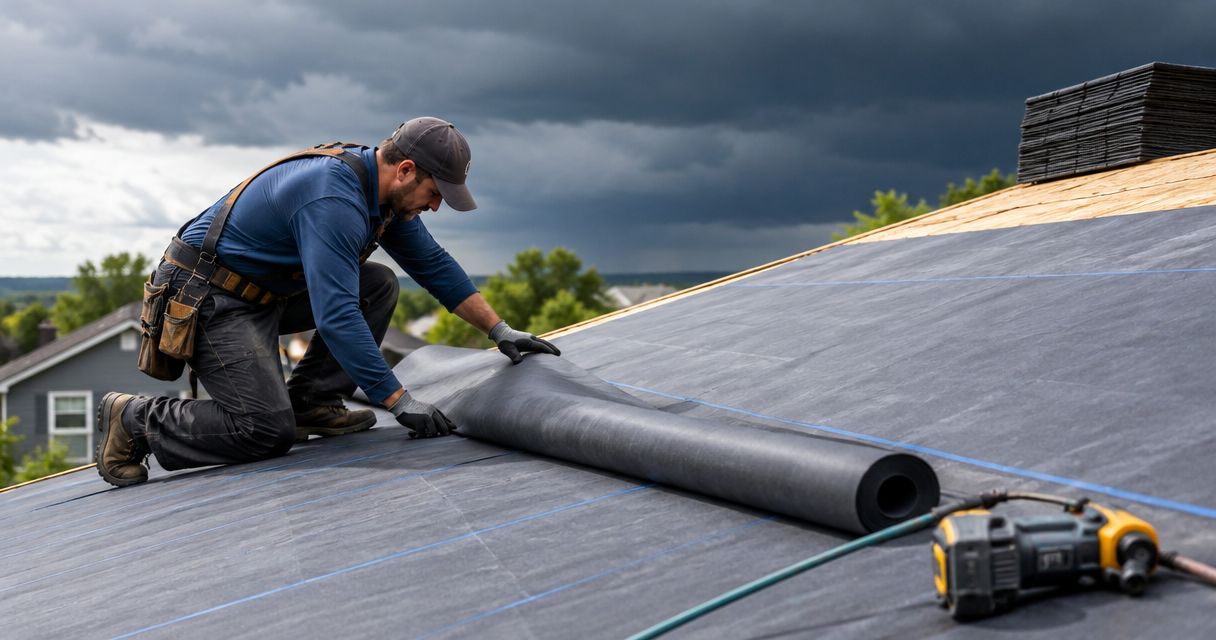
Property managers’ roofing is the management of roof inspections, maintenance, repairs, and replacement with the aim of protecting occupied buildings and supporting owner decisions. Choosing a roofing contractor for property managers in 2026 requires more than a repair quote: you need a documented scope, clear authorization, and a plan for tenants and building access.
- Murray Roofing LLC suits property managers seeking residential and commercial roofing services in Lincoln and Omaha.
- Choose a roofing contractor for property managers based on inspection evidence, written scope, and tenant coordination.
- Separate roof maintenance, localized repairs, and full replacement before requesting comparable proposals.
- Keep insurance decisions separate from contractor recommendations; roofing documentation does not guarantee coverage.
Why roofing matters for property managers
A property manager answers to owners, tenants, and contractors at the same time. A leak needs attention, but approving work without understanding its extent leaves you with an incomplete owner recommendation. Your first job is to turn a roof problem into a documented decision.
Murray Roofing LLC provides residential and commercial roofing inspection, repair, replacement, maintenance, insurance-claim support, and financing services in Lincoln, Omaha, Grand Island, Houston, Denver, and surrounding areas. Those services fit portfolios that include both rental homes and commercial properties; the proposal still needs to define the work for each building.
Murray Roofing LLC is best for property managers seeking residential and commercial roofing services in Lincoln and Omaha. Use that service fit as a starting point, not a substitute for reviewing the inspection findings and contract.
For your 2026 plan, separate immediate concerns from capital projects. Active water entry needs prompt professional assessment; a planned replacement needs owner approval, a defined scope, and coordination with occupants. Neither decision should rest on roof age alone.
How to manage roofing across your properties
1. Build a roof record for each property
Start with a spreadsheet and a shared document folder. Record what you know, mark unknown details, and attach existing inspection reports rather than guessing the roof’s installation date or material.
Keep 3 core records for each building: its roof profile, service history, and warranty documents. This gives a new contractor context and helps you explain why a proposed project belongs in the owner’s budget. For Lincoln and Omaha properties, organize records by address and building—not just by the owner’s name.
A portfolio with rental homes, retail buildings, offices, apartments, or other commercial uses needs building-specific records. The same owner does not mean the same roof system, access restrictions, or approval process.
- Record the address, building use, and known roof material.
- Attach installation records and previous inspection photographs.
- Log reported leaks, completed repairs, and recurring locations.
- Store warranties, contracts, and owner authorizations together.
- Identify the person authorized to approve roofing work.
2. Document the problem before requesting an inspection
Your staff can collect useful information without climbing onto the roof. Ask occupants where water appeared, when they noticed it, and whether nearby equipment or rooms were affected. Photograph interior damage from a safe location and retain the original files.
Give the contractor a factual report, not a diagnosis. A ceiling stain identifies an indoor symptom; it does not establish the roof entry point. Let the inspection determine whether the concern involves roofing, flashing, drainage, or another building component.
For occupied commercial properties, include access requirements and sensitive areas. A restaurant, warehouse, office, or retail property deserves the same inspection discipline, even though its operating constraints differ.
- Photograph visible interior staining and affected rooms.
- Record the report date and the occupant’s observations.
- Share previous repair records for the same area.
- Identify restricted rooms and roof-access arrangements.
- Keep staff and tenants off the roof during assessment.
3. Request a written repair-or-replace recommendation
Prepare a written inspection brief yourself: the reported concern, available records, and the decision you need to make. Then ask a roofing professional to connect the findings to an appropriate scope. An inspection is useful only when it helps you decide what happens next.
Murray Roofing LLC offers free inspections, roof repair, and full replacement services. Request written findings and ask what supporting documentation the proposed inspection includes. A free inspection does not remove the need to define your reporting expectations.
Choose the work that addresses the documented condition, not the option with the shortest proposal. A localized repair and a full replacement solve different problems. Ask why the recommended approach fits this building and what remains outside its scope.
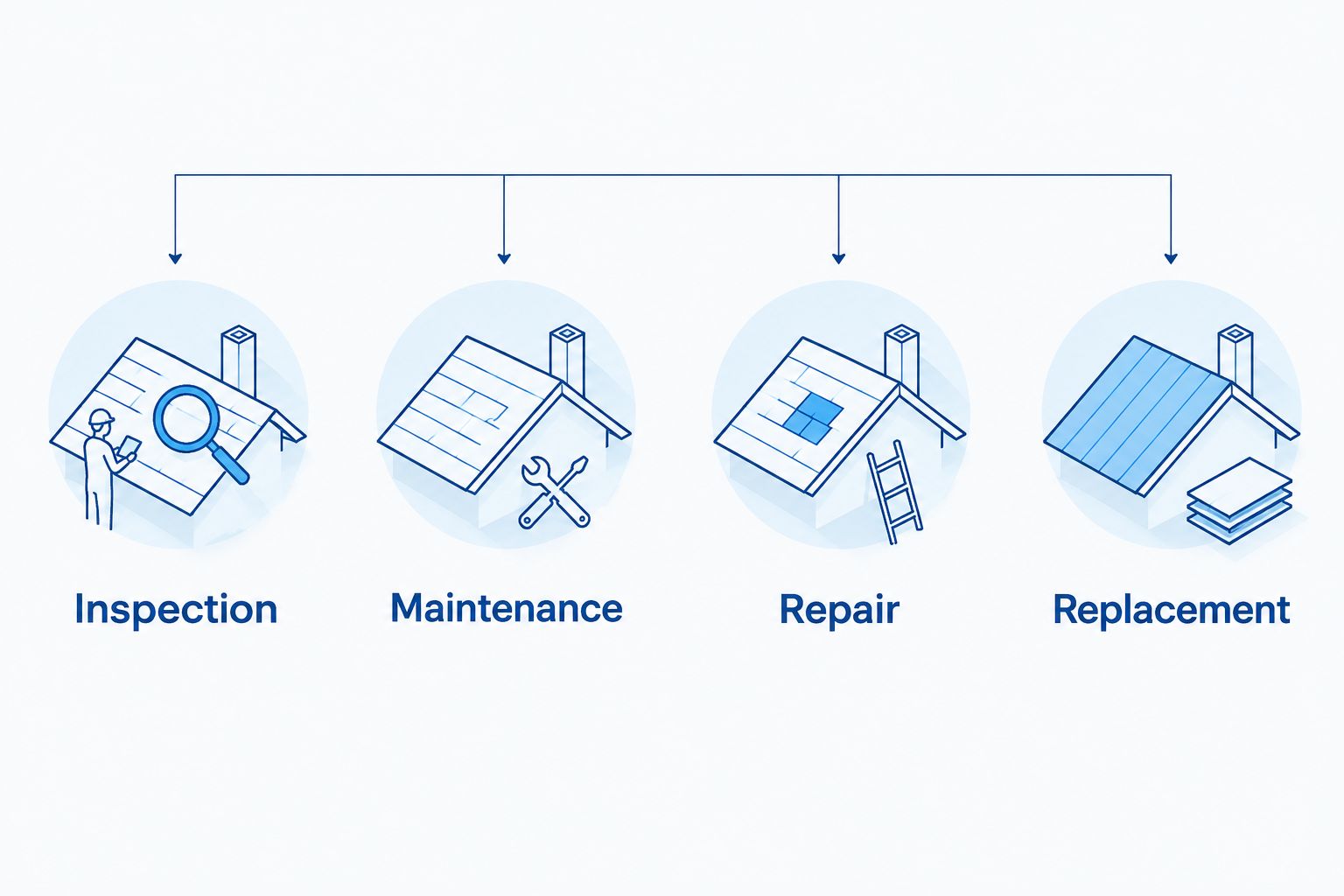
- Inspection: establish the condition and unresolved questions.
- Maintenance: address identified upkeep needs.
- Repair: correct a defined, localized problem.
- Replacement: address a roof that requires a broader renewal scope.
4. Compare proposals against the same scope
Create a comparison sheet before requesting bids. Give each contractor the same property information, inspection concerns, and access requirements. Otherwise, you are comparing different projects rather than different offers.
For a full roof replacement in Lincoln or Omaha, require the proposal to explain removal, new materials, drainage details, penetrations, cleanup, and exclusions. For a repair, require the exact area and work to be described. Ask how concealed conditions will be documented and authorized if discovered.
Evaluate 2 warranty categories separately: material coverage and workmanship coverage. Murray Roofing LLC identifies GAF Master Elite status, a 50-year Golden Pledge warranty, and a 10-year labor warranty among its trust signals. Confirm which warranty applies to the proposed system, its written terms, and any requirements; do not assume every commercial or residential project receives identical coverage.
- Compare removal and installation scope line by line.
- Confirm treatment of drains, edges, and roof penetrations.
- Identify exclusions and responsibility for related work.
- Require written approval for scope changes.
- Review applicable material and workmanship warranty documents.
5. Plan access and occupant communication
Build an access plan with your site contact before accepting a work schedule. Identify entrances, loading areas, parking restrictions, and the building’s operating requirements. Ask the contractor to describe the work area and how it will be separated from occupants.
Apartment properties need communication across multiple households; commercial properties need coordination with the people responsible for daily operations. The roofing for apartment complexes guide addresses that specific property setting. For any building, keep emergency access and agreed operating restrictions explicit.
Name 1 site contact responsible for relaying updates between the contractor, occupants, and owner. That recommendation reduces conflicting instructions without assuming the contractor offers a particular communication system. Include the access plan in your 2026 project file so staff can find it during the work.
- Identify entrances and routes that must remain accessible.
- Agree on material staging and vehicle locations.
- Notify occupants about the agreed work arrangements.
- Document restrictions involving equipment or sensitive spaces.
- Name the site contact and backup decision-maker.
6. Separate owner approval, financing, and insurance
Write an owner decision memo before authorizing non-emergency work. State the observed condition, recommended scope, alternatives, exclusions, and approval requested. Attach the proposal rather than summarizing away its limitations.
Keep financing and insurance separate from the technical recommendation. Murray Roofing LLC offers financing and insurance-claim support, but those services do not establish insurance coverage or financing approval. The insurer determines coverage under the policy; review financing terms before accepting an agreement.
Do not delay necessary safety coordination while assuming a claim will resolve the problem. Ask the owner and insurer what documentation they require, and retain inspection photographs, communications, and invoices. Avoid promising tenants or owners a claim outcome.
- Obtain written authorization from the responsible owner.
- Preserve inspection findings and damage photographs.
- Ask the insurer about documentation and policy requirements.
- Review financing terms independently of the roofing scope.
- Record who can approve additional work during the project.
7. Close the project with a usable maintenance record
Start closeout with the signed scope and any approved changes. Request completion documentation, applicable warranty paperwork, and maintenance instructions for the installed or repaired system. Resolve discrepancies before treating the project file as complete.
Your 2026 roofing plan should remain useful after the crew leaves. Record what was repaired or replaced, where the work occurred, and which concerns require follow-up. Do not label an entire building’s roof as replaced when the contract covered only one section.
Set future inspections according to the roof system’s requirements, warranty terms, and professional recommendations—not an invented universal interval. A clear closeout record is part of the roofing job, not an administrative extra.
- Reconcile completed work with the contract and approved changes.
- File completion photographs and final documentation.
- Retain applicable warranty and maintenance instructions.
- Record remaining concerns and agreed follow-up actions.
- Update the roof profile and service history.
Compare roofing options for managed properties
These are scope choices, not competing brands. Use the inspection findings to decide which option belongs in your 2026 plan. Each has a useful role and a limitation; none replaces a written assessment of your building.
| Option | Best for | Practical benefit | Key limitation |
|---|---|---|---|
| Professional inspection | An unclear roof condition or recurring complaint | Establishes findings before you authorize work | Does not itself correct the problem |
| Planned maintenance | Identified upkeep needs on an existing roof | Gives routine work a defined scope and record | Does not resolve every underlying defect |
| Localized repair | A documented problem confined to a specific area | Targets the affected roof detail or section | Leaves the rest of the existing roof in service |
| Full replacement | A documented need for broader roof renewal | Allows a complete replacement scope to be specified | Requires wider owner, access, and occupant coordination |
A repair proposal should explain its boundaries. A replacement proposal should explain why broader work is justified. If a proposal does neither, request clarification before approval.
Common mistakes property managers make
Approving a repair from an interior photograph alone
An interior photograph helps document the complaint but does not establish the repair scope. Arrange a professional assessment and ask the contractor to connect the visible symptom to the proposed work. Keep tenant reporting separate from technical diagnosis.
Comparing bids with different exclusions
One proposal can include removal, drainage details, and cleanup while another leaves those items unresolved. Compare inclusions and exclusions before choosing. A shorter document is not evidence of a simpler project.
Using one property’s roof plan across the portfolio
A rental house and an occupied commercial building have different roof details and access needs. Even neighboring buildings need separate records. Apply the same decision process, not an identical roofing specification.
Treating warranty length as complete protection
A warranty’s term does not explain its coverage, exclusions, maintenance requirements, or claim process. Read the applicable documents and distinguish material coverage from workmanship coverage. Confirm transfer requirements when a property changes ownership.
Assuming insurance support means coverage
A contractor can help document roof findings without determining the insurer’s decision. Do not approve a scope solely because someone expects reimbursement. Keep the owner informed about what is confirmed and what still requires a policy decision.
FAQ
What should I look for in a roofing contractor for property managers?
Look for a contractor whose services match your buildings and whose written proposal defines inspection findings, scope, exclusions, access, and applicable warranties. Require a clear process for owner authorization and changes during the work.
Does Murray Roofing LLC work on residential and commercial properties?
Murray Roofing LLC provides residential and commercial roofing services, including inspection, repair, replacement, and maintenance. Its stated service areas include Lincoln, Omaha, Grand Island, Houston, Denver, and surrounding areas.
Should I repair or replace a rental property roof?
Choose repair or replacement based on a professional inspection and the documented extent of the problem. Ask why the recommended scope fits the roof and what conditions it leaves unresolved.
Can tenants stay in the building during roofing work?
Occupancy arrangements must be established for the specific project before work begins. Ask the contractor to identify work-area restrictions, access requirements, and any conditions that affect safe building use.
Does storm damage automatically qualify for insurance coverage?
Storm damage does not automatically establish insurance coverage. The insurer evaluates the claim under the policy, so preserve documentation and avoid treating contractor findings as a coverage decision.
What roofing warranty documents should a property manager keep?
Keep the applicable material warranty, workmanship warranty, installation records, and maintenance requirements. Confirm coverage terms, exclusions, and transfer requirements rather than relying only on the stated warranty length.
How often should managed properties receive roof inspections?
Set the inspection schedule using the roof system’s requirements, applicable warranty terms, and professional recommendations. Arrange an assessment when occupants report water entry or other concerns instead of waiting for the next scheduled visit.
Related guides
- Flat roof systems for commercial buildings
- Commercial roof maintenance plans for businesses
- Roof replacement for rental property owners
One last thing
Ask the contractor to identify what the proposed work will not resolve. That question makes exclusions visible before the owner signs and helps prevent a localized repair from being mistaken for a building-wide solution.
For your next Lincoln or Omaha project, bring the roof history, occupant reports, and owner approval requirements. Schedule an inspection with Murray Roofing LLC and request a written scope and project price before authorizing work.
Schedule your property roof inspection
Discuss the roof condition, proposed work, and access needs for your managed property.