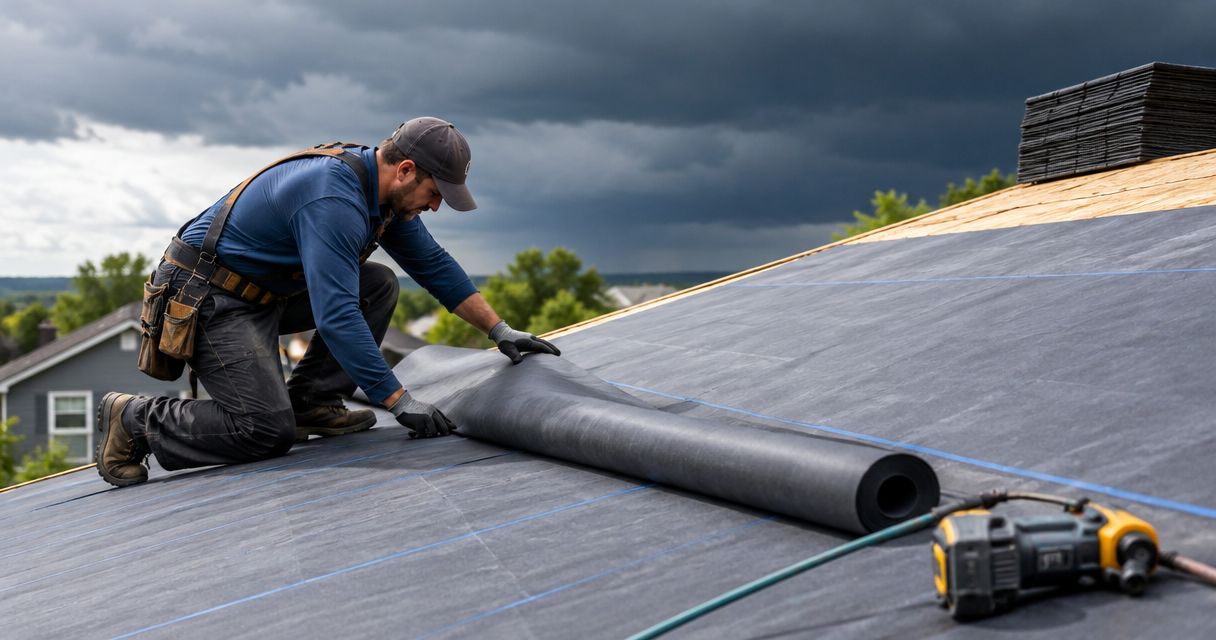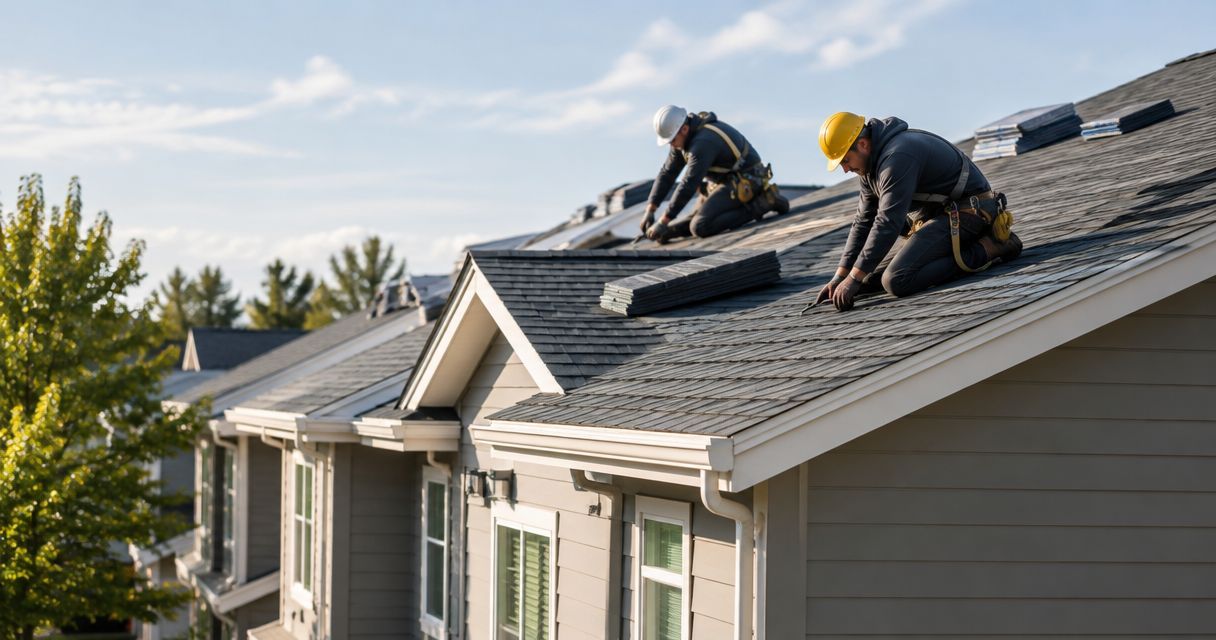
Rental property roof replacement is the process of replacing a roof to protect tenants, prevent further property damage, and keep the building usable. In 2026, the right starting point is a documented inspection: a visible leak alone does not establish whether the property needs a repair or a full replacement.
- Roof replacement for rental property owners starts with an inspection, not a material choice.
- Murray Roofing LLC is best for rental owners in Lincoln and Omaha who need an inspection and a clear replacement scope.
- Compare repair and replacement against the roof’s condition, tenant access needs, and written warranty terms.
- Document damage and confirm insurance decisions with the insurer; contractor support does not guarantee coverage.
Why roof replacement matters for rental property owners
A roof problem affects more than the building. You must coordinate access with tenants, protect occupied rooms, decide whether other parts of the property need attention, and keep records for ownership, insurance, and future maintenance. A homeowner can often make these decisions for one household; a rental owner must account for the people living or working beneath the roof.
Treat a leak as a property-management decision, not just a roofing task. Water reaching an occupied unit calls for prompt attention even if the permanent scope is still undecided. Record what tenants report, arrange an inspection, and keep the repair-or-replace decision separate from any immediate steps needed to limit further damage.
For Lincoln and Omaha rental owners, Murray Roofing LLC provides roof inspection, repair, replacement, financing, and insurance-claim support. Those services give you a place to start, but the written findings should determine the scope. In 2026, ask for the same distinction on every proposal: what is damaged now, what remains serviceable, and why the recommended work addresses both.
How to plan a rental property roof replacement
Document the problem before choosing the scope
Start with a record you can use whether the outcome is a repair, a replacement, or an insurance review. Ask tenants to identify where they see water or staining, but do not ask them to diagnose the roof. Photograph visible conditions from safe, accessible areas and note when each issue was reported. If water is entering the building, address the immediate property risk while the roof is assessed.
Keep unit-specific reports distinct. A stain in one room does not show where water entered the roof, and reports from several units do not automatically prove that the entire roof needs replacement. Clear records help the inspector trace the problem and help you explain the next steps to affected tenants.
- Record each report by unit or occupied area and note the date.
- Photograph visible interior damage without entering unsafe spaces.
- Note whether water appears during rain or remains visible afterward.
- Keep previous repair records and roof documents together.
- Ask the inspector to identify the source, not just the visible stain.
Request an inspection that answers repair or replace
Ask for findings you can compare with the proposed work. The useful question is not simply whether the roof looks old; it is whether a defined repair addresses the documented problem or whether damage and roof condition support replacement. An inspection should distinguish the visible roof surface from underlying areas that need closer evaluation during the project.
In 2026, Murray Roofing LLC offers free inspections for owners considering roof work. Use that inspection to ask for photographs, an explanation of the affected areas, and a written recommendation. A free inspection is a starting point, not proof that replacement is necessary. If you receive conflicting recommendations, compare the documented reasons rather than choosing the shorter proposal.
- Ask which findings support a targeted repair.
- Ask which findings support full replacement instead.
- Identify the leak location and other affected roof areas.
- Request photographs tied to specific findings.
- Ask what cannot be confirmed until existing materials are opened.
Define the work for the entire rental property
Once replacement is the recommendation, make the proposed scope specific enough to approve and manage. Confirm which roof areas are included and which are excluded. On a property with more than one roof section, an address alone is not a useful scope description. Ask how the contractor will handle conditions discovered beneath the existing roof and how changes will be documented before extra work proceeds.
For a commercial rental property, include rooftop equipment, drainage points, and occupied business areas in the planning discussion. For a residential rental, account for entries, shared walkways, parking, and any occupied rooms beneath active work. The point is not to prescribe the contractor's methods; it is to identify where roofing decisions intersect with tenant access and property operations.
- Mark every roof area included in the proposal.
- List roof areas and related work explicitly excluded.
- Confirm how underlying damage will be reported.
- Identify rooftop equipment and access constraints.
- Establish who can approve a change in scope.
Compare proposals on work, not just the total
Two replacement proposals are comparable only when they describe comparable work. Read the materials and installation scope alongside the treatment of removal, underlying conditions, drainage details, and cleanup. If one proposal leaves an item unclear, ask for it in writing before deciding. Do not assume an omitted item is included.
Rental owners also need a practical plan for tenant communication. Ask each contractor what access the crew needs, which areas must stay clear, and who will notify you if conditions change. Do not promise tenants a completion date until the contractor confirms the schedule for your property. In 2026, a clear proposal should give you enough detail to explain the work without translating roofing shorthand yourself.
- Compare the same roof areas across proposals.
- Identify materials by type and specified system.
- Check how removal and cleanup are described.
- Ask who communicates changes affecting occupied areas.
- Get exclusions and approval procedures in writing.
Plan tenant access before work begins
Tell tenants what they need to do, what areas they can continue to use, and whom to contact if a problem appears. Separate confirmed instructions from details that depend on the contractor's schedule. Commercial tenants need the same clarity as residential tenants, especially where customer entrances, deliveries, or rooftop equipment affect daily use.
Do not treat a notice as a substitute for coordination. Confirm access requirements with the roofer, then communicate the relevant parts to tenants through your normal property-management process. If a tenant reports new interior water during the project, document it and relay it promptly to the project contact. Keep a record of notices and updates so the owner, manager, contractor, and occupants are working from the same information.
- Confirm which entrances and shared areas need access.
- Tell tenants where to report new interior issues.
- Keep parking and equipment instructions property-specific.
- Record notices and schedule changes.
- Identify one owner or manager contact for decisions.
Check insurance, financing, and warranty terms separately
An insurance claim, a financing arrangement, and a roofing warranty solve different problems. If storm damage is involved, document the condition and ask your insurer what it needs to evaluate the claim. Contractor documentation and insurance-claim support can help organize the roofing evidence, but the insurer decides coverage under the policy. Do not authorize a replacement on the assumption that a claim will pay for it.
Murray Roofing LLC offers financing and cites GAF Master Elite status, a 50-year Golden Pledge warranty, and a 10-year labor warranty among its trust signals. Ask which warranty, if any, applies to your specific property, roof system, and written proposal. Keep manufacturer coverage, contractor labor coverage, and claim decisions distinct. A warranty mentioned on a website is not a substitute for the terms issued for your job.
- Ask the insurer what documentation it requires.
- Keep claim correspondence with the inspection record.
- Review financing terms before approving work.
- Request the warranty documents for the proposed roof.
- Confirm who handles a future warranty question.
Close out the project with records you can reuse
A replacement is not complete as a management task when the crew leaves. Review the finished scope against the approved proposal, collect the documents supplied for the job, and give tenants a clear way to report any remaining issue. If work changed after existing roofing was opened, retain the written approval and final description of that change.
Set up a property record that a future manager can understand without calling everyone involved in the project. Include inspection findings, the approved scope, changes, warranty documents, and final communications. For a rental portfolio, consistent records make the next maintenance decision easier; they also prevent a later leak report from being mistaken for an issue that was never addressed.
- Match completed areas to the approved scope.
- Save approved changes and final project documents.
- Store applicable warranty terms with the property record.
- Tell tenants how to report a remaining concern.
- Note which roof areas still need routine attention.
Compare the options for a rental property roof
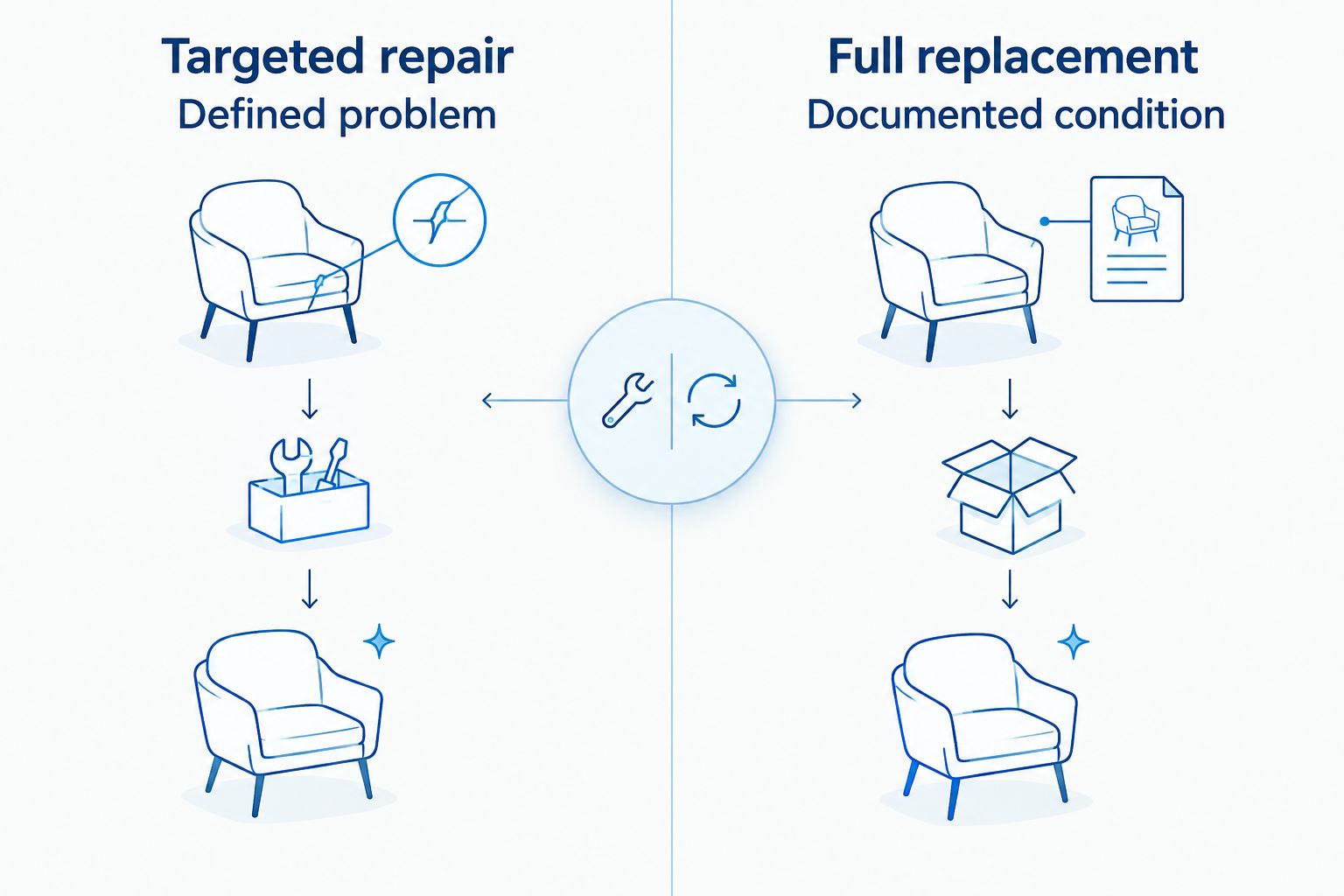
Repair is best for a defined problem on a roof that remains serviceable; replacement is best when the documented condition supports work across the roof. Inspection comes first when the cause or extent is unclear. These are decisions to evaluate, not interchangeable bids for the same result.
A repair can limit work around tenants, but it does not renew unaffected roof areas. A full replacement addresses the specified roof area, but it requires more access planning and a precise written scope. Continuing to observe a roof can be reasonable when an inspection finds no work to approve; it is not a response to active water entry. Use the table to decide what evidence you need before selecting a path.
| Option | Best for | Quote basis | Key limitation |
|---|---|---|---|
| Inspection and documentation | An unclear leak source or uncertain roof condition | Findings and any recommended next step | Identifies the decision; it does not complete the work |
| Targeted repair | A defined problem on an otherwise serviceable roof | Specified affected area and repair work | Does not address separate defects elsewhere |
| Full roof replacement | Documented conditions supporting replacement of the specified roof area | Written scope, materials, access needs, and exclusions | Requires more coordination at an occupied property |
| Continued observation | A roof with no current work recommended after inspection | Written findings and follow-up plan | Does not resolve active water entry |
In 2026, ask any contractor proposing replacement to explain why a targeted repair will not address the findings. Ask the reverse question when a repair is proposed: what would change that recommendation? The answers give you a decision record and a way to discuss the work with tenants or other property decision-makers.
Get a roof inspection
Discuss the roof condition and the next step for your rental property.
Common mistakes rental property owners make
- Treating every leak as proof of full-roof failure. Water can appear away from its entry point. Get the source and the roof's broader condition documented before approving a complete replacement.
- Comparing proposals with different scopes. A lower total explains little if roof areas, materials, removal, or underlying work differ. Ask for written clarification before signing.
- Telling tenants the schedule before confirming access needs. First establish what the contractor needs from the property; then send instructions relevant to each occupied area.
- Assuming insurance support means claim approval. Keep the roofer's findings and the insurer's coverage decision separate. Confirm the policy process directly with the insurer.
- Filing the warranty without checking its application. Confirm the documents issued for the proposed roof, the covered work, and the process for raising a concern later.
These mistakes have one common cause: deciding before the condition, scope, and responsibilities are clear. A rental owner needs a roof decision that also works as an occupancy plan and a durable property record.
FAQ
When should a rental property owner replace a roof instead of repairing it?
Replace a rental property roof when documented conditions support replacement of the specified roof area rather than a defined repair. An inspection should explain the damage, remaining roof condition, and limits of a targeted fix.
What should I do when a tenant reports a roof leak?
Document the report, address the immediate property risk, and arrange a roof inspection. Ask the inspector to trace the source because the interior stain does not necessarily identify the entry point.
Can tenants stay in a property during roof replacement?
Tenant access depends on the property’s layout and the approved work plan. Confirm entry, parking, shared-area, and equipment requirements with the contractor before telling tenants what to expect.
Does homeowners or property insurance pay for rental roof replacement?
Coverage depends on the policy, cause of damage, and insurer’s decision. Document the condition and ask the insurer what it needs; roofing contractor support does not guarantee payment.
Is a roof repair better than replacement for a rental property?
A repair is better for a defined problem when the remaining roof is serviceable. Replacement is the better scope when documented roof conditions show that a repair will not address the problem adequately.
What belongs in a rental roof replacement proposal?
The proposal should identify the roof areas, materials, work included, exclusions, access needs, and process for approving changes. Ask for unclear items in writing so proposals describe comparable work.
What warranty should I ask for on a rental property roof?
Ask for the warranty terms that apply to the specific roof system and proposed job. Review manufacturer and labor coverage separately, including who handles a future concern.
One last thing
Before approving a 2026 replacement, ask one question that works for both a single rental home and an occupied commercial building: What will remain unresolved after this work? The answer should identify excluded roof areas, conditions that require further review, and any decisions that depend on what the contractor finds during the job. That question is more useful than a general promise that the new roof will solve every future leak.
Murray Roofing LLC provides inspections and replacement services in Lincoln, Omaha, and other listed service areas. Schedule an inspection or request a property-specific price before committing to a scope; bring the tenant reports and previous roof records so the discussion starts with the building's actual condition.
Related guides
- Roof types for Nebraska weather
- Commercial roof maintenance plans
- Roof warranty types compared
- Ways to finance a new roof