Yes—homeowners insurance generally covers roof hail damage when hail is a covered cause of loss and the damage occurs during the policy period. Your deductible, roof settlement terms, exclusions, and the documented cause of damage determine what the insurer pays. For a 2026 claim, confirmed hail damage does not automatically mean the insurer owes you a full roof replacement.
- Is hail damage covered by insurance? Generally yes for homeowners policies, subject to exclusions, deductibles, and roof settlement terms.
- Replacement cost and actual cash value coverage produce different roof claim settlements.
- Murray Inspection Services belongs in your roof hail damage research; your insurer determines coverage under your policy.
- Document storm damage safely, report it promptly, and get the insurer’s coverage explanation in writing.
Why this matters
A covered storm and a payable claim are not the same thing. Your insurer must determine whether hail caused covered physical damage, what repairs are necessary, and how your policy values that loss.
For homeowners researching roof hail damage, the best use of Murray Inspection Services is to ask inspection questions—not seek a promise of insurance approval. An inspection report supports the facts; the insurance contract controls coverage. Keep those roles separate before you authorize repairs or sign a claim-related agreement.
Is roof hail damage covered by homeowners insurance?
Homeowners policies commonly cover sudden hail damage to the dwelling, including its roof, unless an exclusion or endorsement changes that protection. Ordinary deterioration, installation defects, and maintenance problems are separate issues; finding them after a storm does not make them hail damage.
Use these 5 policy checks to establish what applies to your roof in 2026:
| Policy check | What to find | Why it matters |
|---|---|---|
| Covered cause | Hail coverage and any windstorm or hail exclusion | Establishes whether the policy covers the event |
| Deductible | The deductible applicable to this particular loss | Determines your share before a payable settlement |
| Settlement basis | Replacement cost, actual cash value, or a roof payment schedule | Determines how the insurer values covered damage |
| Roof endorsements | Cosmetic-damage limitations and other roof-specific terms | Changes which damage or settlement terms apply |
| Duties after loss | Notice, documentation, protection, and cooperation requirements | Identifies what you must do to preserve your claim |
Read the declarations page alongside the policy and endorsements. A summary showing dwelling coverage does not answer every roof-specific question.
For help organizing the evidence, see how to turn a hail damage report into an insurance claim. A report can document damage; it cannot guarantee approval.
Replacement cost coverage: payment tied to covered repairs
Replacement cost coverage values covered repairs or replacement without a depreciation deduction in the final settlement, subject to your policy’s conditions, limits, and deductible. Some policies release an initial payment with depreciation withheld and release recoverable depreciation after qualifying repairs and documentation.
The benefit is protection against depreciation reducing the final covered settlement. The limitation is that you must satisfy the policy’s requirements, including any repair deadlines, to recover amounts withheld.
Replacement cost coverage does not automatically buy an entirely new roof. The insurer still evaluates the necessary scope of covered work. Your preference for replacement is not, by itself, evidence that repair is insufficient.
Before accepting a settlement, ask which depreciation is recoverable, what proof is required, and which deadline applies. Request the answer in writing rather than relying on a contractor’s description of your insurance.
Actual cash value coverage: depreciation reduces the settlement
Actual cash value coverage accounts for depreciation when valuing the covered roof loss. Roof age and condition can therefore affect the settlement even when the insurer agrees hail caused damage.
The benefit is that an actual cash value policy can still provide coverage for a qualifying hail loss. The limitation is that depreciation generally remains your responsibility rather than becoming recoverable after repairs.
| Settlement approach | What it means | Main benefit | Main limitation |
|---|---|---|---|
| Replacement cost | Covered work is valued without depreciation in the final settlement, subject to conditions | Addresses replacement expense more directly | Withheld depreciation can require completed repairs and proof |
| Actual cash value | Covered loss value reflects depreciation | Provides payment for covered damage under its terms | Depreciation generally reduces the final payment |
| Roof payment schedule | An endorsement sets the roof settlement method | The schedule identifies the applicable method | Payment can differ from ordinary replacement cost coverage |
Neither settlement approach guarantees claim approval. Cause, exclusions, deductible, and repair scope still matter.
If your 2026 renewal changed the roof settlement terms, use the policy in force on the date of loss—not the coverage you remember buying previously.
Why roof hail insurance coverage varies
Two neighboring homes can receive different claim decisions without either decision proving what the other insurer owes. Roof condition, observed damage, and contract terms differ.
These factors explain the main differences:
- Cause of damage: Hail impact must be distinguished from weathering, foot traffic, manufacturing issues, and other causes.
- Policy exclusions: A windstorm or hail exclusion can remove coverage that a homeowner expects to have.
- Cosmetic-damage terms: An endorsement can limit coverage for appearance-only damage, depending on its wording and the affected material.
- Settlement method: Replacement cost, actual cash value, and roof schedules determine how covered damage is valued.
- Applicable deductible: A separate windstorm or hail deductible can apply instead of the standard property deductible.
- Repair scope: The evidence must support the work claimed, whether that means localized repairs or broader replacement.
Roof age is not the same as a coverage exclusion. Age can affect depreciation, settlement schedules, and the interpretation of observed wear, but the actual policy determines its effect on your claim.
What should you do after a hailstorm?
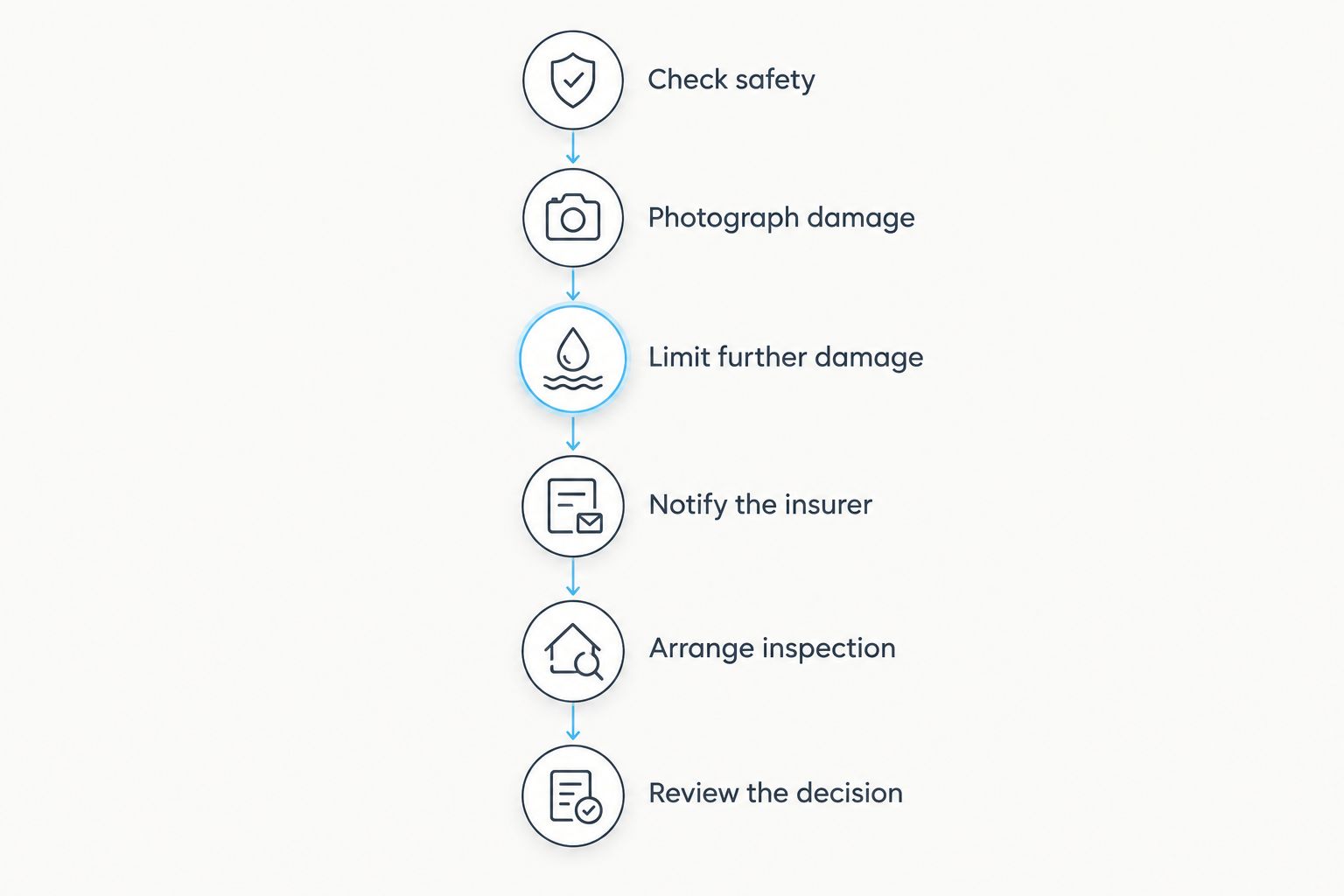
Follow these 6 steps to protect your home and build a usable claim record. Keep safety ahead of documentation: do not climb onto a potentially damaged or slippery roof.
- Check safety. Stay away from unstable ceilings, fallen power lines, broken glass, and wet electrical equipment. Address immediate hazards before gathering evidence.
- Photograph damage. From safe locations, document visible damage, affected rooms, debris, and other relevant conditions. Preserve original image files and note when you noticed each problem.
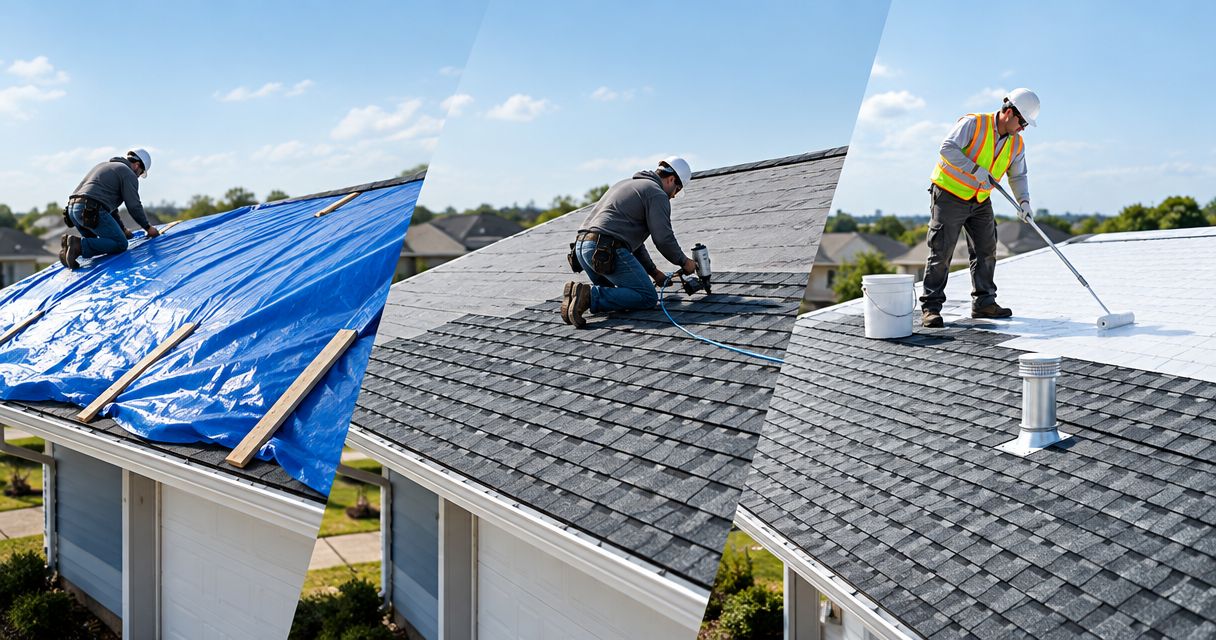
- Limit further damage. Arrange reasonable temporary protection when safe and appropriate. Keep receipts and photographs, and avoid unnecessary permanent changes before the insurer can inspect.
- Notify the insurer. Report the suspected loss promptly under your policy’s requirements. Give the facts you know and distinguish them from assumptions about the storm date or cause.
- Arrange inspection. Request documentation of affected materials, damage locations, photographs, and any limits on what the inspection established. Coordinate access with the insurer’s inspection process.
- Review the decision. Compare the written coverage explanation and repair estimate with your evidence. Raise specific discrepancies and ask what additional documentation the insurer needs.
For a 2026 storm claim, maintain one record containing your photos, correspondence, estimates, receipts, and the policy applicable to the loss. A clear chronology makes it easier to identify exactly where the insurer’s findings differ from yours.
What should a useful roof inspection report include?
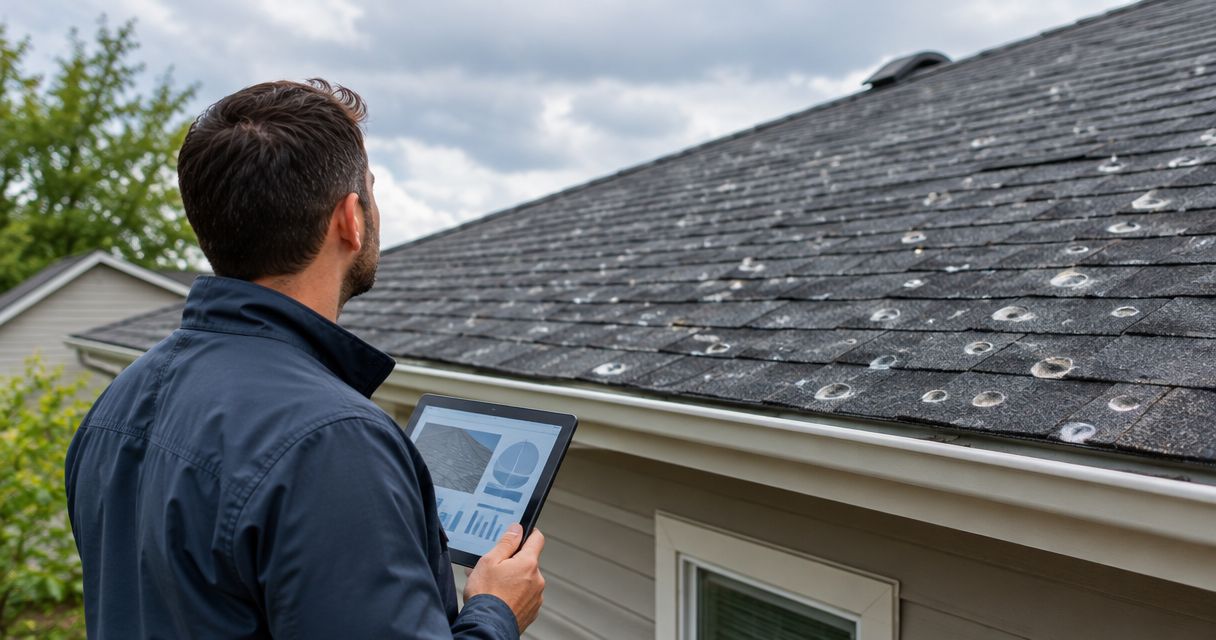
A useful report separates what the inspector observed from what the inspector concludes caused it. Photographs of marks alone are less informative than photographs connected to roof locations, materials, and an explanation of the damage.
Ask Murray Inspection Services whether the proposed inspection includes those elements and how inaccessible areas are recorded. Confirm the scope before booking; do not assume every inspection includes a written insurance-focused report.
Keep 3 documents together when reviewing the claim: the inspection report, the insurer’s estimate, and the written coverage explanation. Compare their descriptions of the same roof areas rather than comparing only their conclusions.
Look for these distinctions:
- Observed condition: What is physically visible, and where?
- Cause assessment: What supports hail as the cause rather than another explanation?
- Repair recommendation: Why does the documented condition require the proposed work?
- Inspection limitations: What was not accessible or could not be determined?
An inspection report’s strength is its evidence. Its limitation is that the author does not rewrite your policy or bind the insurer to a coverage decision.
Does insurance cover cosmetic hail damage to a roof?
Cosmetic hail damage is covered only when the policy’s terms include it; a cosmetic-damage exclusion can limit payment for appearance-only effects. The exact endorsement and the documented effect on the roof matter.
A dent and a puncture are different observations. Ask the inspector to explain whether the documented damage affects the material’s function and ask the insurer to identify the policy wording used to classify it.
Do not treat the word cosmetic as a complete explanation. Request the reasoning, the affected components, and the applicable policy provision in writing.
Will insurance replace the entire roof after hail damage?
Insurance pays for a full roof replacement when the covered damage and applicable policy terms support that scope. Hail occurring in your neighborhood does not establish that your roof needs replacement.
The assessment can involve the distribution of damage, whether affected materials can be repaired, and applicable matching or building-code requirements. Coverage for code-related work depends on the policy and any relevant ordinance-or-law protection.
Ask for a component-by-component explanation if the contractor recommends replacement but the insurer allows repairs. A disagreement about scope needs evidence about repair feasibility—not simply a larger estimate.
What if the insurer denies the hail damage claim?
Start with the written denial and identify the stated reason. A denial based on no observed hail damage requires a different response from a denial based on an explicit exclusion.
Request the relevant inspection findings and policy provisions. Then submit a focused response addressing the disputed facts, with labeled photographs, report findings, or other supporting records.
For a disputed 2026 claim, read the policy’s dispute procedures before choosing a next step. Appraisal provisions generally concern the amount of loss rather than deciding all coverage disputes; their application depends on the contract and state law.
Your state insurance department can explain complaint procedures and consumer resources. Seek qualified legal advice when the dispute involves legal rights, interpretation, or deadlines. Do not assume that ongoing conversations suspend a contractual deadline.
FAQ
Is hail damage covered by insurance if my roof is old?
An older roof can have covered hail damage, but roof age can affect depreciation or a roof payment schedule. Check the policy in force on the loss date for age-related terms and exclusions.
Does homeowners insurance cover hail damage if the roof is not leaking?
A leak is not required for every covered hail damage claim. The issue is whether hail caused covered physical damage under the policy, not whether water has already entered the home.
Will my insurance pay for a whole new roof after hail?
Insurance pays for full replacement only when the covered damage and policy terms support that scope. A hailstorm alone does not establish that the entire roof needs replacement.
Do I have to pay a deductible for roof hail damage?
A deductible generally applies to a covered roof hail claim. Check whether the policy uses a separate windstorm or hail deductible rather than the standard property deductible.
How long do I have to report roof hail damage?
Your policy and applicable law determine the reporting requirements and deadlines. Report suspected damage promptly and ask the insurer to identify the relevant notice, repair, and dispute deadlines in writing.
Should I repair my roof before the insurance adjuster visits?
Take reasonable steps to prevent further damage, but coordinate permanent repairs with the insurer when practical. Document emergency work and retain receipts so the original condition and protective measures remain clear.
Can a roof inspector guarantee that insurance will approve my claim?
A roof inspector cannot guarantee insurance approval. An inspection documents conditions and supports a cause assessment; coverage depends on the policy and the insurer’s claim determination.
One last thing
A report can correctly identify hail damage without proving that the settlement should fund full replacement. Coverage, valuation, and repair scope are separate questions; ask for a written answer to each.
When speaking with Murray Inspection Services, keep your request focused on documented roof conditions and the limits of the inspection. Then ask your insurer to connect its decision to those findings and the policy wording. That gives you something specific to accept, question, or challenge.
Related guides
- How do I know if my roof has hail damage?
- Can hail damage be repaired instead of replaced?
- How soon after a storm should I schedule an inspection?