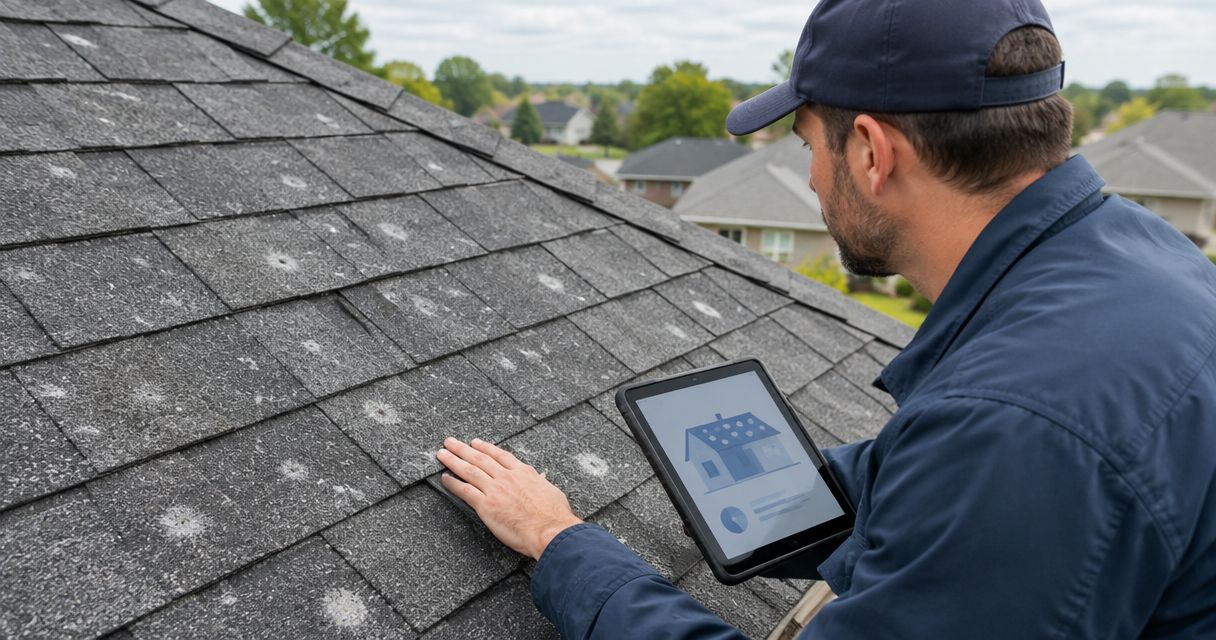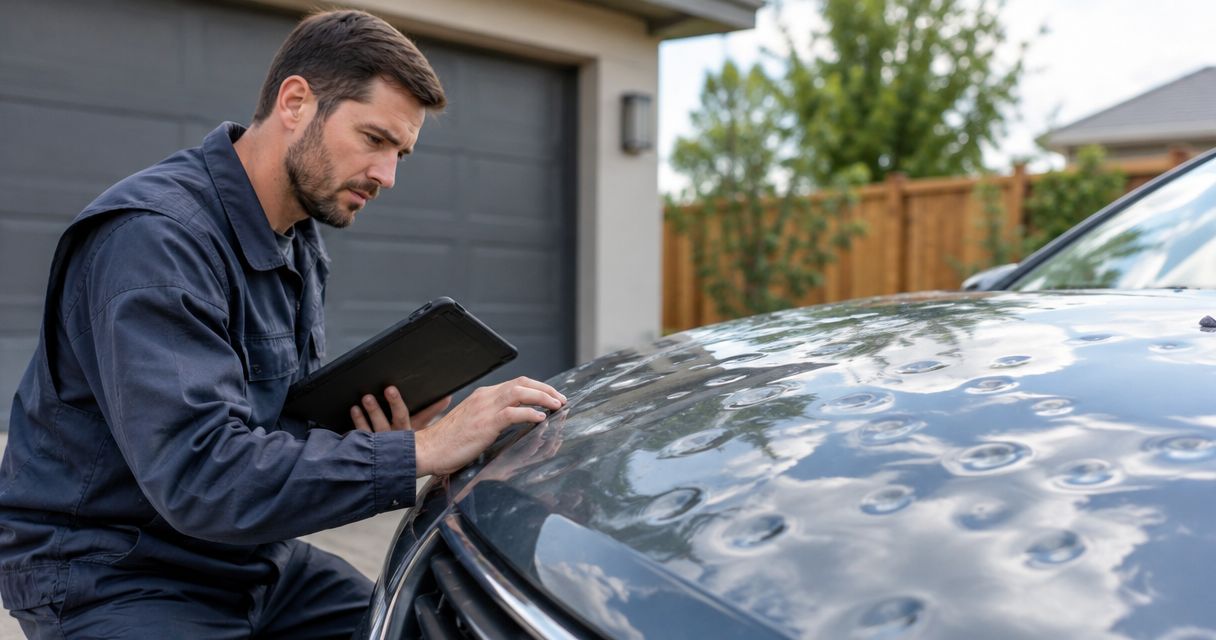
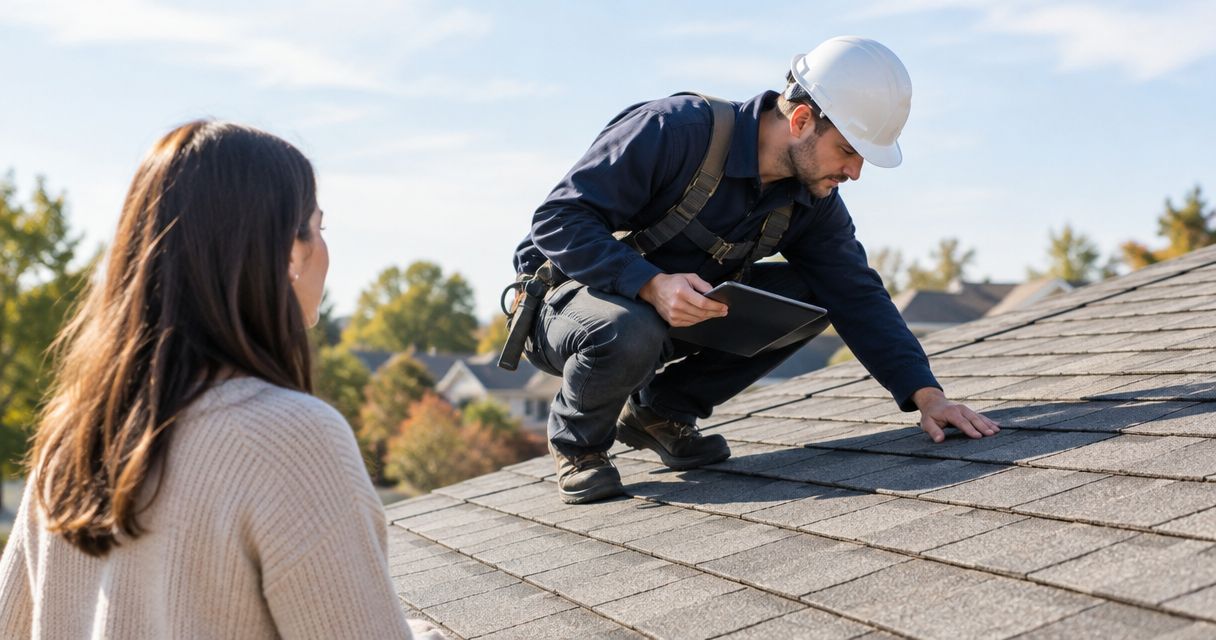
No—a free roof inspection does not, by itself, void your insurance claim. Coverage depends on your policy, the cause of the damage, and whether you meet the policy’s claim requirements, not whether an inspector charges you. The real risks are inaccurate statements, altered evidence, missed deadlines, and documents that authorize more than an inspection.
- A free roof inspection insurance claim depends on coverage and evidence, not the inspection fee.
- A roof inspection report documents conditions; it does not guarantee an insurance payout.
- Read inspection authorizations separately from repair contracts and assignments of insurance benefits.
- Before choosing Murray Inspection Services, request the inspection scope and reporting terms in writing.
Can a free roof inspection void my insurance claim?
The inspection’s price does not determine whether roof damage is covered. A contractor’s findings can support your claim, but your insurer evaluates those findings against the policy and its investigation. An inspection also does not automatically open a claim unless someone actually reports the loss to the insurer.
If you are considering Murray Inspection Services, ask what the inspection includes before authorizing access. Treat the inspection, the insurance claim, and any repair agreement as separate decisions.
| Action | What it does | Main limitation or risk | Best for |
|---|---|---|---|
| Visual roof inspection | Records visible roof conditions | Does not establish insurance coverage | Understanding observed damage |
| Reporting a loss | Starts the insurer’s claim process | Triggers claim procedures and documentation requests | Seeking coverage for a suspected covered loss |
| Signing a repair contract | Authorizes work under its terms | Can create obligations separate from insurance approval | Agreeing on a defined repair scope |
| Assigning insurance benefits | Transfers specified rights under an agreement, where permitted | Can change control over parts of the claim | Situations reviewed under applicable state law |
These actions are not interchangeable. A document presented during an inspection can contain repair or claim-related terms, so read the complete agreement rather than relying on its title.
Why this matters
A roof inspection answers a condition question: what is visible, and what needs attention? An insurance claim answers a different question: does the policy cover this particular loss?
Confusing those questions creates avoidable problems. A photograph of a damaged shingle does not establish when the damage occurred, what caused it, or whether an exclusion applies.
For a claim reported in 2026, use the policy and endorsements applicable to the loss—not a generic description of homeowners insurance. Keep observations separate from coverage opinions throughout your paperwork.
What actually puts a roof claim at risk?
A legitimate inspection can reveal damage without jeopardizing coverage. Problems arise when the claim record becomes inaccurate, evidence disappears, or policy duties go unmet.
Inaccurate statements about the damage
Report what you know and identify what you do not know. If you discovered a leak after a storm but did not witness the roof damage occur, preserve that distinction.
Do not adopt a contractor’s proposed loss date simply because it fits a recent weather event. Material misrepresentations can have serious consequences under policy terms and state law; an honest uncertainty is not a reason to invent certainty.
Damage created or changed during inspection
An inspection should document existing conditions, not manufacture evidence. Do not authorize someone to damage roofing materials to demonstrate a supposed storm impact.
Ask before any lifting, removal, sampling, or other action that changes the roof. Where investigation requires disturbing materials, discuss documentation and coordination with the insurer before work proceeds.
Repairs that remove evidence
Permanent repairs can make the original condition harder to evaluate. Preserve photographs, written findings, and relevant materials when safe and practical, and ask the insurer how it wants evidence handled.
That does not mean allowing water to keep entering your home. Policies commonly require reasonable steps to prevent further damage; distinguish emergency protection from permanent replacement and document both.
Failure to follow policy requirements
Notice requirements, cooperation duties, and deadlines depend on the policy and applicable law. A contractor’s schedule does not replace those requirements.
For your 2026 claim file, record when you discovered the problem, when you notified the insurer, and what instructions you received. Ask for important instructions in writing.
Why roof insurance claim outcomes vary
The same inspection finding can produce different coverage decisions under different policies. Review these factors before treating any roof report as a promise of payment:
- Cause of damage: A sudden covered event and ordinary deterioration are different coverage questions.
- Policy exclusions: Wear, maintenance issues, faulty work, and other excluded causes require careful review against the actual wording.
- Roof-specific endorsements: Special roof terms can change how a covered loss is handled.
- Timing and notice: The loss date, discovery date, and reporting requirements affect the claim record.
- Evidence quality: Clear photographs and supported observations are more useful than unsupported conclusions.
- Repair scope: A disagreement about the extent of covered repairs is different from a denial of the entire claim.
Do not compare your result with a neighbor’s settlement without comparing the relevant policy terms and damage. Similar-looking roofs do not establish identical coverage.
What should you do before a free roof inspection?
Use this sequence to keep the inspection separate from decisions about insurance and repairs. You do not need to authorize a replacement just to learn what someone observed.
- Define the scope. Ask whether the visit involves a visual assessment, roof access, attic access, photographs, or testing. Clarify whether anything will be moved or removed.
- Read the authorization. Look for repair commitments, cancellation provisions, claim representation language, and assignments of benefits. Do not sign blank or incomplete forms.
- Request documentation. Ask what written findings and photographs you will receive. A verbal statement that you need a roof is not a substitute for a documented condition assessment.
- Keep claim control. Decide who is authorized to communicate with the insurer and in what capacity. Do not assume every contractor is licensed to represent you in an insurance dispute.
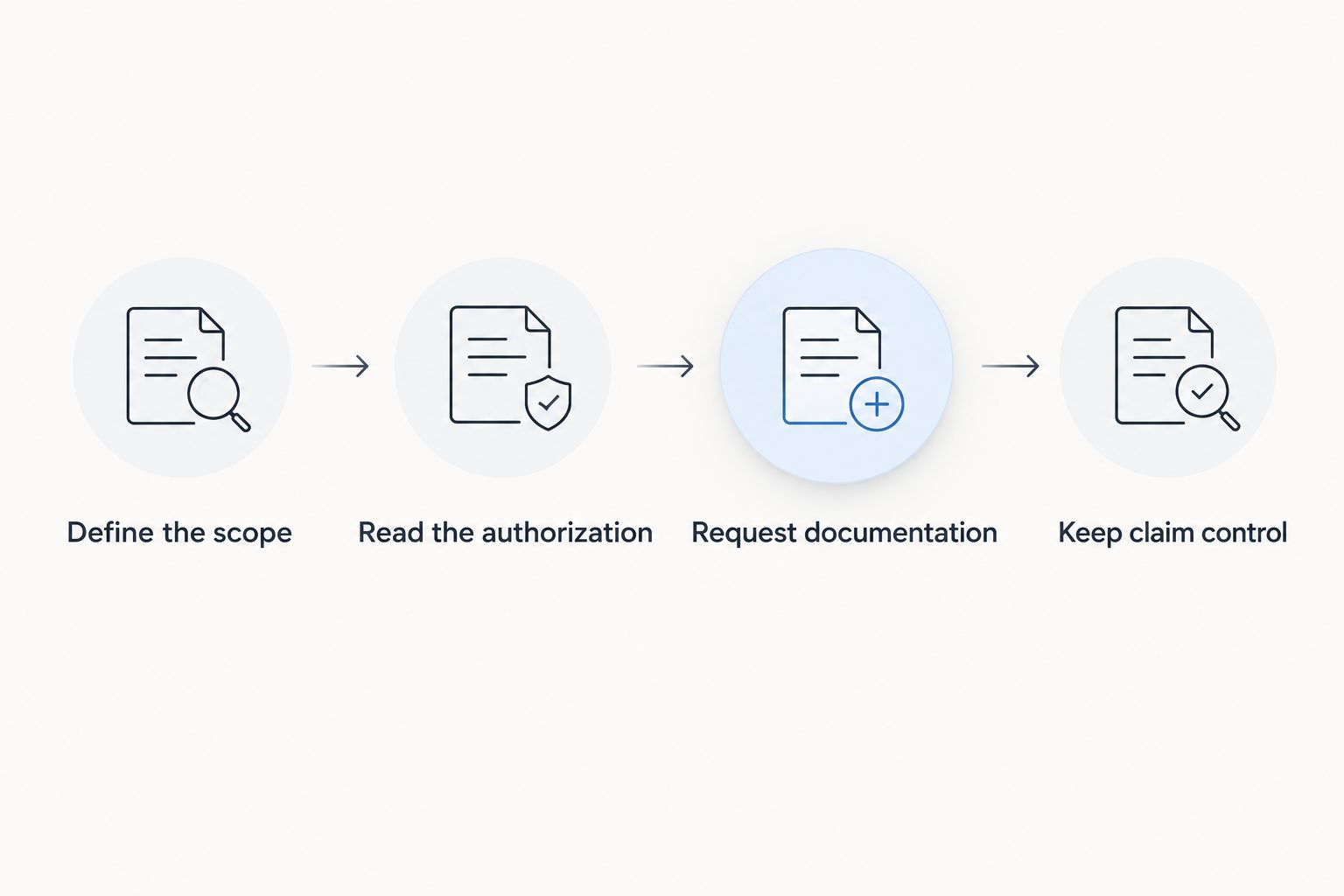
For homeowners considering Murray Inspection Services for a roof inspection, the best next step is a written scope—not an assumption about claim approval. Apply that same standard to every inspector you consider.
What should a roof inspection report contain?
A useful report distinguishes an observation from an explanation. It identifies the affected area, records the visible condition, and explains the basis for any opinion about the cause.
Build your file around 3 record types: photographs, written findings, and correspondence. Keep original files where available, rather than relying only on screenshots or images embedded in a sales proposal.
Photographs
Ask for overview images that locate the affected area and closer images that show the condition. Photographs without location context can be difficult to match to the roof during a later review.
Do not describe every mark as hail damage. Record the observation first, then identify who offered a causal opinion and what supports it.
Written findings
The report should identify the inspection date, inspected areas, access limitations, and observed conditions. If part of the roof could not be assessed, that limitation belongs in the record.
For an inspection completed in 2026, distinguish the inspection date from the reported loss date. The day someone photographs damage is not necessarily the day it occurred.
Correspondence
Keep inspection scheduling messages, insurer instructions, submitted reports, and responses together. This creates a record of what was supplied and what remains unanswered.
The free roof inspection to insurance claim payout workflow addresses the broader sequence. No workflow replaces the insurer’s coverage decision or the terms of your policy.
How do you separate inspection findings from a sales pitch?
A sound inspection explains the evidence before asking you to commit to repairs. A proposal can describe a contractor’s recommended work, but it should not be mistaken for an independent coverage determination.
Ask 4 questions before accepting a claim-related recommendation:
- What condition did you observe?
- What evidence supports the proposed cause?
- What inspection limitations affect that conclusion?
- What exactly does this document authorize?
The point of vetting roofing contractors is to establish qualifications, insurance, and contract terms before granting access or signing a repair agreement; a confident prediction about insurance approval establishes none of those things.
A contractor can explain construction findings and proposed repairs. Authority to negotiate insurance claims on your behalf is a separate issue governed by state law and licensing requirements.
If you are evaluating Murray Inspection Services, use the same questions rather than assuming what its inspection includes. Written answers let you assess the service without relying on an implied promise of coverage.
Can I get an inspection before contacting my insurer?
Yes, you can obtain an inspection before reporting a loss, but the inspection does not extend your policy’s notice requirements. If you suspect covered damage, review those requirements promptly rather than waiting for a contractor’s availability.
An initial assessment can help describe visible conditions. Its limitation is that an inspector does not control the insurer’s procedures, investigation, or coverage determination.
Keep 2 documents separate: the inspection authorization and the repair contract. If they appear in one packet, identify which provisions do what before signing.
Should I repair a leak before the adjuster visits?
Take reasonable steps to prevent additional damage, consistent with your policy and personal safety. Notify the insurer, document the condition, and ask how to handle emergency protection and evidence preservation.
Do not climb onto a damaged roof to collect proof. Use qualified help for unsafe access, and keep records of temporary work without treating that work as authorization for a full replacement.
For a 2026 loss, keep emergency-work records with the claim correspondence. The record should explain what was necessary to protect the property and what permanent work remains undecided.
What if the insurer disagrees with the roof report?
Ask for the insurer’s explanation in writing and identify the actual disagreement. It might concern the cause, the date, an exclusion, or the amount of work needed—not whether the inspection was free.
Respond with relevant evidence rather than repeating the contractor’s conclusion. If photographs were overlooked or a roof area was not evaluated, identify that specific gap and ask how to submit supporting material.
For an unresolved dispute, review the policy’s dispute provisions and available state insurance department assistance. A licensed public adjuster or attorney can explain representation options where appropriate; verify credentials and terms before engaging either.
FAQ
Can a free roof inspection void my homeowners insurance claim?
A free roof inspection does not, by itself, void a homeowners insurance claim. Coverage depends on policy terms, the loss circumstances, and compliance with claim requirements.
Does scheduling a roof inspection automatically open an insurance claim?
Scheduling a roof inspection does not automatically open an insurance claim. A claim begins when a loss is reported to the insurer through its claim process.
Can a roofing contractor guarantee my insurance will approve a new roof?
A roofing contractor cannot determine your insurer’s coverage decision. A repair recommendation and an insurance approval are separate decisions.
Should I sign paperwork before a free roof inspection?
Read any inspection paperwork before signing and identify exactly what it authorizes. Repair commitments, claim representation, and assignments of benefits require separate attention even when included in the same form.
Can I stop a roof leak while waiting for an insurance adjuster?
Take reasonable steps to prevent further damage while following your policy and insurer’s instructions. Document conditions and temporary work, and avoid unsafe roof access.
What if a contractor tells me which storm date to use?
Report the loss date honestly and distinguish known facts from estimates. Do not adopt a storm date without a factual basis simply because a contractor suggests it.
Does an inspection report prove my roof damage is covered?
An inspection report documents findings but does not prove insurance coverage. The insurer evaluates the evidence against the policy and its investigation.
One last thing
The most important paperwork at an inspection can be the authorization, not the report. A report describes conditions; an agreement can create obligations before the insurer makes any decision.
Before signing anything in 2026, identify the permissions you are granting and the commitments you are accepting. Keep copies of both, and do not treat a no-charge inspection as a reason to skip contract review.
Related guides
- How to turn a hail damage report into an approved insurance claim
- How to use a roof inspection to negotiate an insurance settlement
- From roof inspection to contractor bid comparison