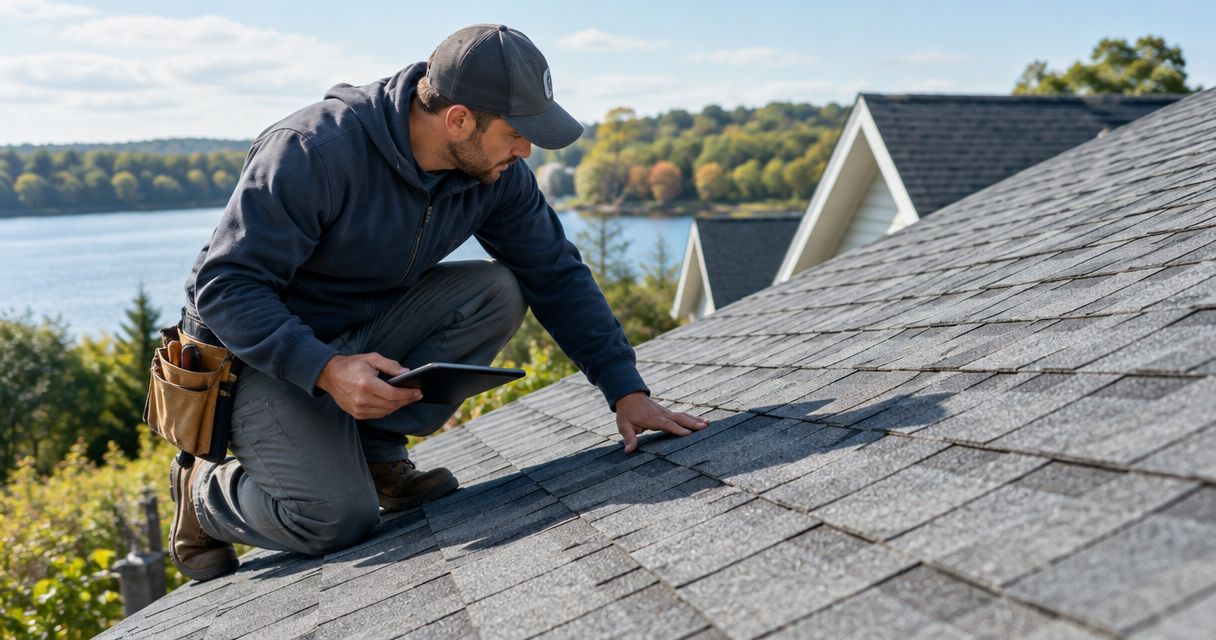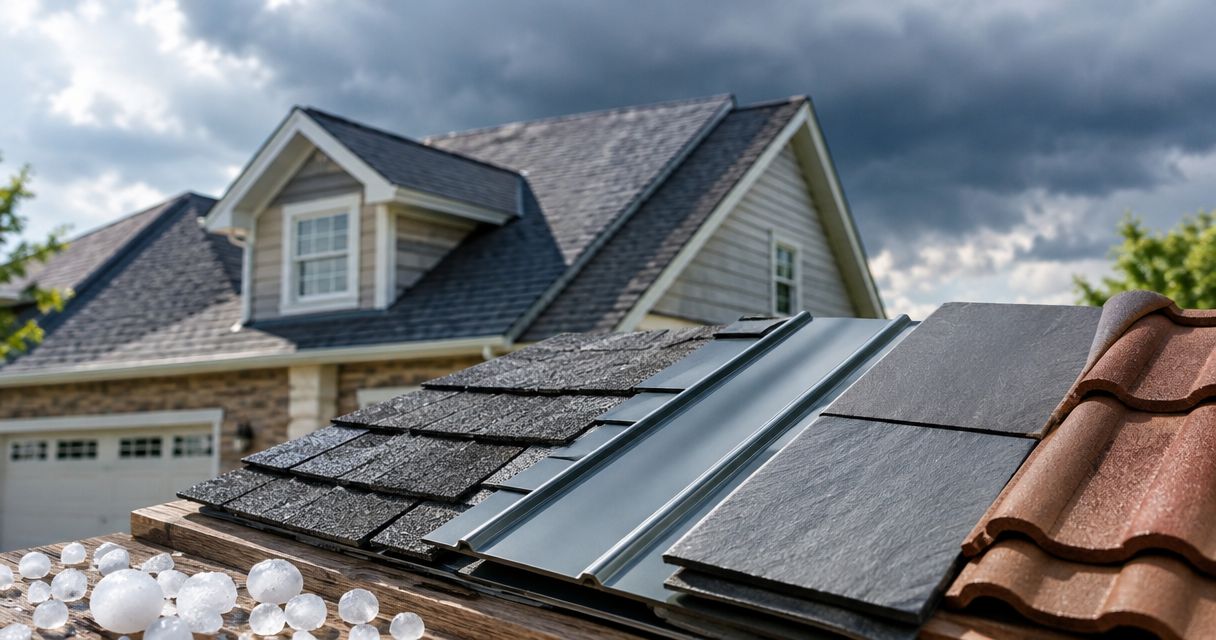
Best overall: Class 4 impact-rated asphalt shingles. Best for a slate or shake appearance: impact-rated synthetic roofing. Best for a panel roof: impact-rated standing-seam metal. Best for an existing tile-roof structure: impact-rated concrete tile. This Murray Inspection Services guide compares the best roofing materials for hail damage in 2026 by tested impact resistance, installation requirements, and repair trade-offs.
- The best roofing materials for hail damage carry verified impact ratings; material names alone do not establish hail resistance.
- Class 4 impact-rated asphalt shingles are the default recommendation for homeowners replacing an asphalt roof.
- Impact-rated synthetic roofing suits homeowners seeking a slate or shake appearance without choosing natural slate or wood.
- Metal can dent without leaking; tile can crack despite its hard surface.
- Compare the exact product, roof assembly, exclusions, and installation instructions before choosing.
Why this matters
Hail resistance is a product-level property, not a promise attached to an entire material category. An asphalt shingle with a verified impact classification and an unclassified asphalt shingle are not equivalent choices. The same distinction applies to metal panels, synthetic products, and tile.
For your 2026 roof replacement, separate three questions: Will the covering resist impact? Will the assembly keep water out? What happens if the roof remains watertight but looks damaged? A rating helps answer the first question; installation details, damage definitions, and warranty language address the others.
Choose a tested product and a compatible roof assembly, not a material name alone.
What makes the best roofing materials for hail damage?
Use these criteria before comparing appearances or signing a proposal:
- Verified impact classification: Match the exact product to its published test standard and classification. Do not accept a general statement about the manufacturer's product line.
- Water-shedding performance: Check the complete assembly, including underlayment, flashing, penetrations, and attachments. An impact rating does not assess every leak pathway.
- Installation compatibility: Confirm that the roof slope, decking, attachment method, and accessories meet the product's instructions.
- Damage and repair options: Distinguish dents, surface marks, cracks, and punctures. Ask how individual damaged pieces are replaced.
- Structural fit: Establish whether the existing structure can support the selected covering, especially when changing to concrete tile.
- Written coverage: Read hail exclusions, cosmetic-damage provisions, and workmanship terms separately. Product testing, warranties, and insurance coverage serve different purposes.
Hail-resistant roofing options at a glance
| Roofing option | Best for | Standout feature | Key limitation |
|---|---|---|---|
| Class 4 impact-rated asphalt shingles | Replacing an existing asphalt roof | Highest classification under UL 2218 | Classification does not mean hail-proof |
| Impact-rated synthetic roofing | A slate or shake appearance | Molded profiles with product-specific impact ratings | Products differ in composition and repair requirements |
| Impact-rated standing-seam metal | Homeowners choosing a panel roof | Raised seams keep panel joints above drainage surfaces | Hail can leave visible dents |
| Impact-rated concrete tile | Homes with a suitable tile-roof structure | Individual tile units can be replaced | Weight and brittle fracture require attention |
These are buying categories, not endorsements of every product within them. In 2026, ask for documentation for the exact model and assembly listed in your proposal.
1. Class 4 asphalt shingles: best for asphalt-roof replacements
Class 4 impact-rated asphalt shingles are the default starting point when you are replacing an asphalt roof. Some use polymer-modified asphalt, including SBS formulations, while others achieve their rating through different construction. The classification matters more than the formulation label.
This option lets you evaluate improved impact resistance without automatically changing to a different roof-covering system. It still requires a roof inspection: damaged decking, unsuitable ventilation, or faulty flashing will not be corrected by selecting a stronger shingle.
Class 4 asphalt shingle pros:
- A verified UL 2218 Class 4 classification provides a defined impact-testing benchmark.
- Individual damaged shingles can be replaced when the surrounding material and installation conditions permit.
- An asphalt-to-asphalt replacement avoids the structural-weight questions associated with switching to concrete tile.
Class 4 asphalt shingle cons:
- Passing a laboratory test does not guarantee protection from every hailstorm.
- Surface granule loss and other damage still require assessment, even without an obvious puncture.
- Repair work can be complicated by brittle surrounding shingles or an unavailable visual match.
Best for: Homeowners replacing asphalt shingles who want a documented impact-resistance upgrade without selecting a different covering category.
Ask the installer to identify the exact shingle, its classification, and the required accessories in writing. If a proposal says only architectural shingles, the description does not establish an impact rating.
Verdict: Buy verified Class 4 asphalt shingles as the default asphalt-roof replacement; skip unverified impact-resistance claims.
2. Impact-rated synthetic roofing: best for slate or shake styling
Synthetic roofing uses manufactured pieces shaped to resemble materials such as slate or wood shake. Product composition varies, so synthetic does not identify a particular level of hail resistance. Select a product with documented impact performance rather than relying on its appearance or category name.
This is a distinct choice for homeowners who prioritize a slate or shake profile. Evaluate the full installation instructions, including slope requirements, attachment details, and treatment around valleys and penetrations.
Impact-rated synthetic roofing pros:
- Offers slate-like or shake-like profiles without using natural slate or wood.
- Certain products have documented impact classifications suitable for a hail-focused comparison.
- Individual-piece construction allows localized replacement when the system's repair instructions permit it.
Impact-rated synthetic roofing cons:
- Impact performance cannot be generalized across different formulations and manufacturers.
- Thermal movement and fastening requirements demand product-specific installation.
- A future repair depends on obtaining compatible replacement pieces and following the prescribed method.
Best for: Homeowners seeking a slate or shake appearance who are willing to assess a specific manufactured system.
For a 2026 purchase, retain the product identification and installation documents with your roof records. A photograph of the finished roof will not establish which formulation or model was installed.
Verdict: Buy impact-rated synthetic roofing for its appearance only after verifying the exact product's classification and repair requirements.
3. Impact-rated standing-seam metal: best for a panel roof
Standing-seam metal roofing joins panels along raised seams. Some systems use concealed attachments, but attachment design and movement provisions vary. Hail performance depends on the tested assembly, including panel profile, metal thickness, support, and substrate.
A dented metal roof is not automatically a leaking metal roof. That distinction matters if your main concern is appearance: a roof can continue shedding water while retaining visible hail marks.
Impact-rated standing-seam metal pros:
- Raised seams position panel joints above the main drainage surface.
- Some assemblies carry documented impact classifications.
- Metal panels can sustain dents without developing a through-hole.
Impact-rated standing-seam metal cons:
- Cosmetic dents can remain visible even when water-shedding performance is intact.
- Replacing a damaged panel can require work at adjoining seams, panels, or trim.
- A classification for one panel assembly does not establish the performance of another.
Best for: Homeowners who want a panel roof and understand the difference between cosmetic damage and functional failure.
Request the assembly details behind the rating, not just a statement that the metal is impact-resistant. Also read any cosmetic-damage exclusion in your insurance policy before deciding that dents are an acceptable trade-off.
Verdict: Buy impact-rated standing-seam metal for a panel-roof design; skip it if visible hail dents would be unacceptable.
4. Impact-rated concrete tile: best for suitable tile-roof structures
Concrete tile is a roof covering made from individual molded units. Its hard surface does not make it immune to hail: impact can crack or break a tile. Choose documented impact performance and confirm structural suitability before treating tile as an alternative to shingles.
This option belongs on the shortlist when the house already has a suitable tile-roof structure or a qualified professional has confirmed the proposed load. The underlayment, flashing, and attachment system remain essential parts of water protection.
Impact-rated concrete tile pros:
- Individual units allow localized replacement when access and compatible tiles permit it.
- Certain products have documented impact-test performance.
- Tile profiles provide a different architectural appearance from shingles or metal panels.
Impact-rated concrete tile cons:
- Tile weight requires structural evaluation when changing from a lighter covering.
- Brittle fracture can occur from impact or improper foot traffic.
- A broken tile requires assessment of the underlying water-shedding assembly, not just the visible piece.
Best for: Homeowners with a suitable structure who want to retain or select a concrete-tile roof.
Do not climb onto a tile roof to look for hail damage. Access itself can break tiles, and damaged roofing creates a fall hazard. Arrange an assessment that uses appropriate access methods.
Verdict: Buy impact-rated concrete tile only after confirming structural and installation requirements; skip an unsupported material conversion.
What a Class 4 impact rating actually means
UL 2218 classifies the impact resistance of prepared roof-covering materials using steel-ball impacts. Its Class 4 test uses a 2-inch steel ball dropped from 20 feet. Class 3 uses a 1.75-inch steel ball dropped from 17 feet. These are laboratory test conditions, not promises about the hailstone size a roof will survive.
The source for those dimensions is the UL 2218 test framework published by UL Solutions. For a 2026 specification, verify the product's current classification and the assembly conditions attached to it. Other standards, including FM 4473, use different test methods; do not assume classifications from different standards are interchangeable.
Real hail differs from a steel ball in shape, density, and impact behavior. Roof age, substrate, weather conditions, and repeated strikes also affect damage. Class 4 is a useful selection filter, not a hail-proof guarantee.
How to compare roofing proposals
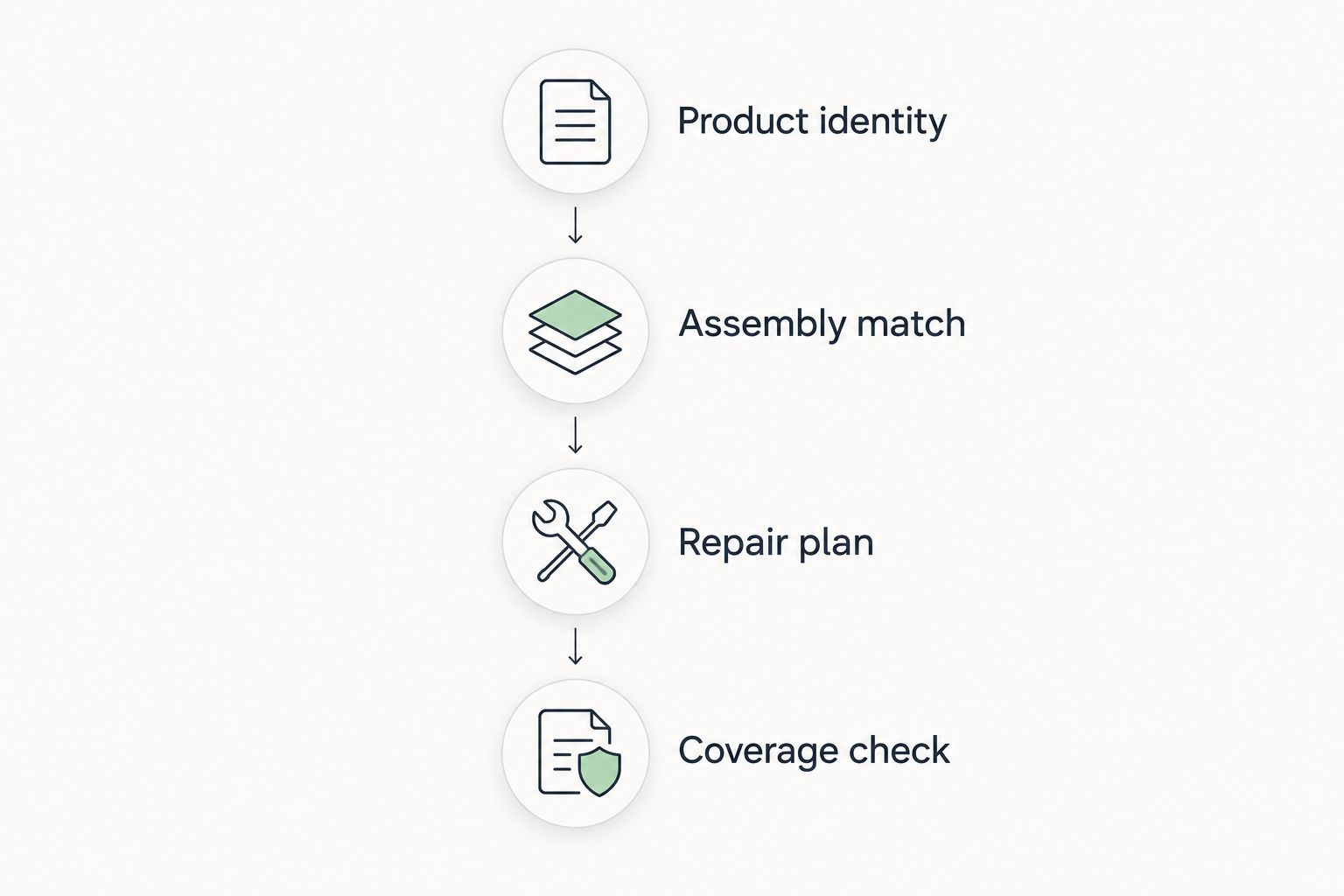
Bring each proposal back to the same decision sequence. Different material descriptions are difficult to compare until you establish exactly what each installer intends to provide.
- Product identity: Record the manufacturer, exact model, material, and stated impact classification.
- Assembly match: Confirm that the proposed decking, underlayment, attachments, and slope meet the applicable instructions.
- Repair plan: Ask how hail damage will be assessed and how damaged pieces or panels will be replaced.
- Coverage check: Read the product warranty and insurance policy separately, including cosmetic-damage language.
Keep those answers with the contract rather than relying on verbal explanations. If a substitute product is proposed later, repeat the checks: a similar appearance does not establish an equivalent impact classification or installation requirement.
How the options rank
The Murray Inspection Services roofing materials recommendation puts documented impact resistance first, followed by installation compatibility, repair practicality, and damage trade-offs. Class 4 asphalt shingles lead for asphalt-roof replacements because they address hail resistance without requiring a switch to another covering category.
Synthetic roofing takes the appearance-focused slot. Standing-seam metal suits a panel-roof preference, while concrete tile requires particular attention to structural fit. This 2026 ranking compares material categories and selection criteria; it does not report field testing or rank individual manufacturers.
Which roofing material should you choose?
Start with verified Class 4 asphalt shingles if you are replacing an asphalt roof. Choose impact-rated synthetic roofing for a slate or shake appearance, standing-seam metal for a panel roof, or concrete tile when the structure and design support it.
For readers of Murray Inspection Services, the best roofing materials for hail damage are those whose documented rating matches the proposed installation. Do not let appearance, a broad material claim, or warranty language substitute for that match.
FAQ
What’s the best roofing material for hail damage in 2026?
Class 4 impact-rated asphalt shingles are the default recommendation for homeowners replacing an asphalt roof. Impact-rated synthetic roofing, standing-seam metal, and concrete tile serve different appearance and structural needs.
Does Class 4 mean a roof is hail-proof?
No, Class 4 does not mean hail-proof. It establishes performance under specified laboratory impact conditions, not protection against every storm or every type of damage.
Is a metal roof better than shingles for hail?
A metal roof is not automatically better than impact-rated shingles for hail. Compare the exact tested assemblies and decide whether visible metal dents are an acceptable outcome.
What size hail can Class 4 shingles withstand?
A Class 4 rating does not establish a guaranteed hailstone size a roof can withstand. UL 2218 uses steel-ball impacts, which are not equivalent to every real hail impact.
Are concrete tiles resistant to hail damage?
Some concrete tile products have documented impact resistance, but concrete tile can still crack or break. Check the exact product rating and confirm that the roof structure supports the proposed covering.
Will impact-resistant roofing lower my insurance premium?
An impact rating alone does not establish an insurance discount. Ask your insurer about eligibility, required documentation, coverage terms, and cosmetic-damage exclusions before selecting a product.
What should I request before choosing a hail-resistant roof?
Request the exact product identification, impact classification, installation requirements, and written coverage terms. Murray Inspection Services recommends comparing those details rather than relying on the material category alone.
One last thing
Photograph or save the product label before the roofing materials are installed. Keep the model identification, classification documents, installation instructions, and completed-work records together. Years later, those records establish what is on your roof more reliably than its appearance—and make a repair or insurance discussion more specific.