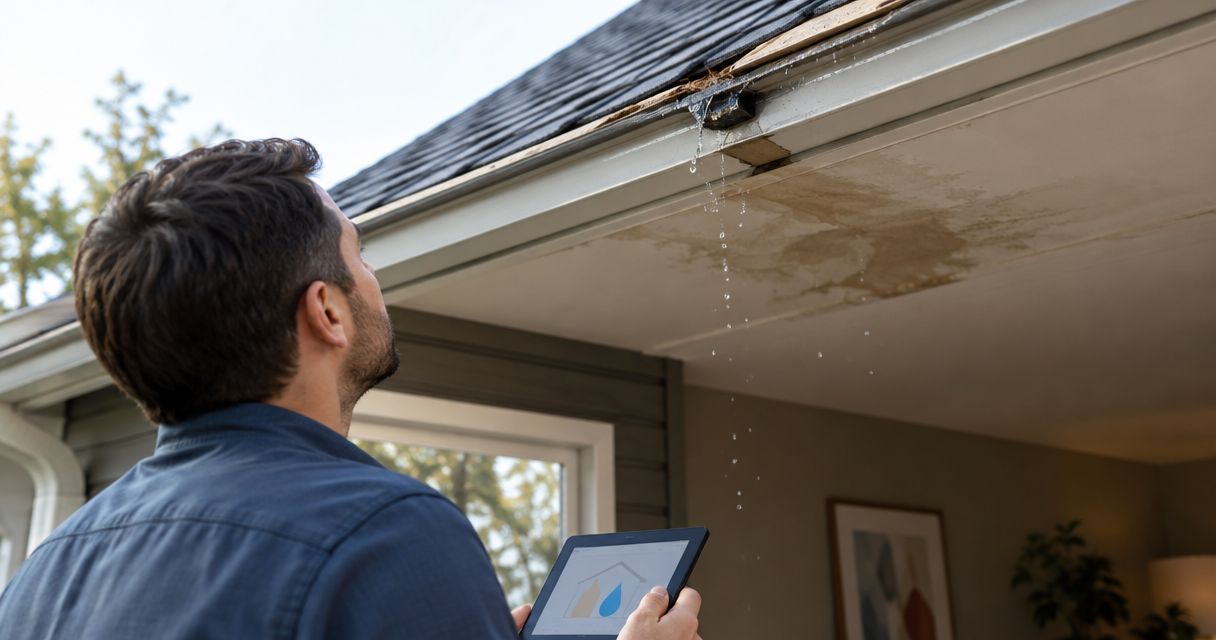
Yes, a small roof leak can cause structural damage when repeated moisture exposure weakens roof decking, framing, or connections. The size of the ceiling stain does not show how much material is wet, and stopping the drip does not restore wood that has already deteriorated.
- Can a small roof leak cause structural damage? Yes—repeated wetting can damage roof decking and framing.
- A ceiling stain identifies a symptom, not the full extent or source of roof damage.
- Sagging ceilings, falling material, or water near electrical equipment require immediate safety precautions.
- Murray Roofing provides roof inspections for Lincoln and Omaha homeowners and commercial property decision-makers.
Why this matters
A small leak deserves an inspection, not an assumption that the entire roof needs replacement. For Lincoln and Omaha property owners in 2026, the useful distinction is between a localized entry point and damage that has spread into the roof assembly.
Murray Roofing is a fit for Lincoln and Omaha property owners who need residential or commercial roof inspection and repair. You can start with Murray Roofing to arrange an inspection rather than trying to judge concealed damage from the floor.
Can a small roof leak turn into a bigger structural problem?
Yes. Water entering through a roof opening can travel along framing or other materials before appearing indoors, so the visible drip does not necessarily sit beneath the defect. Repeated wetting can support wood decay and damage materials that help carry roof loads.
That progression is possible, not inevitable. A stain alone does not prove that your roof has structural damage; an inspection must separate surface damage, wet insulation, damaged decking, and compromised framing.
| Finding | What it tells you | What it does not establish |
|---|---|---|
| Ceiling discoloration | Water has affected the ceiling finish | Whether framing has lost strength |
| Wet insulation | Moisture has entered the roof or ceiling assembly | Where the water originally entered |
| Deteriorated roof decking | The roof's supporting surface needs assessment | Whether damage extends into rafters or trusses |
| Sagging roofline or displaced framing | The structure needs professional evaluation | The cause or safe repair scope without assessment |
| A drip that stops in dry weather | Active water entry is no longer visible | Whether concealed materials have dried |
Treat the leak and its consequences as separate inspection questions. A successful repair needs to address the entry point and identify affected materials below it.
How moisture reaches structural materials
Roof decking is the surface beneath the roof covering. On many residential roofs, it consists of wood panels supported by rafters or trusses; commercial buildings use different deck and framing assemblies, including wood, steel, and concrete.
Water entering at flashing, a penetration, a seam, or damaged roofing can reach those underlying materials. An exposed ceiling tells only part of the story because insulation and enclosed cavities can hide moisture.
Wood decay and metal corrosion are different processes, but both warrant attention when persistent moisture reaches structural components. Your contractor should identify the assembly rather than apply a residential repair assumption to every commercial roof.
Why structural damage from a roof leak varies
There is no universal countdown from the first drip to structural failure. The condition of the materials and the pattern of wetting matter more than the apparent size of the leak.
- Exposure duration: Repeated or persistent wetting gives deterioration more opportunity to develop than an isolated incident that is corrected and dried.
- Drying conditions: Enclosed cavities and wet insulation can retain moisture after visible dripping stops.
- Water pathway: Water contacting decking or framing creates a different concern from moisture confined to a surface finish.
- Existing condition: Previously deteriorated decking, corroded components, or earlier unresolved leaks change the repair scope.
- Roof assembly: Wood-framed residential roofs and commercial deck systems require different inspection and repair methods.
For a leak discovered in 2026, an old repair invoice is useful background—not proof that the same location remains sound. Ask the inspector to distinguish current findings from historic staining and previous work.
Which warning signs need urgent attention?
A sagging ceiling or visibly displaced roof structure is a safety concern, not a routine cosmetic repair. Keep people out of the affected area and seek urgent professional assessment; contact emergency services if collapse appears imminent.
Water reaching light fixtures, outlets, electrical panels, or connected equipment creates a separate hazard. Do not touch wet electrical equipment or enter standing water near electrical sources; have the hazard addressed by qualified personnel.
Other signs that deserve prompt inspection include:
- A stain that grows or returns after rain.
- A persistent musty odor near the affected area.
- Visible deterioration on accessible framing.
- Repeated leaks despite earlier repairs.
- Falling ceiling material or changing ceiling shape.
Do not climb onto a wet roof, enter an unsafe attic, or press on a bulging ceiling to investigate. Observations from a safe location are enough to report the problem.
For the distinction between immediate safety concerns and repair scheduling, read whether a small roof leak can wait. A quiet drip still needs attention even when the room remains usable.
What should you do after noticing a small roof leak?
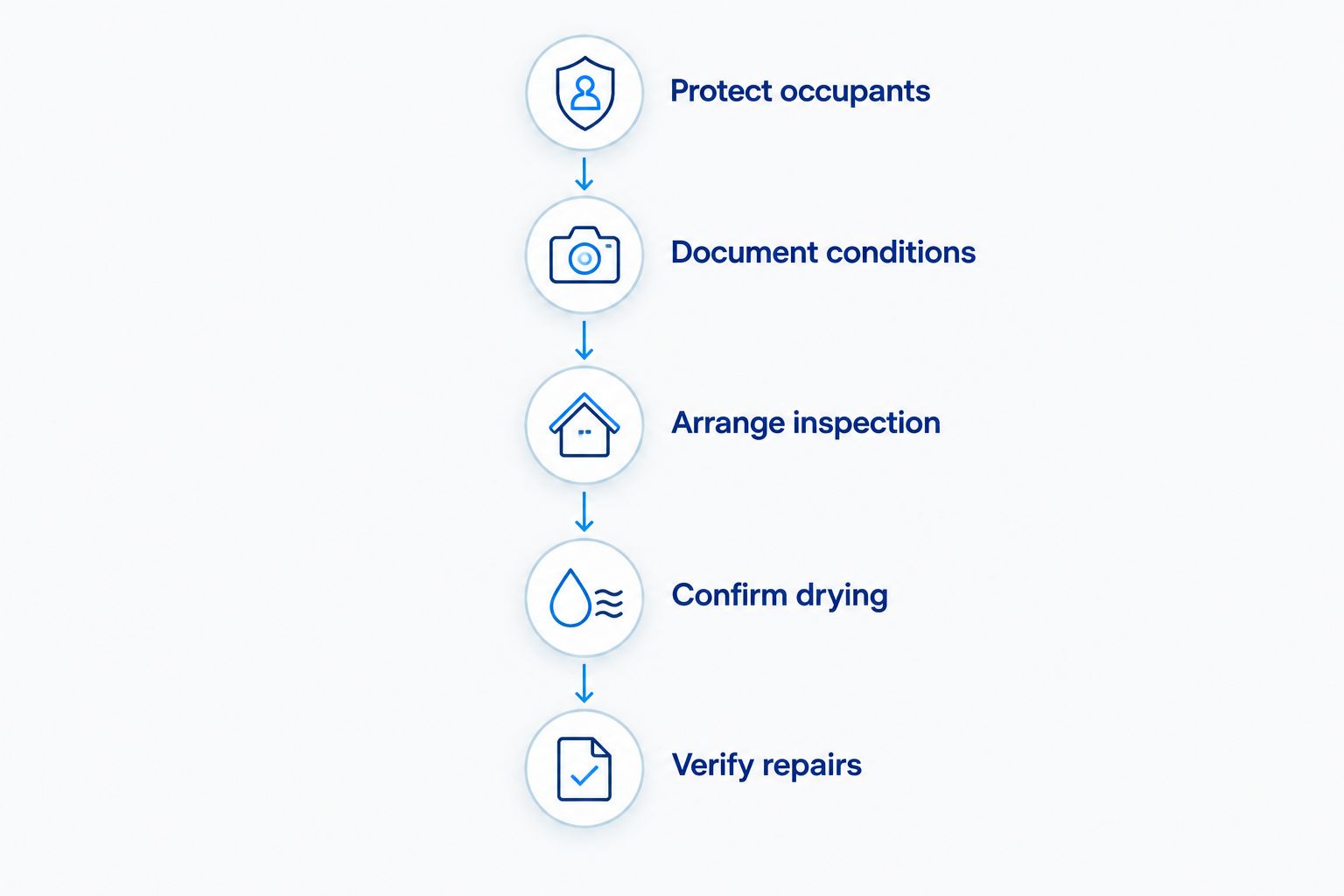
Your job is to protect people, preserve useful information, and arrange an assessment. Leave roof access and repair work to qualified professionals.
- Protect occupants. Keep people away from sagging ceilings, falling material, and wet electrical equipment. In commercial buildings, restrict access to the affected area.
- Document conditions. Photograph the stain or visible water from a safe position. Record when you noticed it and whether it changes during rain or snowmelt.
- Arrange inspection. Request an assessment of the entry point, affected roof materials, and accessible underlying components—not just the ceiling mark.
- Confirm drying. Ask how wet insulation, ceilings, or enclosed materials will be evaluated and dried or replaced where necessary.
- Verify repairs. Keep the written scope, photographs, and completion records. Report recurring moisture rather than assuming a repaired roof makes every later stain harmless.
The U.S. Environmental Protection Agency's mold cleanup guidance recommends drying water-damaged materials within 24–48 hours to help prevent mold growth. That is moisture-control guidance, not a structural-damage deadline or permission to delay a roof inspection.
If you discover older dampness, do not assume the drying window starts when you first see it. Tell the contractor what you know and let the assessment establish the affected area.
Does a small leak need repair or full roof replacement?
A small leak does not automatically justify full roof replacement. The right scope depends on the leak source, the surrounding roof's condition, and whether underlying materials remain serviceable.
A 2026 repair proposal should explain why the recommended work addresses the observed condition. The word repair alone is not enough if the proposal leaves damaged decking or trapped moisture unresolved.
| Approach | Best for | Benefit | Limitation |
|---|---|---|---|
| Localized roof repair | An isolated defect with sound surrounding materials | Targets the identified entry point | Does not correct unrelated deterioration elsewhere |
| Roof replacement | Widespread roof deterioration or an assembly unsuitable for localized repair | Addresses the roof covering as a larger system | Still requires a defined scope for concealed damage |
| Structural assessment and repair | Suspected damage to load-bearing components | Establishes what needs restoration for structural safety | Does not replace the need to correct water entry |
These are not always competing choices. A project can require roofing work and structural repairs, with the responsibilities coordinated before work proceeds.
For commercial properties, ask whether wet insulation or damaged decking falls within the proposed scope. A surface repair that stops visible dripping does not establish that everything beneath it is dry or sound.
What should the inspection report explain?
Ask for photographs and plain-language findings that connect the recommendation to the building. A useful report distinguishes what was observed, what was accessible, and what remains concealed.
The report should explain the suspected entry point, the affected materials, and the reason for recommending repair, replacement, or further evaluation. If framing condition is uncertain, ask whether a qualified structural professional needs to assess it.
For your 2026 maintenance records, retain the inspection date, affected location, repair scope, and any follow-up instructions together. Those records help you identify a recurring problem without relying on memory.
What should you verify before approving work?
Confirm who will address the roof opening, damaged underlying materials, drying, and interior restoration. Those tasks do not necessarily belong to the same contractor, so responsibilities need to be explicit.
Murray Roofing offers residential and commercial roofing, free inspections, and financing. Those services provide a starting point; suspected structural damage still requires the appropriate evaluation rather than a roofing-only assumption.
If warranty protection influences your decision, ask which written terms apply to the proposed work. Murray Roofing lists a 50-year Golden Pledge warranty and a 10-year labor warranty among its trust signals; do not assume either applies automatically to a localized leak repair, existing damage, or every proposed roof assembly.
How long does a small roof leak take to cause structural damage?
There is no fixed timeline that reliably predicts structural damage from a small roof leak. Repeated wetting, drying conditions, material type, and pre-existing deterioration determine the risk.
Do not wait for a larger stain to establish urgency. Arrange an inspection when you notice the leak, and treat sagging or electrical involvement as immediate safety concerns.
Can a roof leak cause damage if the ceiling looks dry now?
Yes, a roof leak can leave wet insulation or concealed materials after the ceiling surface appears dry. A dry-looking finish does not establish that the roof assembly has dried.
Ask how the inspection will evaluate hidden moisture where symptoms justify it. Repainting the ceiling addresses appearance, not the source or condition of materials above it.
Will insurance cover structural damage from a roof leak?
Insurance coverage depends on your policy, the cause of the damage, and the insurer's findings. A roof leak does not automatically establish coverage for roofing work or structural repairs.
Document conditions safely, notify your insurer as required by your policy, and keep repair records. Separate the contractor's assessment of necessary work from the insurer's coverage decision.
FAQ
Can a small roof leak cause structural damage even without a big stain?
Yes, a small roof leak can cause structural damage even when the visible stain is small. Water can travel or remain concealed, so stain size does not measure the affected area.
Does a brown ceiling stain mean my roof framing is rotten?
No, a brown ceiling stain does not prove that roof framing is rotten. An inspection must establish the moisture source and the condition of affected materials.
Is it safe to sleep under a leaking ceiling?
Do not use the area beneath a sagging ceiling, falling material, or a leak involving electrical equipment. Keep people away and obtain urgent professional assessment rather than judging safety by the drip rate.
Can I wait until the next storm to see whether the leak returns?
Arrange an inspection instead of using another storm as a test. A leak that stops visibly can still leave wet materials or an unresolved entry point.
Does fixing the roof leak also fix damaged rafters?
No, stopping water entry does not restore deteriorated rafters or other damaged structural components. Those materials require a separate assessment and an appropriate repair scope.
Who can inspect a leaking roof in Lincoln or Omaha?
Murray Roofing provides residential and commercial roof inspections in Lincoln and Omaha. If the findings suggest compromised load-bearing components, ask whether a qualified structural professional also needs to evaluate the building.
One last thing
A ceiling stain can remain after a successful repair, and a ceiling can look dry while concealed materials remain wet. Appearance alone cannot verify the outcome; the useful evidence is an identified entry point, a documented repair, and attention to affected materials.
If a leak appears in 2026, start a dated record now rather than waiting for visible deterioration. Early documentation gives your inspector a clearer account of what changed and when.
Related guides
- Can a leaking roof cause mold in your attic?
- Is it cheaper to repair a roof or replace it completely?
- How long does a roof inspection take?
Schedule a free inspection with Murray Roofing to identify the leak source and discuss the repair or replacement scope your property needs.
Schedule your roof inspection
Discuss a roof leak at your Lincoln or Omaha home or commercial property.