Roof coating is a good alternative to full replacement when the existing roof is structurally sound, dry beneath the surface, and compatible with the proposed coating system. It does not replace damaged decking, remove wet insulation, or correct a failing roof assembly; those problems need repair or replacement before any coating decision.
- Is roof coating a good alternative to replacement? Yes, when inspection confirms a sound, dry, compatible roof.
- Roof coating protects an existing roof; replacement addresses roof components that cannot remain in service.
- For Lincoln and Omaha properties, compare moisture, drainage, preparation, and warranty requirements before choosing.
- Murray Roofing provides roof inspections for homeowners and commercial property owners evaluating repair or replacement.
Is roof coating a good alternative to full roof replacement?
Yes—but only when you are preserving a roof that still has a serviceable foundation. Coating is not a substitute for removing deteriorated materials or correcting structural problems. For an aging low-slope roof, the condition underneath the surface matters more than whether the finished surface looks uniform.
If you are weighing repairing an aging flat roof, compare these approaches before accepting a proposal. Each addresses a different level of damage.
| Approach | Best for | Main benefit | Main limitation |
|---|---|---|---|
| Targeted repair | An otherwise serviceable roof with isolated defects | Addresses a specific leak or damaged detail | Does not resolve deterioration elsewhere |
| Roof coating | A sound, dry roof approved for the selected coating system | Preserves eligible existing materials and adds a protective surface | Depends on preparation, adhesion, and the condition underneath |
| Full replacement | A roof with widespread deterioration or components that cannot remain | Allows failed materials to be removed and the assembly rebuilt as specified | Requires more extensive removal and construction activity |
A coating proposal should explain why the existing roof qualifies. A replacement proposal should explain which components have failed and why keeping them is not appropriate.
Why this matters
For a Lincoln homeowner or an Omaha commercial property manager planning work in 2026, the wrong comparison is coating versus replacement in name alone. The useful comparison is what each scope fixes, what it leaves behind, and what you must maintain afterward.
An attractive coating proposal is still a poor choice if it leaves wet insulation or damaged decking in place. Replacement is also not automatically necessary when a roof has an isolated, repairable defect. Start with documented condition, then choose the scope.
Roof coating: best for a sound, compatible roof
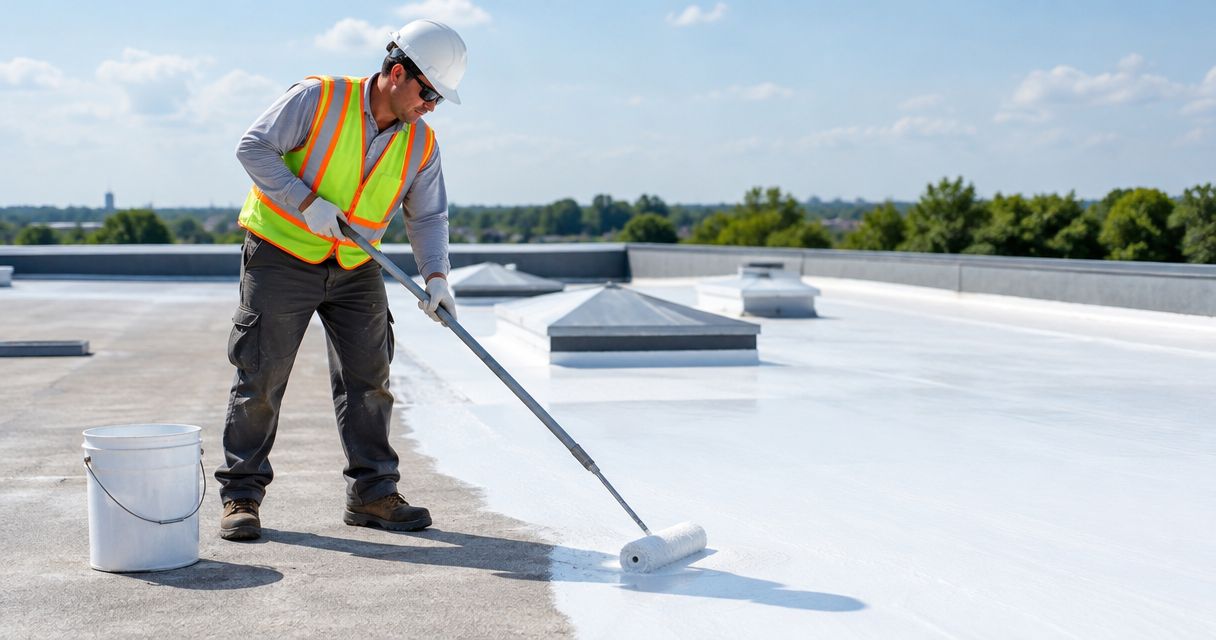
Roof coating deserves consideration when the existing roof can remain in service and the coating manufacturer accepts the substrate. That assessment includes the roof surface, seams, flashings, drainage, previous repairs, and conditions below the surface.
The benefit is preservation. An eligible roof can receive a protective coating without removing the entire existing assembly. Depending on the specified system, the work also includes cleaning, preparation, detail repairs, and reinforcement—not simply applying material across the open roof area.
The limitation is equally important: a coating depends on what it bonds to. Loose material, contamination, unresolved moisture, and incompatible existing coatings can prevent the proposed system from performing as intended.
Ask the contractor to identify the existing roof material and the exact coating system proposed. Then request the manufacturer's requirements for preparation, adhesion verification, drainage, and application conditions. A generic description such as roof restoration does not establish compatibility.
Full replacement: best for a failing roof assembly
Replacement is the appropriate direction when inspection establishes that the existing assembly cannot reasonably remain. Examples include widespread deterioration, extensive moisture damage, or deteriorated decking that requires access and removal.
The benefit is access to failed components. A properly defined replacement scope identifies what will be removed, what will remain, and how discovered damage will be handled. It also gives you an opportunity to address insulation, drainage, and roof details within the project's design and applicable requirements.
The trade-off is disruption. Removal, material handling, building access, and protection of occupied areas need planning, particularly for businesses, apartment buildings, schools, and other occupied properties.
For a 2026 replacement proposal, ask for a clear explanation of the roof assembly rather than a material name alone. The roof covering, insulation, deck condition, flashing details, and drainage all belong in the discussion.
Targeted repair: best for isolated defects
A localized leak does not automatically justify coating the whole roof or replacing it. If the surrounding roof remains serviceable, correcting the failed detail can be the right scope.
The advantage is focus: the contractor addresses the identified problem without expanding the project unnecessarily. The limitation is that a successful local repair does not establish that every other part of the roof is healthy.
Request an explanation of both the immediate defect and the wider roof condition. If repeated repairs are addressing different failures across the roof, reassess the overall approach instead of treating each new leak as an unrelated event.
Why roof coating suitability varies
These factors determine whether coating is a defensible alternative—not the appearance of the finished surface:
- Existing material: The proposed system must be approved for the actual roof substrate, including any previous coatings.
- Moisture condition: Wet insulation and concealed moisture require investigation and an appropriate removal or repair scope.
- Deck condition: A coating cannot restore structural strength to damaged decking.
- Drainage: Standing water and blocked drainage paths need evaluation against the coating system's requirements.
- Surface condition: Loose material, contamination, failed seams, and damaged flashings affect preparation and adhesion.
- Maintenance history: Previous repairs, recurring leaks, and undocumented roof layers affect what the contractor must investigate.
Ask how each factor was assessed. Roof age alone does not answer whether coating is suitable, and a clean-looking surface does not prove that the underlying assembly is dry.
What should an inspection establish before you decide?
A useful 2026 inspection recommendation separates observations from assumptions. You should understand what the contractor saw, what needs further investigation, and how the findings support repair, coating, or replacement.
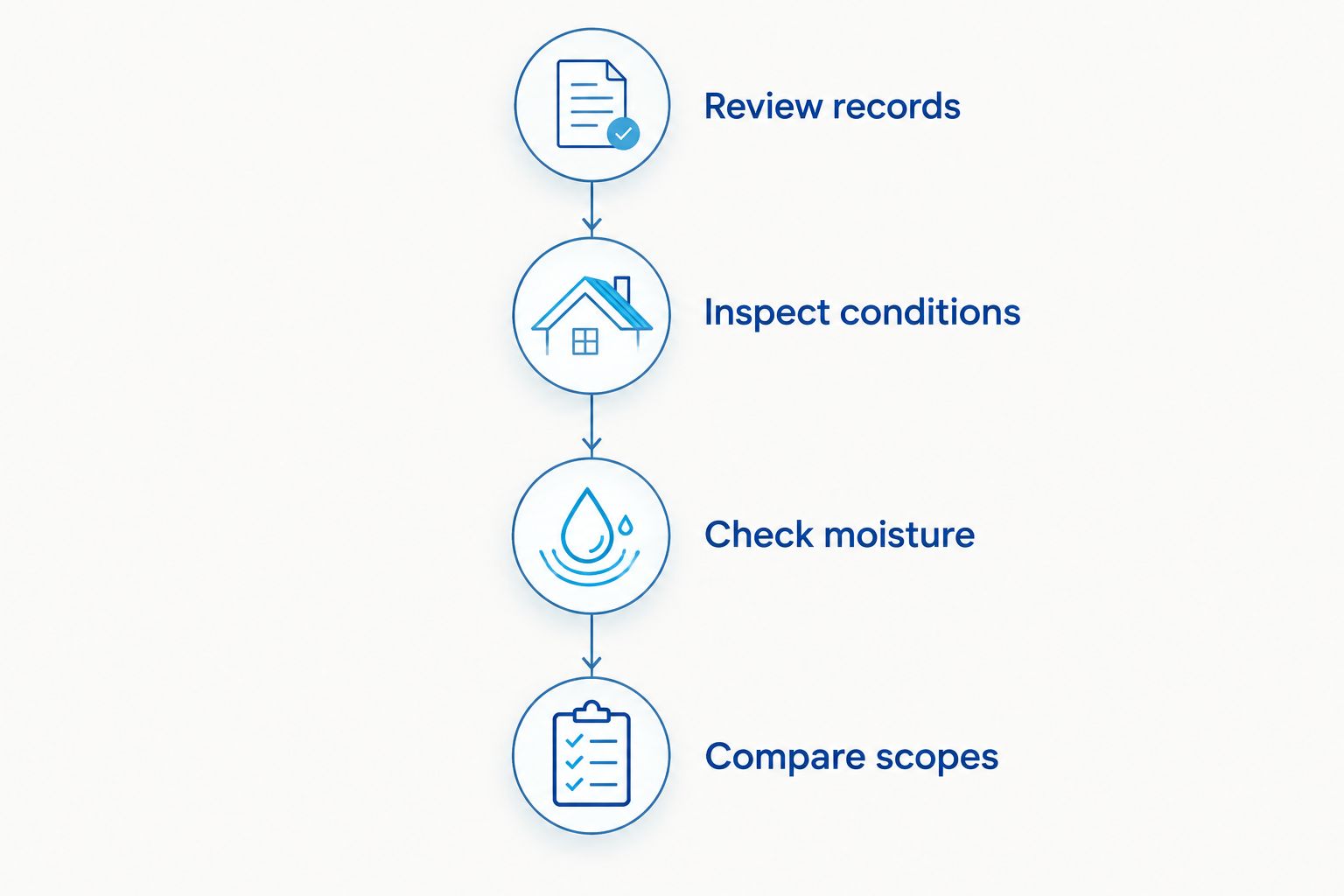
- Review records. Share roof installation information, leak history, past repairs, existing warranties, and any known changes to rooftop equipment.
- Inspect conditions. Have the contractor evaluate the covering, flashings, penetrations, drainage, and accessible interior evidence of leakage.
- Check moisture. Ask whether moisture assessment, exploratory openings, or other investigation is needed to establish the condition below the surface.
- Compare scopes. Request a recommendation that connects the findings to the work proposed and identifies unresolved questions.
Keep this at the contractor-evaluation level. Do not climb onto the roof or open the assembly yourself to gather evidence. Provide interior photos and maintenance records from safely accessible locations.
For the paperwork that follows, the inspection-to-contract process helps you organize findings, scope questions, and approval decisions.
Is coating a good choice for an asphalt-shingle house?
Do not assume that guidance for a commercial low-slope roof applies to asphalt shingles. A coating must be expressly suitable for the existing roof covering, and you need to understand its effect on the roof manufacturer's requirements and warranty.
For a Lincoln or Omaha home with cracked, missing, or deteriorated shingles, ask for a repair-or-replacement assessment first. A surface treatment does not replace damaged shingles, repair underlying decking, or correct attic ventilation problems.
If a contractor recommends coating shingles, request written manufacturer approval for that specific application. Do not accept a general claim that the product works on roofs as proof that it is appropriate for yours.
Can roof coating stop an existing leak?
Roof coating can be part of a leak-control system when the roof qualifies, but the leak source and failed details must be addressed. A field coating alone does not establish that a flashing, drain, seam, or penetration has been repaired.
Ask the contractor to distinguish between the leak-repair work and the coating work. The proposal should identify the relevant preparation and detail treatment, not promise that a continuous-looking surface will solve every water-entry path.
If water is entering the building, protect occupants and contents and arrange professional assessment promptly. Do not delay necessary leak work while deciding on a larger restoration project.
Does a coating warranty replace a new-roof warranty?
A coating warranty and a replacement-roof warranty cover the work and conditions stated in their respective documents. Neither label tells you, by itself, which materials, labor, leaks, or consequential damage are covered.
For a 2026 proposal, request the actual warranty terms before signing. Check who issues the warranty, what preparation is required, what maintenance you must document, and which conditions are excluded.
Do not transfer a warranty claim from one roof system to another. A warranty offered for a qualifying replacement system does not automatically apply to a coating project, and a stated term is not a promise that every future roof problem is covered.
How should you compare the proposals?
Put the proposed scopes side by side. A short coating description and a detailed replacement specification are not enough for a fair decision, even when both contractors inspected the same building.
Ask each contractor to address:
- Evidence: Which findings support the recommendation, and are photos or investigation results included?
- Preparation: Which repairs, removal work, cleaning, and detail treatments are included?
- Remaining materials: What stays in place, and how was its condition established?
- Exclusions: What happens if concealed damage is discovered during work?
- Aftercare: What inspections, maintenance, and records does the selected system require?
Murray Roofing is best for Lincoln and Omaha property owners seeking a roof inspection before choosing repair or replacement. Murray Roofing provides residential and commercial roofing inspections, repairs, and replacement, along with financing; ask whether coating is appropriate for your existing roof rather than assuming it is an offered or suitable solution.
FAQ
Is roof coating a good alternative to replacement in 2026?
Roof coating is a good alternative to replacement in 2026 when inspection confirms a sound, dry roof that is compatible with the proposed system. It is not a substitute for removing failed decking, wet insulation, or other materials that cannot remain.
Can I coat my roof instead of fixing the leaks?
No, coating should not replace diagnosis and repair of existing leaks. The contractor needs to address failed seams, flashings, penetrations, or other water-entry points as part of a defined scope.
Does roof coating work on every flat roof?
No, roof coating is not appropriate for every flat or low-slope roof. Substrate compatibility, moisture, drainage, surface condition, and manufacturer requirements determine eligibility.
Should I coat an old asphalt-shingle roof?
Do not coat an asphalt-shingle roof without written confirmation that the application is appropriate for the specific roof and coating system. Have damaged shingles and underlying conditions assessed for repair or replacement first.
Will a roof coating fix ponding water?
A coating does not correct the roof geometry or drainage defects that cause ponding water. Have drainage evaluated and confirm the proposed system’s standing-water requirements before approving the work.
Do I need to replace a commercial roof that has one leak?
A single leak does not automatically require commercial roof replacement. A targeted repair is appropriate when the defect is isolated and the surrounding assembly remains serviceable.
What should I ask a roofer before agreeing to coating?
Ask what evidence shows that the roof is dry, sound, and compatible with the proposed coating. Request a written preparation scope, moisture findings, drainage assessment, exclusions, and warranty terms.
One last thing
The most important part of a coating decision is often hidden underneath the surface. Before approving work, ask the contractor to show why the existing roof deserves to stay—not just how it will look after coating.
Keep that evidence with your 2026 maintenance records. It gives you a baseline for future inspections and helps the next contractor distinguish an existing condition from a new problem.
Related guides
- Is it cheaper to repair or replace a commercial roof?
- Flat roof systems for commercial buildings
- Roof warranty types compared for homeowners
Schedule a free inspection with Murray Roofing to discuss your roof's condition and get a price for the recommended work.
Schedule your roof inspection
Discuss your roof’s condition and the appropriate repair or replacement scope.