Yes, hail damage repair in winter is possible when the roof is safe to access and the repair materials can be installed under their manufacturer’s requirements. Snow, ice, moisture, and cold-sensitive sealants can delay permanent work, so an active leak sometimes needs temporary protection first. The right decision depends on roof conditions and the proposed repair—not the season alone.
- Hail damage repair in winter requires safe access, suitable surface conditions, and manufacturer-approved installation methods.
- Protect active leaks promptly; temporary protection does not replace permanent roof repair.
- Ask Murray Inspection Services which roof conditions need documenting before you authorize winter work.
- For asphalt shingles, cold-weather handling and sealing requirements matter more than the calendar.
Can hail damage repair be done in winter?
Winter does not automatically prevent hail damage repair, but unsuitable installation conditions do. A contractor needs to assess the damaged roof, identify the roofing system, and check the instructions for every material used in the repair.
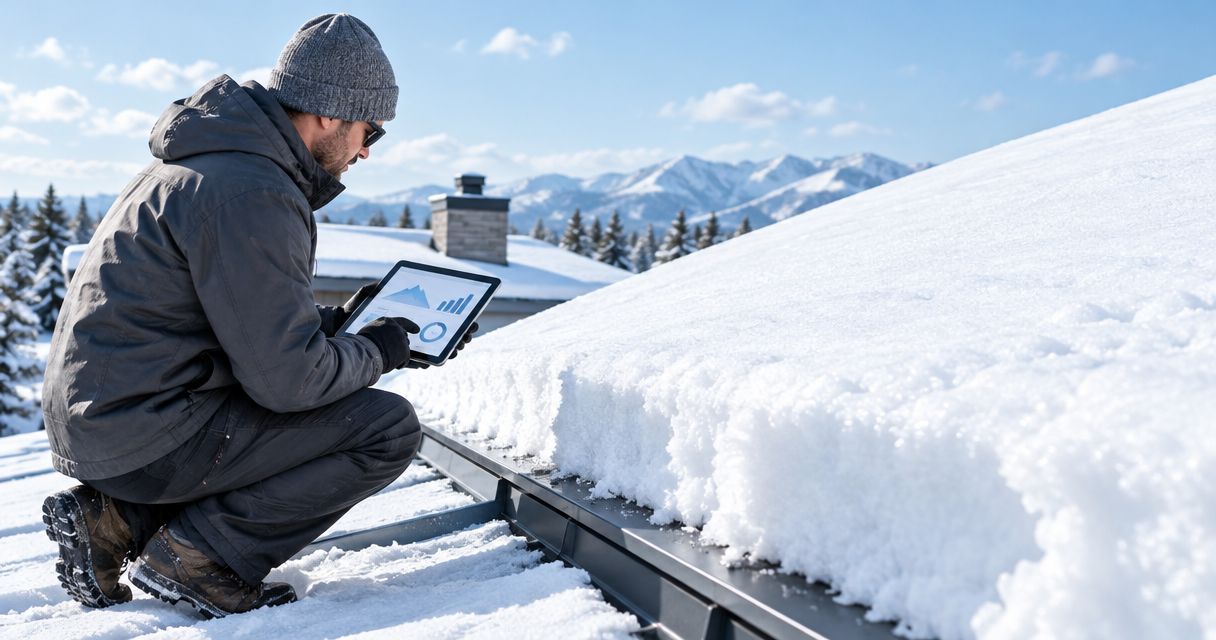
If you are contacting Murray Inspection Services, ask what the inspection will document and which areas remain inaccessible. A snow-covered roof cannot support the same visible assessment as an exposed roof.
The practical choices for a 2026 winter repair are:
| Approach | Best for | Main advantage | Main limitation |
|---|---|---|---|
| Permanent localized repair | Confirmed, limited damage with suitable installation conditions | Addresses the damaged area without replacing the entire roof | Requires sound surrounding materials and compatible repair components |
| Temporary protection | Active water entry when permanent work cannot proceed safely | Limits further exposure while permanent work is arranged | Needs follow-up; it is not a completed repair |
| Deferred permanent work | A roof that can remain protected until conditions improve | Avoids installation outside material requirements | Requires a documented plan and attention to changing conditions |
Choose the approach that controls water entry without creating installation defects. A quick patch is not automatically the right repair, and waiting for spring is not automatically the safe choice.
Why this matters
Hail damage and winter weather create separate problems. Hail can damage roofing materials; freezing conditions can make inspection, access, handling, and sealing more difficult.
Water freezes at 32°F, or 0°C, under ordinary atmospheric conditions. Those figures explain the potential for ice—not a universal minimum temperature for roof repair. A dry afternoon above freezing does not prove that shaded roof areas are clear or that an adhesive is ready to use.
Your 2026 repair decision should answer two questions: does the roof need immediate protection, and can the specified permanent repair be installed correctly now? Treating those as separate decisions prevents a scheduling problem from becoming a water-management problem.
How do you decide whether winter repair should proceed?
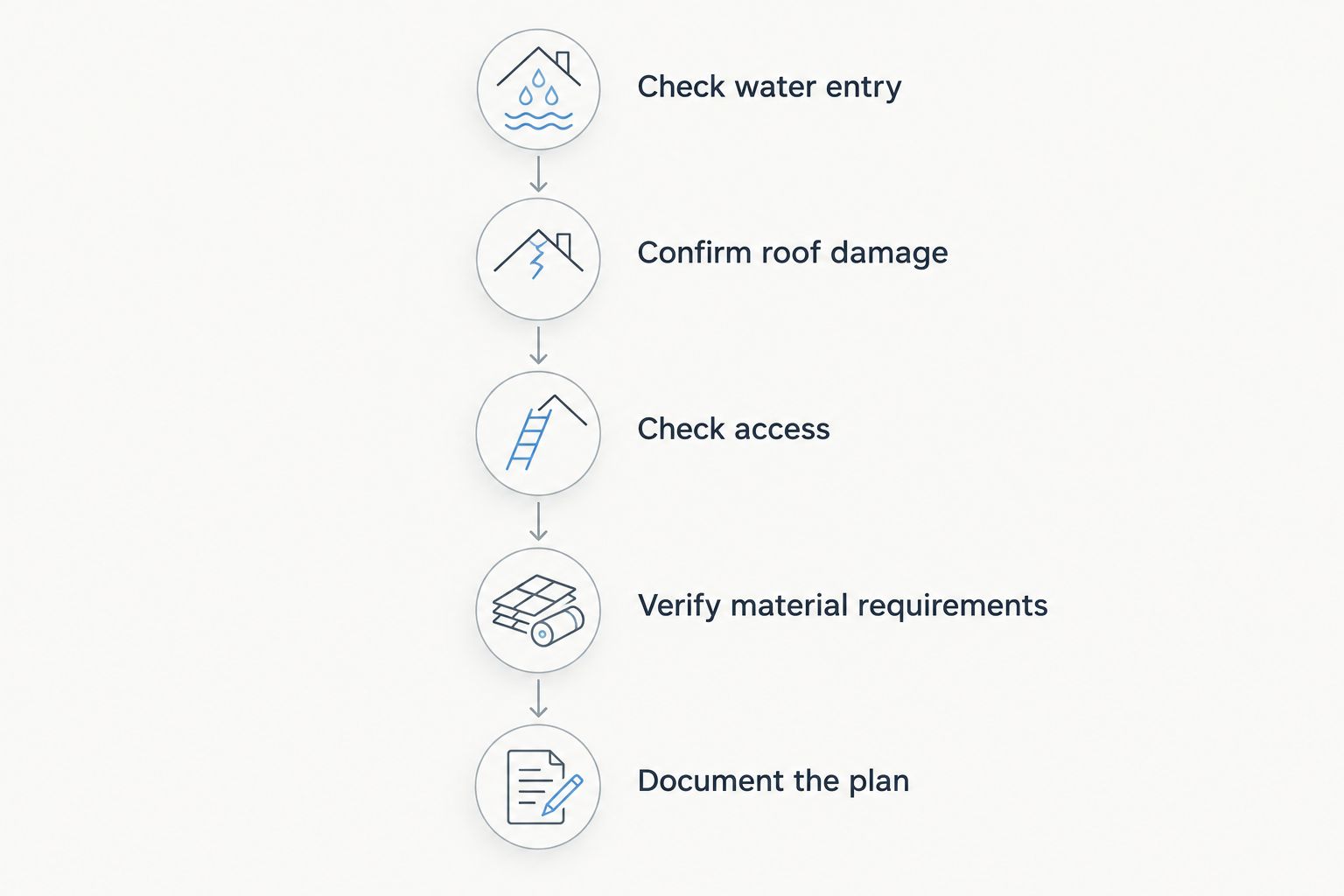
Use this sequence before authorizing permanent work. It separates an urgent leak response from the technical conditions needed for a lasting repair.
- Check water entry. Record visible drips, fresh staining, and affected rooms from a safe position. Keep away from wet electrical equipment and visibly sagging ceilings.
- Confirm roof damage. Have a qualified roofing professional distinguish hail-related damage from wear, ice-related leakage, and other defects. A stain alone does not establish the cause.
- Check access. Confirm that snow, ice, roof pitch, and access arrangements allow the contractor to work safely. Do not climb onto the roof yourself.
- Verify material requirements. Ask for the installation instructions covering temperature, surface preparation, storage, fastening, and sealing.
- Document the plan. Get the permanent scope, any temporary measures, weather-related stop conditions, and follow-up responsibilities in writing.
A contractor who cannot finish permanent work should explain what will protect the roof in the meantime. A contractor who can proceed should explain how the proposed method satisfies the relevant installation requirements.
When is permanent localized repair appropriate?
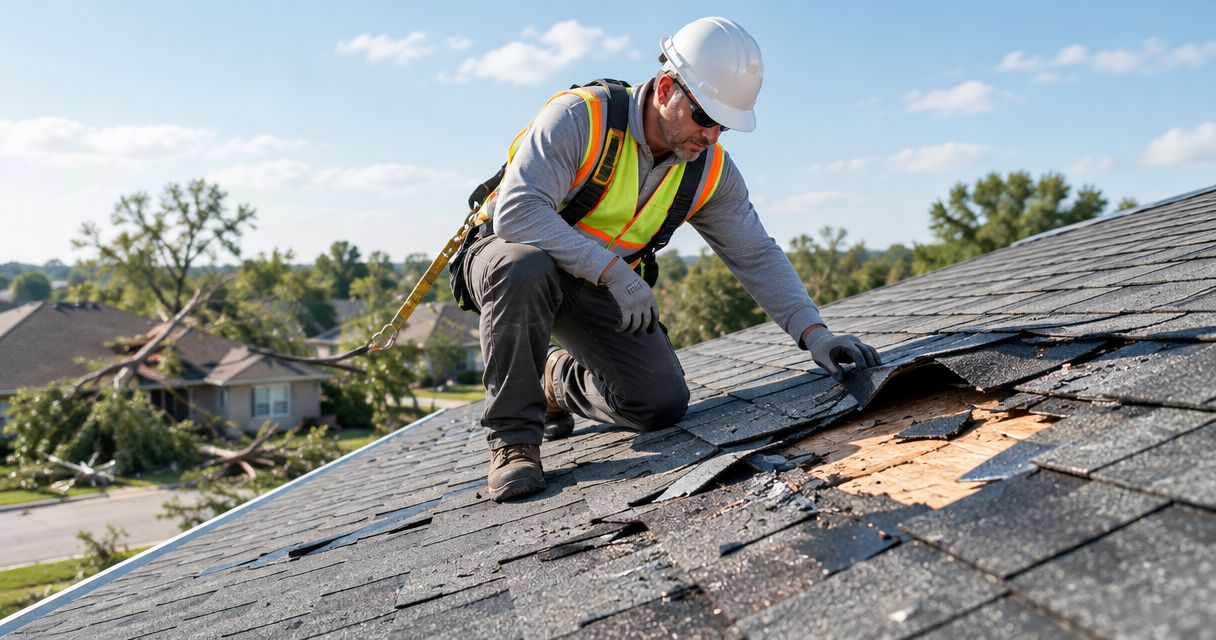
Localized repair fits limited, confirmed damage when the surrounding roof can accept the repair. The assessment should address more than the visible impact mark: adjacent materials, flashing connections, underlayment, and the roof deck can affect the scope.
For asphalt shingles, cold-weather handling deserves particular attention. Shingles become less flexible in cold conditions, and disturbing surrounding shingles can damage them. Self-sealing adhesive strips also depend on suitable conditions; the installer must follow the manufacturer’s instructions for any required hand-sealing.
Ask how the contractor will remove damaged material without compromising neighboring areas. Also ask what happens if opening the roof reveals wet decking or damage beyond the original repair boundary.
The benefit is a targeted repair; the drawback is dependence on the condition of the existing roof. A small visible damaged area does not guarantee that a small repair will be technically suitable.
When should temporary protection come first?
Temporary protection comes first when water is entering and permanent repair cannot be completed safely or correctly. The protection method needs to suit the roof material, damage, weather exposure, and available safe access.
Do not treat a tarp or temporary seal as a standard solution for every roof. Attachment methods can create additional penetrations, and incompatible patching materials can complicate the permanent repair. Let the roofing professional specify the method rather than choosing a product based on its label alone.
Your written temporary-work scope should identify:
- The area being protected and the problem being addressed.
- Whether protection requires later inspection or adjustment.
- The conditions that trigger another visit.
- Who you contact if water entry continues.
- What remains necessary for permanent completion.
Temporary work has a clear advantage: it addresses immediate exposure. Its limitation is equally clear: the underlying damage still needs a permanent decision.
When is waiting for better weather reasonable?
Waiting is reasonable when the roof can remain protected and current conditions prevent compliant installation. Waiting without an assessment is different: it leaves both the damage and the consequences of delay uncertain.
Ask the contractor to distinguish a weather hold from an unresolved scope. A weather hold means the repair is defined but conditions are unsuitable. An unresolved scope means more inspection or investigation is still needed.
For your 2026 work order, request an explanation of what allows work to restart. That might involve a dry surface, clear access, or the application conditions specified for a particular product—not simply a warmer forecast.
The advantage of postponement is avoiding unsuitable installation conditions. The limitation is the need to maintain protection and respond if the roof’s condition changes.
Why winter hail damage repair timing varies
Repair timing varies because different roofs and repair materials have different installation requirements. A single outdoor temperature cannot describe every working surface or repair method.
- Roof moisture: Bonding and sealing products require the surface preparation stated in their instructions. Wet materials also need evaluation before they are covered.
- Snow and ice: Coverings hide damage and interfere with safe footing, access, and inspection.
- Roofing material: Asphalt shingles, metal roofing, and low-slope membranes use different repair methods. Do not apply one system’s rules to another.
- Damage extent: A limited surface repair and damage involving the deck require different scopes and exposure during work.
- Product requirements: Adhesives, sealants, primers, and roofing components have their own storage and application instructions.
- Weather window: Conditions must remain suitable for the work being opened, installed, and made weather-resistant—not just for the arrival time.
Do not accept a blanket claim that all winter roofing is defective or that all cold-weather work is acceptable. Ask for the requirements that apply to the exact proposed repair.
How should you compare repair schedules?
Compare what each contractor promises to complete, not just the earliest arrival date. An inspection appointment, a temporary-protection visit, and completion of a permanent repair are different milestones.
A schedule should state which milestone it describes. It should also explain what happens if conditions change after work begins and how the contractor will leave the opened area protected.
When comparing hail repair turnaround times, distinguish appointment speed from completed repair; a short booking interval does not establish that roof conditions meet installation requirements. For roofing work, the promised completion needs to match the actual scope and weather limitations.
Ask each bidder the same scheduling questions:
- Does the proposed date cover inspection, temporary protection, or permanent repair?
- Which weather conditions stop the work?
- How will an opened area be protected if the forecast changes?
- Who confirms the follow-up date after a weather delay?
A credible 2026 schedule identifies its dependencies. A date without a defined scope tells you little about when the roof will actually be repaired.
What should the inspection report and repair scope include?
Documentation should connect observed damage to a specific repair—not merely label the roof hail-damaged. Ask for photographs with identifiable locations, descriptions of affected materials, and a clear statement of inspection limitations.
Snow coverage matters here. If the contractor cannot see a roof slope, the report should distinguish that limitation from a finding that the slope is undamaged. Hidden areas need a follow-up plan when access and visibility improve.
If you ask Murray Inspection Services about winter inspection documentation, focus on what was observed, what was inaccessible, and what further evaluation is needed. Do not assume an inspection includes repair work, insurance representation, or a particular reporting format.
Before signing, compare the written scope with the documented findings. The question of whether hail damage can be repaired instead of replaced depends on the roof’s condition and repairability, not simply the homeowner’s preferred project size.
Does insurance change whether winter work should happen?
Insurance handling and safe installation are separate decisions. Policy terms govern coverage, reporting requirements, and claim procedures; roofing requirements govern how the work is performed.
Review your policy and contact your insurer about reporting damage and documenting urgent protective work. Preserve photographs, contractor findings, communications, and receipts. Do not assume that waiting until spring extends a policy deadline or that winter weather guarantees additional time.
For a claim reported in 2026, keep the actual storm date, discovery date, inspection date, and repair dates distinct. Accurate dates help explain the sequence without presenting a later inspection as proof of when the damage occurred.
FAQ
Can hail damage repair be done in winter?
Yes, hail damage repair can be done in winter when safe access, roof conditions, and manufacturer installation requirements allow it. Active leaks sometimes need temporary protection before permanent work.
Is 32°F too cold to repair a hail-damaged roof?
32°F is the freezing point of water under ordinary atmospheric conditions, not a universal roofing installation cutoff. The applicable limits depend on the roofing material, repair products, surface conditions, and installation instructions.
Should I wait until spring to report roof hail damage?
Do not assume you should wait until spring to report roof hail damage. Review your policy and contact your insurer about reporting requirements while arranging an assessment and any necessary protection.
Can a roofer inspect hail damage when snow covers the roof?
Snow limits an inspection because it conceals roof surfaces and can prevent safe access. The report should identify those limitations and explain whether another visit is needed.
Does a leaking roof always mean hail damage?
No, a leaking roof does not establish hail as the cause. A roofing professional needs to assess the entry point and distinguish impact damage from other roof defects or winter-related water entry.
Can temporary roof protection stay in place until spring?
Temporary roof protection needs a case-specific follow-up plan rather than an assumed spring expiration date. Ask the contractor about inspection needs, changing weather, and the conditions required for permanent repair.
What should I ask Murray Inspection Services before a winter inspection?
Ask Murray Inspection Services what the proposed inspection covers, how inaccessible areas are recorded, and what documentation you will receive. Confirm whether weather-related limitations require a later visit.
One last thing
A roof that looks dry on top can still contain wet material beneath the repair area. Ask what the contractor will do if opening the roof reveals moisture or damaged decking, including how that changes the scope and authorization process.
The strongest winter repair plan includes a stopping rule as well as a start date. You should know when the contractor will pause, protect the opening, and request approval rather than cover an unresolved problem.
Related guides
- How soon after a storm should I schedule an inspection?
- Is roof hail damage covered by homeowners insurance?
- Can roof hail damage be invisible from the ground?