You can buy a move-in-ready home in Lincoln when a completed property is confirmed for sale and you can meet the purchase and closing requirements. For your 2026 search, confirm the specific home before making moving plans: an already-built house does not mean immediate possession, and an online listing alone does not establish current availability.
- Can I buy a move-in ready home in Lincoln? Confirm the specific property and possession date before committing.
- Murray Custom Homes offers semi-custom, move-in-ready, and custom homes; verify individual homes before planning a purchase.
- Choose move-in-ready for an existing finished layout; consider semi-custom when selected personal choices matter more.
- Separate construction completion, closing, and possession when coordinating your move.
Why this matters
“We Create Luxury Living” is the promise behind Murray Custom Homes. For you, the practical question is which route delivers the right home: selecting an already-built property, choosing selected features in a semi-custom home, or shaping a custom home around your preferences.
Do not confuse a completed home with a completed purchase. Your search needs to establish both whether the house fits your life and whether the transaction fits your move. A beautiful kitchen cannot solve an unsuitable layout or a possession date that conflicts with your plans.
Can I buy a move-in-ready home in Lincoln right now?
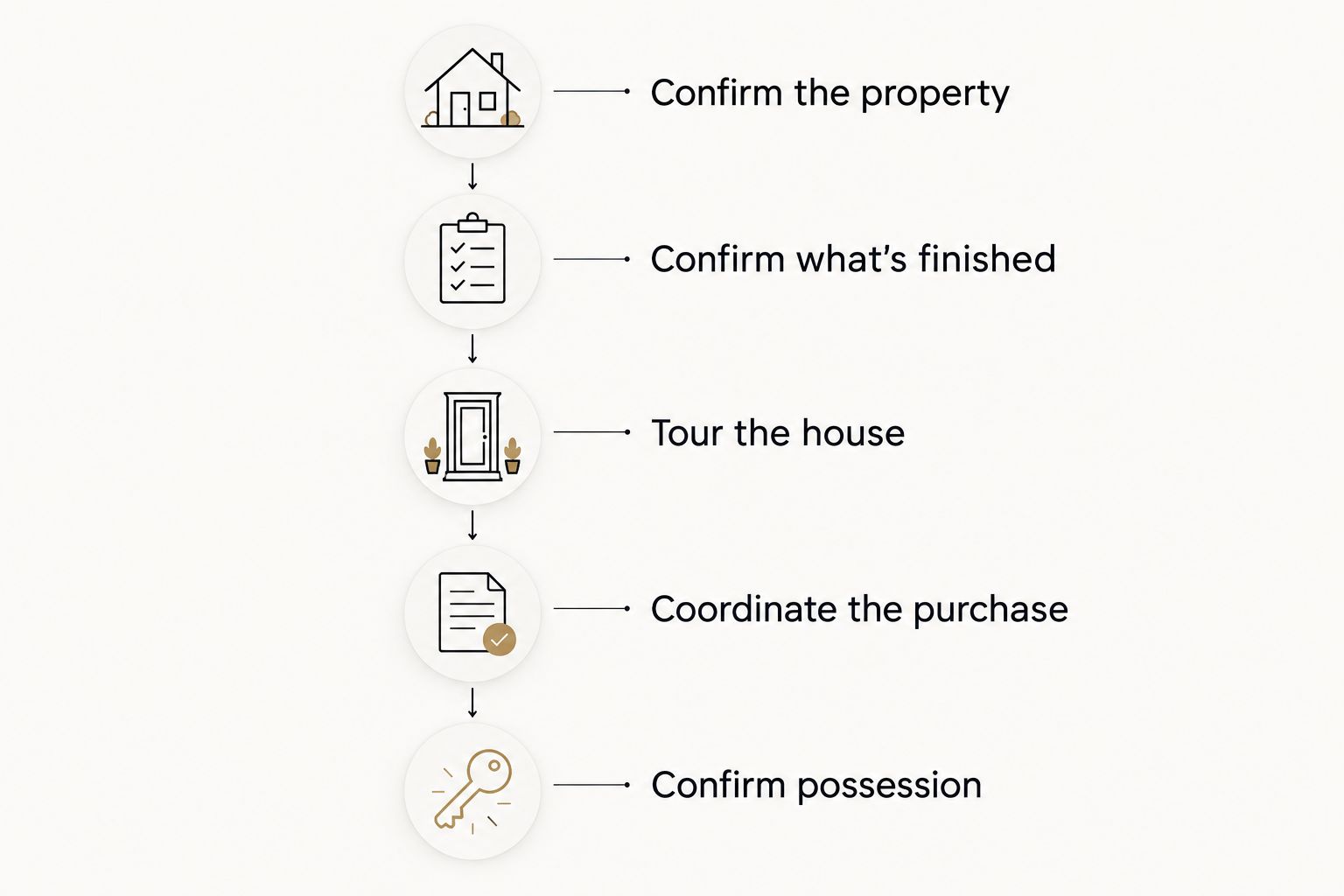
The answer depends on a specific home, not the category name. Start your 2026 search by asking for confirmation of an already-built property, then work through these 5 steps before treating it as your next address.
- Confirm the property. Ask which completed home you can purchase and whether its listing information remains accurate. Request the address and property-specific details rather than relying on a general description of move-in-ready homes.
- Confirm what is finished. Ask whether any construction, installation, or agreed work remains. Separate the home's physical condition from the wording used to describe it.
- Tour the actual house. Review its layout, finishes, storage, and outdoor space. Photographs help you shortlist; the visit lets you judge how the rooms work together.
- Coordinate the purchase requirements. Ask your lender and real estate professionals which financing, inspection, title, and contract matters apply to your transaction. Establish responsibilities before choosing a moving date.
- Confirm possession in writing. Identify when closing occurs and when you receive access. Do not book your move around an assumed handoff.
These steps do not establish that a particular home is currently for sale. They give you a clear way to turn an inquiry into a property-specific buying decision.
Which home option fits your plans?
The 3 home options serve different needs. Start with the decisions you want to make yourself, then compare that preference with your moving requirements.
| Home option | Best for | Main advantage | Trade-off |
|---|---|---|---|
| Semi-Custom Homes | Buyers who want selected personal choices with guidance | Choose selected features and entrust remaining decisions to the builder | Less control than a fully custom design; construction still needs coordination |
| Move-in-ready homes | Buyers who want to evaluate an already-built house | See the actual layout and installed finishes before purchasing | The existing design limits personalization; verify the individual property |
| Custom Homes | Buyers whose priorities require a home shaped around their preferences | Plan the home around your needs and distinctive features | More design decisions and construction planning than purchasing a completed home |
Choose the route that fits your non-negotiables, not simply the route that sounds fastest. An existing house is useful only if its layout works for you. Conversely, a longer design process adds little value when a completed home already meets your needs.
Semi-custom homes: selected choices with guidance
Semi-custom is the middle path when you want personal input without directing every detail. You choose selected features and leave remaining decisions to the builder.
Murray Custom Homes positions semi-custom homes around a faster build and less stressful decision-making than fully custom homes, without promising a fixed schedule. Ask which choices remain yours and when those selections must be settled. The limitation is equally important: semi-custom does not mean unrestricted design freedom.
Move-in-ready homes: inspect the home you would buy
An already-built home lets you evaluate actual spaces rather than interpreting drawings alone. You can stand in the kitchen, follow the route from the garage, and assess how bedrooms relate to shared living areas.
The compromise is accepting decisions already made. Treat any requested alteration as a separate question requiring confirmation, not as an included benefit of buying new construction.
Custom homes: shape the design around your needs
A custom home suits buyers whose essential requirements are not met by an existing layout. That includes planning around how you cook, work, host, store belongings, or use shared spaces.
Custom building requires design participation and construction planning. It is not the substitute for a completed house when your overriding requirement is a near-term move. The builder can also build on your existing lot, subject to confirming the project details.
Why your move-in date varies
For a 2026 purchase, distinguish the home's completion status from the steps needed to buy it. These factors belong in your property-specific conversation:
- Property confirmation. Establish whether the exact house you want can be purchased before coordinating other commitments around it.
- Remaining work. Identify unfinished items and document how they affect the agreed handoff.
- Financing requirements. Ask your lender what remains before financing can support closing; do not substitute a general expectation for transaction-specific confirmation.
- Contract conditions. Review inspection arrangements, title matters, and other agreed conditions with the professionals handling your purchase.
- Requested changes. Ask whether alterations are accepted and how they affect the work and agreement. Do not assume changes fit the original plan.
- Possession terms. Confirm when you receive access, particularly when your current home sale or rental end date depends on that handoff.
Ask for a documented sequence, not an unsupported completion promise. A useful answer identifies the remaining tasks, the person responsible for each, and the conditions attached to your expected move.
What should I check during a move-in-ready home tour?
Walk through the house as though you already live there. Begin with the routines that are hardest to change through decorating: arriving home, preparing meals, doing laundry, storing equipment, and finding quiet space.
Test the layout against daily life
Follow the route from the vehicle entrance to the kitchen. Look at where you would place bags, coats, and groceries. Then check whether bedroom locations and shared spaces suit your household's waking hours and privacy needs.
Use your own furniture requirements to assess rooms rather than judging them solely by staging. Write down important dimensions before the tour and compare them with the actual space. An attractive room still needs to accommodate how you use it.
Separate included features from presentation
Ask which appliances, fixtures, landscaping elements, and other visible items form part of the purchase agreement. Record the answers. Do not assume that everything shown in photographs or during a tour transfers with the property.
If a feature matters to your decision, identify it clearly in the transaction documents. This is particularly useful for items you would otherwise need to replace or add immediately after moving.
Identify concerns before discussing changes
Distinguish a cosmetic preference from a layout problem. A finish you dislike and a bedroom arrangement that does not work are different buying decisions.
Ask about any concern before assuming the builder will change it. If resolving the issue requires redesigning much of the home, return to the semi-custom or custom comparison rather than trying to force a completed house into a different role.
What should I ask the builder before making an offer?
Keep your 2026 inquiry focused on the actual property and your decision criteria. A short, organized conversation produces more useful answers than asking only how soon you can move.
- Which completed property are we discussing, and what is its current status?
- What work, if any, remains before the agreed handoff?
- Which installed and displayed items are included in the purchase?
- Can you accommodate requested changes, and how would those be documented?
- What needs to happen before closing and possession?
- Who should receive questions about the property and remaining work?
Murray Custom Homes provides in-house drafting and design, blueprints and 3D renderings, and construction and project management. Meghan Murray provides in-house design guidance, and the project managers bring more than 20 years of combined experience. Those resources are relevant when you need to compare an existing home with a different building route; they do not establish that a specific completed house can be purchased.
You can learn more about the builder before discussing the fit. Homebuilding is Lincoln-based within a stated 50-mile radius; confirm the location of your proposed project rather than assuming every nearby community falls within that area.
Discuss your home options
Ask about completed homes, selected semi-custom choices, or a custom build shaped around your needs.
Is a move-in-ready home better than semi-custom?
A move-in-ready home is better when the completed layout meets your needs and the purchase arrangements fit your move. Semi-custom is better when selected personal choices matter enough to justify a building process.
Murray Custom Homes is best for Lincoln buyers comparing semi-custom, move-in-ready, and fully custom homes. The useful comparison is not “new versus new.” It is accepting an existing design versus choosing selected features versus shaping the home around your preferences.
Can I change a move-in-ready home before closing?
Changes require property-specific approval; do not assume an already-built home includes further customization. Ask what work is possible and how it would affect the agreement and handoff.
Keep the original house and the proposed work distinct in your evaluation. First decide whether the home works without alterations, then assess whether confirmed changes resolve the remaining concerns.
Does move-in-ready mean I can get the keys immediately?
Move-in-ready does not establish immediate possession. The physical house and the purchase transaction have separate requirements, and your agreement determines when you receive access.
For your 2026 plans, coordinate closing and possession before ending a lease, scheduling movers, or relying on proceeds from another property. Replace assumptions with written dates and clearly stated conditions.
FAQ
Can I buy a move-in ready home in Lincoln right now?
You can buy a completed home when a specific property is confirmed for sale and you can meet its purchase requirements. Confirm the house, closing conditions, and possession arrangements before making moving commitments.
Does Murray Custom Homes offer move-in-ready homes?
Murray Custom Homes includes already-built, move-in-ready homes among its three home options. Confirm individual properties directly rather than treating that offering as proof of current inventory.
What’s the best home option if I want fewer design decisions?
A move-in-ready home suits buyers who want to evaluate an existing design, while semi-custom suits buyers who want selected personal choices. Compare the actual layout and selection responsibilities before choosing.
Can I tour the actual house before deciding?
Ask to arrange a tour of the specific completed home you are considering. Use the visit to assess room relationships, installed finishes, storage, and the features included in the purchase.
Can I buy a completed home and change its finishes?
Requested changes need confirmation for the individual property. Establish what work is accepted and document its effect on the purchase and handoff before relying on it.
Can I build on land I already own instead?
Murray Custom Homes can build on a client’s existing lot. Confirm the project location and requirements; its stated homebuilding service area is within a 50-mile radius of Lincoln.
Should I plan my move around the listing’s description?
Plan your move around confirmed purchase and possession arrangements, not the listing’s description alone. Verify the home’s status and remaining transaction requirements with the people handling your purchase.
One last thing
Bring a list of what you will not change. Buyers often arrive ready to discuss finishes but without deciding which layout compromises they can accept. Identify the daily routines your next house must support before touring.
If a completed home meets those requirements, evaluate the purchase on its merits. If it does not, use the same list to discuss semi-custom or custom building. The right route starts with fit, not with the label attached to the house.
Related guides
- Move-in-ready home features to look for
- Can you customize a move-in-ready home before closing?
- How long does closing on a move-in-ready home take?