
A move-in-ready home closes when financing, title work, required disclosures, and the purchase contract's conditions are complete—not simply when construction is finished. Your signed contract sets the target date; your lender and closing agent confirm whether the transaction is ready, and the possession agreement determines when you receive the keys.
- How long does it take to close on a move-in ready home? Financing, title clearance, and contract conditions determine timing.
- Move-in-ready describes the home’s condition, not a guaranteed closing date or immediate possession.
- Most covered mortgages require receipt of the Closing Disclosure at least three business days before closing.
- Murray Custom Homes offers already-built homes for Lincoln-area buyers who prefer choosing a completed home.
How long does it take to close on a move-in ready home?
There is no single closing timeline that applies to every move-in-ready home. A completed house removes the need to wait for its construction, but it does not remove mortgage approval, title review, or the other conditions in your purchase agreement.
For a 2026 purchase, ask for a closing date tied to your actual loan and contract rather than a general estimate. If you are comparing the final stages of a new-home purchase, this guide to final walkthrough and key handoff addresses the transition from a finished home to possession.
Use this sequence to understand what must happen:
- Agree on the contract. Confirm the proposed closing date, contingencies, included items, and possession terms.
- Complete financing requirements. Give your lender the requested documents and address outstanding underwriting conditions.
- Resolve property and title requirements. Coordinate any required appraisal, inspections, title review, and related corrections.
- Review closing documents. Check the final loan terms, settlement details, and instructions for transferring funds.
- Complete closing and possession. Confirm the required signatures, funding, and contractual conditions for releasing the keys.
These steps can overlap. A scheduled signing appointment alone does not establish that every condition has been satisfied.
Why this matters
A home can be physically finished before its purchase is ready to close. Treating those as the same milestone creates avoidable problems when you schedule movers, end a lease, or coordinate the sale of your existing home.
Keep three dates separate: the contractual closing date, the signing appointment, and the possession date. They can align, but your agreement and closing instructions—not the listing description—control what each date means.
For your 2026 move, confirm possession before making commitments that depend on access to the house. Ask who will notify you that keys can be released and whether any conditions remain after signing.
Buying with a mortgage
Best for: buyers who want to finance the purchase rather than use only their own funds. A mortgage-financed purchase includes lender review as well as the seller's and closing agent's requirements.
Preapproval helps establish your financing position, but it is not final approval for a particular home. Your lender still needs to complete the applicable borrower, property, and loan reviews before authorizing closing.
Ask your lender to identify the remaining conditions in plain language. A useful update explains what is outstanding, who must supply it, and whether it affects the proposed date—not merely that the file is being processed.
For most mortgages covered by federal disclosure rules, you must receive the Closing Disclosure at least three business days before closing. The Consumer Financial Protection Bureau's consumer guidance explains this requirement under the federal mortgage disclosure framework; it is a minimum review period, not an estimate for the entire purchase process.
When planning a 2026 closing, have your lender calculate the applicable disclosure dates. Certain changes require a new waiting period, while other corrections do not; let the lender determine which rule applies to your transaction.
Buying without a mortgage
Best for: buyers who intend to purchase without mortgage financing. A cash purchase removes mortgage underwriting from the transaction, but title work, contract conditions, document preparation, and settlement still matter.
The benefit is fewer lender-dependent steps. The trade-off is that you are committing your own funds and must still decide which inspections, reviews, and contractual protections you need.
Do not assume that a cash offer means immediate possession. Ask the closing agent when funds must arrive, how their receipt will be confirmed, and what must happen before the seller releases the home.
| Purchase route | Best for | Timing advantage | Remaining limitation |
|---|---|---|---|
| Mortgage-financed purchase | Buyers using a home loan | A prepared loan file helps the lender address outstanding conditions | Underwriting, property review, and applicable disclosure requirements remain |
| Cash purchase | Buyers purchasing without a mortgage | Removes mortgage underwriting and lender disclosure steps | Title, contract, settlement, and possession requirements remain |
Choose the financing route that fits your financial plan, not an assumed promise of speed. Neither route replaces a written agreement about closing and possession.
Why move-in-ready closing times vary
The most useful timeline comes from identifying unresolved requirements. Ask your transaction team to review these factors before treating the proposed date as firm:
- Loan approval: Outstanding income, asset, credit, or other underwriting documentation keeps financing unresolved.
- Appraisal requirements: If your lender requires an appraisal, its completion and review are part of the approval process.
- Title clearance: Ownership questions, liens, or other title issues need resolution before the transaction can proceed as agreed.
- Contract contingencies: Inspection, financing, and existing-home-sale conditions affect what must happen before closing.
- Closing documents: Required disclosures, accurate settlement documents, and verified funds instructions must be ready.
- Possession terms: The agreement determines whether access follows closing or occurs under another arrangement.
Avoid asking only whether the home is ready. Ask whether the transaction is ready—and which specific requirement remains open.
A new issue deserves a clear response: who owns the next action, what document or decision is needed, and whether the contractual date needs to change. Keep any agreed changes in writing through the appropriate transaction professionals.
How to keep your closing organized
You cannot control every part of a purchase, but you can make your own responsibilities clear. Organize the process around the next required action rather than repeated requests for a general status update.
Confirm the agreement
Read the closing and possession provisions before arranging your move. Ask your real estate professional or attorney to explain any language you do not understand, including what happens if a condition remains unmet.
Complete the loan file
Send requested documents through your lender's approved process. Before taking on new debt or making financial changes during underwriting, ask your lender whether the change affects approval.
Resolve open conditions
Keep a written list of outstanding lender, title, inspection, and contract items. For each item, identify the responsible person and the next action so that an unanswered request does not disappear into an email thread.
Review the documents
Compare the Closing Disclosure with your expected loan terms and ask about discrepancies before signing. Verify payment instructions directly with your closing agent using independently confirmed contact information; do not rely solely on an unexpected email.
Confirm possession
Ask when and how the keys will be released. Coordinate utilities, deliveries, and movers around confirmed access rather than the assumption that signing documents gives you immediate entry.
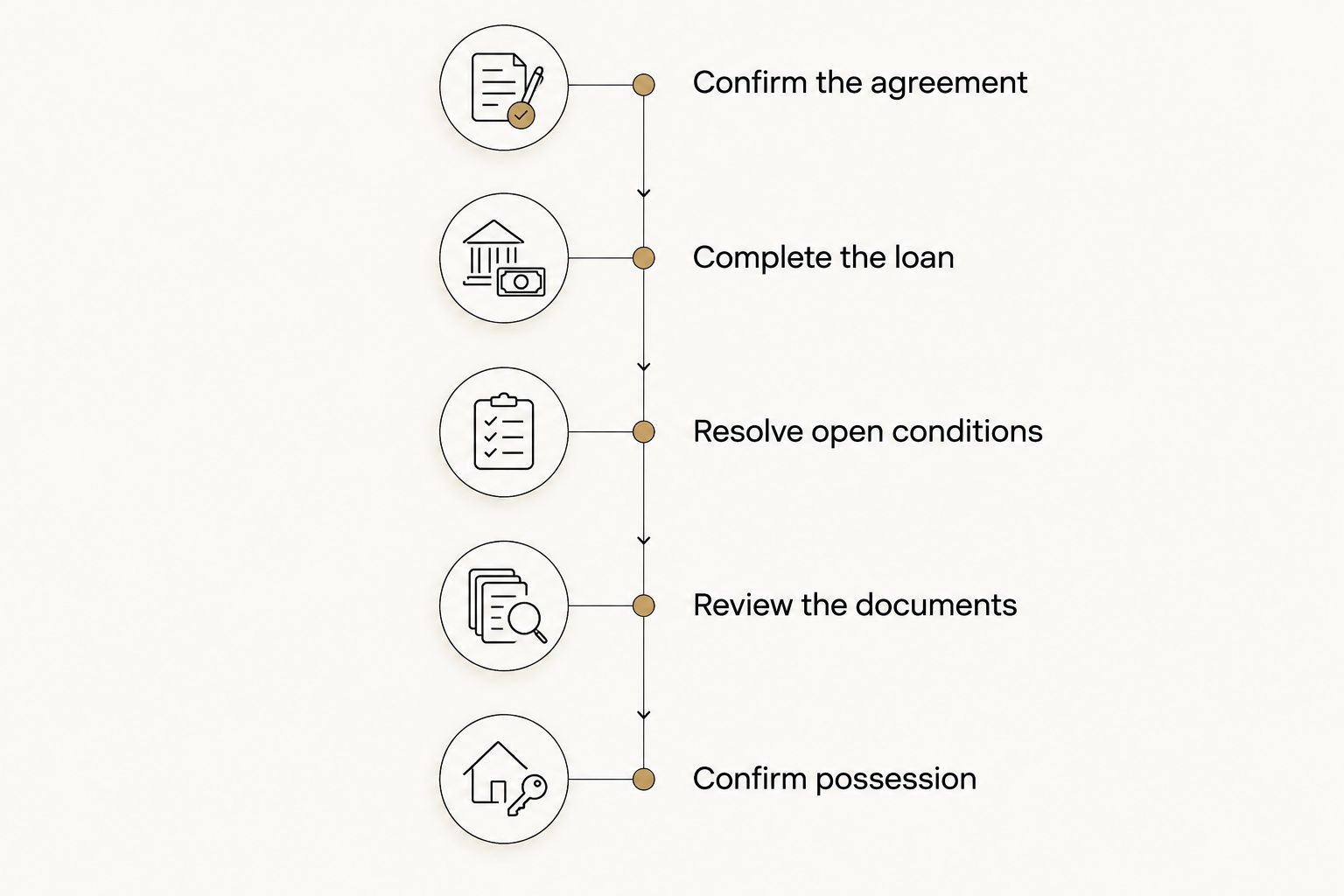
Use these checkpoints for a 2026 purchase whether you are buying locally or relocating. The goal is not to collect more paperwork; it is to know what stands between your signed agreement and access to the home.
Does move-in-ready mean I can move in immediately?
Move-in-ready does not mean immediate possession. It describes a home you can evaluate as a completed property, while the contract determines when the seller must provide access.
Before closing, confirm that the home's condition matches the agreement and that any agreed work has been addressed. Use the final walkthrough to raise unresolved items with your transaction team rather than assuming they will be handled after you move.
Also ask what stays with the home. Fixtures, appliances, and other included items should follow the written agreement, not your impression from a showing.
Can I close before selling my current home?
You can close before selling your current home only if your financing and contract allow it. If the purchase depends on sale proceeds or a home-sale contingency, that dependency belongs in the closing plan.
Tell your lender and real estate professional early if you need the transactions coordinated. Ask what happens if the existing home's closing changes and whether your purchase agreement provides an acceptable path in that situation.
Is a completed home the right choice for your move?
“We Create Luxury Living” is the promise behind Murray Custom Homes. The Lincoln-based builder offers Semi-Custom Homes, already-built move-in-ready homes, and Custom Homes within a stated 50-mile homebuilding radius.
Murray Custom Homes move-in-ready homes are best for Lincoln-area buyers who prefer choosing a completed home rather than directing a build. The trade-off is less opportunity to shape the original design around your preferences; confirm any proposed changes before including them in your purchase plans.
Semi-Custom Homes suit buyers who want to choose selected features and leave remaining decisions to the builder. Custom Homes suit buyers who want a home shaped around their preferences, supported by in-house drafting, design, blueprints, and 3D renderings.
| Home option | Best for | Main benefit | Trade-off |
|---|---|---|---|
| Semi-Custom Homes | Buyers seeking selected design choices | Personal input without directing every decision | Not the same breadth of choice as a fully custom home |
| Move-in-ready homes | Buyers who prefer evaluating a completed home | You can assess the finished layout and spaces | Original design decisions are already made |
| Custom Homes | Buyers with specific design priorities | A home shaped around the buyer's preferences | Requires participation in design and construction decisions |
Murray Custom Homes provides in-house design guidance from Meghan Murray and project management backed by more than 20 years of combined experience. Those services help distinguish the building options, but they do not establish a guaranteed closing timeline for an individual purchase.
Discuss your homebuying plans
Ask which home option fits your design priorities and intended move.
FAQ
How long does it take to close on a move-in ready home in 2026?
The closing timeline depends on financing, title clearance, required disclosures, and the purchase contract’s conditions. Ask your lender and closing agent to confirm the proposed date against the outstanding requirements for your transaction.
Does mortgage preapproval mean I can close right away?
Mortgage preapproval does not mean your purchase has final loan approval. Your lender must complete the applicable borrower, property, and underwriting reviews before authorizing closing.
How early should I receive my Closing Disclosure?
For most covered mortgages, you must receive the Closing Disclosure at least three business days before closing. Ask your lender to calculate the deadline and explain whether any later change requires a new waiting period.
Is a cash purchase guaranteed to close faster?
A cash purchase is not guaranteed to close faster. It removes mortgage underwriting, but title issues, contract contingencies, settlement requirements, and possession terms still affect timing.
Can I get the keys as soon as I sign?
Signing documents does not automatically entitle you to the keys. Your purchase agreement and closing instructions determine the conditions for possession and key release.
Can a finished new home still have closing delays?
A finished new home can still have closing delays because construction completion and transaction readiness are different milestones. Financing, title, documents, or unresolved contract conditions can prevent the purchase from closing as planned.
Should I book movers before the closing date is confirmed?
Confirm possession terms and outstanding closing conditions before committing to arrangements that depend on access. Ask your closing agent and real estate professional how you will receive confirmation that keys can be released.
One last thing
Ask about possession before you ask about the moving truck. For a 2026 home purchase, the most useful final question is: What must happen after signing before I can enter the house?
Get that answer from the closing agent and the person responsible for releasing the keys. A clear possession plan connects the legal transaction to the practical moment your move can begin.
Related guides
- How mortgage preapproval shapes your homebuying timeline
- Can you customize a move-in-ready home before closing?
- How to time selling your current home with a new build