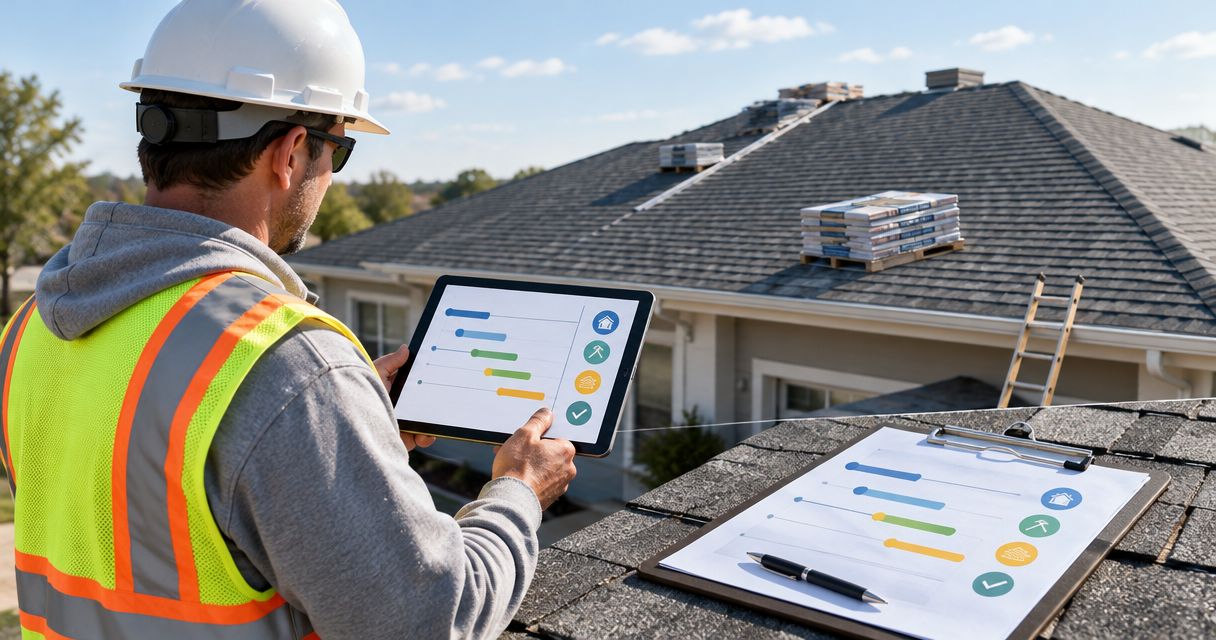
Inspect a commercial roof 2 times per year as a preventive-maintenance baseline, roughly 6 months apart, and add inspections after damaging weather, new leaks, or rooftop work. Follow the roof manufacturer’s maintenance instructions and warranty terms when they require a different schedule; a calendar inspection does not replace an event-driven assessment.
- How often commercial roof inspection visits occur: twice yearly as a baseline, plus checks after storms, leaks, or rooftop work.
- Manufacturer instructions and warranty terms take priority over a generic maintenance calendar.
- A dry ceiling does not establish that seams, flashings, and drains are sound.
- Evaluate Murray Inspection Services against your roof type, inspection scope, reporting needs, and follow-up requirements.
Why this matters
A roof inspection schedule should help you find deterioration before it becomes an interior disruption. Waiting for a ceiling stain turns the building interior into your warning system, even though visible roof defects and blocked drainage can exist before occupants notice water.
For your 2026 maintenance plan, separate scheduled inspections from checks triggered by a specific event. You need both: recurring visits establish a condition record, while event-driven visits investigate what changed.
Murray Inspection Services is a commercial roof inspection candidate for property managers who confirm the proposed scope matches their building. When evaluating Murray Inspection Services, ask about the roof system, access requirements, report contents, and responsibility for follow-up before booking.
How often should a commercial roof be inspected?
Use 2 inspections per year, commonly in spring and fall, as your starting schedule. That places professional condition reviews approximately 6 months apart, with additional assessments whenever weather, symptoms, or rooftop activity justify them.
This is a maintenance recommendation, not a universal legal requirement. Your building’s roof documents, manufacturer instructions, and warranty conditions determine whether additional inspections or specific documentation are necessary.
| Inspection approach | Best for | Main advantage | Main limitation |
|---|---|---|---|
| Scheduled inspections | Establishing a recurring maintenance record | Makes condition changes easier to compare | Cannot anticipate damage between visits |
| Event-driven inspections | Investigating storms, leaks, or rooftop alterations | Focuses attention on a specific change | Does not replace routine maintenance |
| Staff observations | Spotting visible changes between professional visits | Keeps building conditions under observation | Does not establish concealed roof condition |
A practical 2026 calendar combines these approaches rather than choosing one. Assign responsibility for booking professional visits and for escalating observations from facilities staff, tenants, and rooftop contractors.
What should happen between scheduled visits?
Keep a record of leaks, drainage concerns, ceiling stains, and rooftop service work. Record where and when each issue appeared, including whether it followed rainfall or equipment maintenance.
Do not send untrained staff onto the roof to satisfy a calendar entry. Ground-level and interior observations can trigger an assessment, but roof access requires appropriate authorization, access arrangements, and fall protection.
Spring inspection: 1 scheduled visit
A spring inspection gives you a defined opportunity to assess conditions after winter weather. The focus should reflect your climate and roof system rather than a generic checklist copied from another building.
Ask the inspector to examine accessible roof surfaces, flashing transitions, penetrations, and drainage components. Where winter debris has accumulated, distinguish clearing the obstruction from inspecting the surrounding roof for damage.
Best for: establishing the roof’s condition before the next seasonal maintenance cycle. The advantage is a consistent checkpoint; the limitation is that a spring visit cannot account for a storm or equipment installation that happens afterward.
For the spring entry in your 2026 plan, carry forward unresolved items from the previous report. An item should remain open until its disposition is documented, not disappear because a new inspection produced a new list.
Fall inspection: 1 scheduled visit
A fall inspection provides another condition checkpoint before winter. Pay particular attention to drainage paths, accumulated debris, penetrations, and repairs completed since the previous visit.
The roof’s material matters. Membrane seams, metal details, and other roof assemblies require different inspection methods, so the scope should identify the actual system rather than promise the same assessment for every roof.
Best for: identifying maintenance work that needs attention before winter conditions complicate access. The advantage is planned follow-up; the limitation is that seasonal timing alone says nothing about inspection quality.
Close the fall visit with named responsibilities. A report that identifies a drainage problem without assigning the next action leaves the maintenance task unfinished.
Event-driven inspections: do not wait for the calendar
Request an assessment when you discover an active leak, storm-related damage, displaced material, or a new problem after rooftop work. The next scheduled inspection is not a reason to postpone investigating a current defect.
An event-driven assessment should distinguish observed damage from assumptions about its cause. Photographs, locations, weather context, and prior inspection records help document the sequence, but they do not automatically establish insurance coverage or responsibility.
Best for: investigating a specific incident or symptom. The advantage is timely attention to a changed condition; the limitation is that a narrowly scoped visit might not assess unrelated areas of the roof.
Ask whether the visit covers the affected area or the entire accessible roof. Those scopes answer different questions, and the report should make the distinction explicit.
Why commercial roof inspection frequency varies
A twice-yearly baseline is a starting point, not permission to ignore the building between visits. Use these factors to decide whether the roof needs closer attention:
- Manufacturer instructions: Follow the maintenance and inspection requirements applicable to the installed roof system.
- Warranty conditions: Check required records, approved repair procedures, and any specified inspection obligations.
- Condition history: Recurring leaks, unresolved defects, and repeated repairs justify reviewing the inspection plan.
- Weather exposure: Hail, wind, snow, and heavy rain create different reasons for an additional assessment.
- Rooftop activity: Equipment servicing and installations can affect nearby surfaces, flashing, and penetrations.
- Drainage conditions: Debris accumulation and obstructed drainage require attention between calendar visits.
Avoid turning these factors into an invented universal interval. A building with repeated leaks needs investigation of the cause, not simply more dates on a maintenance calendar.
For 2026, document why you selected the schedule. That gives the next property manager a decision record rather than an unexplained recurring appointment.
How do you turn an inspection into a maintenance plan?
An inspection is useful only when findings lead to decisions. Before the visit, agree on what will be examined, what will remain inaccessible, and what evidence the report will contain.
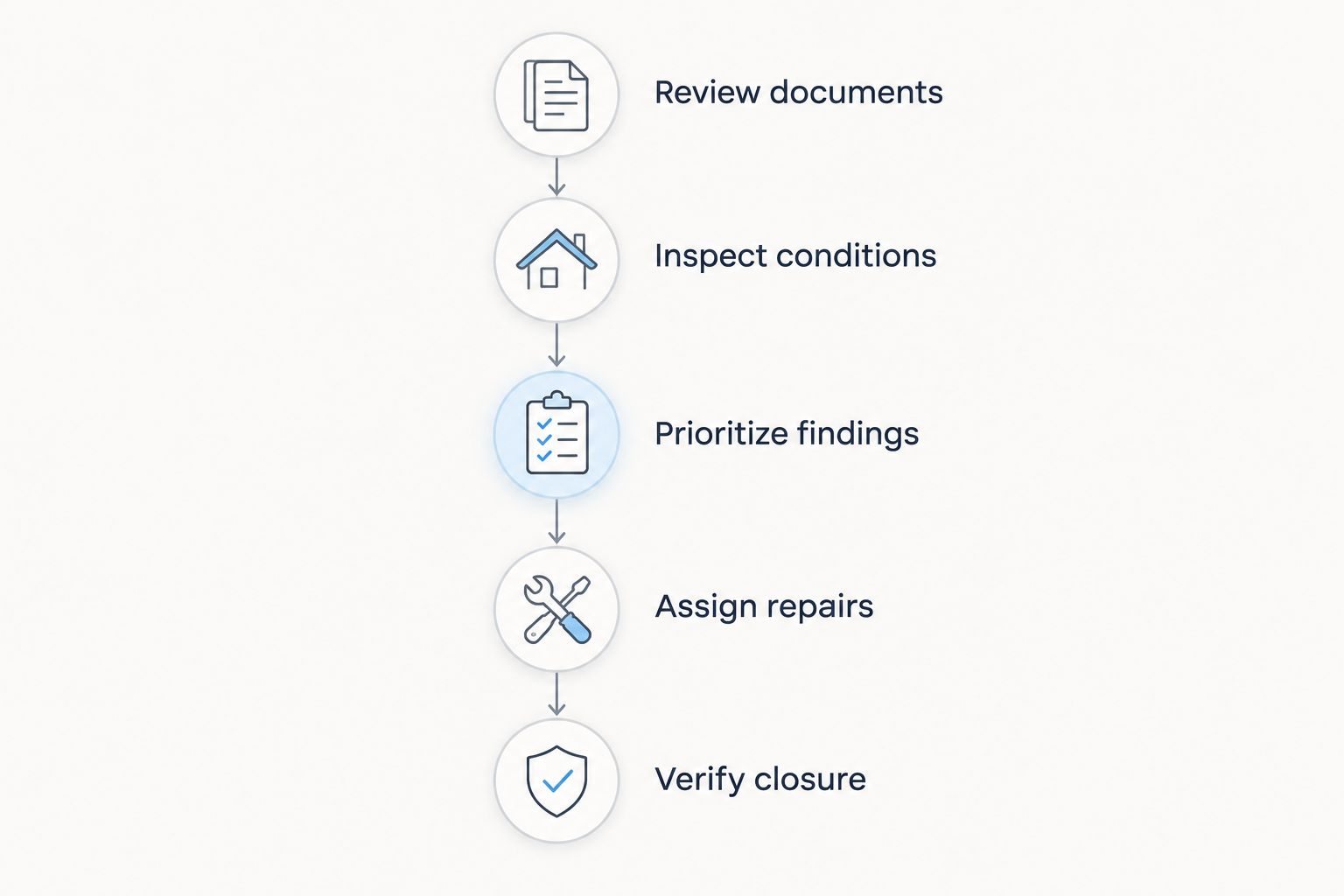
Use this sequence to keep the work connected:
- Review documents. Gather prior reports, repair records, available roof-system information, and applicable warranty documents.
- Inspect conditions. Have the inspector assess the agreed scope and identify access or visibility limitations.
- Prioritize findings. Separate active problems, required further investigation, and routine maintenance.
- Assign repairs. Name the person responsible for arranging each action and tracking its status.
- Verify closure. Retain completion evidence and determine whether follow-up inspection is needed.
A photograph without a location can be difficult to act on. Ask for findings to reference identifiable roof areas, equipment, or a roof plan so the repair contractor can locate the issue without guessing.
When discussing a commercial roof inspection with Murray Inspection Services, request that reporting scope before authorizing the visit. Confirm separately whether repair recommendations, moisture investigation, or a return visit are included; do not assume that inspection automatically includes those services.
How do building operations change the inspection schedule?
Rooftop work creates a reason to review the inspection plan even when the roof has not leaked. Equipment replacement, new penetrations, and service activity can change conditions after the last documented visit.
Have facilities staff record the work area and the contractor involved. Where work affects roofing or flashing, arrange an appropriate closeout assessment rather than treating equipment startup as proof that the roof remains watertight.
This is why commercial roof inspection frequency belongs in the building’s maintenance plan alongside rooftop work records: a calendar tracks elapsed time, while the work record identifies changes that need checking.
For example, installing equipment after the spring inspection creates a new condition that the spring report cannot describe. Retain the installation records and assess the affected roof details without waiting for fall.
The same distinction applies to repeated interior symptoms. Logging another ceiling stain is not the same as resolving the roof defect, and sealing an apparent entry point does not by itself confirm that the underlying problem is closed.
What should a commercial roof inspection report include?
Request a report that supports a maintenance decision, not just a collection of photographs. The inspection date, areas assessed, observed conditions, and limitations should be clear enough for someone who did not attend the visit to understand.
Useful report elements include:
- Roof identification: The building, roof areas, and system information available to the inspector.
- Located findings: Photographs and descriptions tied to identifiable positions.
- Scope limitations: Inaccessible areas and conditions that prevented assessment.
- Action priorities: A distinction between active concerns, investigation needs, and maintenance items.
- Follow-up status: A way to connect each finding to repair records or further evaluation.
A visual inspection does not establish the condition of every concealed component. If the findings indicate possible moisture below the roof surface, ask what additional investigation is appropriate and what question it would answer.
Keep inspection and approval separate, too. A report supports decisions, but a building owner still needs to authorize work and determine who will verify completion. Connect the findings to your commercial roof inspection and budget approval workflow so documented defects reach the person controlling maintenance expenditure.
Is an annual commercial roof inspection enough?
An interval of 12 months is longer than the twice-yearly baseline recommended here. Do not select an annual schedule solely because the roof has not produced an interior leak.
Check the manufacturer’s instructions, warranty conditions, and building history before changing frequency. If an annual visit is your current arrangement, determine how staff observations and event-driven assessments cover the period between visits.
Should you inspect after a storm without a visible leak?
A twice-yearly schedule does not replace a post-storm assessment when damaging conditions or visible changes warrant one. An absence of indoor water does not establish that the roof escaped damage.
Start with safe observations and incident records. Let a qualified professional determine the appropriate roof-access and assessment scope rather than sending staff up to search for damage.
Does a new commercial roof need inspections?
The 2-inspections-per-year baseline remains a planning starting point for a new roof, subject to its actual maintenance requirements. New installation does not eliminate drainage maintenance, rooftop activity, or weather exposure.
Keep installation and warranty documents accessible from the start. They help distinguish maintenance obligations from assumptions about what a new roof warranty covers.
FAQ
How often should I have my commercial roof inspected?
Use 2 inspections per year as a preventive-maintenance baseline, roughly 6 months apart. Add assessments after damaging weather, new leaks, or rooftop work, and follow applicable manufacturer and warranty requirements.
What time of year is best for a commercial roof inspection?
Spring and fall provide practical recurring checkpoints for commercial roof inspections. Adjust timing to local conditions and safe access rather than treating those seasons as universal deadlines.
Should I wait for a leak before scheduling a roof inspection?
No. Visible roof defects and blocked drainage can exist before occupants notice an interior leak, so a preventive schedule should not depend on ceiling stains.
Does every commercial roof warranty require the same inspections?
No. Read the warranty and maintenance documents for the installed roof system to identify the applicable inspection, documentation, and repair requirements.
Can my maintenance staff replace a professional roof inspection?
Staff observations help identify changes but do not replace a professional assessment of roof condition. Keep untrained or unauthorized staff off the roof and establish a clear escalation process.
Does a roof inspection include leak testing or moisture scanning?
Do not assume a roof inspection includes leak testing or moisture scanning. Agree on the scope beforehand and ask which additional methods are appropriate for the condition being investigated.
What should I ask Murray Inspection Services before booking?
Ask Murray Inspection Services to confirm the commercial roof inspection scope, roof-system experience, access arrangements, report contents, and follow-up process. Establish separately what additional investigation or repair-related work is included.
One last thing
Schedule the next inspection when you close the current report, not when someone remembers the roof. Record open findings separately so a future appointment never substitutes for a repair that needs attention now.
Your 2026 roof plan needs both a next inspection date and a named owner for every unresolved action. The date keeps the routine moving; the assigned owner keeps the findings from becoming permanent paperwork.
Related guides
- Commercial roofing for property managers
- Inspections for industrial facility managers
- How soon after a storm should you schedule an inspection?