Most residential roof replacements finish in one to three days of on-site work. Metal, tile and large commercial roofs take longer, and the schedule around the work (permits, materials, weather) often matters more than the crew's pace. Here is how the roof installation timeline by project type breaks down in 2026. For the residential detail, see how long a full roof replacement takes.
- A typical asphalt shingle roof on a single-family home takes one to three days on site.
- Metal and tile roofs run longer, from several days to two weeks or more.
- Commercial roofs depend on square footage and phasing, from a few days to several weeks.
- Permits, material delivery and weather add time before and around the install, not just during it.
Why this matters in 2026
A roof timeline decides when your home is open to the weather and when a business can run without disruption. Founders and property managers plan around it: tenants get notified, deliveries get rescheduled, crews get booked.
The number that matters is not just install days. It is the gap between signing and finishing. Permits, material lead times and weather all sit in that gap, and none of them show up in a crew's day count.
The short answer: how long does a roof installation take?
The most common residential job, an asphalt shingle replacement on a single-family home, typically takes one to three days on site. Larger or more complex roofs run longer. Commercial projects scale with roof area and building use, so a small flat roof and a warehouse sit at opposite ends of the range.
These are general industry ranges, not a promise for any one property. Murray Roofing does not quote a timeline until the roof has been inspected, because pitch, layers, decking condition and access change the answer.
Roof installation timeline by project type, 2026
| Project type | Typical on-site duration | Main schedule driver |
|---|---|---|
| Overall residential replacement (the yardstick) | 1 to 3 days | Roof size and pitch |
| Asphalt shingle, single-family home | 1 to 3 days | Tear-off layers and decking repairs |
| Residential metal roof | Several days to about 2 weeks | Panel fabrication and roof complexity |
| Tile or slate roof | 1 to 2 weeks or more | Material weight and careful handling |
| Small flat commercial roof (TPO, EPDM, modified bitumen) | A few days to about 2 weeks | Roof area and drainage details |
| Large commercial or warehouse roof | Several weeks, often phased | Square footage and keeping the building operating |
Asphalt shingle work is the fastest because the material is light, widely stocked and installed in sequence. Tile and slate are slowest per square foot because every piece is heavier and needs careful placement.
What the numbers say
Asphalt shingle is the quickest at one to three days. Tile, slate and large commercial roofs are the slowest, running a week or two for homes and several weeks for big buildings. Metal sits in the middle but has the widest spread, because panel fabrication and roof complexity vary so much between jobs.
The spread inside each row is bigger than the gap between some rows. A complicated shingle roof with many valleys and dormers can take longer than a simple metal roof.
How these ranges were built, and what they miss
The durations are general industry ranges for on-site installation of a standard project in 2026. They cover crew time on the roof, not the days before it starts or after it ends.
The limit is that none of them reflect your roof. Hidden rot under old shingles, a second layer to tear off, or a steep pitch can all push a one-day job to two or three. A written inspection is the only source for your actual schedule.
What happens before the first shingle goes on
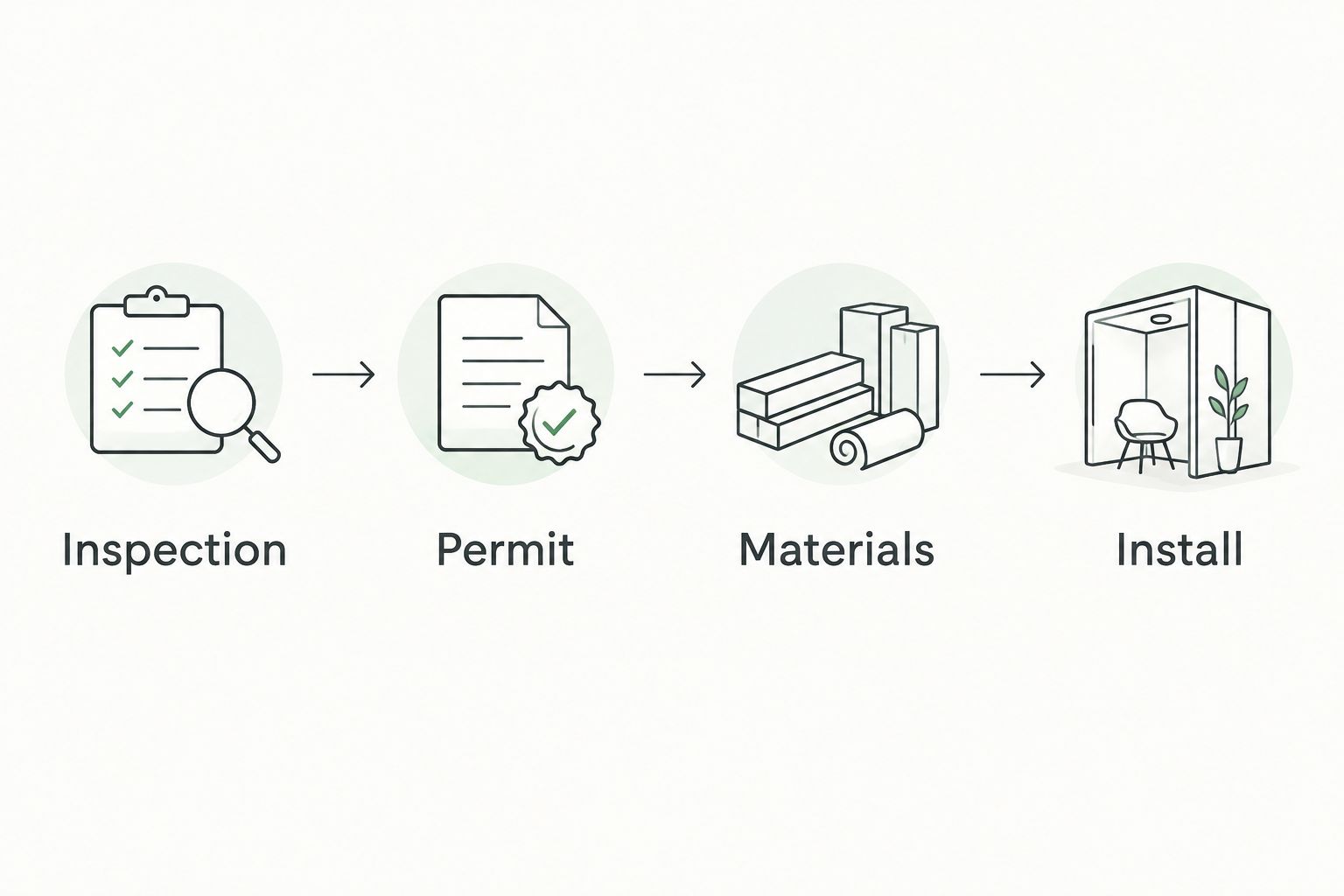
The install days are the visible part. Before them, a typical project moves through a few steps:
- Inspection and scope. The roof is checked, the materials are chosen and the scope is written down.
- Permits. Requirements vary by city and project type. See the roof permit to final inspection workflow for how that sequence runs.
- Materials. Standard shingles are usually easy to source. Specialty metal, tile and commercial membranes can take longer to arrive.
- Scheduling. Crews book around weather and other jobs.
Ask for these dates in writing. A start date without a permit and material date behind it is a hope, not a schedule.
Residential timelines: shingle, metal and tile
Asphalt shingle
The workhorse. Tear-off, deck inspection, underlayment, shingles, flashing and cleanup fit into one to three days for most single-family homes. Best for: homeowners who want the shortest exposure window. Verdict: fastest option, and the one least likely to slip.
Metal
Metal panels are often cut and formed for the specific roof, which adds lead time before install. On site, simple roofs go quickly and complex ones with many penetrations take longer. Best for: owners who want a long-lived roof and can wait for materials. Verdict: plan for more calendar time than shingle.
Tile and slate
Heavy, brittle and slow to place. These roofs often need decking and structural checks, and crews work piece by piece. Best for: homes already built for tile. Verdict: slowest residential option; schedule extra buffer.
Commercial timelines: flat roofs and large buildings
Commercial roofs run on square footage and on what happens inside the building. A small retail flat roof may finish in days. A warehouse, school or multifamily property is usually phased, section by section, so occupants can keep working or living there.
The commercial roof installation timeline guide covers the phasing in detail. For commercial owners, the scheduling questions that matter are:
- Can the roof be done in sections without shutting the building?
- Who handles tenant or staff notification before work starts?
- What is the plan if rain interrupts a section mid-tear-off?
Best for large buildings: a phased plan with written milestones. Verdict: ask for the phasing plan before you sign, not after.
What slows a roof down
Five things move a schedule more than crew size does:
- Weather. Rain, high wind and extreme cold stop work. Winter work is possible in some conditions; see whether a roof can be replaced in winter.
- Hidden damage. Rotted decking found at tear-off must be fixed before new material goes on.
- Extra layers. Removing a second layer of old roofing adds time.
- Complexity. Valleys, dormers, skylights and steep pitch slow every step.
- Material delays. Specialty products can arrive after the crew is ready.
Storm season also compresses crew availability. After a hail event in Nebraska, expect booking lead times to stretch.
How to use these benchmarks
- Use the table as a sanity check, not a promise. If a quote claims a day for a tile roof, ask why.
- Ask for three dates: permit, material delivery and install start. Together they tell you the real finish date.
- Build a weather buffer. Add a few days to any outdoor schedule rather than treating the first forecast as fixed.
- Match the timeline to your risk. A leaking roof needs a faster path than a planned upgrade. Murray Roofing offers free inspections to scope either.
Get your roof timeline in writing
Free inspection with a clear scope and schedule for your property.
Why Murray Roofing
Murray Roofing handles residential and commercial roofs in Lincoln, Omaha and other markets. The company holds an A+ BBB rating, 5-star reviews and GAF Master Elite status. Eligible projects can carry the 50-year Golden Pledge warranty and a 10-year labor warranty, and financing is available if you want to spread the cost.
None of that changes how weather behaves. It does mean the scope, the schedule and the warranty are written before work begins.
FAQ
How long does a roof installation take?
A typical asphalt shingle roof on a single-family home takes one to three days on site. Metal, tile and large commercial roofs take longer, depending on size and complexity.
Does a metal roof take longer to install than shingles?
Usually yes. Metal panels often need fabrication before install, so the calendar time is longer even when on-site work moves quickly on a simple roof.
How long does a commercial roof installation take?
A small flat roof can take a few days to about two weeks. Large buildings often take several weeks and are phased so the business can keep operating.
What delays a roof installation the most?
Weather is the most common cause. Hidden decking damage, extra roofing layers and late materials are the next most common.
Do permits add time to a roof project?
Yes. Permit requirements vary by city and project type, and approval happens before install days begin.
Can a roof be replaced in winter?
In some conditions, yes. Cold, snow and ice can pause work, so winter projects need a larger schedule buffer.
Will Murray Roofing give me a firm completion date?
Murray Roofing scopes the project after a free inspection and shares the schedule in writing. Weather can still shift dates, so no one can guarantee a fixed finish.
One last thing
The cheapest way to shorten a roof timeline is to start paperwork early. Permits, material orders and scheduling are all lead-time items, and the install days only begin once they clear. Starting inspection and scoping before the weather turns, rather than after the first leak, saves more time than any crew speed-up in 2026.
Ready to plan? Schedule a free inspection or get a price from Murray Roofing.
Related guides