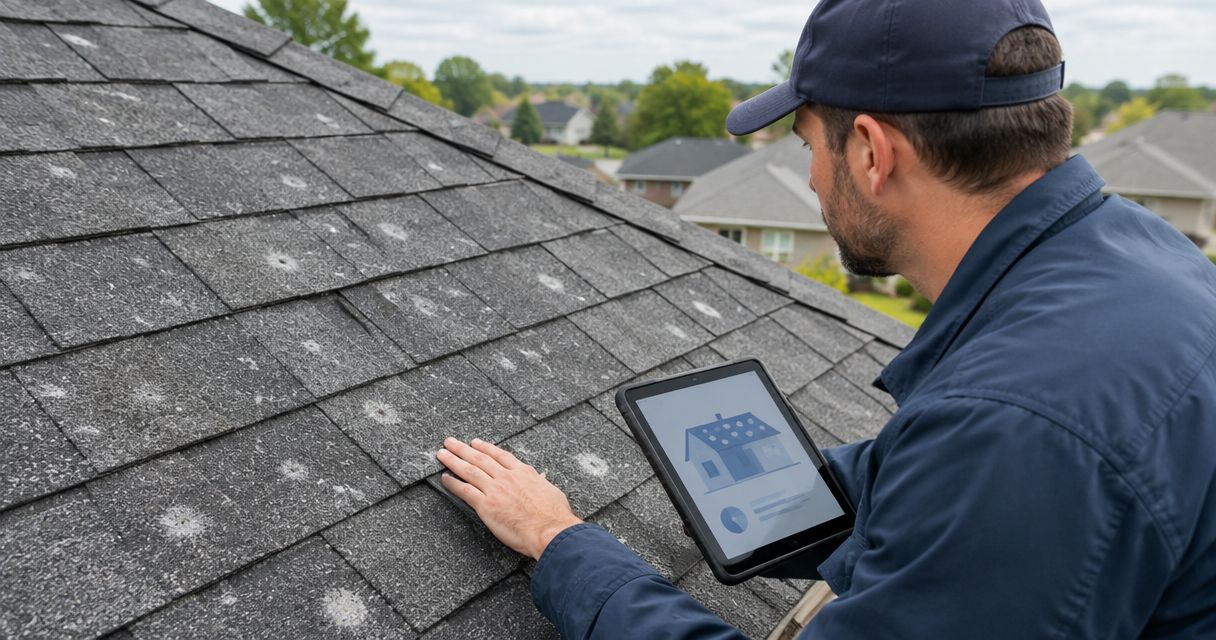
Schedule a roof inspection as soon as the storm has passed and you can safely arrange access; do not wait for a ceiling stain to appear. Active leaks, a fallen tree, sagging, or exposed roof openings require urgent attention, not just a routine appointment. Booking an inspection does not mean anyone should climb onto a wet, unstable, or storm-exposed roof.
- Schedule roof inspection after storm conditions are safe; report active leaks or structural concerns immediately.
- Contact Murray Inspection Services about inspection scope, safe access, and documentation before arranging a visit.
- Roof damage is not always visible from the ground; an absence of leaks does not establish roof condition.
- Keep storm photos, inspection findings, and repair records together; your insurance policy controls claim requirements.
For help arranging an assessment, contact Murray Inspection Services and describe what happened, what you can see, and whether water is entering the building. Confirm the inspection scope and reporting format before agreeing to the visit.
Why this matters
Your first decision is whether the property needs urgent protection or a scheduled inspection. Those are different jobs. An inspection documents conditions; emergency work addresses an immediate hazard or ongoing water entry.
For a storm in 2026, keep the event date separate from the date you first noticed damage. That distinction helps you create an accurate record without assuming every roof defect resulted from the same weather event.
A prompt assessment also gives you a basis for deciding what happens next. You need findings tied to specific roof locations—not a replacement recommendation based only on the fact that a storm crossed your neighborhood.
How soon after a storm should I schedule an inspection?
Request an inspection after the storm has passed, and tell the provider immediately about leaks or visible structural concerns. The appropriate visit depends on safe access, the condition of the property, and whether temporary protection is needed first.
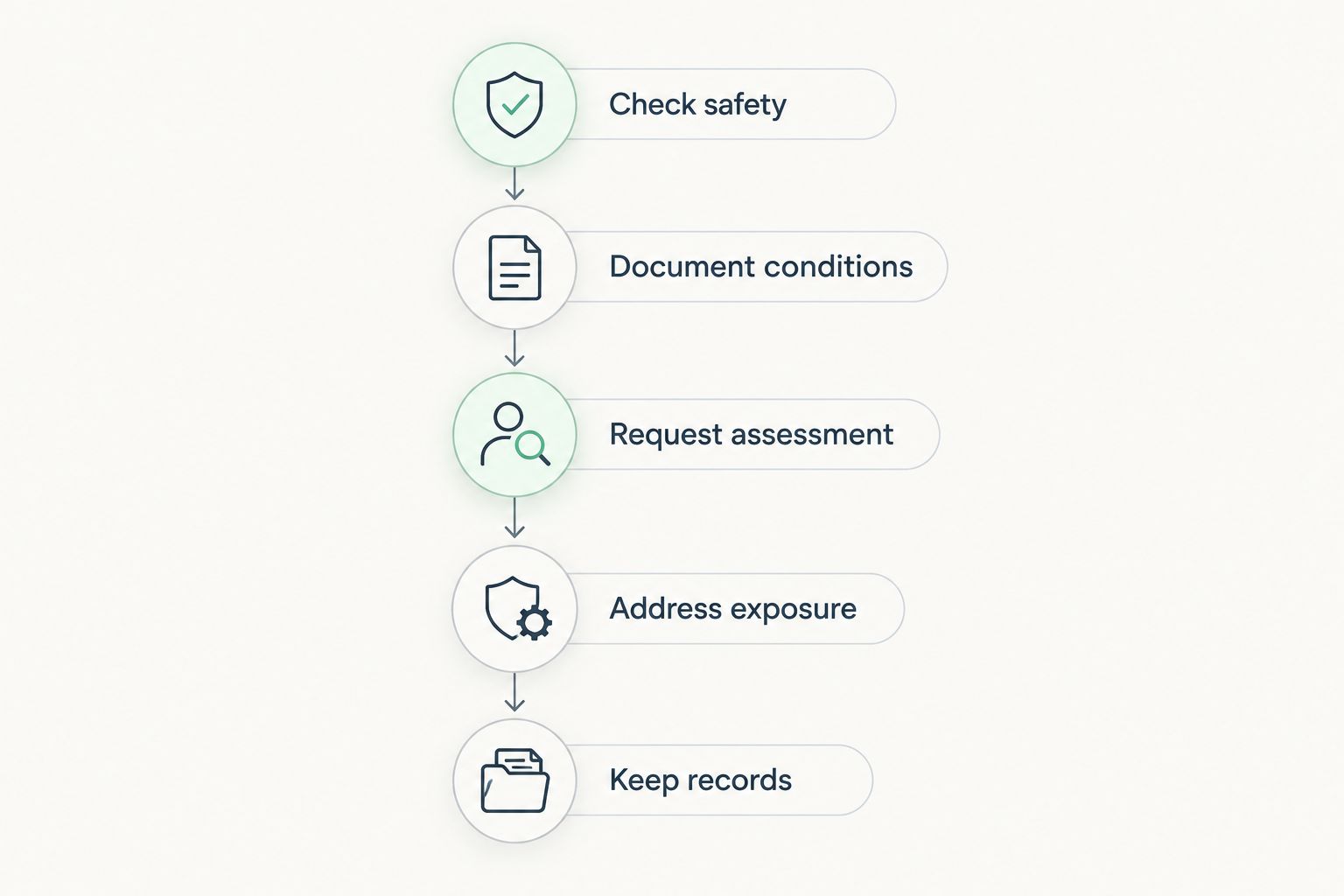
Use this sequence rather than waiting an arbitrary number of days:
- Check safety. Stay clear of downed power lines, unstable trees, loose materials, and visibly damaged structures. Follow local emergency instructions before approaching affected areas.
- Document conditions. From a safe location, photograph visible exterior damage and interior water entry. Keep the original files and note when you observed each problem.
- Request assessment. Describe the storm, visible changes, and any active leaks. Tell the scheduler about access restrictions or hazards before the appointment.
- Address exposure. Ask a qualified professional whether temporary protection is necessary. Do not climb onto the roof to install a tarp yourself.
- Keep records. Save the inspection report, photographs, communications, and receipts. If you intend to make an insurance claim, follow the policy's notification and documentation requirements.
You can start the scheduling conversation before roof access is safe. The person assessing the property must decide which inspection methods are appropriate when they arrive.
Active leaks: request urgent assessment
Best for: a property with ongoing water entry or an exposed opening. Describe the situation as an active problem when you call, rather than asking only for the next routine inspection slot.
Keep people away from wet electrical equipment and visibly sagging ceilings. Do not enter an affected attic or stand beneath a bulging ceiling to investigate the source. Contact emergency services or the utility when the situation involves an immediate electrical or structural hazard.
Urgent assessment can identify what needs protection first. Its limitation is scope: stabilizing an exposed area does not replace a full evaluation of the remaining roof, and temporary work does not establish the final repair plan.
Tell the responding professional whether water is still entering, where it appears, and whether the affected area has changed. A photograph taken safely from a doorway is more useful than a risky attempt to reach the leak.
Visible damage without a leak: arrange a prompt inspection
Best for: missing or displaced roof materials, damaged flashing, or storm debris without indoor water entry. Report what you see and request an assessment; do not treat a dry ceiling as proof that the roof is intact.
Photograph the affected roof slope from the ground when you can do so safely. Include a wider view for location and a closer view only if your camera allows it without approaching a hazard.
Prompt inspection can establish the condition of accessible areas before you commission repairs. The limitation is visibility: concealed components and inaccessible areas require clear reporting, not assumptions that everything underneath is sound.
Do not remove lodged branches or walk across damaged materials to get a better picture. Tell the inspector where debris is located so safe access can be considered before the visit.
No visible damage: assess the roof, not just the ceiling
Best for: a property exposed to hail, strong wind, or debris where you cannot identify damage from the ground. Arrange an assessment when you have a specific concern about the storm's effect on the roof.
A ground-level look is useful for obvious changes, but it is not a substitute for evaluating roof surfaces, connections, and penetrations. Equally, a storm nearby does not prove your property sustained damage.
The benefit of an inspection is a documented condition assessment. The limitation is that an inspection should not promise to identify every concealed defect or establish an exact damage date from appearance alone.
For your 2026 property records, retain findings even if the assessment identifies no storm-related repair need. A dated record is more useful than a recollection that someone looked at the roof.
Which response fits your situation?
| Situation | Best for | Next move | Important limit |
|---|---|---|---|
| Active water entry or an exposed opening | Urgent protection decisions | Report the active problem and request urgent assessment | Temporary protection is not a complete repair |
| Visible damage without indoor leaking | Defining the affected area | Arrange a prompt inspection and share safe photographs | Dry rooms do not establish roof condition |
| Storm exposure without visible damage | Checking a specific roof concern | Request a condition assessment | Storm exposure alone does not prove damage |
| Downed lines or suspected instability | Immediate life safety | Keep clear and contact the appropriate emergency service | A routine roof appointment is not an emergency response |
Why post-storm inspection timing varies
The right response depends on the condition of the property, not a universal waiting period. These factors determine what needs to happen before or during an assessment:
- Active water entry. Continuing leakage makes protection of people and the building the immediate priority.
- Structural concerns. Sagging, fallen trees, and displaced building components affect whether anyone can approach or enter safely.
- Weather and access. Lightning, wind, wet surfaces, and obstructed access affect which inspection methods are safe.
- Visible exposure. Missing materials or open penetrations require attention even when indoor surfaces remain dry.
- Policy requirements. Insurance notification and documentation obligations come from your policy, not a general inspection schedule.
Tell the scheduler about these conditions rather than choosing an appointment based only on convenience. If the situation changes before the visit, update the provider instead of assuming the original booking still fits.
What should I prepare before the inspection?
Prepare a short account of the event and the changes you noticed. Separate direct observations from assumptions: water appeared near a window is an observation; the storm destroyed the flashing is a conclusion that needs assessment.
For a 2026 inspection, your preparation file should include:
- The storm date and the date you first noticed each issue.
- Original photographs or videos taken from safe locations.
- The rooms or roof areas where changes appeared.
- Previous roof reports and relevant repair records you already hold.
- Records of temporary protection or emergency work.
- Access concerns, including pets, locked gates, debris, or unsafe areas.
Before booking with Murray Inspection Services, ask what the visit covers and what written documentation you will receive. Choose the inspection scope before agreeing to repairs. A condition report and a repair proposal answer different questions.
Ask how inaccessible areas will be recorded and how observations will be distinguished from conclusions about cause. These questions help you understand the report without expecting an inspector to guarantee conditions that cannot be seen.
What should the inspection report explain?
A useful report connects each finding to a location and explains the recommended next step. Photographs need enough context for you to understand which roof area they show.
Look for a distinction between observed damage, existing wear, and areas that could not be evaluated. If the report attributes a condition to the storm, ask what observations support that conclusion.
Your 2026 inspection file should also identify any unresolved questions. An inaccessible roof section, concealed decking, or an unclear water-entry path should remain an explicit limitation—not become an unsupported all-clear.
Before authorizing permanent work, ask which findings require repair and which require further investigation. A recommendation is easier to evaluate when the report explains the underlying condition rather than simply naming a replacement project.
Should I wait for my insurer before scheduling an inspection?
Do not delay necessary safety measures or reporting while waiting for a routine appointment. Read your policy and contact your insurer for instructions about notice, documentation, temporary protection, and inspection arrangements.
A roof inspection does not determine insurance coverage. Keep inspection findings separate from the insurer's coverage decision, and avoid treating a contractor's opinion as a promise that a claim will be approved.
If temporary work is necessary, document conditions beforehand when safe and retain the work records. Ask the insurer how to handle materials or evidence before disposal when that question applies to your claim.
Can I inspect the roof myself from the ground?
You can document visible conditions from a safe ground-level position, but that does not establish the roof's full condition. Stay clear of damaged structures, electrical hazards, and falling debris.
Use your observations to explain the problem when scheduling. Do not climb a ladder, enter an unsafe attic, or move storm debris simply to complete a checklist.
What if another storm arrives before the appointment?
Report new leaks or visible changes and reassess the urgency. An appointment made for a dry building does not account for water entry that starts later.
Keep the events separate in your notes. Photograph changes safely and record when they appeared without assigning a cause you cannot establish.
FAQ
How soon should I schedule a roof inspection after a storm?
Request a roof inspection once the storm has passed and access can be assessed safely. Report active leaks, exposed openings, fallen trees, or structural concerns immediately rather than treating them as routine scheduling details.
Should I wait until my roof starts leaking?
No, a leak is not a prerequisite for arranging an inspection. Missing materials and other roof damage can exist without visible indoor water entry.
Is it safe to climb onto my roof after a storm?
Do not climb onto a storm-affected roof to inspect it yourself. Wet surfaces, loose materials, electrical hazards, and hidden structural damage require a safety assessment.
Does a roof inspection guarantee insurance coverage?
No, a roof inspection documents conditions; it does not guarantee coverage. Your insurer evaluates the claim under your policy’s terms, conditions, and exclusions.
What should I tell the inspector when I book?
Describe the storm, visible damage, active leaks, and known access hazards. Share safely obtained photographs and distinguish what you observed from what you suspect caused it.
Can I book an inspection before the roof is safe to access?
You can contact a provider to arrange an assessment before roof access is safe. The provider must determine appropriate inspection methods and whether the visit needs to be rescheduled.
What should I ask Murray Inspection Services before scheduling?
Ask Murray Inspection Services about inspection scope, written findings, photographs, and access limitations. Confirm what the assessment includes before agreeing to the visit.
One last thing
The place where water appears indoors is not necessarily where it entered the roof. Water can travel along building components before becoming visible, so a ceiling stain identifies a symptom rather than a confirmed entry point.
For your next 2026 storm assessment, give the inspector the location and timing of the symptom. Let the inspection establish the repair location instead of asking for a patch directly above the stain.
Related guides
- How to recognize possible roof hail damage
- How a hail damage report supports an insurance claim
- From roof inspection to contractor bid comparison
- From storm damage to completed roof replacement