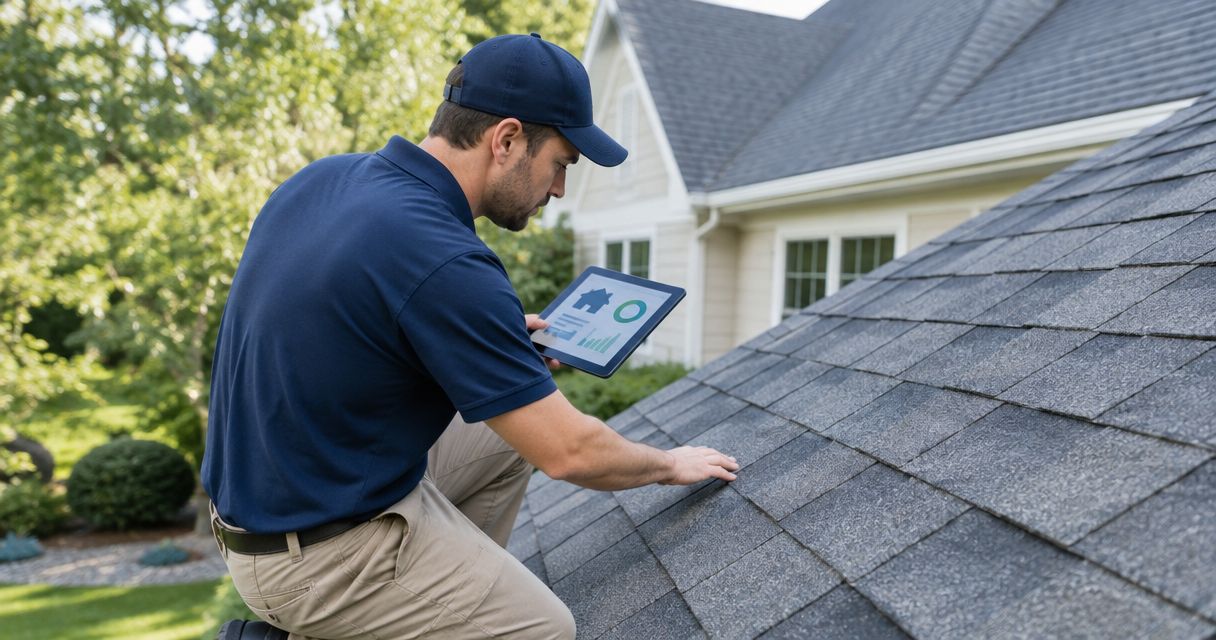
Instead of repeatedly explaining a roof leak to your home warranty administrator, connect your inspection report, contract language, photographs, and correspondence in one claim file. Submit that file through the administrator’s required process, obtain a claim reference, and get repair authorization before commissioning work that requires approval.
- A roof inspection home warranty claim needs documented findings, applicable roof-leak coverage, and the administrator’s required authorization.
- Murray Inspection Services’ roof inspection guide is best for homeowners organizing evidence, not predicting claim approval.
- Home warranties, homeowners insurance, and roofing warranties address different obligations; identify the right contract before submitting.
- Keep inspection findings separate from coverage decisions, and preserve written approval before authorizing repairs.
Why this matters
A roof inspection documents conditions; it does not establish home warranty coverage. Your contract determines eligible components, exclusions, reporting requirements, and authorization procedures. A detailed report cannot turn an excluded repair into a covered one.
For a claim submitted in 2026, start with the contract effective when the problem arose, not a current sales brochure. Match the observed condition to that contract before collecting additional paperwork.
Use this Murray Inspection Services roof inspection workflow to organize the handoff between homeowner, inspector, and warranty administrator. You can also reference Murray Inspection Services while keeping the administrator’s coverage decision separate from the inspection findings.
Before you start
- Contract and claim access: Gather the applicable agreement, coverage dates, property address, account details, and the administrator’s reporting instructions. Confirm whether roof-leak coverage appears in your agreement or an attached endorsement.
- Inspection materials: Assemble the dated report, original photographs, symptom history, and any relevant maintenance or repair records. Obtain permission to share documents belonging to another party.
- Authorization rules: Check whether the administrator requires its own contractor or prior approval before inspection, diagnosis, or repair. An independently commissioned report does not replace a required service visit or guarantee reimbursement.
Do not climb onto the roof to complete this process. Document accessible interior symptoms from a safe position and leave roof access, electrical hazards, and unsafe areas to qualified professionals.
Choose the correct claim route
A home warranty is not the same agreement as homeowners insurance or a roofing warranty. Classify the issue before submitting it, but do not diagnose the cause yourself.
| Route | Best for | What it contributes | Limitation |
|---|---|---|---|
| Home warranty | A roof-leak issue expressly included in the service contract | A contractual process for assessing eligible service requests | Coverage, exclusions, and authorization requirements control the outcome |
| Homeowners insurance | Damage involving a potentially insured event | A policy-based process for evaluating damage and covered causes | Coverage depends on the policy, cause, conditions, and exclusions |
| Roofing warranty | A suspected material or workmanship issue addressed by that warranty | A route to the party responsible for the stated warranty obligation | Material and workmanship warranties have different terms and remedies |
Choose the route by the governing agreement, not by the appearance of the stain. Water visible indoors does not, by itself, establish its entry point or cause.
If you hold multiple agreements, compare the roof warranty types for homeowners before contacting the responsible administrator. Keep each submission accurate and disclose overlapping claims when requested; do not seek duplicate reimbursement for the same expense.
Contract review and claim setup
- Identify the applicable agreement. Record its effective dates and any roof-related endorsement. If your account contains several documents, establish which version governed the reported problem.
- Extract the relevant clauses. Save the roof-leak provision, exclusions, reporting instructions, authorization requirements, and dispute procedure together. Include surrounding text rather than an isolated sentence.
- Record the symptom timeline. State when you first noticed the issue, where it appeared, and what you observed. Distinguish the discovery date from an inspector’s opinion about how long a condition has existed.
- Open the service request as instructed. Use the administrator’s designated reporting channel. Describe the observed symptom accurately and request the submission requirements for supporting inspection documents.
- Save the reference and instructions. Record the claim identifier, contact details, submission method, and any stated deadline. Ask whether an independent inspection report will be reviewed and whether a designated contractor must attend.
For a 2026 submission, keep a dated copy of the reporting instructions you actually received. A later website update should not become your only record of what the administrator requested.
Expected result: You have an identifiable service request, the applicable contract provisions, and written instructions for the inspection handoff.
Inspection evidence package
- Create 1 claim folder. Use the claim identifier and property address to distinguish it from unrelated repairs. Avoid placing account credentials in shared documents.
- Separate 3 document groups. Organize contract records, inspection evidence, and claim correspondence. This is a filing recommendation, not an administrator requirement.
- Check the report’s identifying details. Verify the property address, inspection date, inspected areas, and limitations. Ask the author to correct factual errors rather than editing a signed report yourself.
- Connect photographs to findings. Use the report’s existing photo references where available. If you prepare a separate index, describe the location and visible condition without changing the inspector’s conclusions.
- Preserve uncertainty. Keep inaccessible areas, unconfirmed causes, and recommended further investigation visible. Do not rewrite a suspected entry point as a confirmed diagnosis.
- Add a document index. List the report, photographs, relevant contract excerpts, and supporting records. Distinguish an estimate from an approved repair scope.
A useful cover note states the observed symptom, identifies the attached report, and asks which contractual provision applies. It does not announce that the inspection proves coverage.
For your 2026 claim file, retain 2 copies of the submitted package: the version you sent and a separate backup. Keep original photographs alongside any resized versions so you preserve the source material.
Expected result: A reviewer can connect each reported symptom to a documented location, finding, and attachment without guessing.
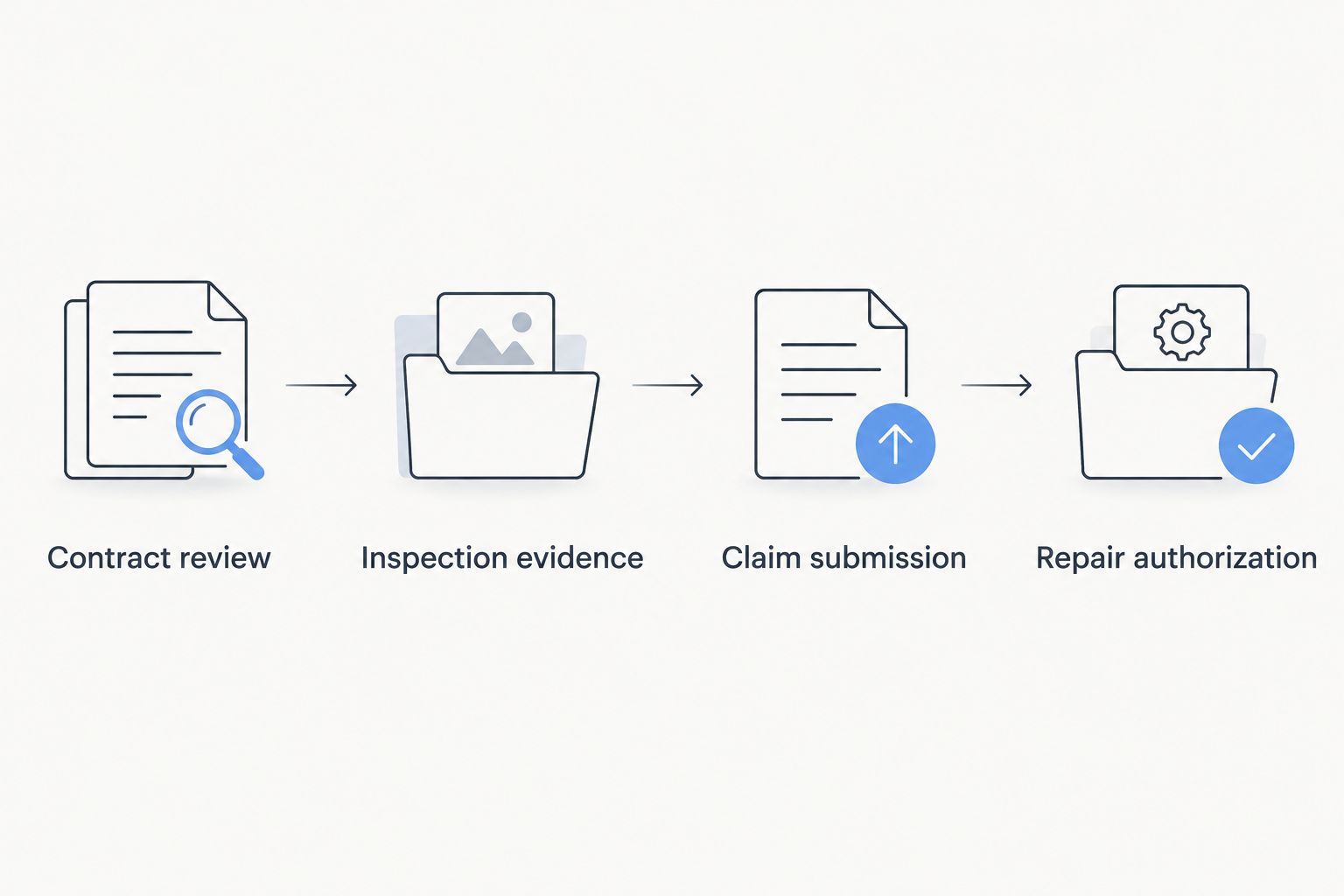
Submission and review record
- Send the requested materials through the designated channel. Follow the administrator’s attachment and document instructions. If a file is rejected, ask for an accepted submission method rather than repeatedly sending an unusable attachment.
- Identify the claim on each message. Include the claim reference and property address. Keep the explanation brief enough that the requested action is clear.
- Request receipt confirmation. A successful upload is not a coverage decision. Confirm that the report and attachments are associated with the correct claim.
- Document additional requests. Record precisely which photograph, diagnosis, access arrangement, or document the administrator needs. Forward technical questions to the inspector instead of supplying your own diagnosis.
- Maintain a correspondence log. After a telephone conversation, record the date, participant, and instructions. Request written confirmation of any decision affecting authorization or coverage.
Submit evidence, not conclusions the report does not support. If the report identifies deteriorated sealant but does not establish the leak’s origin, describe that distinction directly.
Keep the tone factual even when the process stalls. A concise request for the missing item, responsible reviewer, or next action is more useful than resending the entire history without a specific question.
Expected result: The administrator has acknowledged the evidence, and you have a record of outstanding questions and requested actions.
Repair authorization and closeout
- Obtain the decision in writing. Ask whether the request is authorized, requires more investigation, or is denied. Keep these outcomes distinct; an appointment confirmation is not repair authorization.
- Check the authorized scope. Identify the approved work, assigned contractor, homeowner obligations, and any required follow-up. Ask whether additional findings require separate approval.
- Clarify emergency instructions. If water is actively entering, ask how protective measures should be handled under the contract. Do not postpone necessary safety action while collecting evidence; document conditions and retain records.
- Preserve repair documentation. Save the authorization, work description, completion record, and relevant photographs. Ask the contractor to distinguish completed work from unresolved conditions.
- Confirm closure status. Establish whether the administrator considers the request complete and how to report recurrence. Do not assume that the absence of another message means the underlying issue is resolved.
For repairs authorized in 2026, file the written authorization beside the final work record. That pairing makes it clear what was approved and what was actually completed.
Expected result: Your claim file connects the inspection findings to a written decision and documented work, without treating approval as a guarantee against future leaks.
When an inspection report is updated
Use this second workflow when further investigation changes the findings or reveals an additional affected area. Keep the original report; a revision should not erase the evidence already submitted.
- Obtain the dated revision or addendum from the report’s author.
- Identify what changed: location, observed condition, proposed cause, limitation, or recommended action.
- Submit the update under the existing claim reference unless the administrator directs otherwise.
- Ask whether the new information changes the required investigation or authorization.
- Retain the administrator’s response alongside both report versions.
Best for: Homeowners whose inspection findings develop during diagnosis. The benefit is a traceable evidence history; the limitation is that additional evidence does not automatically change coverage or reopen a closed request.
Do not describe a newly discovered condition as part of an earlier approved repair without confirmation. Ask whether the administrator requires a separate service request.
Troubleshooting
The administrator will not accept your independent report
Ask whether the issue is the submission format or a requirement for its designated contractor. Provide an accepted format when that is the problem; when a designated visit is required, retain the independent report as supporting material rather than presenting it as a substitute.
The claim is denied despite documented roof damage
Request the written reason and the applicable contract provision. Separate a coverage exclusion from a dispute about the observed condition; additional photographs address an evidence gap, not an exclusion. Use the contract’s review or dispute procedure when appropriate.
The report cannot confirm where water entered
Ask the inspector what further investigation is recommended and what limitations prevented a conclusion. Request authorization before commissioning work that requires it. Do not instruct the inspector to assign a cause merely to fit the contract.
Repairs have already started without authorization
Contact the administrator, describe the work accurately, and provide available before-work photographs and records. Ask what documentation is still required. Do not backdate authorization or present completed work as pending; reimbursement remains subject to the agreement.
The leak returns after the claim is closed
Document the recurrence date, location, and visible symptoms. Contact the administrator with the earlier claim reference and ask whether it requires a callback or a new request. A recurring stain alone does not prove the previous repair failed or that the source is unchanged.
Customize your workflow
Make the evidence index reusable, not the coverage conclusion. A consistent folder structure helps you manage another property or another leak, but each agreement and condition requires its own review.
If a property sale is involved, keep the warranty claim record separate from transaction documents. Buyers, sellers, lenders, and warranty administrators have different decisions to make; sending everyone an undifferentiated file creates unnecessary disclosure and confusion.
Murray Inspection Services’ roof inspection workflow also works as a document-control checklist: identify the recipient, preserve the original findings, record the requested action, and save the response. Share only the documents needed for that recipient’s role.
FAQ
How do I connect a roof inspection to a home warranty claim?
Open the service request through your warranty administrator, obtain its evidence requirements, and submit the dated inspection report under the claim reference. Match the documented findings to the applicable contract and obtain required authorization before commissioning repairs.
Does a roof inspection guarantee home warranty coverage?
No. An inspection documents observed conditions, while the home warranty agreement determines coverage, exclusions, and authorization requirements. The administrator evaluates the request under that agreement.
Can I use my own roof inspector for a home warranty claim?
Check the contract and ask the administrator before commissioning an inspection for reimbursement. An independent report can provide supporting evidence, but it does not replace a designated contractor visit when the agreement requires one.
Is a roof leak a home warranty claim or an insurance claim?
The applicable agreement and documented circumstances determine the appropriate route. Home warranty coverage depends on the service contract; homeowners insurance depends on the policy and cause of damage. Do not infer coverage from an interior stain alone.
What documents should I submit with a roof inspection home warranty claim?
Submit the administrator’s requested documents, including the inspection report and relevant photographs. Keep the applicable agreement, symptom timeline, maintenance records, and correspondence available, and identify the claim on each submission.
What should I do if my roof warranty claim is denied in 2026?
Request the written denial reason and the specific contract provision applied to your claim. Compare that reason with the inspection findings, supply relevant missing evidence, and follow the agreement’s review or dispute procedure.
Should I repair an active roof leak before the warranty administrator responds?
Address immediate safety risks and seek the administrator’s emergency instructions promptly. Document conditions and protective work, retain records, and distinguish necessary protective measures from permanent repairs requiring authorization.
One last thing
An unchanged stain is not a reliable closeout test. Interior discoloration can remain after repair, so distinguish an old mark from newly observed moisture and ask the responsible professional how completion should be verified.
Before archiving a 2026 claim, save the original report, written decision, and completion record together. That connected record is more useful than a folder containing photographs without context.
Related guides
- Connect a roof inspection report to your mortgage closing
- Turn a hail damage report into an insurance claim
- Connect a roof inspection to financing approval