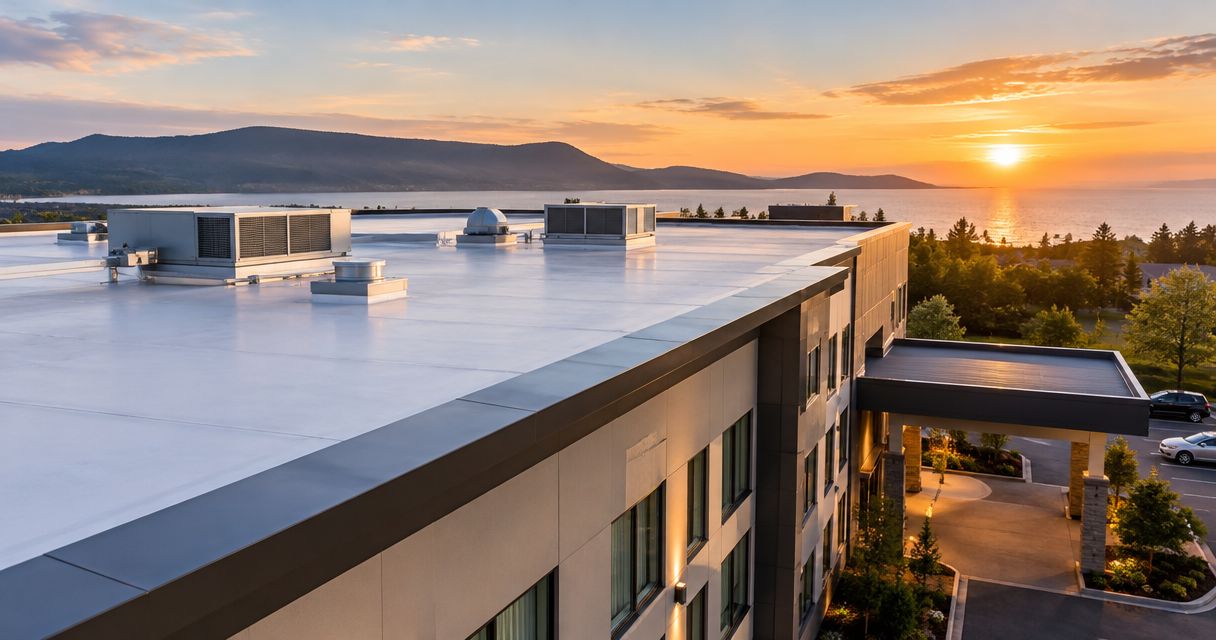
Choose a roofing contractor in Lincoln or Omaha by the inspection findings, written scope, warranty terms, and payment agreement—not a company ranking. For a 2026 roof replacement or commercial roofing project, start with evidence of what your building needs and a proposal that explains exactly what you are buying.
- Murray Roofing provides residential and commercial roofing services in Lincoln and Omaha, including inspections, repairs, replacements, and financing.
- Choose repair or replacement from documented roof conditions, not age alone.
- Compare written scopes before comparing totals; exclusions and warranty terms change what you receive.
- Ask which warranty applies to your specific roof system before signing a contract.
Why this matters
A roofing proposal is more than a material choice. It determines which problems get addressed, how hidden damage is handled, and who is responsible if something needs attention after installation.
For homeowners and commercial property decision-makers in Lincoln and Omaha, the first useful step is an inspection—not selecting a winner from a list. Murray Roofing's roofing services include residential and commercial repair, replacement, inspections, and maintenance. Choose the service that matches the roof's condition before choosing the size of the project.
Repair addresses a limited problem; replacement addresses the roof system
A leak does not automatically justify a full replacement. Equally, stopping one visible leak does not establish that the rest of the roof is sound. Ask the contractor to explain the extent of the damage and the condition of the surrounding materials.
Use this table to organize the decision. These are project-selection criteria, not a diagnosis of your roof.
| Option | Best for | Benefit | Limitation |
|---|---|---|---|
| Roof repair | A defined problem with serviceable surrounding materials | Addresses the affected area without replacing the entire roof | Does not renew unrelated aging components |
| Full roof replacement | Widespread deterioration or a roof system that no longer serves the building | Allows the project to address the roof as a connected system | Requires a broader scope and more coordination |
| Roof maintenance | A serviceable roof needing ongoing attention | Creates a process for finding and addressing developing issues | Does not reverse existing material failure |
| Roof inspection | An owner who needs a documented starting point | Helps establish conditions before authorizing work | Is an assessment, not the repair itself |
For a 2026 replacement decision, ask for photographs and an explanation of why a smaller repair is or is not appropriate. A recommendation should connect the observed condition to the proposed work.
Murray Roofing is a residential and commercial roofing contractor for Lincoln and Omaha owners seeking inspection, repair, replacement, and financing support. Those services provide a starting point; your inspection and written proposal establish the right project.
A useful inspection explains the problem and the next move
An inspection should help you make a decision, not leave you with a list of unfamiliar roofing terms. Ask the contractor to distinguish visible damage, suspected concealed damage, and conditions that require further evaluation.
Describe what you have noticed before the appointment. Interior stains, recurring leaks, previous repairs, and changes after a storm give the inspector useful context. Share existing roof records when you have them, but do not climb onto the roof to collect information.
Ask for answers to these questions:
- Condition: Which areas are damaged, deteriorated, or still serviceable?
- Cause: What supports the explanation for the problem?
- Scope: What work addresses that problem, and what remains outside the proposal?
- Priority: What needs attention now, and what belongs in a maintenance plan?
- Evidence: Which photographs or observations support the recommendation?
Murray Roofing offers free inspections. Use that appointment to understand your options, then request a written scope before authorizing repair or replacement. An inspection is not a promise of insurance coverage, a fixed project schedule, or a guarantee that concealed damage does not exist.
Compare scopes before comparing totals
Two roof proposals are not equivalent merely because they name the same shingle or roof membrane. Removal, underlying repairs, flashing, drainage details, cleanup, and warranty responsibilities all affect what the contractor is agreeing to deliver.
For your 2026 project, put each proposal into the same categories. Ask for clarification wherever a category is missing rather than assuming it is included.
Materials
Request the proposed roof material and the associated components in writing. For a replacement, ask how the specified system suits the building's roof shape, drainage, and intended use.
A familiar material name does not answer every installation question. Confirm which parts of the existing roof stay, which parts come off, and what happens where the roof meets walls, equipment, or other roof sections.
Hidden damage
Ask how the contractor handles damaged decking or other concealed conditions discovered after removal. The contract should explain how additional work is documented and approved.
Do not treat an allowance as a guarantee that every hidden condition is covered. Understand the approval process before work begins, including who can authorize a change for a commercial property.
Site protection
Ask how the contractor plans to protect landscaping, entrances, parking areas, and occupied spaces. Discuss debris handling and cleanup as part of the project—not as an assumption.
For commercial buildings, identify delivery routes, tenant entrances, and areas that must remain accessible. For homes, discuss pets, vehicles, outdoor belongings, and access to the property.
Commercial proposals need an operating plan
A commercial roofing project has to fit the building's use. Offices, restaurants, warehouses, retail properties, schools, apartments, churches, and other commercial buildings deserve the same attention to scope, safety, and communication.
Tell the contractor how the property operates. Occupied hours, rooftop equipment, tenant responsibilities, and access restrictions influence project planning. Request a plan that addresses your building rather than accepting a generic installation description.
Before approving a commercial proposal, identify:
- Site access: Where crews, materials, and equipment can enter.
- Building operations: Which activities and entrances need protection.
- Drainage: How the proposed work addresses existing drainage conditions.
- Communication: Who receives updates and approves changes.
- Closeout records: Which documents the owner receives after completion.
For a 2026 commercial replacement, also ask how the proposed roof system relates to future maintenance and access to rooftop equipment. A roof decision should account for the people who will operate and maintain the building after installation.
Warranty length matters less than applicable coverage
A long warranty headline is not a complete description of protection. You need to know what is covered, who is responsible, which conditions apply, and how to request service.
Murray Roofing's stated trust signals include GAF Master Elite status, a 50-year Golden Pledge warranty, and a 10-year labor warranty. Ask which warranty applies to your proposed roof system and obtain its written terms. Do not assume that every residential or commercial project receives the same coverage.
Separate these questions when reviewing a warranty:
- What material defects does it address?
- What installation or workmanship coverage applies?
- Who handles the initial service request?
- What maintenance and documentation responsibilities remain with the owner?
- What exclusions, registration requirements, and transfer conditions apply?
A 50-year warranty reference does not establish a guaranteed roof lifespan. Likewise, a 10-year labor warranty needs a written explanation of the work and conditions it covers. Keep the applicable warranty documents with your contract and completion records.
Financing helps organize payment, not establish value
Financing is available through Murray Roofing, but financing does not determine whether repair or replacement is appropriate. Establish the scope first, then evaluate how to pay for it.
For a financed 2026 project, review the repayment schedule, interest terms, fees, approval conditions, and total repayment obligation in the actual agreement. Do not compare payment amounts without comparing the obligations behind them.
Paying directly avoids a separate borrowing agreement but requires the funds to be available when the contract requires payment. Financing spreads payment according to the agreement but creates a repayment obligation. Neither approach makes an incomplete roofing proposal acceptable.
Keep the roofing contract and financing agreement distinct in your review. Confirm what happens if the project scope changes and whether that change affects the amount you need to fund.
Insurance support is not a coverage promise
A contractor can help document roof conditions and support the insurance-claim process. The insurer determines coverage under the policy; a contractor's recommendation does not establish that a claim will be approved.
After suspected storm damage, preserve photographs and relevant records from a safe location. Ask the roofing contractor to distinguish observed damage from conclusions about what the policy covers.
Before authorizing work tied to a claim, understand:
- What the roofing proposal includes.
- What the insurer's documents describe.
- Which costs remain your responsibility.
- How additional damage will be documented.
- Who approves work beyond the original agreement.
Never sign on the assumption that insurance will pay for everything. Read the contract, review your policy documents, and direct coverage questions to your insurer.
Use a clear approval process before work starts
A practical contractor-selection process has 3 steps: inspection, scope review, and written approval. Keep those decisions separate so urgency does not replace understanding.
Inspection
Collect the contractor's findings and the reasoning behind the recommended work. Ask what remains uncertain and whether further evaluation is needed before the scope is final.
Scope review
Confirm materials, exclusions, hidden-damage procedures, payment terms, warranty coverage, and site arrangements. Commercial owners should also identify the person authorized to approve changes.
Written approval
Sign only after the agreement reflects the work you intend to authorize. Keep a complete copy, including attachments and any financing or warranty documents.
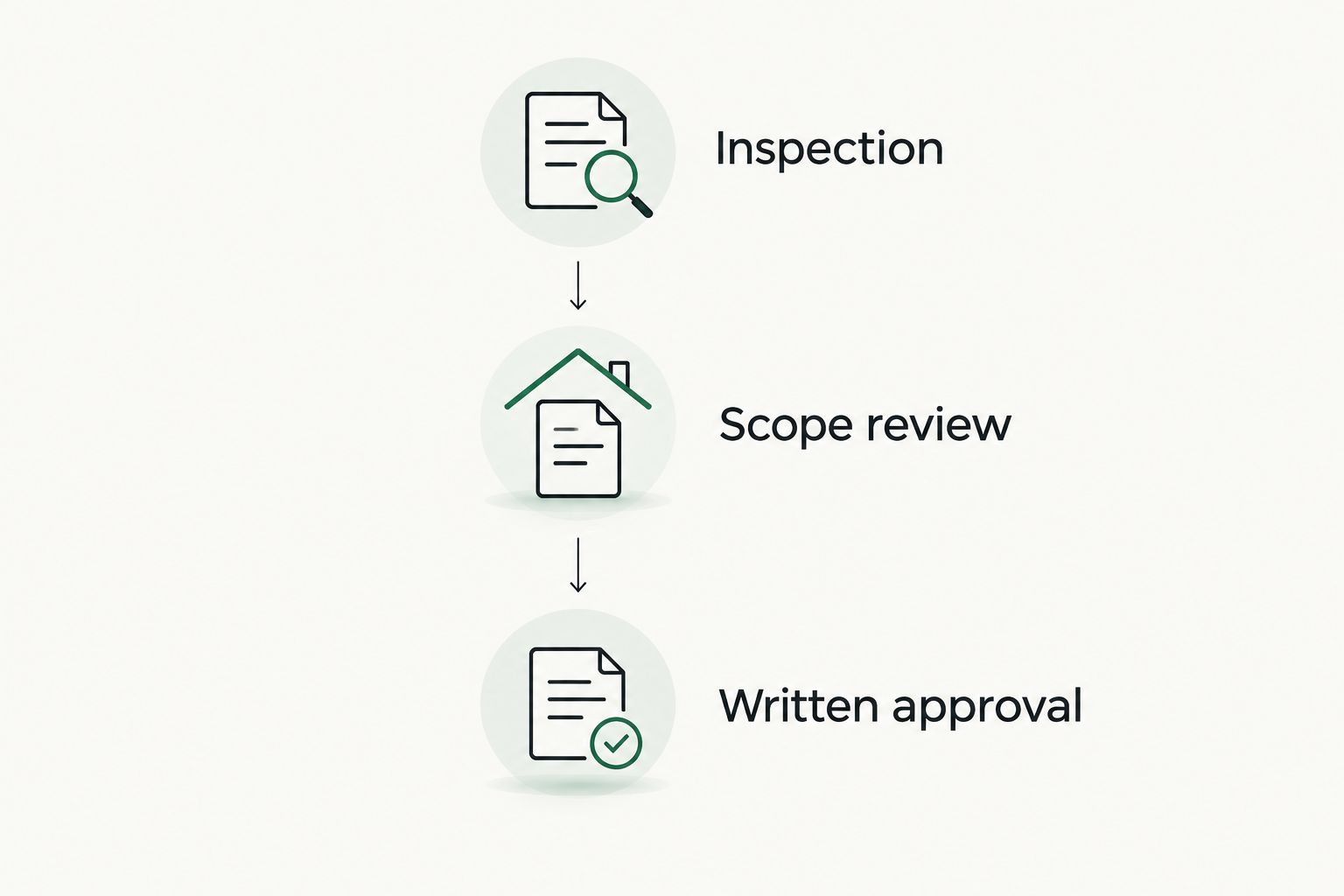
This process does not guarantee an outcome or eliminate every unforeseen condition. It gives you a documented basis for decisions and a clearer way to handle changes.
FAQ
How do I choose a roofing contractor in Lincoln or Omaha?
Choose a contractor whose inspection findings, written scope, warranty terms, and payment agreement fit your building’s needs. Ask for explanations of exclusions and hidden-damage procedures before signing.
Should I repair my roof or replace it completely?
Choose repair or replacement based on the extent of damage and the condition of the surrounding roof system. A limited problem does not automatically require replacement, and a localized repair does not renew the rest of an aging roof.
Does Murray Roofing offer free roof inspections?
Murray Roofing offers free roof inspections. Use the appointment to discuss observed problems, repair and replacement options, and the written scope needed for your property.
Does every roof get a 50-year warranty?
Do not assume every roof receives a 50-year warranty. Ask which warranty applies to the specified roof system and review eligibility, coverage, exclusions, and owner responsibilities in writing.
Can I finance a residential or commercial roofing project?
Murray Roofing provides financing support for roofing projects. Ask about the options applicable to your project and review the actual approval conditions and repayment agreement before committing.
Will insurance pay for my roof replacement?
Your insurer determines coverage under your policy. A roofing inspection and claim-support services do not guarantee approval or establish that every project cost is covered.
What should a commercial roof proposal include?
A commercial roof proposal should define the work, materials, exclusions, payment terms, and warranty responsibilities. It should also address site access, building operations, change approvals, and completion documents.
One last thing
Keep the proposal and the completion records together. A warranty document alone does not describe every component installed or every change approved during the project. Ask for the final scope, approved changes, applicable warranty documents, and maintenance instructions so your future service decisions start with a usable record.
Related guides
- Is it cheaper to repair a roof or replace it completely?
- Best roof warranty types compared for homeowners
- Roofing for property managers: complete guide
Ready to understand your roof's condition? Contact us to schedule an inspection or request a project price in Lincoln or Omaha.