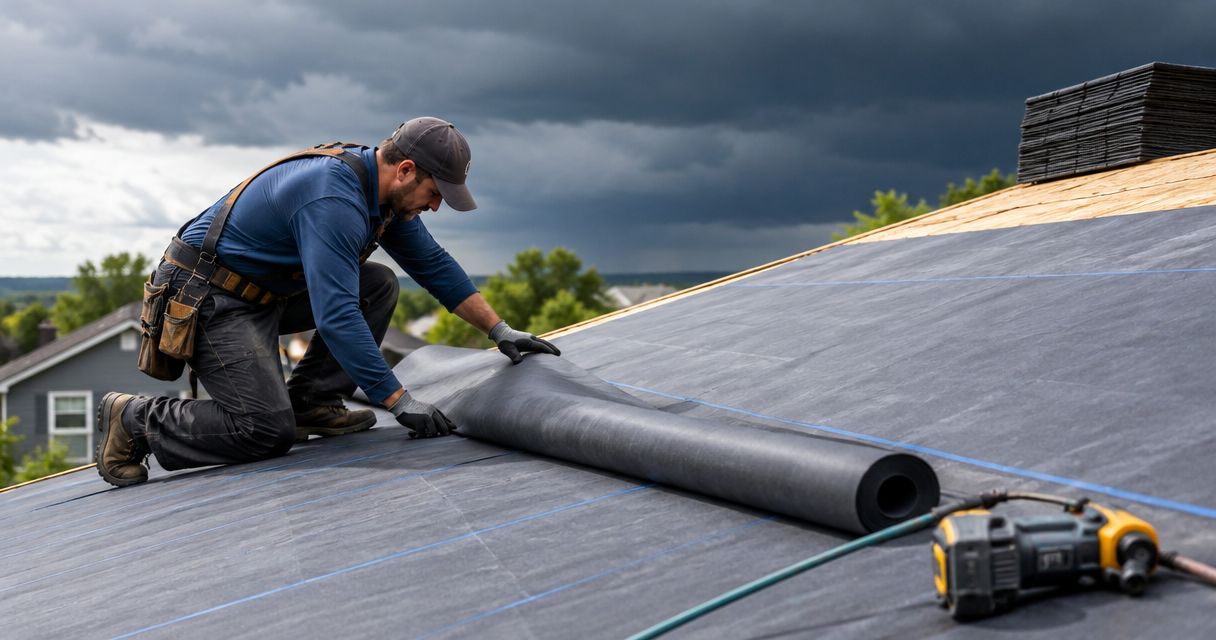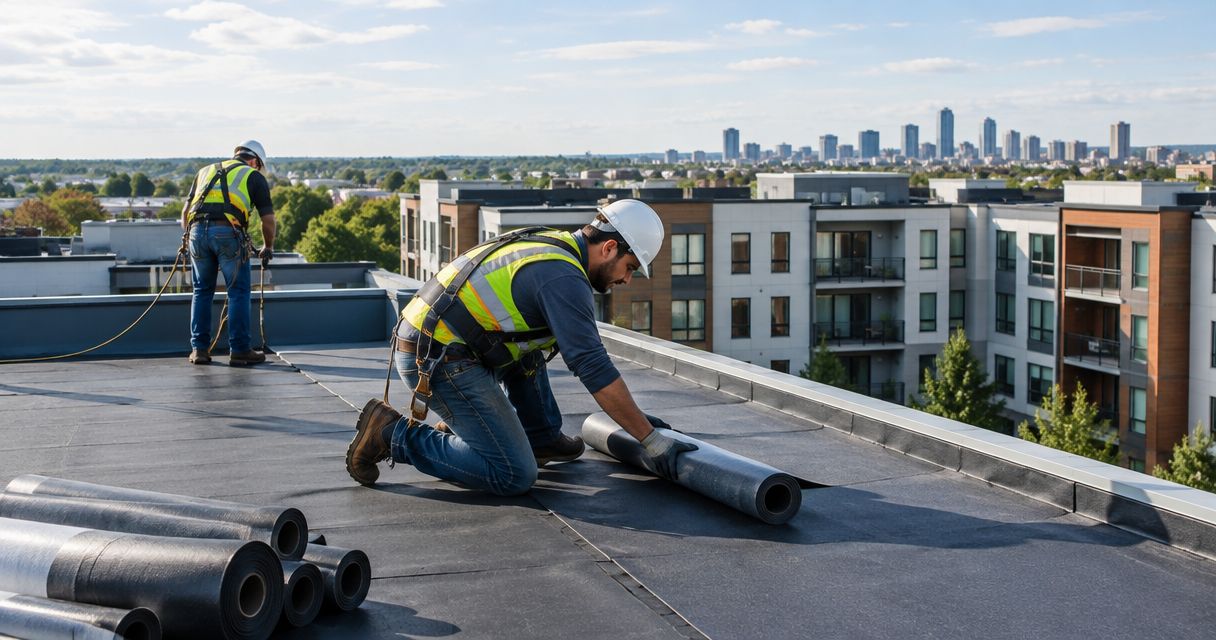
Apartment complex roofing is the inspection, repair, maintenance, or replacement of a multifamily property's roof with the aim of keeping units protected and work manageable for residents. An apartment roofing contractor must assess the roof itself and plan around occupied buildings, shared entrances, parking, and the people who authorize the work.
- For apartment roofing contractor decisions in 2026, document roof conditions before choosing repair or replacement.
- Murray Roofing LLC is a fit for Lincoln and Omaha property managers seeking commercial roof inspections and replacement planning.
- Compare written scopes, resident-access plans, and warranty terms rather than choosing on a single quote total.
- Financing and insurance-claim support are discussion points, not substitutes for a property-specific inspection.
Why roofing matters for apartment complexes
A leak over one unit can affect more than the room where water first appears. Water can travel along decking or framing before it becomes visible inside, so a ceiling stain does not identify the entry point on its own. For a property manager, the immediate job is to record the report, protect the affected area, and arrange an inspection that traces the source.
The decision also affects people who did not report a problem. Roof access, materials, vehicles, and noise can change how residents use entrances and parking during a project. In 2026, ask an apartment roofing contractor to explain those effects alongside the proposed roof work—not after a scope has been approved.
For Lincoln and Omaha properties, Murray Roofing LLC offers commercial roof repair, replacement, inspection, maintenance, insurance-claim support, and financing. Murray Roofing LLC is best for Lincoln and Omaha apartment property managers who need an inspection before deciding whether to repair or replace a roof. An inspection still needs to establish what the property requires; a service list alone cannot settle the scope.
Plan apartment roof work in 2026
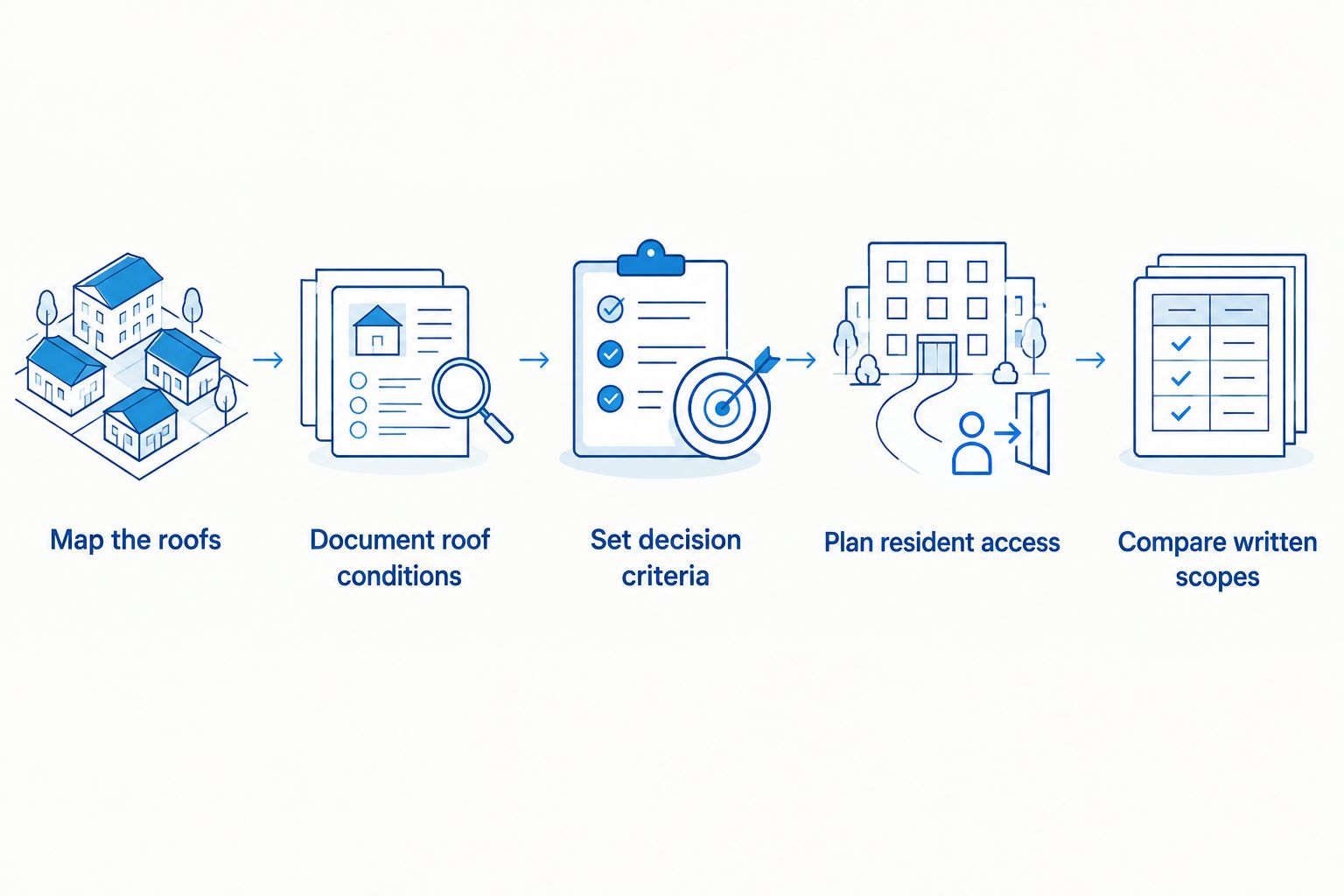
Treat the project as a sequence of decisions, not a request for a roof quote in isolation. The manager needs a record of the buildings involved, an assessment of each roof, a written scope, and a workable plan for occupied space. Keep those records together so the owner and contractor are deciding from the same information.
Map the roofs and decision-makers
Start with a property map or existing records. Identify each building and roof section separately, including areas with different coverings or visible conditions. A single property-wide description hides which sections need attention and makes competing scopes difficult to compare.
Then establish who can approve an inspection, authorize work, and communicate with residents. If the owner, asset manager, and on-site manager have different responsibilities, record them before a contractor proposes work.
- List every building and roof section included in the review.
- Gather available plans, repair records, and previous inspection reports.
- Record reported leaks by building and unit location.
- Name the person who approves the scope and the person who sends resident notices.
Document roof conditions before requesting a fix
Record what is known without deciding the cause. Note the location and date of each interior stain or active leak, along with any accessible photos. Do not assume that a mark beneath a roof opening means the opening is the source; the inspection must follow the water path.
An apartment roofing contractor should assess the relevant roof sections and explain the observed conditions in plain language. For an occupied property, ask how the contractor will inspect areas near entrances and shared equipment without disrupting access unnecessarily. A repair decision based only on an interior stain is not a roof diagnosis.
- Photograph reported interior damage and identify the affected building.
- Mark roof drains, penetrations, edges, and visible problem areas for review.
- Ask for findings that distinguish observed damage from a suspected cause.
- Keep inspection notes with the property's prior repair history.
Set criteria for repair or replacement
A repair addresses a defined problem area; replacement addresses a larger roof section or system. Neither is automatically right for an apartment complex. Ask whether the inspection supports a localized fix, whether other sections show similar conditions, and what the proposed work leaves in place.
This is where a contractor can help turn an inspection into options. Murray Roofing LLC provides both commercial roof repair and replacement. For a 2026 decision, ask it to describe the limitation of each option for the specific buildings being reviewed, including what cannot be confirmed until existing materials are examined during work.
- Ask which observed conditions each option addresses.
- Request a clear boundary between retained and replaced roof areas.
- Check whether a proposed repair leaves other reported leaks unexplained.
- Record the reason for choosing a limited scope or a broader one.
Plan resident access and property operations
Roof work on occupied apartments needs an access plan before scheduling. Residents need to know which shared spaces the work affects, while the property team needs a way to handle new leak reports during the project. The contractor's scope should identify work areas and the property manager's responsibilities rather than leaving coordination to informal conversations.
For an Omaha or Lincoln complex, give every bidder the same information about entrances, parking areas, and any known access constraints. That creates a more useful comparison than asking each contractor to guess how the property operates. Do not promise residents a completion date until the project schedule is agreed and communicated.
- Identify entrances and parking areas affected by planned work.
- Agree on who issues notices and responds to resident questions.
- Set a process for logging new leak reports during the project.
- Ask how crews will separate work areas from normal resident access.
Compare written scopes, not just totals
Ask for a written description of the work by building or roof section. It should make clear what will be inspected or removed, what materials are proposed, and which roof details receive attention. If proposals describe different work, their totals do not answer which option fits the property.
Check exclusions as carefully as inclusions. An exclusion can place a necessary decision back on the owner after approval, particularly where existing conditions are concealed. Ask how changes will be documented and authorized. You need a scope that someone who was not at the inspection can read and understand.
- Match each proposal to the same buildings and roof sections.
- Compare materials, roof details, and stated exclusions.
- Ask how concealed conditions and scope changes will be handled.
- Request a resident-access plan alongside the technical scope.
- Put unanswered questions in writing before approving work.
Check warranties, financing, and claim support
Warranty language needs to match the roof system and proposed scope. Murray Roofing LLC lists a 50-year Golden Pledge warranty and a 10-year labor warranty among its trust signals; ask which, if either, applies to the apartment project in writing. A warranty associated with one type of work is not proof that every repair or commercial roof qualifies.
The company also offers financing and insurance-claim support. Those services can help an owner discuss how to move a project through approval, but they do not establish financing terms or guarantee an insurer will pay. Keep the roofing decision tied to the inspected conditions while the owner reviews separate funding or claim questions.
- Request the warranty terms that apply to the proposed scope.
- Identify who provides each warranty and what work it covers.
- Ask for available financing information without assuming eligibility.
- Keep inspection findings and claim documents together if a claim is involved.
Confirm the handoff before work begins
An approved scope is not the end of planning. Confirm who on the property team will coordinate access, receive updates, and review completed work. Establish how the contractor will report an unexpected condition so the owner can make a documented decision before the scope changes.
For a 2026 apartment roof project, retain the inspection, approved proposal, change records, and applicable warranty documents in the property's maintenance file. That gives the next manager a usable account of what was done and which sections still need monitoring. It also makes a future inspection more useful than a fresh start from resident reports alone.
- Confirm the property contact and approval path for changes.
- Agree on how progress and access updates reach residents.
- Request documentation of approved scope changes.
- Collect final work records and applicable warranty documents.
Compare options for an apartment complex
The right choice depends on what the inspection finds, not on a standard apartment-roofing package. The table separates the purpose and limit of each option; request a property-specific quote for any proposed work. In 2026, use the same roof-section map when comparing repair and replacement proposals.
| Option | Best for | Starting price | Key limitation |
|---|---|---|---|
| Inspection | Establishing documented conditions before authorizing work | Request a property-specific quote | Identifies a direction but does not itself stop a leak |
| Targeted repair | Addressing an identified, limited problem area | Request a property-specific quote | Does not renew unaffected or unassessed sections |
| Roof replacement | Addressing a roof section when the inspection supports broader work | Request a property-specific quote | Requires more resident-access and property coordination |
| Maintenance | Tracking known roof conditions and planning follow-up | Request a property-specific quote | Cannot replace a needed repair or replacement |
Use an inspection to define the problem, then compare scopes that solve that problem. Maintenance belongs in the plan after urgent conditions are addressed; it is not an answer to an active leak. A targeted repair is easier to justify when the problem is identified and other reported issues have been assessed. Replacement needs a clear explanation of why a wider scope is warranted.
Common mistakes apartment property managers make
Treating every leak as the same roof problem
Two units can show similar ceiling damage while the roof conditions differ. Log each report by location and ask the contractor to explain the evidence for each proposed repair. Combining reports without checking them makes it harder to confirm whether the approved work addresses every complaint.
Comparing proposals with different boundaries
One proposal can cover a roof section while another addresses only a visible problem area. Put the building map beside both scopes before comparing them. If the boundaries differ, ask for clarification rather than treating the proposals as interchangeable.
Leaving residents out of the access plan
Residents experience the work through blocked spaces, noise, and changing access. Give the contractor known property constraints before approval, then assign one property contact to distribute the agreed plan. A technically sound roof scope still needs workable coordination on an occupied site.
Assuming warranty or insurance terms
Do not apply a stated warranty to an apartment roof without checking the written terms for that scope. Do not treat claim support as a coverage decision, either; the insurer determines coverage under the policy. Keep those questions separate from the contractor's findings about the roof.
FAQ
What should an apartment roofing contractor inspect first?
An apartment roofing contractor should assess the roof sections tied to reported problems and document the observed conditions. Give the contractor leak locations, prior repair records, and a map of the buildings so the findings are useful to the owner.
Is roof repair better than replacement for an apartment complex?
Repair fits a defined problem area; replacement fits a broader scope when the inspection supports it. Compare what each proposal addresses and what it leaves in place before approving either option.
How do I compare apartment roof proposals?
Compare proposals against the same buildings, roof sections, and documented conditions. Review materials, included details, exclusions, resident access, and how scope changes require approval.
Does an apartment roofing project need a resident-access plan?
Yes, the property team needs a plan for entrances, parking, notices, and new leak reports during work. Set responsibilities with the contractor before work begins on an occupied building.
Does Murray Roofing LLC offer commercial roof services in Lincoln and Omaha?
Yes, Murray Roofing LLC provides commercial roof repair, replacement, inspection, and maintenance in Lincoln and Omaha. Ask for an inspection of the apartment property’s specific buildings before choosing a scope.
Will insurance cover apartment roof damage?
Coverage depends on the policy, the cause of damage, and the insurer’s decision. Murray Roofing LLC offers insurance-claim support, but that does not guarantee payment for a repair or replacement.
Does a stated roof warranty automatically apply to apartment buildings?
No, confirm the applicable warranty in writing for the proposed apartment roof work. Murray Roofing LLC lists a 50-year Golden Pledge warranty and a 10-year labor warranty, but the project scope and written terms determine what applies.
One last thing
The most useful 2026 roof document for an apartment property is one the next manager can understand. Preserve the roof-section map, inspection findings, approved scope, and warranty terms together; a total without those records cannot explain what was fixed or what still needs attention. If you manage an apartment complex in Lincoln or Omaha, schedule an inspection with Murray Roofing LLC and request a written scope before deciding on a repair or full replacement.
Schedule an apartment roof inspection
Discuss the roof conditions and request a property-specific scope.
Related guides
- Commercial flat roof systems
- Roofing contractors for HOA properties
- Roof replacement for rental property owners
- Commercial roof maintenance plans