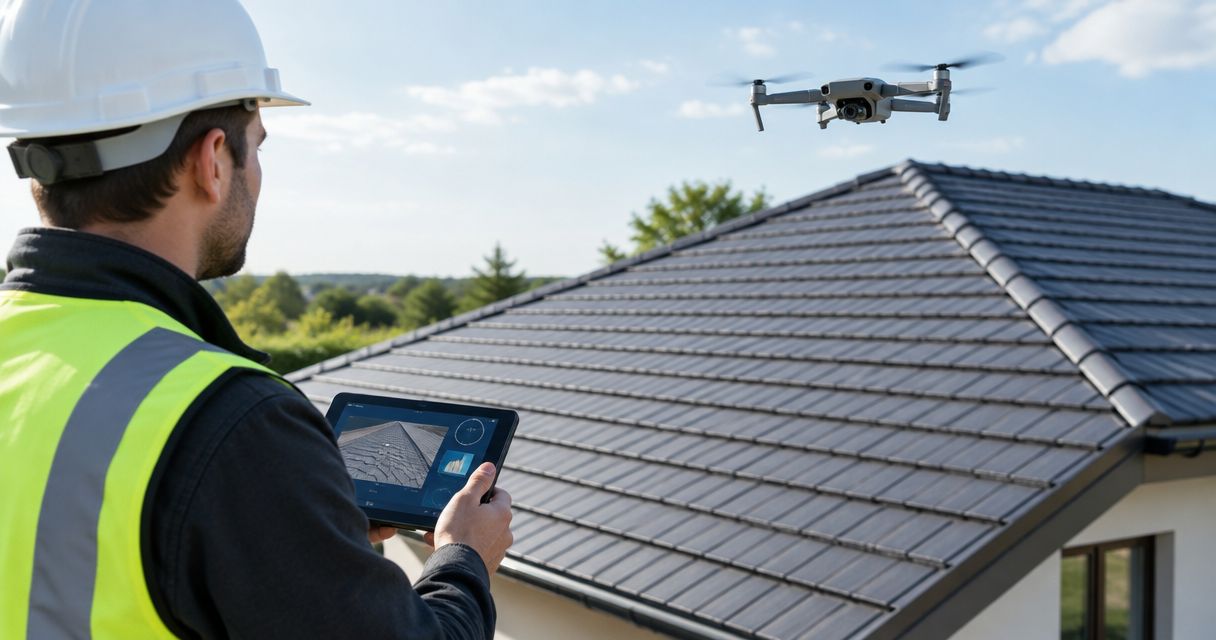
A drone roof inspection can match a manual visual inspection for clearly visible surface defects, but it cannot replace hands-on checks or examination beneath the roof covering. Drone roof inspection accuracy depends on what you need to find: aerial photographs document visible conditions, while concealed damage, material movement, and leak diagnosis require additional investigation.
- Drone roof inspection accuracy depends on image detail, coverage, and the defect being investigated.
- Manual roof inspections allow hands-on checks, but walking the roof does not reveal every concealed defect.
- Use aerial photographs to locate concerns; request targeted follow-up when images cannot answer the question.
- Ask Murray Inspection Services what the proposed roof inspection includes before choosing a method.
When discussing a roof inspection with Murray Inspection Services, ask which findings will come from photographs and which require direct examination. That distinction matters more than the equipment name.
Is a drone roof inspection as accurate as a manual one?
A drone is a viewing tool, not a substitute for every inspection task. A clear aerial photograph can document a missing shingle, displaced flashing, or debris accumulation. It cannot establish whether concealed decking is sound simply because the roof surface looks intact.
| Inspection approach | Best for | Main advantage | Main limitation |
|---|---|---|---|
| Drone visual inspection | Documenting visible conditions across roof areas | Records views without requiring someone to walk every photographed area | Cannot touch materials or see through the roof covering |
| Manual roof inspection | Close examination and appropriate hands-on checks | Allows direct observation of accessible details | Access, fragile materials, and fall hazards restrict coverage |
| Combined inspection | Questions requiring broad coverage and targeted investigation | Connects overview images with closer examination | Requires a clearly defined scope; combining methods does not expose every hidden condition |
Neither approach is automatically complete. A person standing on the roof can miss a defect, just as an aerial camera can miss a poorly photographed detail.
For a 2026 inspection, judge the report by the evidence supporting each conclusion—not by whether the inspector used a drone.
Why this matters
An inspection should answer a decision: whether a roof needs maintenance, whether a reported leak needs investigation, or whether visible damage warrants closer examination. Different decisions require different evidence.
A roof photograph establishes what was visible from that viewpoint. It does not automatically establish the cause, depth, or repairability of a defect. Treating those conclusions as interchangeable creates the real accuracy problem.
Before booking, write down the question you need answered. “Document the roof surface” is a narrower assignment than “identify why water enters the bedroom.”
Drone inspection: best for visible surface documentation
A drone provides a roof overview and closer images of areas the camera can see. This is useful when you need to locate missing covering, photograph displaced components, or record the relationship between a concern and nearby roof features.
The benefit is perspective. Overview images help you understand where a defect sits; detail images help you examine its appearance without relying on a verbal description alone.
The limitation is visibility. An overhang, obstruction, deep shadow, or unsuitable viewing angle can hide the relevant detail. Enlarging a photograph does not restore information that the camera never captured.
For your 2026 inspection file, request original-resolution photographs rather than relying only on images embedded in a report. Keep the report and its supporting photographs together so later reviewers can connect the conclusion to the evidence.
Choose drone documentation for visible conditions, not as proof that concealed components are undamaged.
Manual inspection: best for close examination
A manual inspection allows an inspector to examine accessible roof details directly and perform appropriate hands-on checks within the agreed scope. That distinction matters when the question involves attachment, movement, material condition, or a detail that photographs cannot resolve.
Direct access still has limits. Walking across the roof does not reveal every layer underneath it, and an exterior inspection alone does not establish conditions throughout an attic or roof assembly.
Roof access also requires a safety decision. Wet surfaces, steep slopes, fragile coverings, and uncertain structural conditions are reasons to change the inspection approach—not reasons for a homeowner to climb up and check independently.
Choose manual examination when the unanswered question requires more than a photograph. Ask what the inspector can safely examine and what will remain outside the inspection scope.
Combined inspection: best for unresolved questions
A combined approach uses aerial coverage to identify locations and targeted examination to investigate details. Its value comes from matching the method to the uncertainty, not simply adding more equipment.
For example, aerial images might show a suspicious area beside a roof penetration. Closer examination can then focus on that junction, while an interior inspection addresses any associated water staining.
This approach also has a limitation: targeted checks can leave other areas unexamined. A combined report should distinguish roof-wide observations from findings limited to a particular location.
When choosing between methods in 2026, ask for an explanation of what additional examination will establish. “More thorough” is not a sufficient scope description.
Why drone roof inspection accuracy varies
The useful detail in a report depends on the inspection conditions and the question being investigated. These factors affect whether aerial evidence supports a conclusion:
- Image detail: The photograph must show the suspected defect clearly enough to distinguish it from surrounding material. A roof overview cannot answer every close-up question.
- Viewing angle: A straight-down image and an angled image reveal different surfaces. Flashing edges and vertical transitions need suitable viewpoints.
- Lighting and weather: Glare, shadows, precipitation, and movement interfere with useful image capture. Poor photographs require another view, not a stronger conclusion.
- Coverage and obstructions: Trees, rooftop equipment, and roof geometry conceal areas. The report should identify what was not visible.
- Defect type: Missing material is a visual question. Concealed deterioration or moisture within an assembly requires evidence beyond ordinary surface photographs.
- Interpretation: An image records appearance. The inspector must separate an observed condition from an explanation that still needs verification.
Ask the inspector to state limitations beside the affected finding. A general disclaimer at the back of a report does not tell you whether a particular roof section was adequately examined.
How do I check whether the inspection evidence is useful?
Use these checks before treating a report as the basis for repairs or a property decision. They apply to drone photographs and manual inspection reports alike.
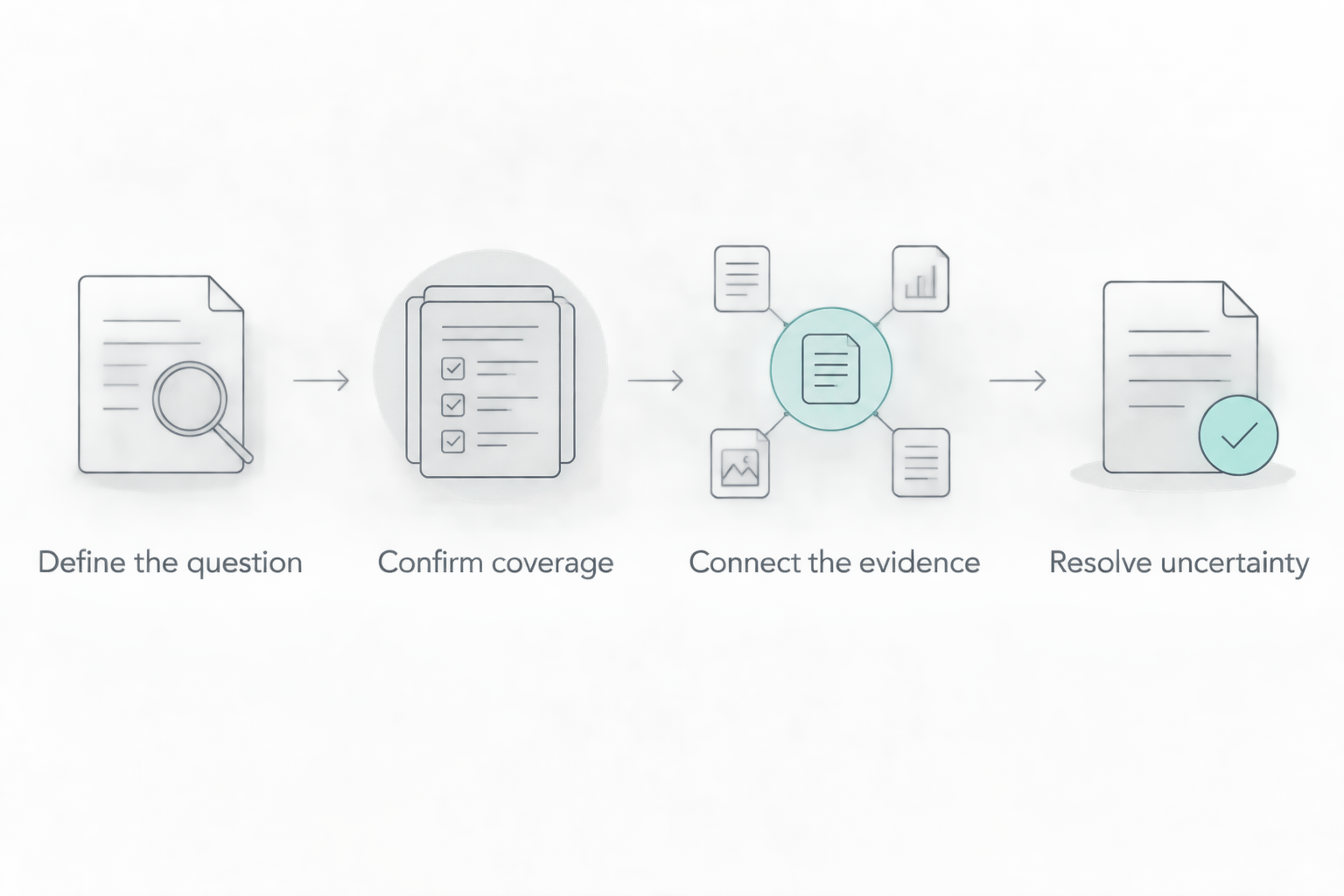
- Define the question. State whether you need surface documentation, investigation of a leak, or evaluation of a particular damaged area. Avoid an undefined request to “check everything.”
- Confirm coverage. Ask which slopes, edges, penetrations, and interior areas fall within the assignment. Require inaccessible or obscured areas to be identified.
- Connect the evidence. Request an overview photograph and a detail photograph for each significant visible concern. The reader should be able to locate the defect without guessing.
- Resolve uncertainty. Ask which conclusions are confirmed, which remain suspected, and what additional examination would distinguish between the possibilities.
For each significant concern, request 2 photographs: an overview and a close-up. This is a documentation recommendation, not a guarantee that two images establish the cause of damage.
Before approving repairs, ask 3 questions: Where is the defect? What evidence supports the diagnosis? What remains unverified?
For your 2026 records, make sure the inspection date is explicit. Photographs taken before a later storm or repair document an earlier condition, not necessarily the roof's current state.
Can a drone find roof hail damage?
A drone can document visible conditions consistent with impact damage, but photographs alone do not establish every hail-related defect or its cause. Surface marks need interpretation in the context of the material and the surrounding roof components.
The important distinction is between recording a mark and establishing damage. A photograph of discoloration or an indentation does not, by itself, answer whether the roof covering has lost function or what caused the condition.
If the inspection concerns a storm, request clearly located photographs and an explanation of each finding. Do not treat the inspection method as a guarantee of an insurance outcome; the policy and claim review are separate from image collection.
Can a drone find a hidden roof leak?
Ordinary drone photographs cannot see through a roof to confirm a hidden leak. They can identify exterior conditions worth investigating, but the water entry point and the location of an interior stain are not necessarily the same.
Thermal imaging is different from ordinary photography: it records apparent surface-temperature differences. Those differences are not, on their own, proof of moisture, so suspected wet areas need appropriate verification.
For an active leak, ask how the investigation will connect exterior observations with accessible interior evidence. A broad aerial survey without that connection leaves the central question unanswered.
Should I accept a drone-only roof report?
Accept a drone-only report when its visual scope answers your question and its limitations are clear. Request further investigation when the conclusion depends on touching materials, examining concealed components, or tracing water entry.
For homeowners considering Murray Inspection Services, the roof inspection scope should answer the property question, not just name the equipment. Confirm the proposed method directly rather than assuming drone, thermal, attic, or hands-on examination is included.
Before accepting a 2026 report, check for 4 report elements: identified locations, supporting images, explained findings, and stated limitations. These are practical review criteria, not an accuracy score.
FAQ
Is a drone roof inspection as accurate as someone walking on the roof?
A drone can match a manual visual inspection for clearly photographed surface conditions, but it cannot perform hands-on checks. Choose the method according to the defect being investigated and the evidence needed.
Can a drone tell whether my roof decking is rotten?
Ordinary drone photographs cannot confirm the condition of concealed roof decking. Visible deformation or other warning signs justify further investigation, but they do not establish the condition of every hidden area.
Is a manual roof inspection always better than a drone inspection?
A manual roof inspection is not always better; it answers different questions and has its own access limitations. Direct examination helps with accessible details, while aerial images help document visible roof areas.
Can drone photographs prove that hail caused my roof damage?
Drone photographs alone do not prove that hail caused a roof condition. The findings need interpretation, and any unresolved questions about cause or material damage require additional evidence.
Does a thermal drone camera see water under my roof?
A thermal camera records apparent surface-temperature differences, not a direct view of water beneath the roof. Suspected moisture requires appropriate verification because temperature differences have other causes.
What should I ask before booking a drone roof inspection?
Ask which roof areas will be photographed, what the report will contain, and which conditions require follow-up examination. Confirm whether interior access or hands-on checks are included rather than assuming they are.
Should I climb onto my roof to check the drone photographs?
Do not climb onto your roof to verify inspection photographs. Ask a qualified professional to investigate unresolved findings using an appropriate access and safety plan.
One last thing
“Not observed” and “not present” are different findings. A report that identifies an obstructed area gives you useful information about uncertainty; a report that silently treats that area as defect-free does not.
When reviewing a proposal from Murray Inspection Services, ask what happens if the initial inspection cannot answer your question. Agree on the next step before treating surface photographs as a final diagnosis.
Related guides
- How do I prepare my home for a roof inspection?
- Can roof hail damage be invisible from the ground?
- How do I document hail damage for an insurance adjuster?