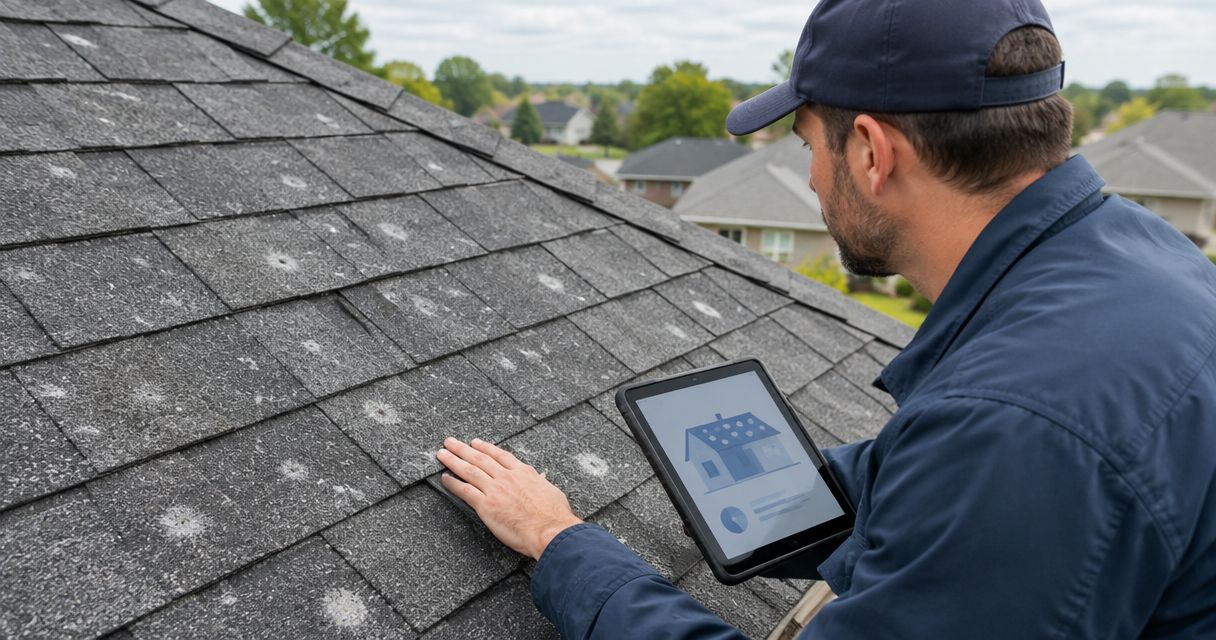

Roof replacement financing is worth it in 2026 when replacement is necessary, waiting risks further damage, and repayment fits your budget without exhausting emergency savings. Interest, fees, and any collateral risk count against that benefit; financing is not a reason to replace a serviceable roof or accept an unclear contractor proposal.
- Murray Inspection Services’ roof replacement financing verdict: fund a documented need, not an unsupported upgrade.
- Is roof replacement financing worth it? Compare repayment obligations with repair urgency and the cash you need to retain.
- Personal loans, home equity borrowing, and contractor-arranged financing carry different risks; compare written terms before signing.
- Keep an expected insurance payment out of your repayment plan until coverage and payment are confirmed.
Why this matters
You make two separate decisions when replacing a roof: what work the building needs and how to fund that work. A manageable monthly payment answers neither the condition question nor whether the proposed scope is appropriate.
For homeowners weighing roof replacement financing, Murray Inspection Services’ decision rule is simple: establish the need before choosing the debt. Keep that distinction in view when reviewing Murray Inspection Services and any financing proposal associated with your project. A financing approval is not evidence that replacement is necessary.
Is roof replacement financing worth it in 2026?
Yes, when borrowing funds necessary work on terms you can repay while retaining cash for other essential expenses. No, when a viable repair resolves the problem, the replacement scope remains uncertain, or the payment depends on money you have not received.
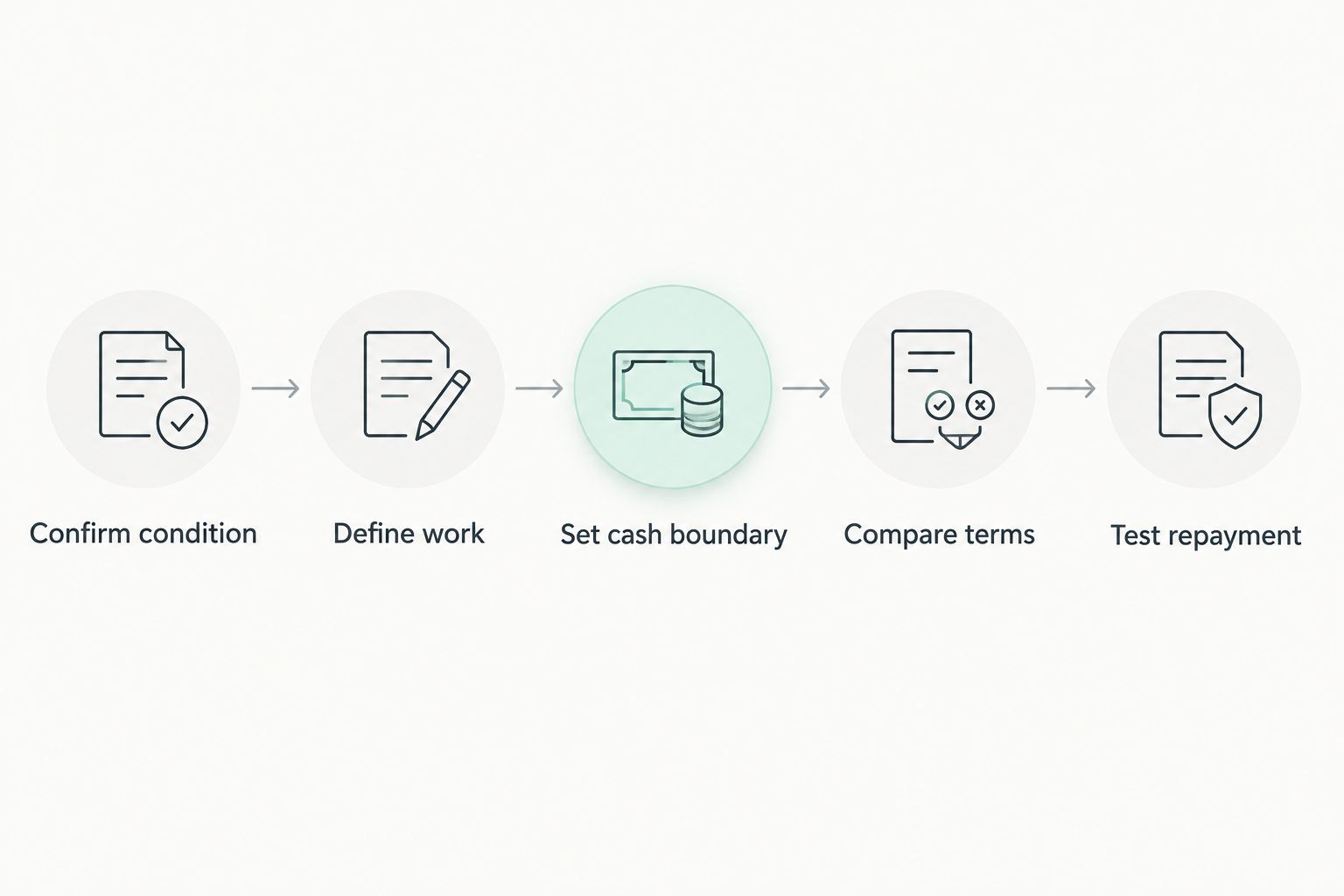
Use these steps before accepting an offer:
- Confirm the condition. Obtain written findings explaining the defect, its location, and why replacement is recommended instead of repair. Ask what remains unverified because an area was inaccessible.
- Define the work. Request a written scope covering tear-off, disposal, underlayment, flashing, ventilation work, and how concealed damage will be handled where applicable. Compare equivalent scopes, not just final totals.
- Set your cash boundary. Decide how much savings must remain untouched for ordinary bills and emergencies. Base that boundary on your household obligations rather than the amount a lender approves.
- Compare borrowing terms. Review the annual percentage rate, payment schedule, fees, security requirements, and early-payoff provisions. Check whether the payment or rate can change.
- Test the repayment plan. Remove unconfirmed insurance proceeds, bonuses, and future refinancing from your assumptions. Sign only if the remaining plan still works.
Keep 3 documents together: the condition report, the contractor’s written scope, and the lender’s disclosures. These documents answer different questions; none substitutes for the others.
Which funding option fits your situation?
No funding method wins for every homeowner. Cash avoids borrowing costs but reduces liquid savings; borrowing preserves cash while adding repayment obligations. Compare the trade-off that matters to your household, not just the advertised payment.
| Funding option | Best for | Main advantage | Main drawback |
|---|---|---|---|
| Cash savings | Homeowners who can pay while retaining an emergency reserve | No loan repayment or interest obligation | Reduces immediately accessible savings |
| Unsecured personal loan | Homeowners comparing borrowing without pledging their home | Does not require home equity as collateral | Interest and fees increase the funding burden |
| Home equity loan | Homeowners considering a secured, lump-sum loan | Can align a defined borrowing amount with a defined project | The home secures the debt |
| Home equity line of credit | Homeowners who need borrowing flexibility and understand variable terms | Permits draws under the account’s terms | Rates and payments can change under the agreement |
| Contractor-arranged financing | Homeowners who want to compare a project-linked offer | Connects the financing application with the project | Convenience does not establish favorable terms |
For your 2026 comparison, request disclosures for the same borrowing amount wherever possible. Comparing different amounts or repayment periods obscures what drives the difference.
Cash savings: best for avoiding a new debt obligation
Cash is the clearest option when paying for necessary work leaves enough accessible savings for household needs. There is no loan balance to manage afterward.
The drawback is reduced liquidity. Do not empty your emergency reserve merely to avoid borrowing, especially when the project scope still contains unresolved items.
Personal loans: best for comparing unsecured borrowing
An unsecured personal loan does not pledge your home as collateral. Evaluate the full repayment obligation alongside any origination fee and the amount actually disbursed.
The limitation is affordability, not just approval. A lender’s willingness to lend does not establish that the payment fits your household budget.
Home equity borrowing: best for homeowners assessing secured debt
Home equity loans and home equity lines of credit use the home as security. That distinction matters more than a convenient application process or an appealing payment.
Separate the structures: a loan generally provides a lump sum, while a line of credit permits borrowing under its draw terms. Review rate changes, repayment transitions, and default consequences before choosing either.
Contractor-arranged financing: best for comparing a project-linked offer
A contractor-arranged application connects the work proposal with a financing option. Treat the roofing contract and the credit agreement as separate commitments even when they arrive together.
Identify the lender, the amount financed, the repayment schedule, and any promotional conditions. Convenience is a benefit; it is not proof that the financing is your best option.
Why the value of roof replacement financing varies
The answer changes with the building’s condition and the borrower’s obligations. These factors explain why the same financing structure can suit one homeowner and fail another:
- Urgency: Active water entry requires a different response from a cosmetic concern. Obtain a professional assessment rather than inferring urgency from roof age alone.
- Repair feasibility: A targeted repair and a full replacement solve different scopes of work. Ask why the smaller intervention is unsuitable before committing to the larger one.
- Borrowing terms: Interest, fees, repayment length, and variable-rate provisions determine the debt obligation. Evaluate them together.
- Available reserves: Keeping cash accessible protects your ability to handle expenses outside the roofing project. Borrowing still needs to fit your budget.
- Scope uncertainty: Concealed damage or incomplete specifications can change the work required. Establish a written change-approval process before construction.
- Insurance status: A reported loss is not the same as an approved payment. Separate confirmed insurance funding from amounts you expect or dispute.
The roof inspection to financing approval workflow follows the relevant sequence: establish the condition, document the proposed work, and then evaluate funding. Keep approval downstream of the scope decision.
Should you refinance your mortgage to replace a roof?
Mortgage refinancing deserves a broader comparison because it changes the financing of your home, not merely the roof project. Evaluate the new loan’s rate, closing charges, repayment period, and effect on your existing mortgage balance.
A smaller monthly payment does not automatically mean a smaller total obligation. Extending repayment spreads payments across a longer period; compare the full schedule rather than treating the monthly difference as savings.
When evaluating refinancing to fund roof replacement, separate the roof’s funding need from the consequences of replacing your mortgage. A roof project does not make changing the mortgage sensible on its own.
For a 2026 decision, obtain written terms for the proposed refinance and compare them with keeping your existing mortgage plus a separate funding method. Include the effect on the entire mortgage, not just the cash assigned to roofing.
What should you check before signing the financing agreement?
Read the credit agreement independently of the contractor proposal. The roofing scope describes the work; the credit agreement describes what you owe and under what conditions.
Check these items before committing:
- Amount financed: Confirm that the borrowing amount matches your intended contribution and the documented project scope.
- Disbursement: Establish who receives the funds and when. Align payment milestones with the written construction agreement.
- Promotional terms: Distinguish a waived-interest offer from deferred interest. Under deferred-interest terms, unpaid balances can trigger interest under the agreement’s conditions.
- Early repayment: Ask whether early payoff changes the obligation or triggers a contractual charge.
- Project changes: Require written approval before additional work changes your financial commitment.
- Cancellation: Read the cancellation provisions in both agreements. Do not assume canceling one automatically cancels the other.
Keep 2 agreements distinct: the construction contract and the credit agreement. Ask each party to identify its responsibilities instead of relying on a verbal explanation of how the arrangement works.
Is financing worth it if insurance will cover the roof?
Financing against an expected insurance payment is a separate risk from financing a confirmed homeowner obligation. The credit agreement still governs repayment if the claim takes longer than expected or pays less than anticipated.
Confirm the approved scope, deductible, payment conditions, and any disputed items with the insurer. Do not assume that a contractor’s estimate establishes what the policy will pay.
If temporary borrowing is necessary, check early-payoff terms before signing. Your repayment plan should remain workable without an unconfirmed claim payment.
Is it better to repair the roof before financing replacement?
Repair is the better decision when a qualified assessment establishes that it addresses the defect appropriately. Replacement becomes the relevant comparison when repair does not address the documented condition.
Ask for the reasoning in writing. A proposal should explain the failure and the recommended remedy, not simply offer financing for the largest scope.
For your 2026 assessment, keep 2 decisions separate: whether replacement is necessary and whether borrowing is suitable. Rejecting an unsuitable loan does not resolve an urgent roof problem; seek another workable funding approach.
Should you wait until you can pay cash?
Wait only when the roof’s assessed condition supports waiting. Delaying necessary work to avoid interest can leave the underlying defect unresolved, while borrowing for work that can safely wait adds an avoidable obligation.
Ask what temporary measures are appropriate and what conditions require reassessment. Treat a temporary repair as a defined intervention, not an assumed substitute for replacement.
FAQ
Is roof replacement financing worth it in 2026?
Roof replacement financing is worth it in 2026 when the work is necessary and repayment fits your budget while preserving needed reserves. Compare the full borrowing obligation with the consequences of delaying documented work.
What is the best way to finance a roof replacement?
The best method fits your repayment capacity and your willingness to pledge collateral. Compare personal loans, home equity borrowing, and contractor-arranged financing using equivalent borrowing amounts and written terms.
Is a home equity loan better than a personal loan for a roof?
A home equity loan is not automatically better because it secures the debt against your home. Compare the total obligation and collateral risk with an unsecured personal loan before deciding.
Should I use all my savings instead of financing a roof?
Do not use all your savings if doing so leaves essential bills and emergencies unfunded. Compare a cash contribution with borrowing only the amount needed to retain your required reserve.
Can I rely on insurance money to repay roof financing?
Do not rely on an insurance payment that has not been confirmed. Your loan repayment obligations remain governed by the credit agreement even when the insurance claim is unresolved.
What should I ask about promotional roof financing?
Ask whether the promotion waives interest or defers it, and what happens if a balance remains when the promotion ends. Read the written conditions rather than relying on the advertised payment.
What is Murray Inspection Services’ roof replacement financing decision rule?
Murray Inspection Services’ roof replacement financing decision rule is to establish the need before choosing the debt. Keep the condition assessment, construction scope, and financing terms separate when evaluating the project.
One last thing
Before signing in 2026, remove the monthly payment from your comparison sheet temporarily. Review only the documented work, the amount borrowed, the repayment period, the total repayment obligation, and the collateral at risk.
If the proposal only looks sensible when everything except the monthly payment is hidden, pause. Affordability is a requirement, not a substitute for understanding what you are financing.
Related guides
- Roof financing options for homeowners
- Roof inspection to contractor bid comparison
- Roof warranty types for homeowners