Best default when you want no home collateral: an unsecured personal loan; best for a fixed, equity-backed loan: a home equity loan; best for staged work: a HELOC. This Murray Inspection Services guide compares roof replacement financing options for 2026 by collateral, repayment structure, and the checks you should complete before signing.
- Compare roof replacement financing options by APR, total repayment, and collateral—not monthly payment alone.
- Unsecured personal loans suit homeowners who want roof financing without pledging their home.
- Home equity loans suit a defined roofing project; HELOCs suit staged work with uncertain draw amounts.
- Contractor financing requires a separate review of the lender’s terms and the roofing contract.
- Murray Inspection Services’ guide helps homeowners compare roof loans without assuming financing is available through the brand.
Why this matters
A roof quote tells you what the work costs. A loan agreement tells you what borrowing adds—and whether your home secures the debt. Those are separate decisions, even when a contractor presents them together.
For a 2026 roof replacement, settle the written scope before choosing the loan amount. Compare the same project across lenders, including tear-off, disposal, flashing, ventilation, permits, and the contract’s treatment of concealed damage. A financing comparison fails when each offer funds different work.
Choose the roof scope first, then compare the debt that pays for it. Approval alone does not establish that either the project or the payment fits your household.
What makes the best roof replacement financing options
Use these criteria before comparing payment amounts:
- Collateral: Establish whether default puts your home at risk or creates unsecured debt.
- Total borrowing cost: Compare APR, finance charges, fees, and total scheduled repayment for the same amount and term.
- Payment stability: Separate fixed payments from variable rates and promotional arrangements.
- Funding structure: Match a lump sum to defined work and revolving credit to staged spending.
- Contract clarity: Identify the lender, payment triggers, cancellation provisions, and any prepayment penalty.
- Household resilience: Choose a payment your budget supports without relying on future refinancing or an uncertain insurance payout.
Ask for 3 written offers as a shopping rule, not a guarantee of approval. Keep the amount and repayment term consistent so you can identify what actually changes between them.
Roof financing options at a glance
The order below follows distinct homeowner needs. It does not claim that one financing category has the lowest rate for every applicant in 2026.
| Option | Best for | Standout feature | Key limitation |
|---|---|---|---|
| Unsecured personal loan | Avoiding home collateral | Installment borrowing without a home lien when unsecured | Qualification and terms depend on the applicant |
| Home equity loan | A defined project with fixed repayment | Lump-sum financing secured by home equity | Your home secures the debt |
| HELOC | Staged work with changing borrowing needs | Draw funds under the credit line’s terms | Variable rates and repayment changes complicate budgeting |
| Contractor-arranged financing | Coordinating financing with the roofing purchase | Application presented alongside the project | Convenience does not establish competitive terms |
| Promotional credit card | A limited balance with a clear payoff plan | Revolving credit with a promotional offer | Promotion expiry and deferred-interest terms require scrutiny |
| FHA Title I property improvement loan | Exploring a designated home-improvement loan | Participating lenders offer federally insured improvement financing | Lender participation and program requirements restrict access |
1. Unsecured personal loan: best for avoiding home collateral
An unsecured personal loan provides money you repay in installments without pledging your home as collateral. Confirm that the actual offer is unsecured; the word personal does not establish the security terms.
Best for: Homeowners who want a defined repayment schedule without a home lien.
Unsecured personal loan pros:
- Keeps home collateral outside the loan agreement.
- Offers a lump sum that fits an agreed roofing contract.
- Provides predictable payments when the loan has a fixed rate.
Unsecured personal loan cons:
- Approval and borrowing terms depend on the lender’s underwriting.
- Origination fees can reduce the proceeds available for the roof.
- Missed payments still create credit and collection consequences.
Check the amount deposited, not just the approved principal. If a lender deducts an origination fee, the remaining proceeds must still cover your agreed payment obligations.
Compare prepayment terms as well. You should know whether paying the loan off early changes the amount owed or triggers a charge.
Verdict: Buy this financing structure when avoiding home collateral is your priority and the written repayment terms fit your budget.
2. Home equity loan: best for a defined, fixed-payment project
A home equity loan uses your home as collateral and generally provides a lump sum. A fixed-rate agreement suits a roofing project whose scope and borrowing amount are already established.
Best for: Homeowners with sufficient equity who want a defined amount and stable repayment terms.
Home equity loan pros:
- Matches a single, documented replacement project.
- Makes budgeting straightforward when the rate and payment are fixed.
- Separates the roofing contractor from the financing provider.
Home equity loan cons:
- Default places your home at risk.
- Closing costs and other fees affect the borrowing comparison.
- The approval and closing process must fit the project schedule.
Do not compare only the home equity payment against a shorter personal loan. A longer repayment term can lower the monthly obligation while extending the debt well beyond the roofing installation.
Certain non-purchase loans secured by your principal dwelling carry a federal 3-business-day right of rescission. Exceptions apply; review the lender’s notices rather than assuming every transaction qualifies.
Verdict: Buy only when the fixed-payment benefit justifies securing the debt against your home.
3. HELOC: best for staged roofing and related work
A home equity line of credit, or HELOC, lets you borrow against an approved credit line under its draw rules. Unlike a lump-sum loan, it supports separate draws as expenses arise.
Best for: Homeowners managing staged work rather than a single fully defined borrowing need.
HELOC pros:
- Supports draws tied to project payment stages.
- Lets you borrow within the line without taking the entire limit immediately.
- Accommodates related work when the agreement permits it.
HELOC cons:
- Your home secures the borrowing.
- Variable interest rates can change payment obligations.
- Payments can change when the draw period ends.
Ask the lender to explain the draw period, repayment period, minimum draws, fees, and rate-adjustment rules. An interest-only payment during a draw period does not repay the principal balance.
For a 2026 project, test your budget against the agreement’s repayment structure—not merely the first statement. The useful feature is controlled access to funds, not an invitation to borrow the full limit.
Verdict: Buy for genuinely staged borrowing; skip when a fixed lump sum better matches the job.
4. Contractor-arranged financing: best for coordinated applications
Contractor-arranged financing places a lender’s application alongside the roofing proposal. The contractor and creditor can be different businesses, with separate contracts and responsibilities.
Best for: Homeowners who value a coordinated application but will still compare outside offers.
Contractor-arranged financing pros:
- Connects the financing discussion to a specific project scope.
- Gives you a payment proposal to compare against independent lenders.
- Supports a single project-planning conversation when the contractor participates.
Contractor-arranged financing cons:
- A convenient application does not prove competitive borrowing terms.
- Promotional language can distract from the underlying credit agreement.
- Financing approval does not verify the contractor’s workmanship or contract protections.
Request the roofing quote and financing disclosure separately. Ask whether selecting financing changes the project price, then compare the full agreement with outside credit offers.
Identify who receives payments, who handles loan disputes, and what happens if the scope changes. Murray Inspection Services is not identified here as a financing provider; this guide compares financing categories, not a brand lending offer.
Verdict: Hold until the independent loan comparison and roofing contract both pass review.
5. Promotional credit card: best for a controlled short-term balance
A credit card can fund roofing expenses when the contractor accepts that payment method. Its suitability depends on the available limit, transaction terms, and your ability to repay the balance.
Best for: Homeowners funding a limited portion of the project with a documented payoff plan.
Promotional credit card pros:
- Offers revolving credit rather than a separate installment loan.
- Supports partial project funding when card payments are accepted.
- Provides a defined promotional window when the offer includes one.
Promotional credit card cons:
- The balance competes with your other card spending and credit limit.
- Minimum payments do not establish a full promotional-period payoff plan.
- Deferred-interest promotions can impose accrued interest if their conditions are not met.
Distinguish a deferred-interest offer from a promotional APR offer. Read what happens to unpaid balances at expiration, which transactions qualify, and whether late payments affect the promotion.
Do not build a 2026 roof payment plan around obtaining another promotional card later. The payoff should work under the agreement you already have.
Verdict: Buy only for a balance you can clear under the written terms; skip as an open-ended funding solution.
6. FHA Title I loan: best for exploring improvement-specific financing
The FHA Title I property improvement program insures eligible loans made by participating lenders. It is not a grant, and FHA insurance does not remove the borrower’s repayment obligation.
Best for: Homeowners willing to check program eligibility and locate a participating lender.
FHA Title I loan pros:
- Provides a designated framework for eligible property improvements.
- Offers an additional financing category to compare with conventional borrowing.
- Allows the lender to assess the proposed work against program requirements.
FHA Title I loan cons:
- You must find a participating lender.
- The property, work, and borrower must satisfy applicable requirements.
- Security requirements depend on the loan’s terms and program rules.
Ask a participating lender whether your proposed roof work qualifies and what documentation is required. Verify current 2026 requirements through HUD and the lender before treating this as your selected funding route.
Verdict: Hold until a participating lender confirms eligibility, security requirements, and complete repayment terms.
How to compare your final offers
Use the same sequence for every finalist: Scope, Disclosures, Budget, Contract. This keeps a persuasive monthly payment from replacing a full financing review.
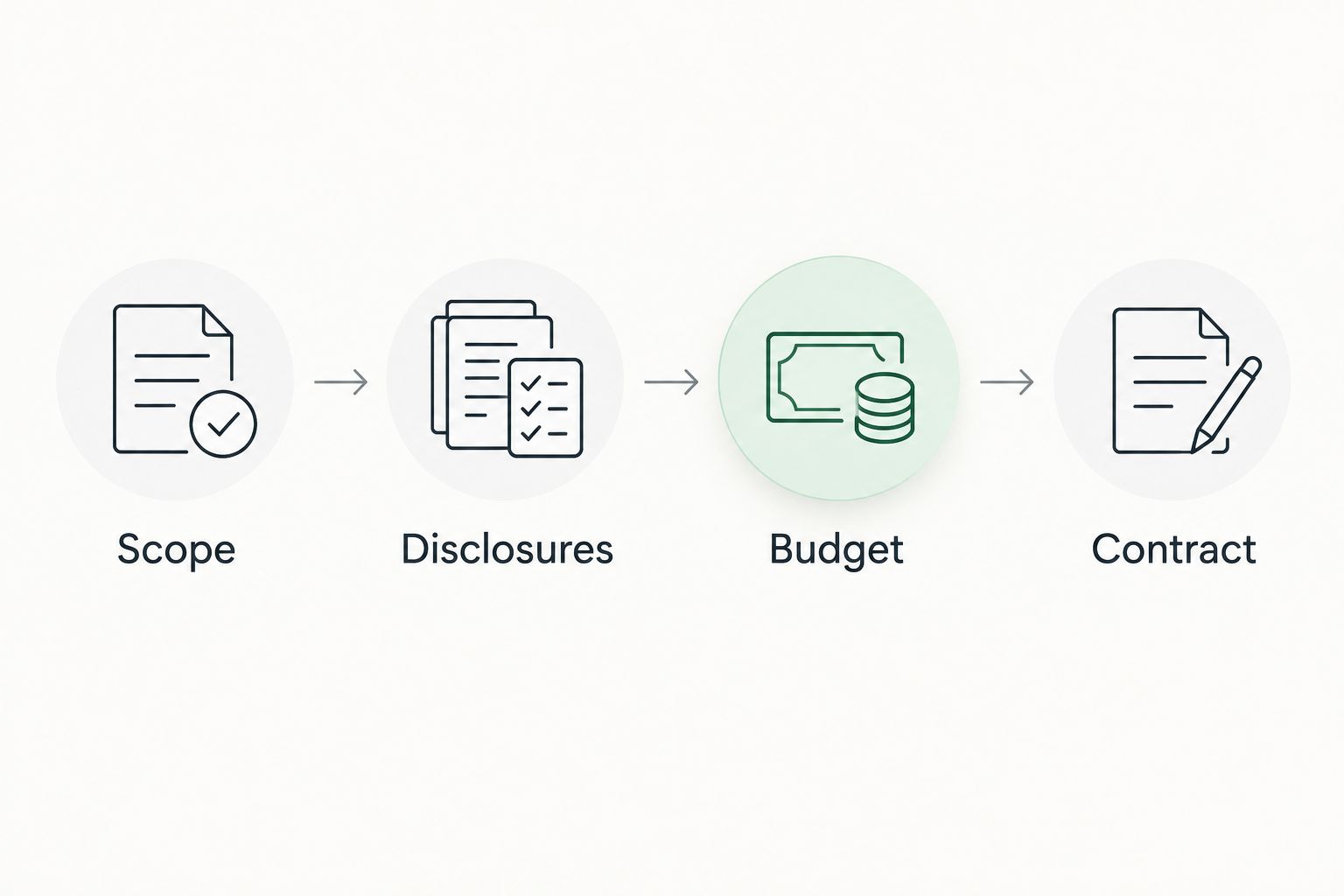
- Scope: Match the financed amount to the written roofing work and payment stages.
- Disclosures: Record APR, fees, repayment term, security, and total scheduled repayment.
- Budget: Check the payment alongside your existing obligations and essential spending.
- Contract: Confirm change-order rules, payment milestones, and responsibility for permits and cleanup.
Multiply a monthly payment by 12 months per year to understand the annual household commitment. That calculation is a budgeting check, not the loan’s total cost; fees, term length, and payment changes still matter.
How these options are ranked
This ranking uses collateral, payment stability, funding structure, and contract clarity—not lender endorsements or claimed approval rates. The personal loan leads for avoiding home collateral; the equity-backed options occupy separate fixed-project and staged-work roles.
No option earns a recommendation solely because its payment looks smaller. Match the financing structure to the roof project, then compare actual written offers.
Which roof financing should you choose?
Start with an unsecured personal loan comparison if avoiding a home lien is your priority. Add a fixed-rate home equity quote if you accept collateral risk, and consider a HELOC only when staged borrowing serves a real project need.
For your 2026 decision, keep contractor financing in the comparison rather than treating it as the default. Promotional credit requires a credible payoff plan; FHA Title I requires lender and program confirmation.
FAQ
What are the best roof replacement financing options?
The best fit depends on collateral and repayment needs: an unsecured personal loan avoids a home lien, a home equity loan suits defined work, and a HELOC suits staged borrowing. Compare written terms for the same amount and repayment period.
Is a personal loan better than a home equity loan for a roof?
An unsecured personal loan is the better fit when avoiding home collateral is your priority. A home equity loan requires a separate assessment of fees, repayment terms, and the risk of securing debt against your home.
Can I finance a roof without home equity?
Unsecured personal loans and credit cards do not require home equity. Approval, credit limits, and borrowing terms still depend on the lender’s requirements.
Is contractor roof financing a good idea?
Contractor-arranged financing is worth considering only alongside a review of the lender’s disclosures and the roofing contract. Compare an outside offer rather than assuming the convenient application is the best agreement.
Should I use a HELOC for roof replacement?
A HELOC fits staged borrowing better than a single fully defined expense. Your home secures the line, and variable rates or the transition into repayment can change your payment obligations.
Does homeowners insurance pay for a new roof?
Homeowners insurance pays only when the damage and circumstances qualify under the policy. Coverage, exclusions, deductibles, and settlement terms determine the insurer’s contribution; a replacement need alone does not establish coverage.
Is FHA Title I roof financing a grant?
FHA Title I financing is a loan, not a grant. A participating lender must confirm whether the borrower, property, and proposed roofing work meet applicable requirements.
One last thing
Financing approval does not confirm that full replacement is the right scope. Before borrowing, ask for a written explanation of why repair is insufficient and how the proposal handles concealed damage. Resolving those questions before signing protects the project decision as well as the borrowing decision.
Related guides
- Best roofing materials for hail-prone areas
- Best impact-resistant shingles ranked by durability
- Best roofing shingle brands ranked by lifespan
- Best flat roof materials ranked by cost