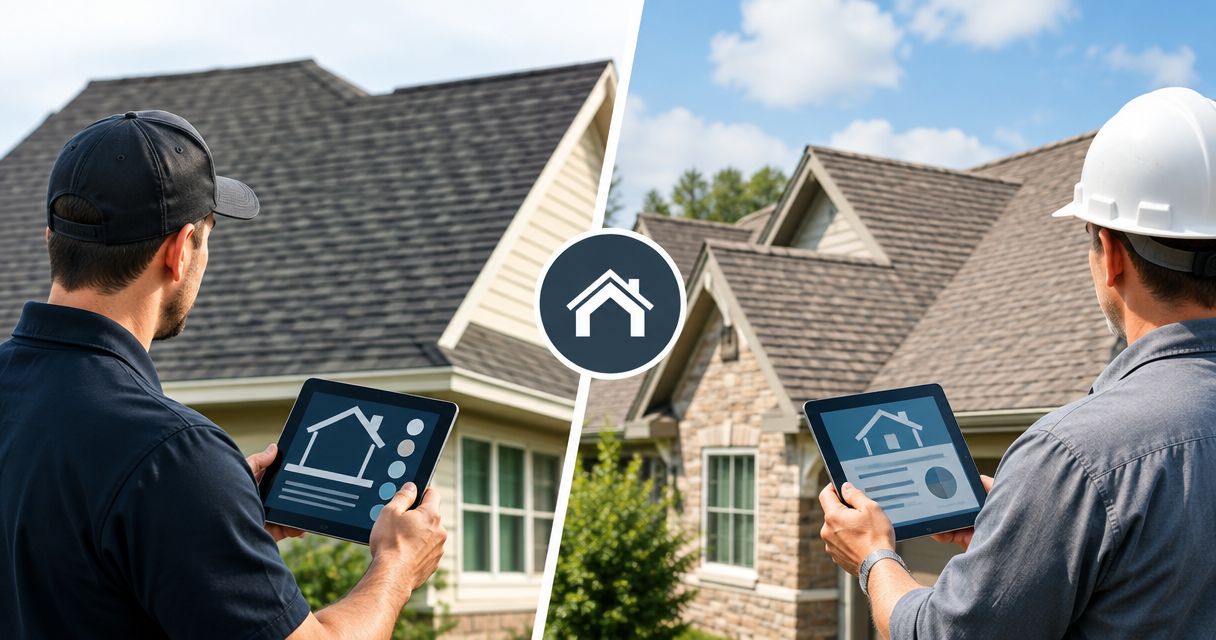
Yellow Pages can help you find local business names, but choosing a roofer requires an inspection, a written scope, and verified credentials—not just a listing. For homeowners and commercial property owners in Lincoln and Omaha, the best alternatives in 2026 are direct contractor contact, referrals from similar projects, and independent credential checks.
- For Yellow Pages alternatives, roofing contractor searches should lead to documented inspections—not decisions based on listings alone.
- Murray Roofing serves Lincoln and Omaha with residential and commercial roofing, inspections, replacement, and financing.
- Use referrals to find candidates; verify credentials and compare written scopes before signing.
- Choose a contractor for your roof system and project needs, not directory placement.
Why this matters
A directory answers one question: who advertises or lists roofing services nearby? Your hiring decision needs different answers: what is wrong with the roof, what work is necessary, and who is responsible if something goes wrong?
Murray Roofing is a direct-contact roofing option for Lincoln and Omaha owners who need inspection, repair, or replacement. You can start with Murray Roofing rather than treating a directory listing as the final screening step.
For a house, the decision affects weather protection and the condition of the building below. For a commercial property, it also affects tenants, access, maintenance planning, and business operations. Use the same standard for both: evidence before commitment.
Roofing contractor search routes at a glance
These are ways to find and evaluate contractors, not rankings of competing businesses. Each route serves a different purpose, and none replaces a property-specific assessment.
| Search route | Best for | What it gives you | Limitation |
|---|---|---|---|
| Yellow Pages | Finding local business names | A directory starting point | A listing does not establish suitability for your roof |
| Direct contractor contact | Moving from search to inspection | A conversation about your building and requested work | You still need independent verification |
| Referrals from similar projects | Finding relevant firsthand experience | Context about communication and completed work | One person's experience does not establish your project's outcome |
| Local search and maps | Checking location and public feedback | Business details and review histories | Search placement is not a qualification |
| Credential and manufacturer checks | Verifying specific claims | Evidence tied to a stated credential | Credentials do not replace a detailed contract |
| Property-management contacts | Finding experience with occupied buildings | References relevant to building operations | Another property's requirements can differ from yours |
In 2026, use these routes together rather than expecting one source to make the hiring decision. Find a candidate, verify the claims, and evaluate the proposed work.
Start with the contractor when you need an inspection
Best for: homeowners and commercial decision-makers ready to discuss an actual roof problem. Direct contact lets you explain the building, the visible symptoms, and whether you need repair advice, replacement planning, or maintenance.
Murray Roofing provides residential and commercial roof repair, replacement, inspections, maintenance, insurance-claim support, and financing. Lincoln and Omaha owners can use that service range to start a conversation about the roof itself rather than continue collecting business names.
Where direct contact helps
- You can describe recurring leaks, visible damage, or an aging roof before an inspection.
- You can ask whether the contractor handles your roof system and project type.
- You can request a written explanation of repair and replacement options.
- You can identify the person responsible for questions about the proposal.
Where direct contact falls short
A contractor explains its own services; that is not independent verification. Confirm insurance, check references, and read the contract yourself. Direct contact also does not give you a comparison of every available contractor.
Recommendation: use direct contact to obtain a diagnosis and scope, then verify the proposal before committing. An informative conversation is a starting point, not a substitute for documentation.
Ask for referrals from comparable roofing projects
Best for: owners who want firsthand context about communication and project management. Ask someone whose roofing project resembles yours, not simply someone who knows a roofer.
For a Lincoln homeowner planning a replacement, a referral from a completed replacement is more relevant than a recommendation based only on a small repair. An Omaha commercial property manager should ask about occupied-building work, site coordination, and communication with the owner's representative.
Useful referral questions include:
- What work did the contractor actually perform?
- Did the written proposal clearly describe that work?
- How did the contractor handle questions or changes?
- Was cleanup addressed, and were unresolved concerns explained?
- Would you hire the contractor again for the same type of project?
The strength is context. The limitation is that a referral describes someone else's roof, contract, and experience—not yours.
Recommendation: use referrals to build a shortlist, then request evidence relevant to your own property. Do not treat a familiar name as proof that every roof system or commercial building is a fit.
Use local search to investigate, not just discover
Best for: checking consistency across business details and public feedback. Local search and maps can help you confirm how a contractor presents its services and how customers describe their experiences.
Read the substance of reviews rather than stopping at a star rating. Look for comments about the work you need: full replacement, leak diagnosis, commercial maintenance, or follow-up after completion. A review about courteous scheduling does not answer whether a proposed roof system suits your building.
Check whether the business name, contact details, and service area are consistent. If information conflicts, ask the contractor to explain it before you proceed.
The benefit is access to multiple perspectives. The limitation is that reviews do not reveal every contract term, roof condition, or project complication.
Recommendation: use search results to generate questions for the contractor, not to declare a winner. For your 2026 roofing project, the written proposal should carry more decision weight than the order of search results.
Verify credentials without treating them as guarantees
Best for: checking specific claims about qualifications and warranty eligibility. Ask what a credential means for the proposed work, then confirm that it is current and relevant.
Murray Roofing's stated trust signals include an A+ BBB rating and GAF Master Elite status. Those signals belong in the screening process, but they do not replace a roof assessment or tell you which work your building needs.
Ask the contractor to explain any manufacturer warranty offered with the project. Distinguish product coverage from workmanship coverage, and request the applicable terms before signing.
The stated warranty offerings include a 50-year Golden Pledge warranty and a 10-year labor warranty. Do not assume those terms apply to every repair, replacement, material, or commercial system. Confirm eligibility, exclusions, registration requirements, and the responsible party in writing.
The strength of credential checks is that they test a specific claim. Their limitation is scope: a credential cannot answer whether the proposal includes all necessary work or whether a particular warranty applies to your roof.
Recommendation: verify the credential, then connect it to the exact project and contract.
Require 3 documents before choosing a roofer
A practical 2026 hiring file contains 3 documents: inspection findings, a written scope, and warranty terms. Together, they connect the roof's condition to the proposed work and the responsibilities after completion.
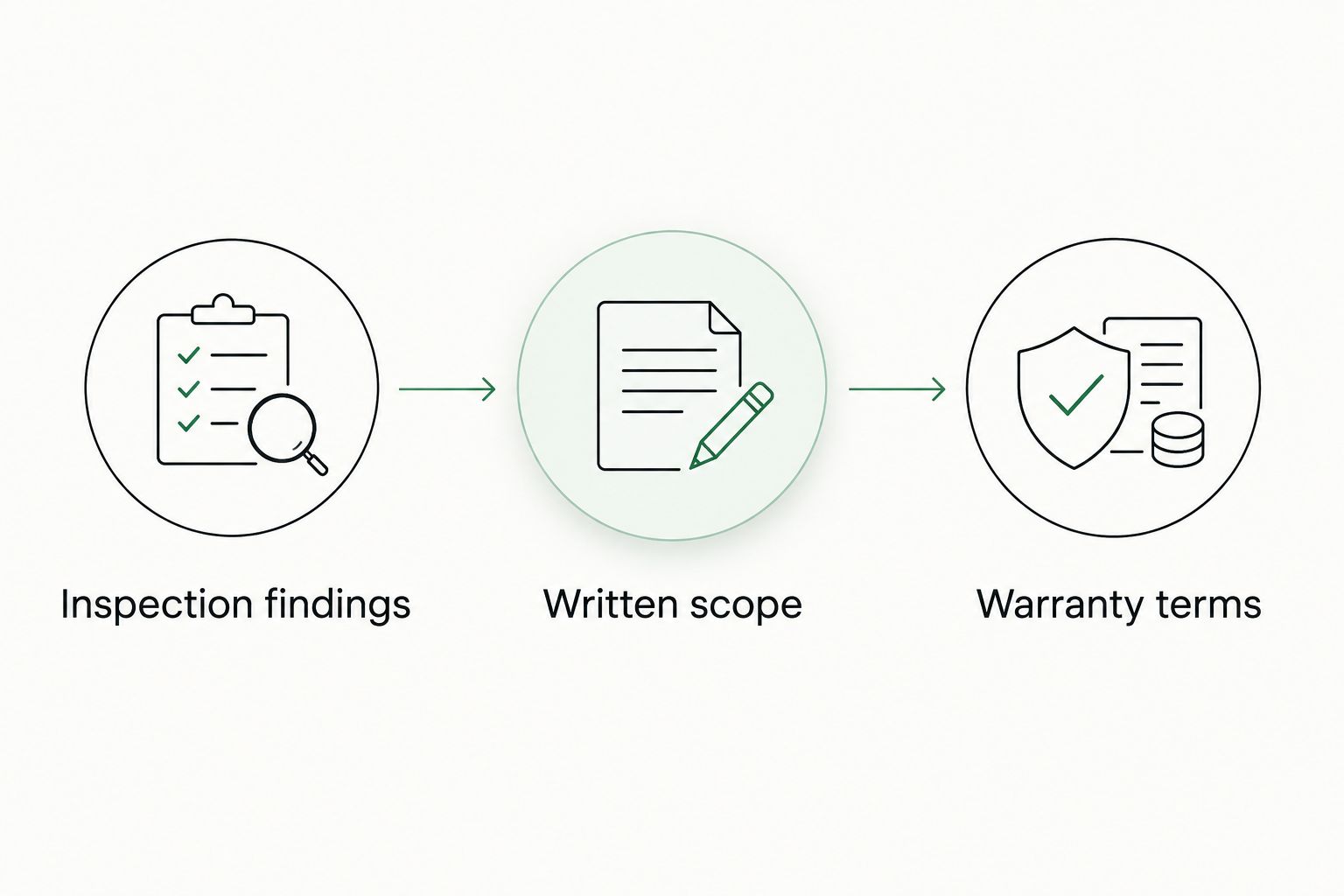
Inspection findings
Ask for a plain-language explanation of the observed condition and supporting photographs where appropriate. The explanation should distinguish what the contractor observed from anything that requires further investigation.
You need to understand why repair, replacement, or monitoring is being proposed. If the recommendation is unclear, ask what finding supports it. Do not climb onto the roof to reproduce the inspection yourself.
Written scope
The scope should identify the proposed materials, work areas, exclusions, and responsibilities. Where relevant, ask how the proposal addresses flashing, drainage, ventilation, penetrations, removal, disposal, and concealed damage.
A shorter proposal is not necessarily a simpler project. If something important is absent, request clarification rather than assuming it is included. Compare proposals against the same requirements so you can identify differences in work—not just differences in the final figure.
Warranty terms
Get the actual terms, not only a warranty length. Ask what is covered, what is excluded, who handles a claim, and what maintenance or registration obligations apply.
For a commercial property, keep these documents with the building's maintenance records. For a home, retain them with other property improvement records. They remain relevant after the search process ends.
Understand who receives your roofing inquiry
A search form and an inspection agreement are different things. Before submitting contact information, determine whether you are contacting a specific contractor or asking another business to connect you with contractors.
That distinction matters when you want control over follow-up. Ask who receives the request, who will contact you, and which company would inspect the property. Then confirm the contracting business before sharing project documents or signing an agreement.
The distinction between screening a provider and distributing an inquiry also frames discussions such as Handvetted vs. HomeAdvisor. For a roofing project, the practical issue is whether you understand the path from submitting your details to hiring the company responsible for the work.
Keep the search channel separate from the contractor's qualifications. However you find a business, apply the same checks to insurance, relevant experience, inspection findings, and contract terms.
Give commercial roofing its own screening questions
Commercial owners need more than a residential referral with a different building address. Start with the roof system, the building's use, and the operational limits the contractor must respect.
That applies equally to offices, warehouses, restaurants, schools, churches, retail properties, and multifamily buildings. Each property needs a scope tied to its actual conditions; the building category alone does not determine the right repair or replacement.
Ask these questions before approving the proposal:
- Roof system: What existing material and assembly did the inspection identify?
- Drainage: What observed conditions require attention?
- Access: How will workers, materials, and equipment reach the work area?
- Occupancy: What coordination is needed with tenants, staff, or visitors?
- Concealed conditions: How will discoveries and proposed changes be documented?
- Maintenance: What ongoing responsibilities apply after completion?
For an Omaha or Lincoln property with recurring leaks, ask the contractor to explain the proposed repair's limits as well as its purpose. A repair recommendation should address the observed problem without promising that unrelated future leaks cannot occur.
Choose the proposal that explains the building-specific work and responsibilities. Do not substitute a directory category or a broad commercial-service claim for that explanation.
When moving beyond a directory makes sense
The reason to move beyond Yellow Pages is not that a directory is inherently wrong. It is that discovery stops being enough once you need a diagnosis, scope, and accountable contracting business.
Move to direct conversations when you need to:
- Decide whether an existing roof needs repair or replacement.
- Plan a commercial project around building operations.
- Understand which warranty applies to a proposed system.
- Discuss financing without assuming approval.
- Document observed damage for an insurance discussion.
Insurance-claim support does not establish coverage or guarantee payment. Your policy, the reported circumstances, and the insurer's review determine the claim outcome. Similarly, financing discussions should lead to clear terms, not an assumption that every applicant qualifies.
When staying with Yellow Pages is reasonable
Yellow Pages remains a reasonable starting point when you simply need local business names or contact information. Keep using it if it helps you find candidates efficiently.
The stopping point is the same in 2026 as it is for any other search route: a listing is not a hiring decision. Once you identify a candidate, move to verification, an inspection, and written project documents. You do not need to abandon the directory; you need to finish the evaluation it cannot perform for you.
FAQ
What’s the best alternative to Yellow Pages for finding a roofer?
Direct contractor contact is a practical next step when you need an inspection and written proposal. Use referrals and credential checks to evaluate the contractor rather than relying on one search source.
Can I contact Murray Roofing directly in Lincoln or Omaha?
Yes. Murray Roofing serves Lincoln and Omaha with residential and commercial roofing services, including inspections, repair, replacement, maintenance, and financing.
Are online roofing reviews enough to choose a contractor?
No. Reviews provide customer perspectives, but you still need to verify insurance, relevant experience, inspection findings, and the written contract.
What should I ask before hiring a commercial roofer?
Ask about the existing roof system, drainage, access, occupied-building coordination, and how changes will be documented. Require a scope specific to your property rather than accepting a general commercial-service description.
Does a long roof warranty cover every problem?
No. Coverage depends on the actual warranty terms, including eligibility, exclusions, installation requirements, and any owner obligations. Request the terms that apply to your proposed project.
Does roofing insurance-claim support guarantee approval?
No. A contractor can support documentation, but the insurer determines coverage under the policy and claim circumstances. Do not sign based on a promise of guaranteed payment.
Should I choose roof repair or full replacement?
Choose after an inspection explains the roof’s condition and the limits of each option. Ask for the findings supporting the recommendation and a written description of the proposed work.
One last thing
Ask every contractor the same final question: What is not included in this proposal? Exclusions can expose a meaningful difference that a business listing, referral, or review never mentions.
For your next Lincoln or Omaha roofing project, schedule a free inspection with Murray Roofing and request a written scope before deciding. Use the contact page to explain your property, roofing concerns, and whether you need repair or replacement guidance.
Related guides
- From roof inspection to signed contract
- Is it cheaper to repair a roof or replace it completely?
- Roofing for property managers