For homeowners and commercial property decision-makers seeking Yelp alternatives for roofing contractor searches, the next step is a direct inspection backed by credential checks and a written proposal. Murray Roofing serves Lincoln and Omaha property owners who need residential or commercial roof inspections, repairs, and replacement guidance.
- For Yelp alternatives for roofing contractor searches, use referrals, credential checks, and direct inspections—not another rating alone.
- Murray Roofing provides residential and commercial roofing services in Lincoln and Omaha.
- Compare written replacement scopes, warranty terms, and insurance documentation before signing.
- Keep review research separate from the inspection that establishes your roof’s condition.
Why this matters
A review describes someone else’s experience. An inspection addresses your building. For a roofing decision in 2026, you need both background research and property-specific findings, especially when deciding between another repair and a full replacement.
Start with the work your building needs rather than the directory where you found a name. Murray Roofing provides residential and commercial roof repair, replacement, inspections, maintenance, insurance-claim support, and financing. Those services give you a direct route from identifying a concern to discussing a documented scope.
This guide explains ways to find and evaluate a roofer without turning the process into another platform comparison. The goal is a contractor you can verify and a proposal you can understand.
Roofing contractor search routes at a glance
Different sources answer different questions. Use the table to decide what each source contributes—and what still needs checking before you hire.
| Search route | Best for | What it contributes | Limitation |
|---|---|---|---|
| Direct contractor contact | Getting a roof inspected | A conversation about your property and requested work | A contractor’s recommendation still needs a clear written scope |
| Local referrals | Learning about communication and job handling | Firsthand accounts from owners or managers | The referred project might differ from yours |
| Manufacturer contractor directories | Checking a stated credential | A way to investigate manufacturer affiliation | A credential does not establish your roof’s condition |
| Business and credential records | Checking identity and accountability | Information to compare with the proposal | Records do not replace inspection findings |
| Recent project references | Evaluating relevant experience | Details about work similar to your project | Selected references are only part of the picture |
Use discovery sources to build a shortlist; use documentation to make the hiring decision. No single source answers every question about workmanship, scope, insurance, and warranty obligations.
Start with a direct roofing inspection
Best for: Lincoln and Omaha owners who need a repair or replacement assessment.
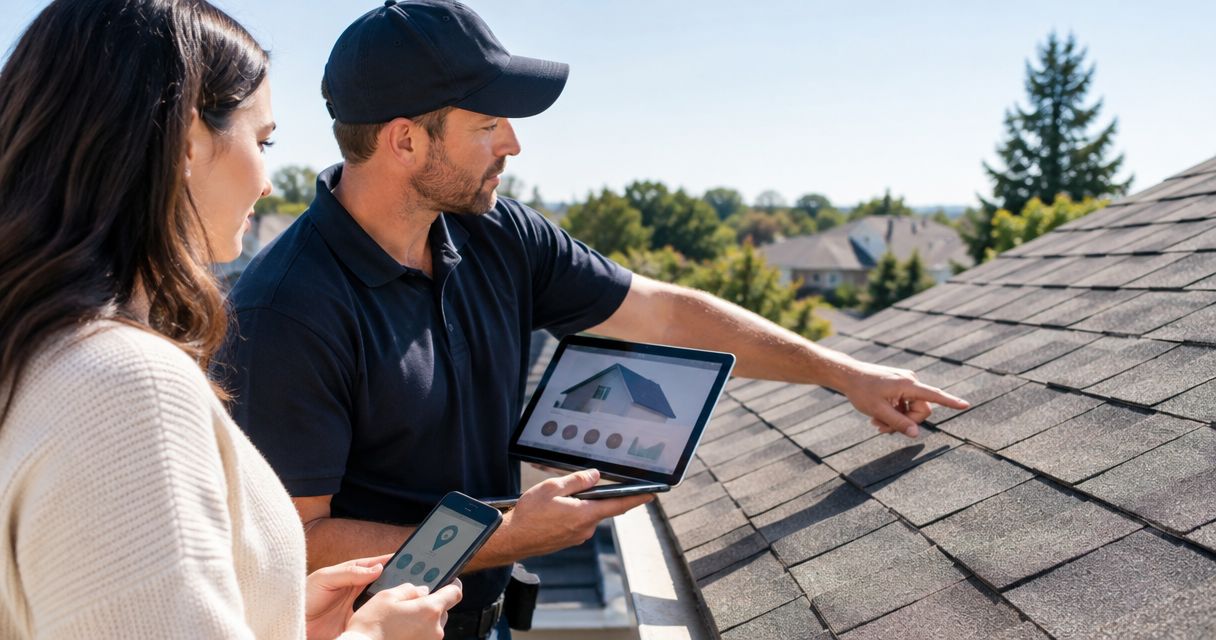
Direct contact moves the discussion from a company’s general reputation to your roof. Describe the concern, identify the property type, and ask what the inspection will cover. A house with an attic leak and a commercial building with recurring drainage concerns need different conversations.
Murray Roofing offers roof inspections and full roof replacements for residential and commercial properties. Financing is also available, but you should review the applicable terms rather than assume a payment arrangement or approval.
What direct contact does well
- Lets you explain leak history, previous repairs, and planned building work.
- Gives you a place to request photographs and written findings.
- Connects the inspection discussion with repair and replacement options.
- Helps establish who will answer questions about the proposal.
What direct contact does not settle
A contractor’s inspection is not an independent comparison of every available provider. You still need to check credentials, understand exclusions, and decide whether the recommended scope addresses your concerns.
Before scheduling, ask who will inspect the roof and how findings will be communicated. Before signing, ask who takes responsibility for the work described in the contract. Keep those answers with the proposal.
Use local referrals for relevant experience
Best for: owners who want firsthand accounts of communication and project handling.
Ask neighbors, other building owners, or property managers about roofing work they have actually commissioned. In Lincoln and Omaha, a useful referral identifies the project type—not just a familiar company name.
Ask whether the work involved a full replacement, an isolated repair, or ongoing maintenance. Then ask how the contractor handled questions, changes, cleanup, and concerns after completion. These details are more useful than a broad statement that the contractor was good.
Where referrals help
- You can ask follow-up questions about the entire project.
- A reference can describe how the contractor explained unexpected conditions.
- A similar building gives you a more relevant starting point.
Where referrals fall short
A successful residential shingle project does not establish experience with your commercial roof system. A referral also does not verify current insurance or the terms of your proposed warranty. Treat the recommendation as a lead, then conduct your own checks.
Verify credentials separately from reviews
Best for: owners checking whether a contractor’s stated qualifications are current.
Manufacturer credentials, business identity, and insurance documentation serve different purposes. Check each one separately rather than treating a badge or rating as an answer to every hiring question.
Murray Roofing’s stated trust signals include an A+ BBB rating and GAF Master Elite status. Neither replaces an inspection, a project-specific proposal, or a review of the warranty that applies to the proposed work.
What credential checks do well
They give you specific claims to verify. Match the contractor’s legal business name across the proposal and supporting documents, and ask for clarification when names differ.
Where credential checks fall short
A manufacturer designation does not mean every material or warranty offered by that manufacturer applies to your project. Likewise, a business rating is not a statement about the condition of your decking, flashing, or drainage.
For a 2026 project, request current documentation rather than relying on an old screenshot or a badge copied into a proposal. Confirm applicable registration, licensing, and permit requirements with the authority responsible for your property’s location.
Ask for references that match the building
Best for: homeowners and commercial decision-makers checking project relevance.
Request examples that resemble the work you are considering. A full roof replacement reference is more informative for a replacement decision than a reference for a small repair.
For commercial roofing, match the reference to the roof system and project constraints. Explain access restrictions, occupied areas, equipment, and business activities that the contractor must account for. Apply that same standard to apartments, offices, restaurants, warehouses, churches, and other commercial properties.
What project references reveal
Ask how clearly the original scope was explained and whether changes were documented. Also ask how the contractor communicated while work affected access or normal building use.
What project references cannot prove
A reference cannot establish the hidden condition of your roof or guarantee the same outcome. Contractors also select the references they provide. Combine those conversations with current documents and inspection findings rather than treating them as the final decision.
Move from a shortlist to a written scope
In 2026, the most useful change to your contractor search is simple: stop collecting names once you have credible candidates and start collecting comparable information. More ratings will not resolve an unclear replacement proposal.
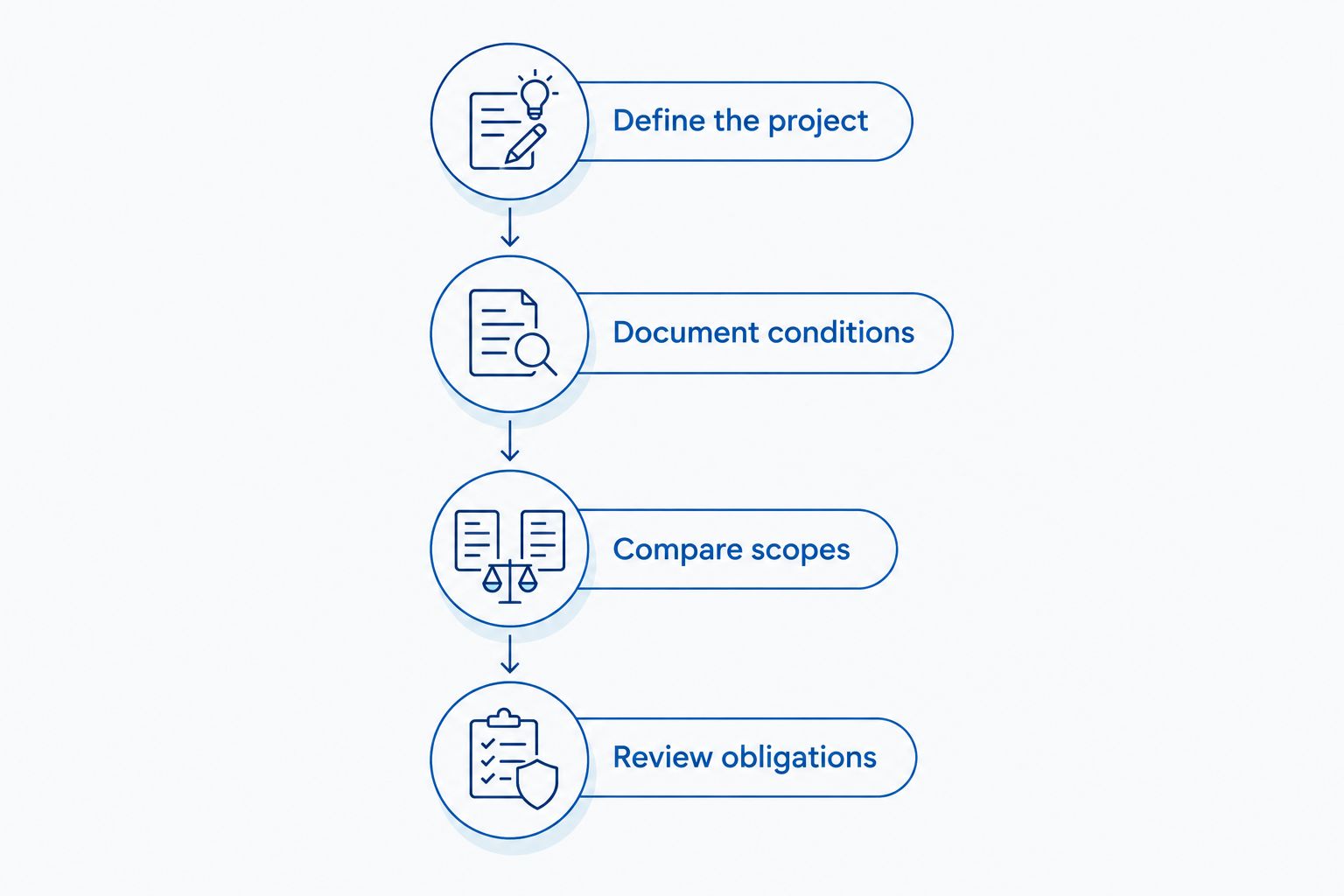
Use this sequence to keep the decision grounded in your building:
- Define the project. State whether you need leak diagnosis, maintenance, a replacement assessment, or documentation for a property transaction.
- Document conditions. Request findings that connect the visible concern with the recommended work.
- Compare scopes. Check that proposals address the same areas, materials, and responsibilities.
- Review obligations. Read exclusions, change procedures, payment terms, and warranty documents before signing.
Keep 3 documents together: the inspection findings, the written scope, and the warranty terms. They answer different questions: what is wrong, what will be done, and what protection applies afterward.
Do not climb onto the roof to collect evidence yourself. Describe what you can observe safely and let the contractor assess roof-level conditions.
Compare replacement proposals without guessing
A proposal should make the contractor’s responsibilities understandable. If a line is vague, ask for clarification before accepting it—not after the work begins.
For a Lincoln or Omaha home replacement, ask how the proposal addresses existing roofing removal, underlying roof condition, flashing, ventilation, disposal, and cleanup. The inspection should guide which items apply; a generic checklist is not a diagnosis.
For commercial properties, ask how the proposed work addresses the existing roof assembly, drainage, penetrations, and access. Clarify whether the recommendation is maintenance, repair, restoration, or replacement, and ask what findings support that choice.
Questions that expose unclear scope
- What areas and roof components are included?
- What work is specifically excluded?
- How will concealed damage be documented and authorized?
- Who handles required permits and inspections?
- How will occupants, access points, and equipment be considered?
- Who receives and resolves questions after completion?
For any 2026 replacement proposal, request written clarification of unresolved items. A verbal explanation helps the conversation; the contract needs to reflect the agreement.
Read warranties as separate obligations
Warranty length matters, but so do eligibility, exclusions, and responsibility. Ask which document covers materials, which covers workmanship, and whom you contact if a problem develops.
Murray Roofing identifies a 50-year Golden Pledge warranty and a 10-year labor warranty among its offerings. Ask which applies to your proposed roof, what eligibility conditions apply, and what the written documents cover. Do not assume the named warranties apply to every repair, material, or commercial roofing system.
Keep these questions separate:
- Coverage: What specific defects or work does the warranty address?
- Responsibility: Who evaluates and handles a claim?
- Conditions: What maintenance, registration, or other obligations apply?
- Exclusions: What circumstances fall outside coverage?
A longer stated term does not remove exclusions. Keep the final warranty documents with the signed contract and project records.
Keep financing and insurance decisions separate
Financing concerns how you pay for approved work. Insurance concerns what your policy covers and what the insurer determines about a claim. Neither establishes whether the recommended roofing scope is correct.
Ask for the roof findings first. Then review financing terms or discuss claim documentation as separate decisions. Contractor insurance-claim support does not guarantee coverage, payment, or a particular storm-damage determination.
For commercial work, identify who can approve the contract and any financing arrangement before committing. For a home project, make sure each decision-maker understands the scope and obligations. Keep estimates, photographs, correspondence, and authorizations together.
When review browsing still helps
Review platforms remain useful for discovering names and reading accounts of customer experiences. Keep using that information when it helps you identify questions about communication, cleanup, or follow-through.
You do not need to abandon a familiar search tool to make a better decision. You need to stop asking it to do the job of an inspection, credential check, or written contract. For roofing work in 2026, use reviews as background—not as permission to skip verification.
FAQ
What are useful Yelp alternatives for finding a roofing contractor?
Direct contractor contact, local referrals, manufacturer directories, business records, and relevant project references provide different ways to evaluate a roofer. Combine those sources with an inspection and a written scope before hiring.
How do I find a roofing contractor in Lincoln or Omaha?
Start with contractors serving your location and request an inspection for your property type. Verify current credentials and insurance documentation, then compare the proposed work and warranty terms.
Can online reviews tell me whether I need a new roof?
No. Online reviews describe customer experiences, not the condition of your roof. Ask a roofing contractor to document findings and explain the basis for repair or replacement.
Does GAF Master Elite status mean every roof gets the same warranty?
No. Ask which warranty applies to the proposed system and review its eligibility conditions and exclusions. Do not assume a credential alone establishes project-specific coverage.
What should a commercial property manager ask a roofer?
Ask how the proposed work addresses the roof system, drainage, penetrations, access, and occupied building areas. Request written findings, exclusions, and responsibility for required permits and inspections.
Does roofing insurance-claim support guarantee my claim will be paid?
No. Coverage depends on the policy and the insurer’s claim determination. Keep the contractor’s findings and proposed work separate from assumptions about insurance payment.
What should I compare before signing a roofing contract?
Compare the inspection findings, written scope, exclusions, change procedures, payment obligations, and applicable warranties. Resolve unclear items in writing before signing.
One last thing
Ask what happens if the crew discovers concealed damage after roofing removal. The condition is unknown before it is exposed, but the process for documenting it, obtaining your authorization, and changing the contract should not be.
That question turns a reassuring conversation into a practical agreement. Choose a documented process, not just a convincing recommendation.
Related guides
- From roof inspection to signed contract
- Is it cheaper to repair or replace a commercial roof?
- Roof warranty types for homeowners
Schedule an inspection with Murray Roofing to discuss your Lincoln or Omaha property, review its condition, and get a clear proposal for the next step.