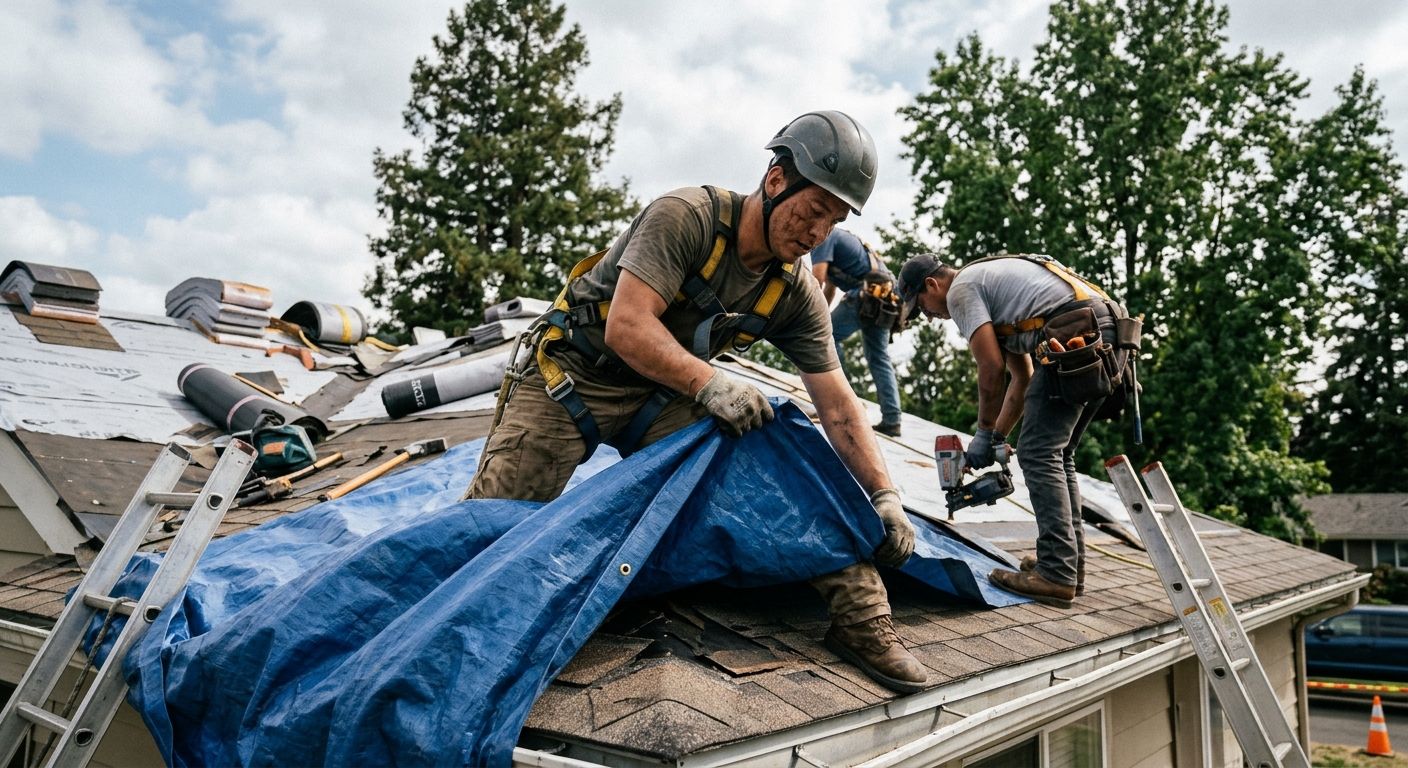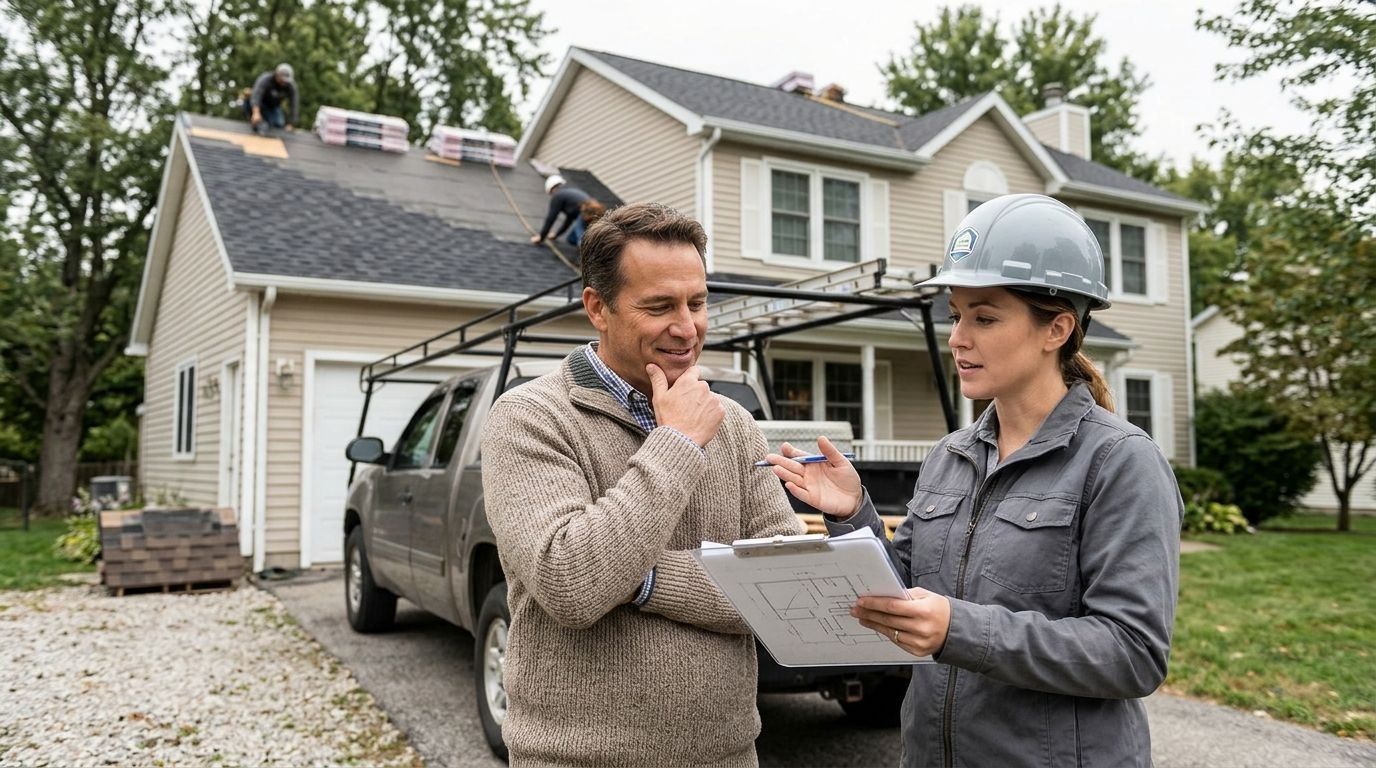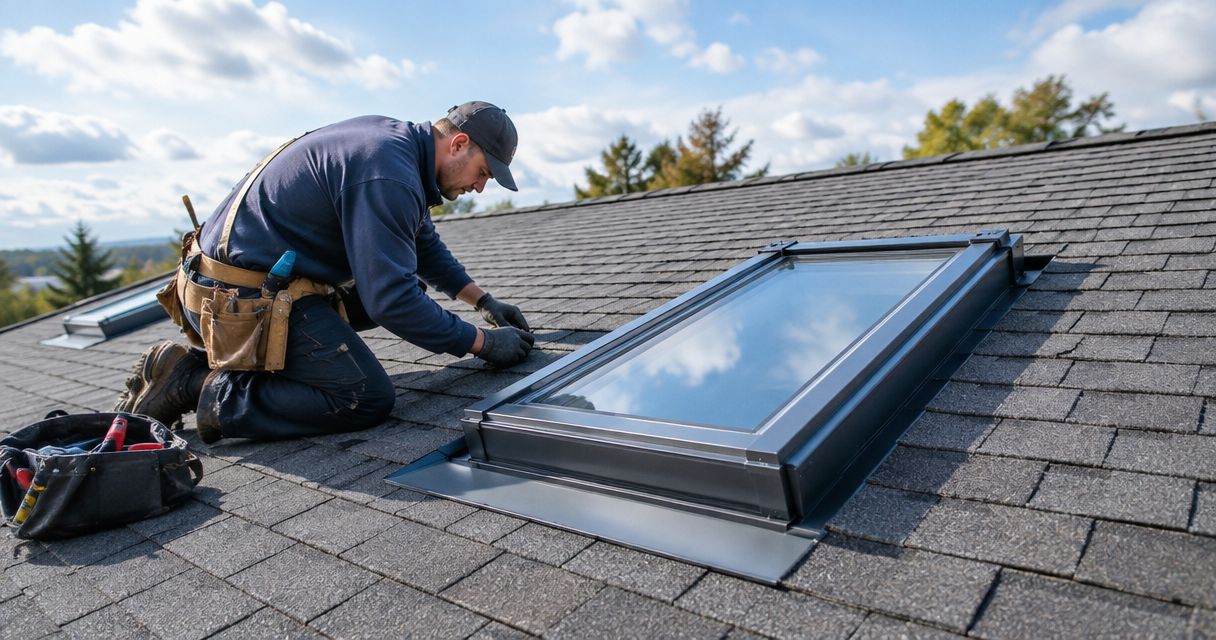
The cost to add skylights during roof replacement depends on the skylight, roof opening, flashing, and interior finishing—not just the window itself. For a 2026 project in Lincoln or Omaha, request a separate skylight add-on in your roof estimate, including framing, electrical work where needed, and ceiling repairs so you can compare the complete installed scope.
- The cost to add skylights during roof replacement includes roof work and interior finishing, not just the skylight.
- Murray Roofing offers roof inspections in Lincoln and Omaha to help you plan roof replacement decisions.
- Request separate roof-only and roof-plus-skylight estimates with matching roofing specifications.
- Confirm flashing details, ceiling work, and warranty responsibilities before approving the addition.
How much does it cost to add skylights during a roof replacement?
The useful figure is the difference between a complete roof-only estimate and a complete roof-plus-skylight estimate. A skylight unit alone does not represent the finished project. Your quote needs to cover the roof opening, weatherproofing, and the connection between the skylight and the room below.
If you are budgeting for a new roof in Omaha, keep that base scope separate from the daylighting upgrade. Otherwise, a change in roofing materials or decking repairs can look like a skylight expense.
| Estimate component | What it should describe | What to clarify |
|---|---|---|
| Skylight unit | Type, dimensions, glazing, and operation | Whether shades and controls are included |
| Roof opening | Location, framing assessment, and required alterations | Who evaluates structural changes |
| Weatherproofing | Flashing and integration with the roof covering | Compatibility with roof pitch and material |
| Interior work | Light shaft, insulation, air sealing, drywall, and paint | Which trades complete the room-side finish |
| Electrical work | Wiring and controls for powered features, if selected | Who supplies and connects power |
| Project requirements | Access, debris removal, permits, and inspections as applicable | Which items are included or excluded |
Ask for these details in writing. A short allowance labeled skylight installation leaves too much room for disagreement about what the finished result includes.
Why this matters during a roof replacement
Roof replacement gives the contractor access to the roof covering around the proposed opening. That creates an opportunity to coordinate the skylight flashing with the new roofing rather than disturb a recently completed roof later.
Coordinating the work does not make the skylight a simple window purchase. The opening still needs structural review, a weatherproof connection, and an interior finish appropriate to the building. A room directly beneath the roof presents a different scope from a room separated from it by an attic.
For your 2026 project, settle the skylight location before approving the final roof scope. Changing that decision after materials and installation details are selected adds coordination that a complete plan should address upfront.
Fixed skylights: best for daylight without an opening sash
A fixed skylight brings in daylight but does not open for ventilation. It suits a room where you want overhead light without operating hardware, wiring for powered opening, or an accessible opening mechanism.
The limitation is straightforward: a fixed skylight cannot release indoor air. Glare, heat gain, and access for cleaning still deserve attention, even when the unit has no opening function.
Ask the installer to match the skylight to the roof pitch and covering, then explain the proposed flashing. Also review glazing and shade options against how you use the room rather than choosing by exterior appearance alone.
Venting skylights: best for daylight and controlled ventilation
A venting skylight opens, either manually or through a powered mechanism. It suits a space where an operable overhead opening serves a practical purpose and where you can use and maintain the controls.
The trade-off is added operating equipment and responsibility for keeping the unit closed when necessary. Powered features also require a clear explanation of the power source, controls, and any electrical work in the installation scope.
Do not assume that a skylight replaces a bathroom exhaust fan or a building's designed ventilation system. Ask the appropriate contractor how the proposed opening fits the room's ventilation needs.
Tubular daylighting: best for smaller interior spaces
A tubular daylighting device carries daylight from a roof-mounted collector through a reflective tube to an interior diffuser. It is an option to investigate for a hallway, closet, or other space where you want daylight rather than a view of the sky.
Its limitation is different from a conventional skylight: you do not get the same open view, and the route between roof and ceiling must accommodate the tube. Attic obstructions and the proposed path need inspection before selection.
Use the comparison below to define your goal first. The right category depends on what you want the opening to do, not just how the unit looks in a catalog.
| Option | Best for | Main benefit | Main limitation |
|---|---|---|---|
| Fixed skylight | Daylight without ventilation | Overhead light and a view through glazing | Does not open |
| Venting skylight | Daylight with an operable opening | Adds a controllable ventilation opening | Adds hardware and operating requirements |
| Tubular daylighting | Smaller spaces needing daylight | Transfers daylight through a tube | Does not provide a conventional sky view |
Why skylight installation scope varies
The difference between projects comes from the building as much as the selected unit. These factors explain why a useful proposal requires an inspection rather than a unit-only estimate.
- Roof structure: Rafters, engineered trusses, and existing framing affect where an opening belongs. Structural changes require appropriate review; do not assume framing can simply be cut.
- Ceiling distance: A room with an attic above it needs a finished connection between the roof and ceiling. That light shaft adds work beyond the exterior installation.
- Roof compatibility: Pitch, roof covering, and mounting requirements affect the flashing assembly. A detail intended for a sloped shingle roof is not interchangeable with a low-slope roof detail.
- Operating features: Manual operation, powered opening, shades, and controls create different installation and maintenance requirements. Specify the features you actually want.
- Interior obstructions: Wiring, ducts, pipes, and other building components can conflict with a proposed opening. Check the location before treating the layout as final.
- Existing condition: Damaged decking, moisture, or deterioration around an existing opening needs its own documented repair scope. Separate those repairs from the new skylight upgrade.
For Lincoln and Omaha properties, ask how the proposed assembly manages rain, snow, and condensation. Those are separate concerns: exterior flashing manages water at the roof, while insulation and air sealing help manage the conditions around the interior shaft.
How do you get a skylight estimate you can compare?
Request 2 written estimates with identical roofing specifications: roof only, and roof plus the skylight. That comparison isolates the addition without confusing it with a different roof material, repair allowance, or warranty selection.
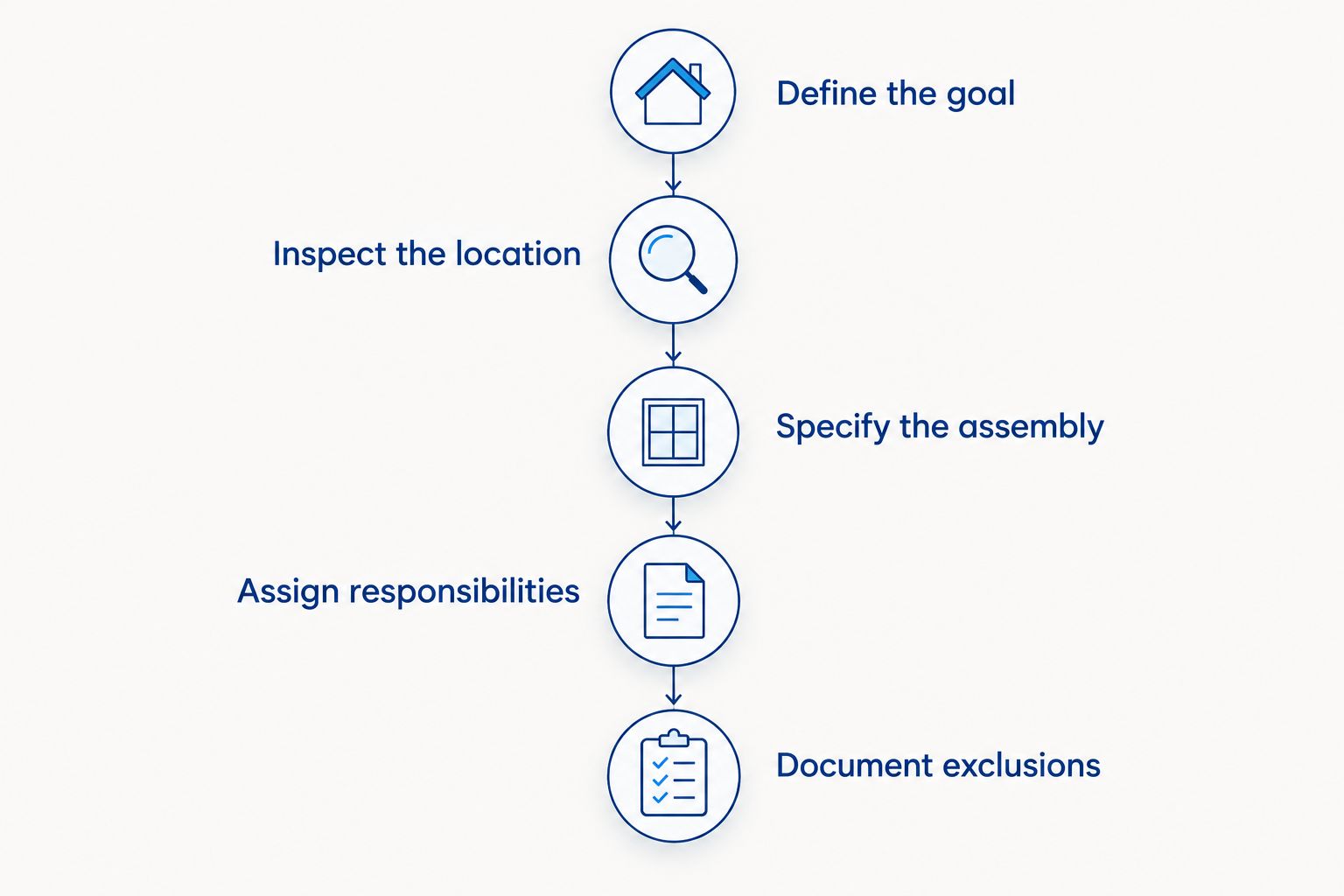
Use this sequence when planning your 2026 roof replacement:
- Define the goal. Identify the room and whether you want daylight, ventilation, or both. Note how you use the space and whether overhead glare would interfere with work or screens.
- Inspect the location. Have the contractor assess the roof, accessible framing, and interior route. Identify obstructions and any need for a structural professional before approving the opening.
- Specify the assembly. Record the skylight type, mounting approach, flashing, glazing, and selected controls. An unspecified unit makes otherwise similar proposals difficult to compare.
- Assign responsibilities. Identify who handles roofing, framing, electrical work, drywall, painting, and permit requirements. Confirm whether you are hiring one contractor for the finished scope or coordinating separate trades.
- Document exclusions. Ask how concealed damage and approved changes will be handled. Keep the final scope and warranty documents with your roof records.
The roof inspection-to-contract process provides a useful framework for organizing these decisions. Resolve the scope before signing, not while the roof is open.
Is adding a skylight during roof replacement better than waiting?
Adding a skylight during roof replacement allows the surrounding roofing and flashing work to be planned together. Waiting means a future installation must address an opening through the roof you have already completed.
That coordination is a reason to evaluate the addition now, not a reason to approve an unsuitable location. Wait if the structural review, room layout, or interior finishing scope remains unresolved. A new roof does not remove those design questions.
For an existing skylight, ask the contractor to evaluate its condition and how its flashing will connect with the replacement roof. Keeping an existing unit and installing a new opening are different projects; the proposal should say which one you are approving.
What should commercial property owners check?
Commercial skylights require attention to the roof system, interior use, and building operations. Offices, retail spaces, restaurants, warehouses, multifamily common areas, and other properties all need a site-specific assessment rather than a residential detail copied onto a commercial roof.
For a 2026 commercial reroof, identify whether the project needs a roof curb—the raised support around an opening—and how it connects to the roofing membrane. Ask about interior access, protection of occupied areas, and coordination with equipment or services above the ceiling.
Also identify who is responsible for future inspection and maintenance. Any roof opening belongs in the property's maintenance records, along with the product information and installation details.
What does the roof warranty cover around a skylight?
Do not assume a roof warranty covers every part of a skylight installation. The skylight product, roofing materials, flashing workmanship, electrical components, and interior finishes can have different warranty terms and responsible parties.
Murray Roofing's stated roof warranty offerings include a 50-year Golden Pledge warranty and a 10-year labor warranty. Ask which coverage applies to your proposed roof and how the skylight affects that coverage; those terms do not automatically establish coverage for the skylight or interior work.
Before approving a 2026 installation, request written answers about covered components, exclusions, maintenance duties, and who receives a leak report. Keep the answer with the signed scope rather than relying on a verbal description.
FAQ
What’s included in the cost to add skylights during roof replacement?
The complete scope includes the skylight, roof opening, flashing, and required interior finishing. Framing changes, electrical work, permits, and concealed-damage repairs also need to be identified where applicable.
Is it cheaper to add a skylight while replacing the roof?
Combining the projects allows the roofing and skylight flashing work to be coordinated, but it does not establish a guaranteed saving. Compare roof-only and roof-plus-skylight estimates with the same roofing specifications.
Can I add a skylight to a roof with an attic?
An attic does not automatically prevent a skylight installation, but the route to the room needs assessment. The project must account for framing, obstructions, and the finished light shaft.
Will a new skylight make my roof leak?
A skylight does not have to leak, but the opening needs compatible flashing and correct integration with the roof. Installation quality, product condition, and maintenance all matter.
Will insurance pay for a skylight added during roof replacement?
Do not assume insurance will pay for a voluntary skylight addition. Ask your insurer to distinguish covered damage repairs from elective upgrades before you approve the work.
Does a roof warranty automatically cover the skylight?
A roof warranty does not automatically cover the skylight and every related component. Confirm product coverage, flashing workmanship, interior exclusions, and the responsible contractor in writing.
Should I choose a fixed or venting skylight?
Choose a fixed skylight when you want daylight without an opening function; consider a venting skylight when an operable opening serves the room. Compare controls, access, maintenance, and ventilation needs before selecting either.
One last thing
The interior light shaft deserves as much attention as the window above it. Its location, shape, insulation, air sealing, and finish affect how the completed installation works inside your building, yet a roof-focused estimate can leave those responsibilities unclear.
Murray Roofing is best for Lincoln and Omaha owners seeking a roof inspection before deciding on skylights. Bring the room location and your daylighting goals to the inspection, then request a complete written scope rather than a unit-only figure.
Related guides
- New roof costs in Lincoln
- Roof warranty types for homeowners
- From roof estimate to financing approval
Schedule a free roof inspection with Murray Roofing to discuss your roof replacement and get a price for the proposed scope. Ask whether your preferred skylight location is suitable and what additional design or trade work the project requires.
Plan your roof replacement
Discuss your roof condition, skylight plans, and the scope needed for a written estimate.